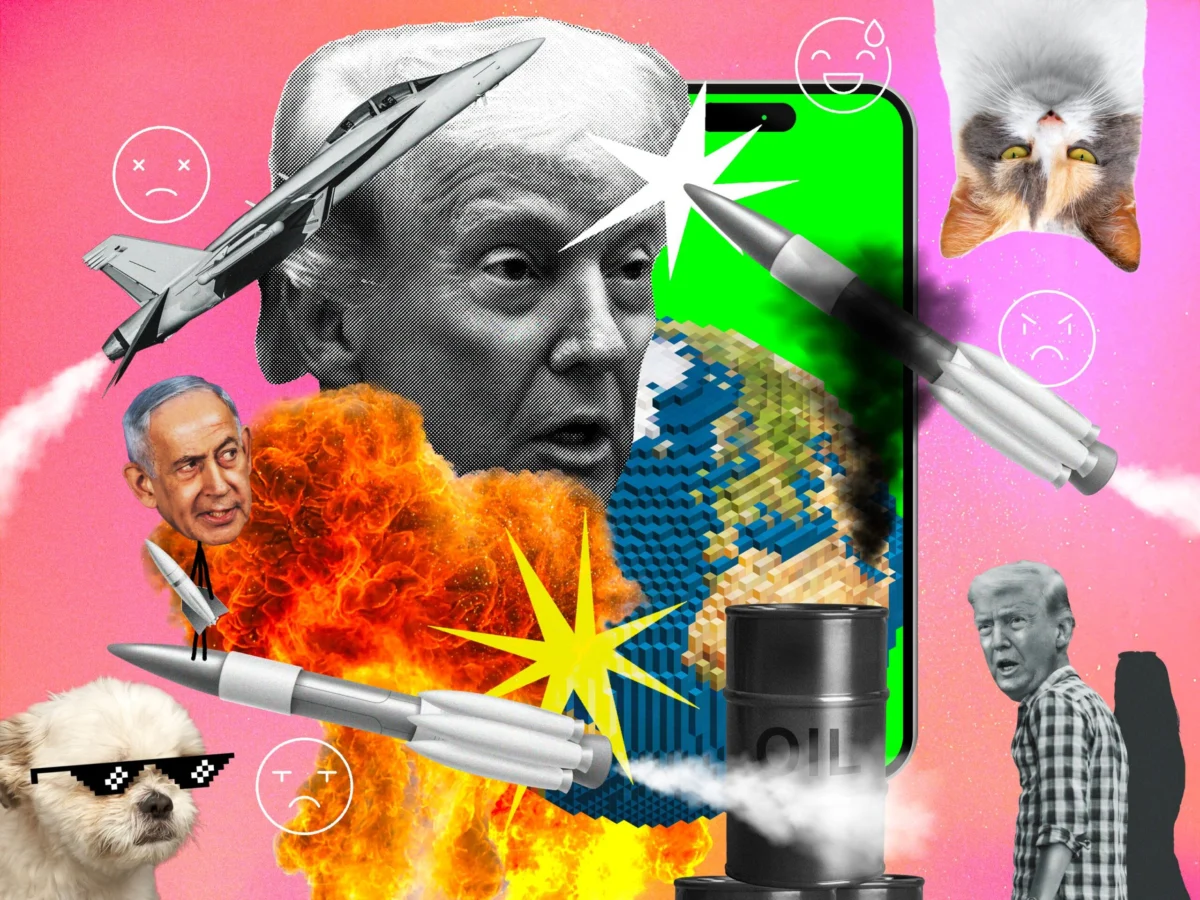
The recent wave of ceasefire announcements between the United States and Iran, as well as the concurrent diplomatic shifts between Israel and Lebanon, have dominated global headlines, signaling a potential cooling of tensions in a volatile region. However, beneath the formal diplomatic channels, a parallel narrative has unfolded across digital platforms, revealing how modern conflict is processed, shared, and commodified through the medium of the internet meme. As traditional warfare escalates or de-escalates on the ground, the digital front remains active, characterized by a rapid-fire exchange of humor, satire, and propaganda that often moves faster than the facts themselves.
Over the past several months, social media users have witnessed a surge in war-related content that ranges from the absurd to the macabre. In the United States, jokes about conscription and the potential for a "Third World War" became a staple of short-form video platforms like TikTok and Instagram. Content creators utilized military-themed filters and lip-synced to viral audios, such as the "Bazooka" song, which features lyrics about a relative being struck by a projectile. Simultaneously, across the Middle East and the Gulf, the tone of humor shifted to reflect a closer proximity to the threat. Memes in these regions often satirized the speed of military responses compared to social interactions or depicted delivery drivers navigating missile strikes with nonchalant efficiency. This phenomenon highlights a significant shift in how the public engages with geopolitical crises, moving away from passive news consumption toward active, albeit fragmented, participation in a visual economy.
The Evolution of Digital Satire and Conflict
The use of humor in times of crisis is not a modern invention. Middle East scholar and media analyst Adel Iskandar notes that political satire has roots stretching back centuries, from ancient Egyptian papyri to the gallows humor of 20th-century trench warfare. The psychological foundation for this behavior is often linked to Sigmund Freud’s "relief theory," which suggests that humor serves as a vital release valve for pent-up nervous energy and tension. In the context of war, dark humor allows individuals to reclaim a sense of agency over events that are otherwise beyond their control.
However, the advent of social media has fundamentally altered the scale, speed, and impact of this instinct. Unlike a joke shared among a local community, a digital meme can become a global template within minutes. The logic of social media platforms—driven by algorithms that prioritize engagement over accuracy—encourages the stripping away of context. For a meme to go viral, it must be easily recognizable, simple to remix, and emotionally resonant. This process often reduces complex historical and political grievances to digestible, often trivialized, visual shorthands.
Chronology of the Digital Escalation: 2023–2024
The digital narrative of the current Middle Eastern tensions can be traced through several key phases of escalation and response:
- October 2023 – Initial Surge: Following the escalation of hostilities in Gaza, social media platforms saw an immediate influx of "war-core" aesthetic content. This included tactical gear "outfits of the day" and the romanticization of military life, largely driven by Western users far removed from the conflict.
- April 2024 – Direct Confrontation: When Iran launched a direct drone and missile strike against Israel, followed by an Israeli response, the internet was flooded with "reaction" memes. In the Gulf, users joked about the "theatricality" of the exchange, while Western users focused on the perceived inevitability of a global conflict.
- September – October 2024 – Lebanon Escalation: As the conflict expanded into Lebanon, the digital tone became more fatalistic. Content from within Beirut and southern Lebanon often featured "last messages" or satirical takes on the resilience of the Lebanese people amidst collapsing infrastructure.
- The Ceasefire Phase: With the announcement of ceasefires, the meme cycle has shifted toward themes of "post-war" normalcy, often using AI-generated imagery to depict rebuilt cities or satirical takes on the sudden silence of the air raid sirens.
Data and the Illusion of Informed Consent
The prevalence of war memes has created what researchers call an "illusion of knowledge." A 2024 study published in Frontiers in Psychology found that while social media consumption increases a user’s feeling of being informed, it does not necessarily correlate with an increase in factual understanding. This is particularly evident in the 2023 Arab Youth Survey, which reported that 61 percent of young Arabs rely on social media as their primary news source. While 89 percent of respondents still consider television the most trusted medium, the sheer volume of time spent on social media means that the fragmented, meme-heavy narrative often becomes the dominant one.
The danger of this "fragmented system," according to Sut Jhally, a professor of communication at the University of Massachusetts Amherst, is that it discourages deep historical inquiry. "Understanding requires history and a much broader timeframe," Jhally argues. When crises are delivered as clips and jokes, the public may recognize the symbols of a conflict without ever grasping the systemic causes or the human cost.
The Rise of State-Sponsored Meme Propaganda
The phenomenon is not limited to organic user behavior. Nation-states have increasingly adopted the visual language of the internet to promote their agendas. This "meme-native propaganda" uses fast edits, cinematic soundtracks, and gaming references to make state messaging more palatable to younger audiences.
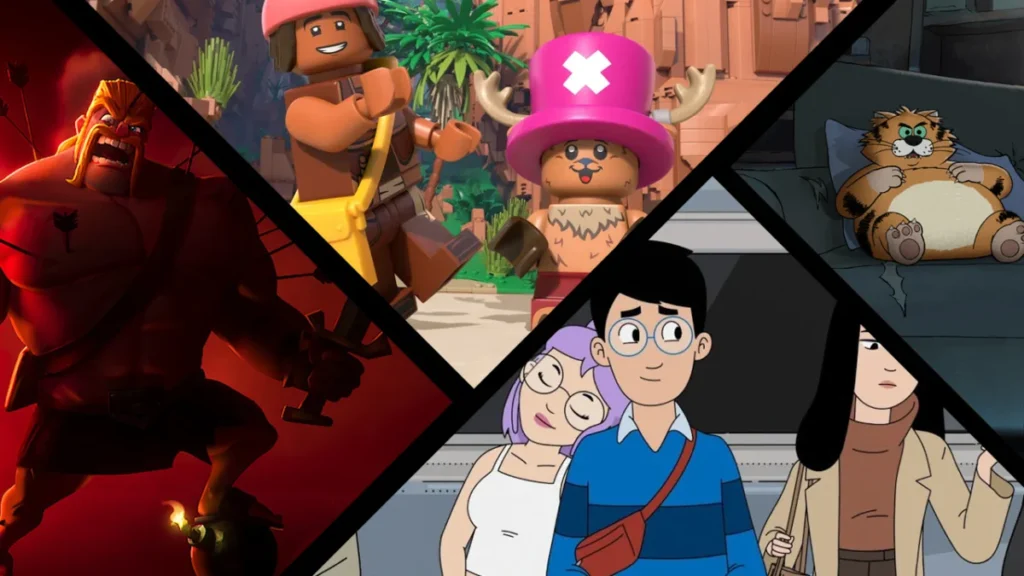
During the height of tensions, the White House released content under the banner of "Operation Epic Fury," which spliced actual combat footage with Hollywood-style aesthetics and pounding soundtracks. This content, designed to project American military prowess, reportedly garnered over 2 billion impressions. In response, Iranian state-affiliated accounts utilized AI-generated animations—some in the style of Lego sets—to depict Iranian military victories. These animations were not merely for entertainment; they were calculated efforts to project resilience and "normalcy" as a state project.
By using humor and familiar pop-culture tropes, states can bypass the critical filters that audiences usually apply to formal political statements. As Jhally notes, "If you can make someone laugh, then you can do almost anything." This weaponization of humor allows propaganda to spread under the guise of irony, making it difficult for content moderators and the public to distinguish between a joke and a psychological operation.
Geographic Disparity and "Happy Violence"
A critical factor in the production and consumption of war memes is the geographic distance of the creator from the actual threat. For those in the West, war is often experienced as a "mediated spectacle." Cultural critic George Gerbner termed this "happy violence"—violence that is spectacular, consequence-free, and detached from its aftermath. American teenagers joking about a military draft often draw their references from zombie movies or superhero franchises rather than any lived experience of political violence.
In contrast, for those within the conflict zones or in neighboring countries, the humor is often a form of "fatalism." The memes are not about a distant movie-like apocalypse but about the daily reality of disrupted flights, rising prices, and the constant checking of safety status messages. This divide highlights a significant empathy gap in digital spaces: the same meme that serves as entertainment in one hemisphere may represent a desperate coping mechanism in another.
Implications for Media Literacy and Global Stability
The shift toward a meme-based understanding of war has profound implications for global stability and media literacy. When every crisis is treated as "content," the gravity of geopolitical shifts can be lost. The speed of the feed rewards the most sensational or humorous take, often burying nuanced reporting or humanitarian pleas.
Furthermore, the "viral logic" described by Adel Iskandar—where a meme must travel to survive—creates a feedback loop. Algorithms recognize the high engagement levels of war memes and push them to more users, further normalizing the trivialization of conflict. This creates a public that is highly "familiar" with the aesthetics of war but largely ignorant of its reality.
As the current ceasefires take hold, the digital footprint of the conflict remains as a testament to this new era of warfare. The challenge for educators, journalists, and policymakers is to find ways to bridge the gap between "knowing" a meme and "understanding" a conflict. Without a concerted effort to promote historical context and critical media consumption, the risk remains that the public will continue to view global crises through a lens of "vicarious trauma" and "mediated entertainment," unable to distinguish the spectacle from the human tragedy.
In the final analysis, the rise of war memes represents more than just a change in how we laugh; it represents a fundamental shift in how we perceive the world. When war is reduced to a 15-second clip with a trending audio track, the real danger is not that people are laughing, but that they no longer know what they are looking at. The feed moves at the speed of humor, but the consequences of war—lives lost, cultures displaced, and regions destabilized—unfold at a much slower, more painful pace.