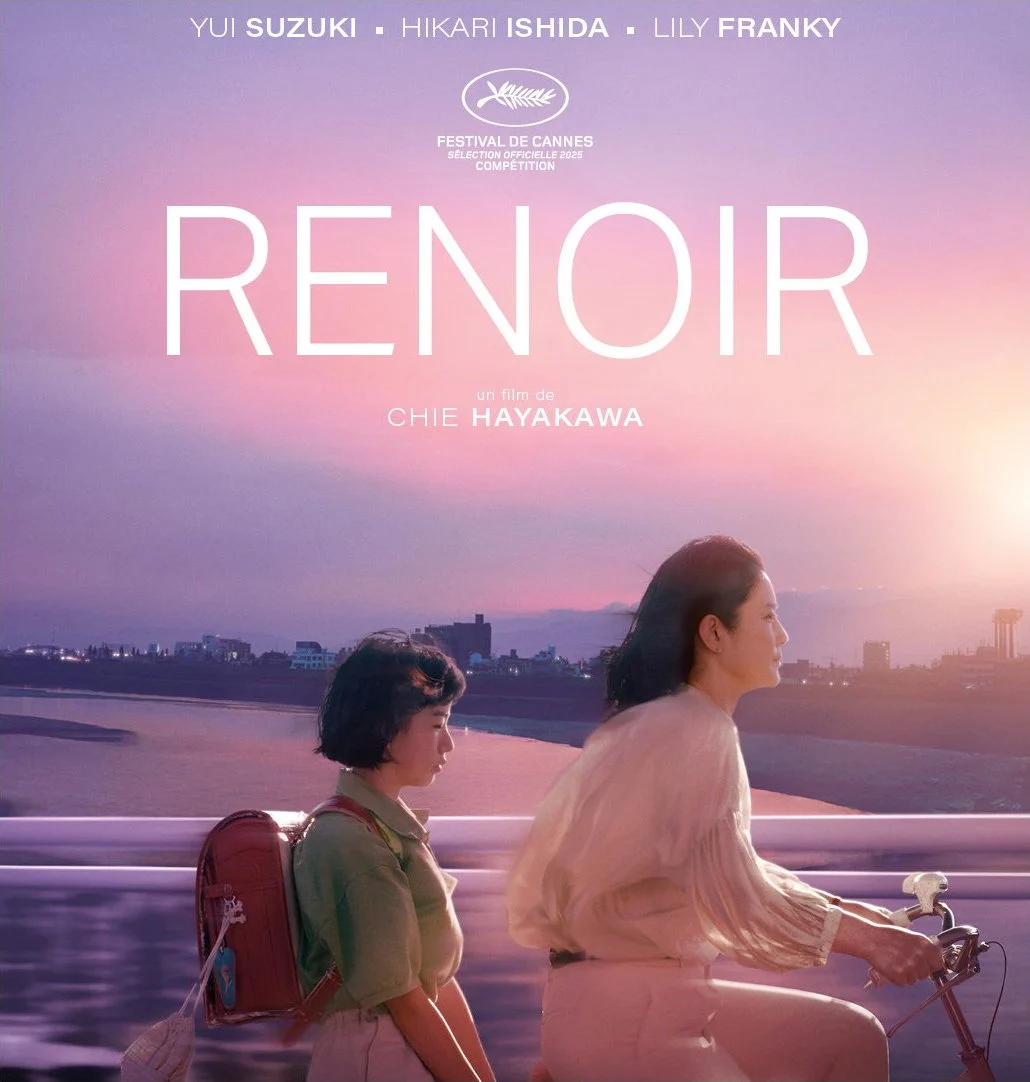
Film Movement has officially unveiled the United States trailer for the Japanese drama Renoir, a highly anticipated feature from acclaimed director Chie Hayakawa, slated for a theatrical release on May 29th, 2026. The film, which garnered significant attention following its premiere at the 2025 Cannes Film Festival, marks Hayakawa’s sophomore effort after her critically lauded debut, Plan 75. Set against the backdrop of Tokyo in 1987, Renoir delves into the poignant world of 11-year-old Fuki, portrayed by newcomer Yui Suzuki, as she navigates a challenging summer amidst family illness and a burgeoning fascination with the mysteries of the universe, leading her into unforeseen dangers.
Chie Hayakawa’s Evolving Vision: From Plan 75 to Renoir
Chie Hayakawa has rapidly established herself as a significant voice in contemporary Japanese cinema. Her debut feature, Plan 75, released in 2022 (and in US theaters in April 2023), offered a chillingly prescient dystopian vision of a near-future Japan where the government encourages euthanasia for its elderly citizens to manage an aging population crisis. That film, which also premiered at the Cannes Film Festival (in the Un Certain Regard section, earning a Special Mention), was praised for its contemplative storytelling, ethical depth, and powerful performances. It explored themes of human dignity, societal responsibility, and the often-unseen struggles of marginalized individuals with a quiet intensity that became a hallmark of Hayakawa’s style.
With Renoir, Hayakawa shifts her focus from speculative social commentary to a deeply personal, introspective drama rooted in childhood memory and the processing of grief. The director has openly stated that the film is a return to her own childhood experiences, specifically a period when her father was gravely ill. This personal connection imbues Renoir with an emotional authenticity that distinguishes it from her earlier work, yet retains her characteristic sensitivity and meticulous approach to character development. This transition demonstrates Hayakawa’s versatility and her capacity to tackle diverse narrative landscapes while maintaining a consistent artistic voice centered on profound human experiences. The choice to set the film in 1987 also suggests a deliberate dive into a specific cultural and historical moment in Japan, potentially influencing the film’s aesthetic, societal nuances, and the analog nature of Fuki’s exploration of the supernatural.
Narrative Threads: Childhood, Grief, and the Supernatural

Renoir introduces audiences to Fuki, an 11-year-old girl living in the Tokyo suburbs. Her seemingly ordinary childhood takes a dramatic turn when her father is hospitalized with a serious illness. This profound family crisis casts a shadow over their home, with her mother working tirelessly to keep their daily lives afloat, leaving Fuki largely to her own devices during the summer holidays. This period of isolation and emotional vulnerability becomes a fertile ground for Fuki’s vivid imagination and burgeoning curiosity.
Fuki’s fascination with telepathy and the mysteries of the universe serves as both a coping mechanism and a gateway to self-discovery. In her world, disconnected from immediate parental supervision, the boundaries between reality and the supernatural blur. This internal landscape, rich with wonder and a longing for connection, is depicted with a poetic sensibility that permeates the film. The narrative takes a pivotal turn when Fuki stumbles upon a phone hotline, a seemingly innocuous discovery that draws her into increasingly dangerous situations. This plot point hints at the vulnerability of children left unsupervised, particularly when seeking answers or connections outside conventional avenues. The film is poised to explore the fine line between innocent curiosity and genuine peril, amplified by the emotional turmoil Fuki is experiencing.
The casting of newcomer Yui Suzuki in the central role of Fuki is a bold choice, reflecting Hayakawa’s commitment to authentic performances. The film also features a strong ensemble cast of established Japanese talent, including Lily Franky, known for his nuanced performances in films like Shoplifters; Hikari Ishida, a veteran actress; Yuumi Kawai; Ayumu Nakajima; Ryota Bando; and Hana Hope. Their collective presence promises a rich tapestry of characters supporting Fuki’s journey.
The Symbolic Power of the Renoir
One of the most intriguing aspects of the film, and a testament to Hayakawa’s artistic depth, is its Renoir. The director has revealed that the title holds deep personal significance, stemming from a gift her dying father gave her—a copy of a painting by the renowned French Impressionist artist Pierre-Auguste Renoir. This revelation immediately elevates the film beyond a simple coming-of-age story, imbuing it with layers of symbolic meaning.
Renoir’s art is celebrated for its vibrant depictions of light, color, and joyous domestic scenes, often featuring women and children in leisurely settings. While the film’s premise suggests a more somber tone, the connection to Renoir’s work could signify several things. It might represent a cherished memory, a last act of love, or a window to a world of beauty and light amidst darkness. The "exceptionally poetic" nature of the film, as described in early reports, likely draws from this very personal and artistic inspiration. The painting itself could serve as a visual motif, a thematic anchor, or a subtle commentary on the enduring power of art to provide comfort, solace, and a connection to those we have lost. It invites audiences to consider how art, memory, and personal legacies intertwine in shaping an individual’s emotional landscape, especially during formative years.

Cannes Premiere and Critical Reception
Renoir made its world premiere at the 2025 Cannes Film Festival, where it was selected for the prestigious Main Competition. Inclusion in the Main Competition at Cannes is a significant achievement for any film, placing it among a select group of international features vying for the coveted Palme d’Or. This selection not only provides immense global visibility but also signifies the festival’s recognition of Hayakawa’s artistic vision and the film’s cinematic merit. For a Japanese drama, particularly a director’s second feature, this level of recognition at one of the world’s most prominent film festivals underscores its perceived quality and potential for international appeal.
Initial critical reactions, as aggregated on Rotten Tomatoes, currently indicate an 88% approval rating. While the initial report noted "mostly mixed reviews," an 88% score typically indicates strong positive reception. This potential discrepancy might suggest a nuanced critical discussion that goes beyond a simple positive/negative binary, or perhaps the initial "mixed" sentiment evolved as more reviews came in. For an independent foreign film, a high Rotten Tomatoes score is invaluable for attracting audiences and securing broader distribution. Critics often praise such films for their visual aesthetics, emotional depth, unique cultural insights, and strong performances. The consensus seems to lean towards Renoir being a compelling and artistically significant work, particularly for enthusiasts of modern Japanese cinema. The film’s poetic narrative and its exploration of universal themes through a specific cultural lens are likely key factors contributing to its positive reception.
Film Movement: Championing International Arthouse Cinema
The distribution of Renoir in the United States is being handled by Film Movement, an independent film distributor renowned for bringing critically acclaimed arthouse and foreign-language films to American audiences. Established in 2002, Film Movement has built a strong reputation for curating a diverse catalog of films from around the globe, often focusing on works that challenge conventions, explore profound human experiences, and offer unique cultural perspectives. Their acquisition of Renoir is a testament to their confidence in Hayakawa’s film and its potential to resonate with their discerning audience base.
Film Movement’s strategy typically involves a limited theatrical release in select arthouse cinemas, followed by wider availability on various digital platforms and home video. This approach allows them to build critical buzz and cater to a niche audience that actively seeks out international and independent cinema. Their previous successful distributions of films like Hirokazu Kore-eda’s Shoplifters (though not by them in the US, it’s an example of the type of film they champion) and other award-winning features demonstrate their expertise in marketing and positioning such works within the competitive US market. For Renoir, Film Movement’s involvement ensures that the film will reach viewers who appreciate cinematic artistry and compelling storytelling, further cementing its status as a significant international release. The May 29th, 2026, release date positions Renoir as a late spring/early summer offering, often a time when independent films can find their footing amidst blockbuster releases.

Broader Context: Contemporary Japanese Cinema on the Global Stage
Chie Hayakawa’s emergence and the international acclaim for Renoir contribute to a vibrant period for Japanese cinema on the global stage. Directors like Ryusuke Hamaguchi (Drive My Car, Evil Does Not Exist), Hirokazu Kore-eda (Shoplifters, Broker), and Naomi Kawase (True Mothers) have consistently brought Japanese films to prominence at major international festivals and awards ceremonies. These filmmakers, along with a new generation including Hayakawa, are exploring diverse genres and themes, from intimate family dramas to incisive social commentaries and philosophical explorations.
Japanese cinema has a long and storied history of critical success and artistic innovation, from the golden age masters like Akira Kurosawa and Yasujiro Ozu to the contemporary voices pushing boundaries today. Hayakawa’s work, with its delicate balance of personal narrative and broader societal implications, fits well within this rich tradition while also forging its own distinct path. Renoir, with its deeply personal origin and universal themes of coping with illness and navigating childhood, exemplifies the power of Japanese filmmakers to tell stories that are culturally specific yet emotionally resonant across borders. The film’s anticipated US release offers American audiences another opportunity to engage with the compelling and thought-provoking narratives emerging from Japan.
Anticipation for the US Release
As the May 29th, 2026, release date approaches, anticipation for Renoir continues to build, particularly among cinephiles and followers of international cinema. The film’s compelling premise, Hayakawa’s growing reputation, its Cannes pedigree, and the intriguing symbolic title all point towards a film that is much more than a simple drama. It promises an introspective and poetic journey into the mind of a young girl grappling with immense personal challenges, framed by the specific cultural and temporal setting of 1987 Tokyo.
The trailer, recently released by Film Movement, provides a glimpse into the film’s evocative visuals and emotional depth, posing the question, "Shall we talk about the mysteries of the universe?" This line encapsulates Fuki’s quest for understanding and connection in a world suddenly made uncertain. For those who appreciate modern Japanese cinema, and indeed for anyone seeking a thoughtful and artistically rich cinematic experience, Renoir is positioned as a must-see. Its exploration of grief, resilience, and the power of imagination through the eyes of a child offers a timely and timeless narrative that is sure to leave a lasting impression.