


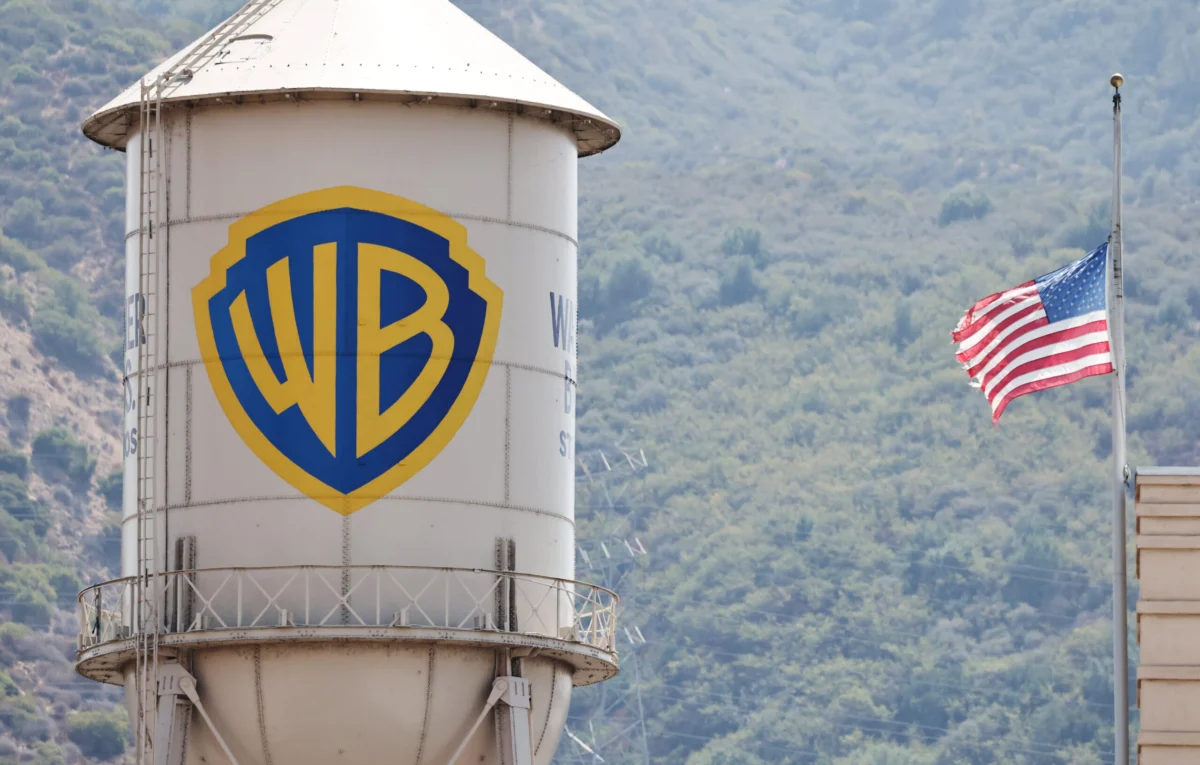
The Warner Bros. Discovery (WBD) board of directors has reached a pivotal decision in the future of the media landscape, formally selecting a merger proposal from Paramount Skydance over a competing offer from streaming giant Netflix. While the board’s choice of the $31-per-share acquisition offer from Paramount Skydance represents a significant premium for shareholders compared to Netflix’s $27.75-per-share bid, the announcement has sent waves of apprehension through the company’s global workforce. The decision, finalized on Thursday, February 26, 2026, marks the beginning of a complex integration process that aims to combine two of Hollywood’s most storied "Big Five" studios, even as internal morale at WBD faces a sharp decline.
The financial allure of the Paramount Skydance deal is clear on paper. The $31-per-share valuation places a higher immediate price tag on WBD’s assets, potentially enriching institutional and individual investors who have weathered the company’s volatile stock performance since the 2022 merger of WarnerMedia and Discovery. However, for the thousands of employees stationed at Warner Bros. Studio in Burbank, the CNN Center, and Discovery’s various hubs, the financial victory for shareholders feels like a precarious omen for their professional futures.
Internal Turmoil and the Fear of "Synergies"
In the wake of the board’s decision, the atmosphere within WBD has been described by insiders as "deflated" and "terrified." CNBC conducted interviews with 10 WBD employees across various divisions, all of whom spoke on the condition of anonymity to avoid professional repercussions. The consensus among these staff members was a profound concern regarding job security and the logistical chaos of merging two massive, overlapping corporate infrastructures.
The primary source of anxiety stems from the stated goals of Paramount executives. Chief Strategy Officer Andy Gordon has previously signaled a roadmap for $6 billion in cost-savings, primarily achieved through the elimination of "duplicative operations." These cuts are expected to target the "back office," including finance, legal, corporate administration, technology, and infrastructure. For a workforce that has already endured multiple rounds of layoffs since the tenure of CEO David Zaslav began, the prospect of another massive "synergy" drive is exhausting.
One long-term WBD executive noted that while the financials of the Paramount bid might satisfy the board’s fiduciary duties, the human cost is being overlooked. "It’s fair to say people are deflated by the news," the executive said. "We’ve spent years trying to integrate Discovery and WarnerMedia, and just as some stability was emerging, we are being thrown into an even larger, more complex machine."
The Netflix Alternative: A Lost Sense of Autonomy
The preference among a large segment of WBD staff for the Netflix offer was rooted in the structural differences between the two bids. Netflix’s proposal was viewed as a "hands-off" acquisition that would have preserved more of WBD’s existing identity. Netflix co-CEO Ted Sarandos had reportedly communicated a plan to allow WBD’s theatrical film business to operate independently, recognizing that Netflix’s own model is primarily focused on direct-to-consumer streaming rather than traditional cinema distribution.
Furthermore, Netflix’s bid did not include WBD’s linear cable business. Under a Netflix deal, assets like CNN, TNT Sports, and the Discovery networks would have been spun off into a standalone publicly traded company. This would have theoretically protected those divisions from the aggressive consolidation and "streamlining" that often follow a total merger. Employees at HBO Max also expressed a preference for Netflix, as the streamer had intended to keep HBO Max as a separate, premium service, maintaining its distinct brand equity.
In contrast, the Paramount Skydance merger creates direct overlap in nearly every category: theatrical production, streaming, cable news, and sports broadcasting. This redundancy is precisely what Paramount executives intend to harvest for savings, but it is also what WBD employees fear will lead to the wholesale elimination of entire departments.
The Battle for the Newsroom: CNN vs. CBS News
Perhaps no division faces more uncertainty than the news sector. Currently, WBD’s news operations are led by Mark Thompson, the former Director-General of the BBC and CEO of The New York Times, who has been tasked with modernizing CNN. However, the merger brings WBD into the same orbit as Paramount’s CBS News, which is currently overseen by Editor-in-Chief Bari Weiss.
Speculation is rampant regarding who would ultimately control the combined news entity. Reports from late 2025 indicated that Paramount CEO David Ellison had discussed potential "sweeping changes" at CNN with political figures, including Donald Trump, should he gain control of the network. This has sparked intense concern among CNN anchors and journalists regarding the potential for a dramatic shift in the network’s editorial tone and culture.

Mark Thompson attempted to provide some measure of calm in a memo sent to employees following the board’s decision. "Despite all the speculation you’ve read during this process, I’d suggest that you don’t jump to conclusions about the future until we know more," Thompson wrote. Meanwhile, media analysts like Brian Stelter have pointed out that CNN remains a highly profitable asset, suggesting that any new owner would be "foolish" to disrupt a business model that continues to generate significant revenue.
Sports Integration: A Silver Lining in March Madness
While the news and corporate divisions are bracing for impact, the sports division offers a rare point of optimism. TNT Sports, led by Luis Silberwasser, has focused on a younger demographic through investments in Bleacher Report and House of Highlights. CBS Sports, led by David Berson, has historically catered to an older, broadcast-heavy audience.
While there will inevitably be duplications in production and back-end staffing, the two units have a long history of successful collaboration. Since 2011, CBS and WBD (formerly Turner Sports) have partnered to broadcast the NCAA Men’s Basketball Tournament, known as March Madness. This decade-plus of working together has created a level of professional familiarity that does not exist in other divisions.
Additionally, the merger could solve a major strategic deficit for WBD. After losing the media rights to the NBA in 2025—a cornerstone of TNT’s identity for decades—the company was left in a vulnerable position. By joining forces with CBS, WBD gains access to a robust portfolio that includes the NFL, the Masters, and high-profile collegiate sports, effectively restoring its status as a major player in the sports broadcasting world.
The $64 Billion Debt Burden
A significant point of contention among financial analysts and WBD employees alike is the staggering debt load associated with the deal. The merger carries a $111 billion enterprise value, of which $64 billion is debt. WBD has spent the last several years aggressively trying to pay down debt from its previous merger, and the prospect of taking on more has raised alarms.
Employees noted the stark difference in the financial "safety net" provided by the two bidders. Netflix boasts a market capitalization of more than $400 billion, offering a level of stability and cash flow that is unparalleled in the industry. Paramount Skydance, by comparison, has a market valuation of approximately $15 billion. The fear is that the new combined entity will be so burdened by debt servicing that it will be forced to stifle creative spending and innovation to satisfy creditors.
Regulatory Hurdles and the Road Ahead
The deal is far from a certainty. California Attorney General Rob Bonta has already signaled that his office will closely monitor the transaction, stating that a WBD-Paramount merger "is not a done deal." The transaction must also clear rigorous antitrust reviews from the Department of Justice (DOJ) and the Federal Trade Commission (FTC) in the United States, as well as regulatory bodies in Europe.
WBD CEO David Zaslav addressed these concerns during an all-hands meeting on Friday, February 27. Zaslav acknowledged the "whiplash" employees were feeling and admitted that the deal could still be blocked by regulators. According to leaked audio, Zaslav told staff, "The deal may not close. If it doesn’t close, we get $7 billion, and we get back to work." The $7 billion refers to the breakup fee Paramount would be required to pay WBD if the deal fails to pass regulatory muster.
Timeline of the WBD-Paramount-Netflix Bidding War
- September 2025: Speculation begins regarding a potential sale of WBD as the company struggles with linear TV declines and NBA rights losses.
- December 2025: Paramount Skydance submits a hostile bid for WBD. Netflix enters the fray shortly after with a competing proposal.
- January 2026: WBD board enters "exclusive" talks with both parties to weigh the benefits of a traditional media merger (Paramount) versus a tech-led acquisition (Netflix).
- February 17, 2026: Netflix increases its offer to $27.75 per share, emphasizing a "hands-off" approach to WBD’s legacy assets.
- February 24, 2026: Paramount Skydance raises its bid to $31 per share, including a $6 billion cost-savings plan.
- February 26, 2026: The WBD board officially votes to accept the Paramount Skydance offer.
- February 27, 2026: CEO David Zaslav holds an all-hands meeting to discuss the merger and potential regulatory failure.
Broader Industry Implications
The merger of WBD and Paramount Skydance represents a defensive consolidation in an industry under siege by "Big Tech" players like Amazon, Apple, and Netflix. As traditional cable subscriptions continue to dwindle, legacy media companies are finding that scale is their only defense. By combining their libraries—ranging from the DC Universe and Harry Potter to Star Trek and Mission: Impossible—the new entity hopes to create a streaming service that is an "essential" buy for consumers.
However, the "culture clash" remains the biggest intangible risk. The combined company will feature a leadership team of "heavy hitters" who are all accustomed to being the ultimate authority. With executives like Jeff Shell (former NBCUniversal CEO), Cindy Holland (former Netflix content chief), and George Cheeks (former Paramount co-CEO) all in the mix, the battle for internal influence may be just as intense as the battle for market share.
For the employees at Warner Bros. Discovery, the next 12 to 18 months will be defined by uncertainty. As the deal moves through the regulatory gauntlet, the workforce remains caught between the promise of a dominant media empire and the reality of a $6 billion cost-cutting axe. Whether this merger creates a sustainable titan or a debt-laden conglomerate remains to be seen, but for now, the mood in Burbank is one of cautious, if not fearful, observation.