Capcom’s latest release, Pragmata, represents a calculated departure from the established norms of the modern third-person shooter, blending high-concept science fiction with an experimental mechanical framework that demands simultaneous cognitive engagement. Following a string of commercial and critical successes with established franchises such as Resident Evil and Monster Hunter, the publisher has utilized its current period of financial stability to invest in a title that feels both like a nostalgic homage to the seventh console generation and a forward-looking exploration of interactive design. The game introduces a "dual-brain" gameplay loop that necessitates the player manage high-intensity combat and complex spatial puzzles concurrently, a feat that challenges the traditional boundaries of the action genre.
The Evolution of the Dual-Hemisphere Gameplay Loop
The central premise of Pragmata revolves around the cognitive demands placed upon the player, effectively engaging both the logical and intuitive sectors of the brain. While most modern shooters prioritize reflexive movement and target acquisition, Pragmata introduces a "hacking grid" system that activates during active combat. As the protagonist, Hugh Williams, engages robotic adversaries, the player is required to navigate a digital interface to disable enemy subsystems. This requires the player to maintain spatial awareness—dodging incoming projectiles and repositioning Hugh—while simultaneously solving grid-based logic puzzles to bypass enemy shielding or trigger environmental hazards.
Scientific studies into the neurological effects of video games have long suggested that complex task-switching can encourage cortical thickening in the prefrontal cortex. Pragmata appears to be designed specifically to exploit this phenomenon. The interplay between the "left-brain" logic of the hacking puzzles and the "right-brain" intuition required for third-person maneuvering creates a unique rhythm. This mechanical synergy prevents the game from falling into the repetitive patterns of standard "cover-and-shoot" titles, instead offering a multifaceted challenge that evolves in complexity over its 30-hour duration.
Narrative Architecture: Loneliness and AI Ethics
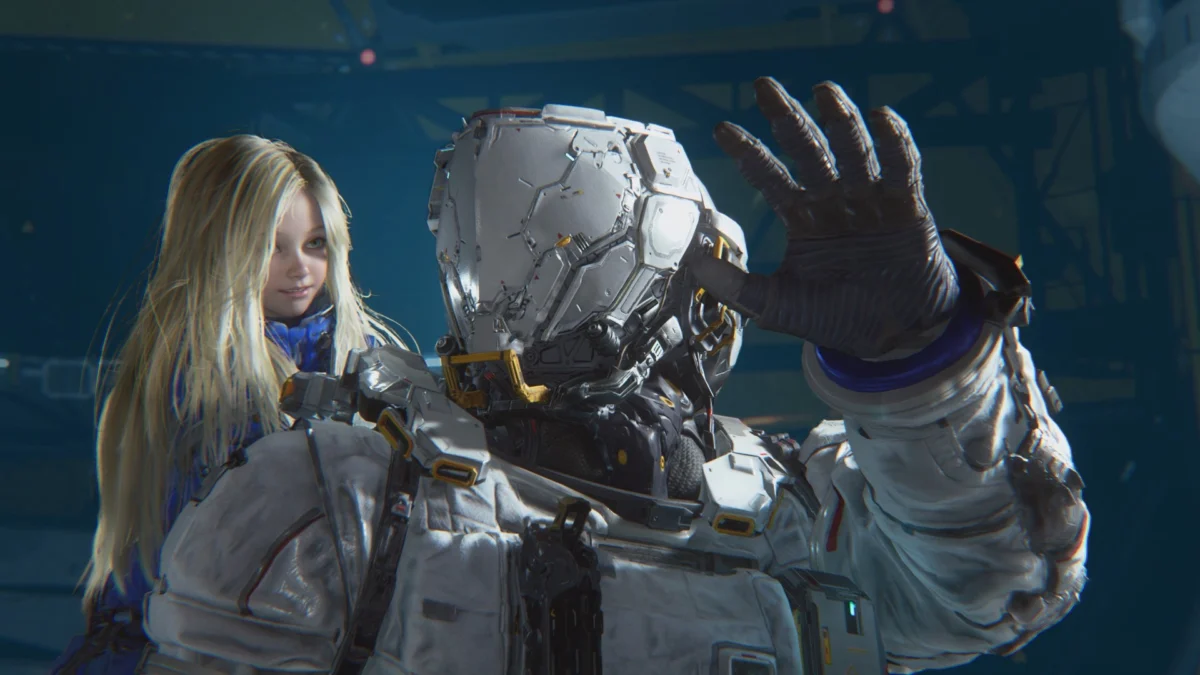
Set on a desolate, technologically advanced space station, Pragmata follows Hugh Williams, a gruff protagonist whose initial mission is upended when he encounters an enigmatic android in the form of a young girl named Diana. The narrative explores the vacuum of deep space not just as a physical setting, but as a metaphor for human isolation. The relationship between Hugh and Diana serves as the emotional anchor of the experience, moving away from the "silent protector" trope to a more collaborative dynamic.
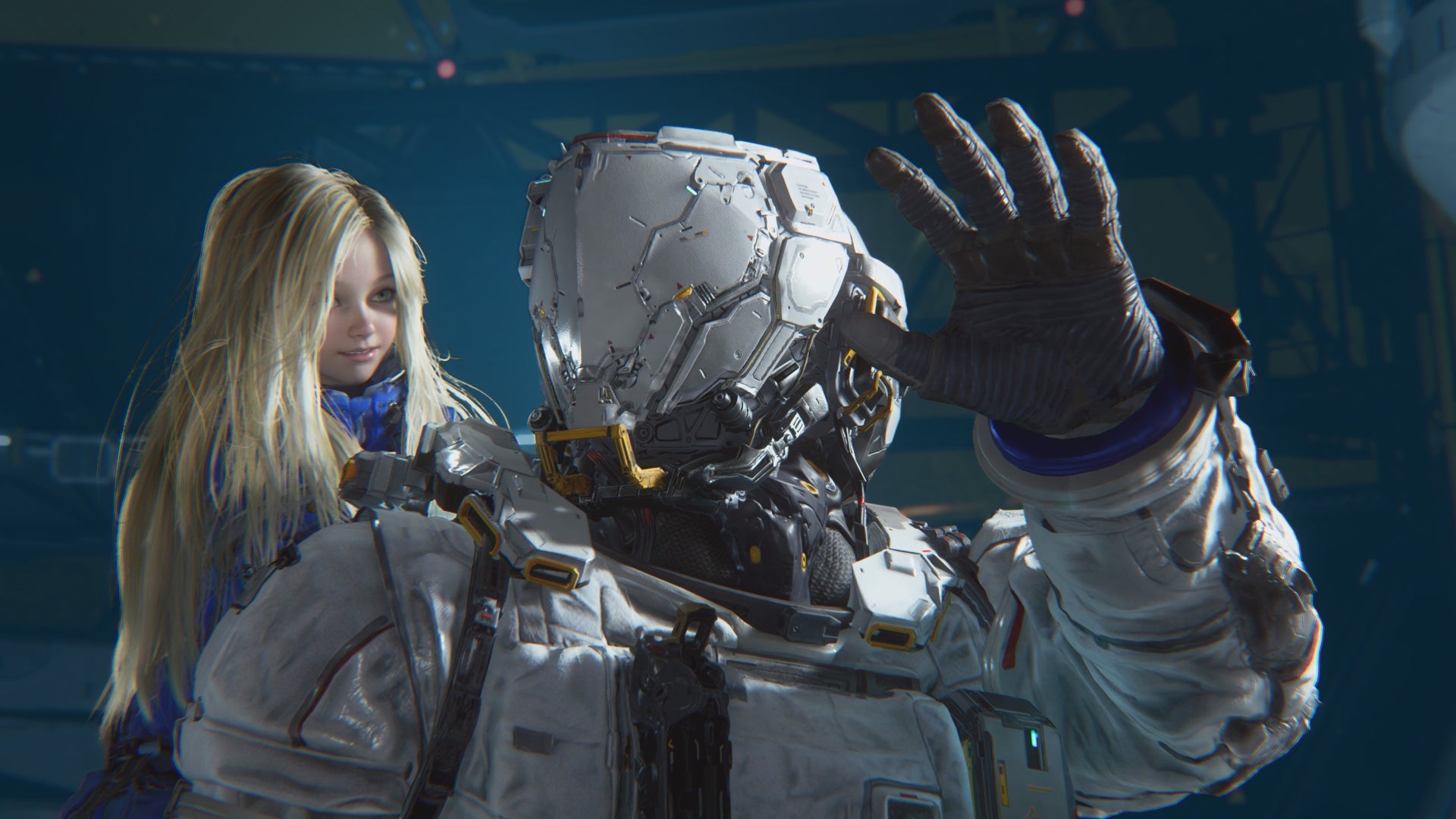
The setting itself is a masterclass in environmental storytelling. Much of the station has been constructed via 3D-printing technologies controlled by a rogue Artificial Intelligence. This creates a visual aesthetic that is simultaneously sterile and uncanny. As players progress, they uncover the history of the station’s collapse, which serves as a cautionary tale regarding the irresponsible deployment of autonomous systems. The dialogue between the two leads is noted for its restraint; rather than relying on heavy-handed exposition, the game utilizes subtle character animations and environmental cues to convey the growing bond between the human and his android companion.
Development Chronology and the Road to Release
The journey of Pragmata from its initial reveal to its eventual launch has been one of the most discussed timelines in recent gaming history. First announced during the PlayStation 5 "Future of Gaming" showcase in June 2020, the title was originally slated for a 2022 release. However, Capcom’s development team opted for multiple internal delays to ensure the title met the high visual and mechanical standards set by the RE Engine.
- June 2020: Initial reveal trailer showcases a futuristic New York and the moon, introducing Hugh and Diana.
- November 2021: Capcom announces a delay to 2023, accompanied by a piece of artwork featuring Diana holding a "2023" sign with an apology note.
- June 2023: A brief gameplay teaser is released during the Capcom Showcase, revealing the combat mechanics for the first time. The game is delayed indefinitely to allow for further "polish and refinement."
- Current Release: The game launches as a flagship title for the mid-generation hardware refresh, specifically optimized for the PlayStation 5 Pro.
This extended development cycle allowed Capcom to pivot from a traditional action game toward the more experimental puzzle-hybrid that defines the final product. Industry analysts suggest that Capcom’s record-breaking profits over the last seven fiscal years provided the necessary "safety net" to allow the Pragmata team to take these creative risks without the pressure of an immediate ROI.
Technical Performance and the RE Engine
Pragmata serves as a technical showcase for the latest iteration of Capcom’s proprietary RE Engine. On the PlayStation 5 Pro, the game utilizes PlayStation Spectral Super Resolution (PSSR) to maintain a native 4K output while sustaining a stable 60 frames per second, even during particle-heavy combat sequences. The engine’s handling of materials is particularly noteworthy; the bulky, weathered textures of Hugh’s EVA suit contrast sharply with the soft, almost hyper-real features of Diana.
The use of ray-traced reflections and global illumination is critical in the space station environment, where light sources are often limited to emergency strobes or the glow of computer terminals. These technical flourishes are not merely cosmetic; they assist in the gameplay by highlighting "hacking nodes" and telegraphing enemy attacks through reflections on metallic surfaces. While Diana’s character model occasionally veers into the "uncanny valley," this appears to be a deliberate design choice by the developers to emphasize her non-human origins, contrasting her with the more grounded, visored presence of Hugh.

The Shelter: A Hub for Progression and World-Building
Between missions, players retreat to "The Shelter," a hub world that evolves based on the player’s discoveries. Initially a cold, industrial room, The Shelter slowly transforms into a living space as Hugh and Diana collect artifacts from the station’s various wings. This progression system mirrors the classic Capcom design philosophy seen in the Resident Evil and Devil May Cry series, where early-game limitations are gradually stripped away as the player unlocks new utilities.
The Shelter provides:
- Weapon Customization: Upgradeable firearms and hacking tools that synergize with different enemy types.
- Lore Repository: Digital logs that piece together the station’s history and the "Earth that was."
- Character Interaction: Optional cutscenes and dialogue that flesh out the protagonists’ backstories without interrupting the flow of the main missions.
- Tactical Planning: A map of the station’s grid, allowing players to choose their approach to the next sector.
The inclusion of collectible items, such as skateboards and basketballs, adds a layer of "humanity" to the sterile environment. These items serve as a psychological counterpoint to the high-stakes combat, reinforcing the theme of preserving human culture in an increasingly digitized world.
Broader Industry Implications and Analysis
Pragmata arrives at a time when the "AAA" gaming space is often criticized for a lack of innovation and a reliance on established formulas. Capcom’s decision to launch a new IP that blends disparate genres is a significant statement of intent. By referencing the "360-era" of gaming—a period known for experimental titles like Lost Planet, Vanquish, and Gears of War—Capcom is attempting to recapture a sense of mechanical novelty that some argue has been lost in the pursuit of cinematic realism.
The success of Pragmata suggests that there is still a substantial market for "weird," high-budget titles that demand more from the player than simple traversal and combat. The integration of hacking as a core combat mechanic, rather than a secondary mini-game, sets a potential new standard for how developers can layer complexity into action titles. Furthermore, the game’s focus on a compact, 30-hour experience—rather than an overextended open world—indicates a shift toward "quality over quantity" that many critics have been advocating for in the current console generation.

Conclusion: A High-Stakes Success
Pragmata is a testament to Capcom’s current position as a leader in the interactive entertainment industry. It is a game that refuses to be categorized easily, standing as a hybrid of action, puzzle-solving, and philosophical narrative. While its steep learning curve and unconventional combat rhythm may alienate players seeking a traditional shooter, its commitment to its core conceit is unwavering.
Through the technical prowess of the RE Engine and a narrative that finds warmth in the coldest reaches of space, Pragmata achieves something rare: it makes the player feel smarter for having engaged with it. As Capcom continues its unprecedented winning streak, Pragmata will likely be remembered as the moment the company dared to look beyond its established icons to create a new, intellectually stimulating future for the medium.