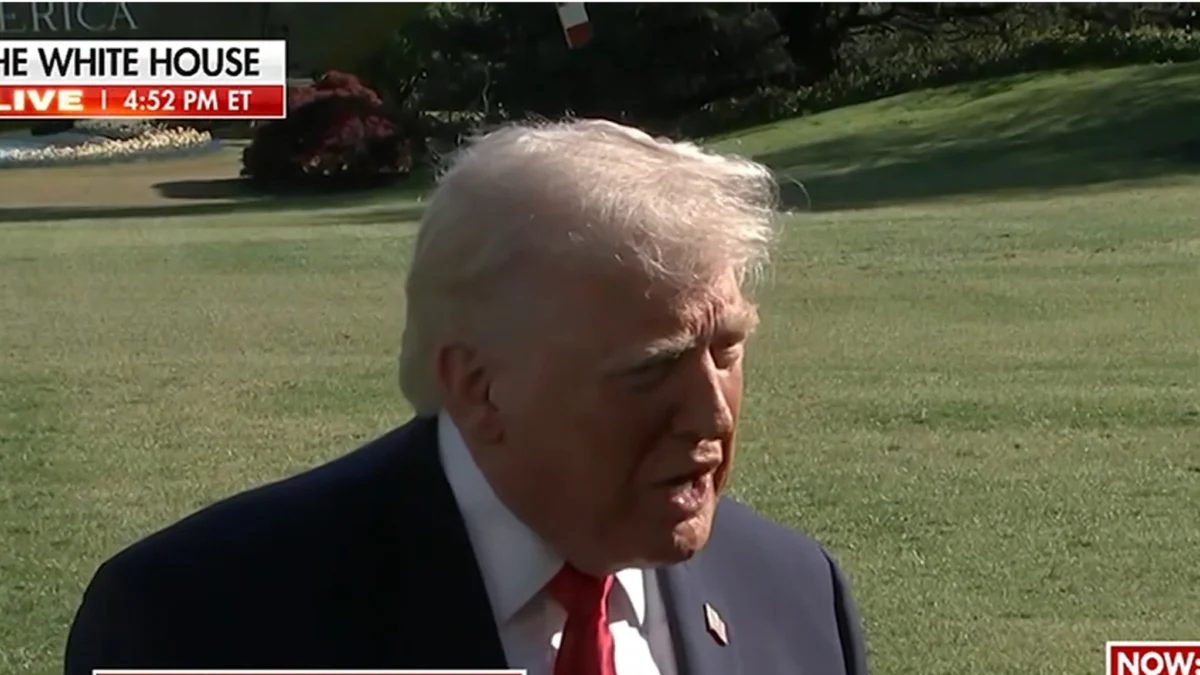
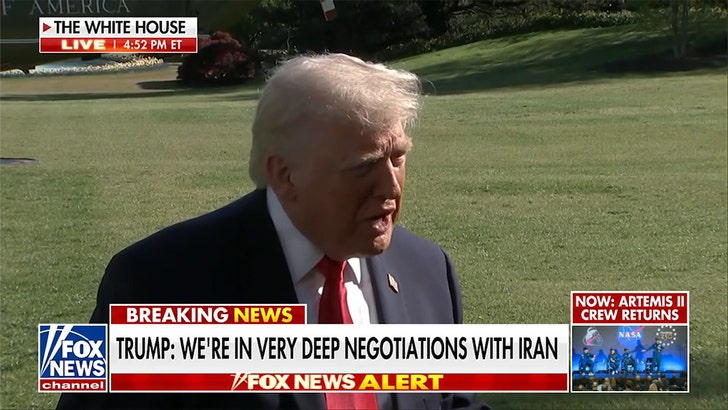
President Donald Trump engaged in a heated exchange with an NBC News reporter on the White House Lawn on Saturday, April 11, 2026, delivering a sharp rebuke regarding her knowledge of Iran and the crucial Strait of Hormuz. The confrontation unfolded amidst sensitive ceasefire negotiations between the United States and Iran in Islamabad, Pakistan, raising questions about the coherence of American foreign policy messaging during a critical diplomatic period.
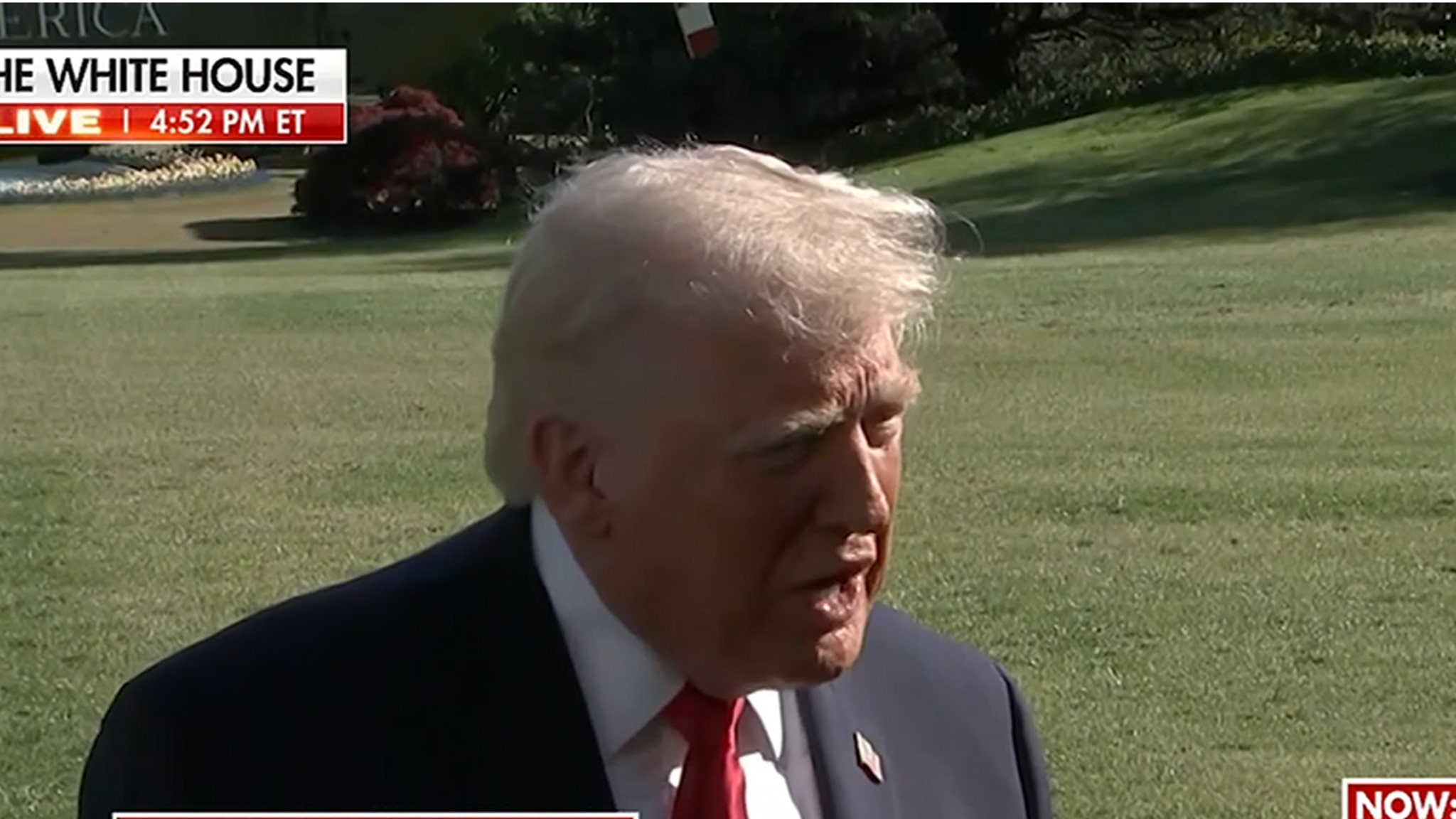
The incident occurred around 5:00 PM ET as President Trump was addressing a cadre of reporters gathered outside the White House. An NBC correspondent posed a direct question about the continued closure of the Strait of Hormuz, a vital global shipping lane. The President, visibly agitated by the inquiry, responded dismissively, stating, "You know nothing," before demanding to know which outlet she represented. Upon learning she was from NBC, he immediately branded the network "fake news." He then proceeded to make a series of striking claims regarding the ongoing conflict with Iran, asserting that the United States had achieved a "complete and total victory." According to Trump, the U.S. had decisively defeated the Iranian navy, sinking "more than 150 ships to the bottom of the sea." He further alleged that Iran possessed "no radar, no air force" and that its Supreme Leader, Ayatollah Ali Khamenei, was deceased, a claim that had circulated but remained unconfirmed by independent sources.
The Strategic Significance of the Strait of Hormuz
The Strait of Hormuz, a narrow waterway connecting the Persian Gulf to the Arabian Sea, holds unparalleled strategic and economic importance globally. Approximately one-fifth of the world’s total petroleum liquids consumption, or about 21 million barrels per day (b/d) in 2023, transits through this choke point. This includes nearly all oil exports from Saudi Arabia, Iran, the UAE, Kuwait, and Iraq, as well as LNG exports from Qatar, the world’s largest LNG exporter. The Strait is just 21 nautical miles (39 km) wide at its narrowest point, making it highly vulnerable to disruption. Any significant closure or impediment to shipping can send shockwaves through global energy markets, trigger sharp spikes in oil prices, and destabilize international trade.
Historically, the Strait has been a flashpoint for regional tensions, particularly involving Iran, which controls its northern coast. During the Iran-Iraq War in the 1980s, both sides attacked tankers in what became known as the "Tanker War." More recently, Iran has repeatedly threatened to close the Strait in response to sanctions or perceived aggressions, utilizing its naval forces, including fast attack crafts and naval mines, to project power and deter adversaries. The current closure, which began following the outbreak of hostilities in late February 2026, has had a profound impact on global supply chains, contributing to energy price volatility and creating immense pressure for a resolution. Reports circulating on April 10, 2026, including from The New York Times, indicated that Iran itself was struggling to locate and clear mines it had deployed to close the waterway, complicating efforts to reopen it for international shipping.
The Genesis of the US-Iran Conflict and its Escalation
The current conflict between the United States and Iran, which commenced in late February 2026, marked a dramatic escalation of long-standing tensions. While the precise catalyst for the renewed hostilities remains a subject of intense debate among analysts, it followed months of heightened rhetoric, reciprocal cyberattacks, and proxy skirmishes in the region. Sources suggest that a series of alleged Iranian provocations against international shipping and increased support for regional militia groups, coupled with a more assertive U.S. posture under the Trump administration, contributed to the rapid deterioration of relations.
Early reports indicated that the conflict involved targeted strikes on military installations, naval engagements, and extensive cyber warfare. President Trump’s claim of sinking over 150 Iranian naval vessels, if accurate, would represent an unprecedented level of destruction for Iran’s naval capabilities, far exceeding most public assessments of their fleet size and composition. Independent military analysts, prior to the conflict, estimated Iran’s conventional navy and the naval forces of the Islamic Revolutionary Guard Corps (IRGC) to comprise a few dozen major surface combatants, alongside a larger number of fast attack crafts, patrol boats, and submarines. The claim of such extensive losses would suggest a near-total annihilation of Iran’s maritime power.
Another significant claim by President Trump was the death of Ayatollah Ali Khamenei. Reports of Khamenei’s demise had indeed surfaced previously, notably on February 28, 2026, with some Israeli sources cited by news outlets like TMZ suggesting his passing. However, official confirmation from Tehran was consistently absent, and Iranian state media had continued to broadcast images and statements attributed to the Supreme Leader, albeit often without clear indications of recent origin. The lack of definitive proof from independent, verifiable sources meant that, while a talking point for some, Khamenei’s status remained officially unconfirmed, adding another layer of complexity to the information landscape surrounding the conflict.
Diplomatic Crossroads: Ceasefire Talks in Islamabad
Against the backdrop of these military claims and the ongoing closure of the Strait of Hormuz, crucial diplomatic efforts were underway in Islamabad, Pakistan. Vice President J.D. Vance was leading the American delegation in extensive ceasefire talks with Iranian officials. These negotiations, aimed at de-escalating the conflict that began in late February, had reportedly been ongoing for 15 straight hours, according to NBC News reports around 4:30 PM PT on the day of Trump’s remarks. The marathon nature of the discussions underscored the immense urgency and difficulty of finding common ground to end the hostilities.
The choice of Pakistan as a neutral venue for these high-stakes talks reflected the international community’s deep concern over the regional instability and global economic repercussions of the conflict. Vice President Vance’s role as the lead negotiator highlighted the administration’s official commitment to a diplomatic resolution, even as the President’s public statements painted a picture of outright military triumph. The delicate balance required in such negotiations often necessitates carefully coordinated messaging to foster trust and create an environment conducive to agreement. The President’s confrontational remarks, therefore, risked undermining the very diplomatic efforts his administration was pursuing.
Regional Reactions and Broader Implications
The President’s assertive declaration of victory and his dismissal of the reporter’s question carried significant implications for regional dynamics and international relations. While the U.S. delegation in Islamabad was working towards a ceasefire, Israeli Prime Minister Benjamin Netanyahu issued his own statement, emphasizing that his country’s campaign against Iran was far from over. This divergence in rhetoric between key U.S. and allied figures highlighted the multifaceted and often conflicting agendas at play in the Middle East. Israel has long viewed Iran as its primary regional adversary, and any perceived reduction in pressure on Tehran would be met with skepticism in Jerusalem.
The Iranian government’s reaction to President Trump’s claims was anticipated to be strong, particularly concerning the alleged destruction of its navy and the death of its Supreme Leader. Such assertions, if widely believed, could either embolden hardliners within Iran or be leveraged by the regime to rally nationalist sentiment against perceived foreign aggression. The lack of independent verification for Trump’s claims further complicated the situation, making it difficult for the international community to ascertain the true state of affairs on the ground.
Analysts suggested that President Trump’s public statements, especially those directly contradicting the observable reality of the Strait’s closure and the unconfirmed status of Khamenei, could severely complicate the ceasefire negotiations. Sending mixed signals from the highest levels of government risks confusing adversaries, alarming allies, and potentially weakening the hand of American diplomats. It creates an environment where the credibility of U.S. statements can be questioned, making it harder to build the trust necessary for successful peace talks. Furthermore, the confrontational tone towards a major news outlet like NBC reinforced a pattern of media relations that has often characterized the Trump presidency, further polarizing public discourse.
A Pattern of Media Confrontation
This interaction was not an isolated incident but rather fit within a broader pattern of President Trump’s often-combative relationship with the media. Throughout his political career, he has frequently used strong language to criticize news organizations he deems unfair or purveyors of "fake news." This approach has resonated deeply with his political base but has drawn criticism from press freedom advocates and many mainstream journalists.
A notable previous incident occurred on November 18, 2025, when President Trump was reported to have called a female reporter a "piggy" on Air Force One in response to a question about a sensitive matter, reportedly relating to Jeffrey Epstein. While the "piggy" remark was widely condemned as an extreme personal attack, the latest confrontation on the White House Lawn, though less overtly personal, maintained a similar confrontational spirit, challenging the legitimacy of the reporter’s question and the network she represented. Such exchanges underscore the ongoing tension between the executive branch and the press, particularly during periods of national crisis and international diplomacy, where accurate and unvarnished information is paramount.
In conclusion, President Trump’s forceful exchange with the NBC reporter on the White House Lawn served as a stark reminder of the volatile intersection of geopolitics, media relations, and high-stakes diplomacy. His bold assertions of a decisive victory over Iran and the death of its Supreme Leader, juxtaposed with the reality of a still-closed Strait of Hormuz and ongoing ceasefire talks, presented a complex and potentially contradictory narrative. As Vice President Vance’s delegation continued its arduous negotiations in Islamabad, the international community watched closely, grappling with the implications of such pronouncements for regional stability and the elusive pursuit of peace in a deeply troubled part of the world. The incident highlighted the challenges of maintaining coherent diplomatic messaging in an era of rapid information dissemination and polarized political discourse, leaving many to wonder about the true path forward for U.S.-Iran relations.