


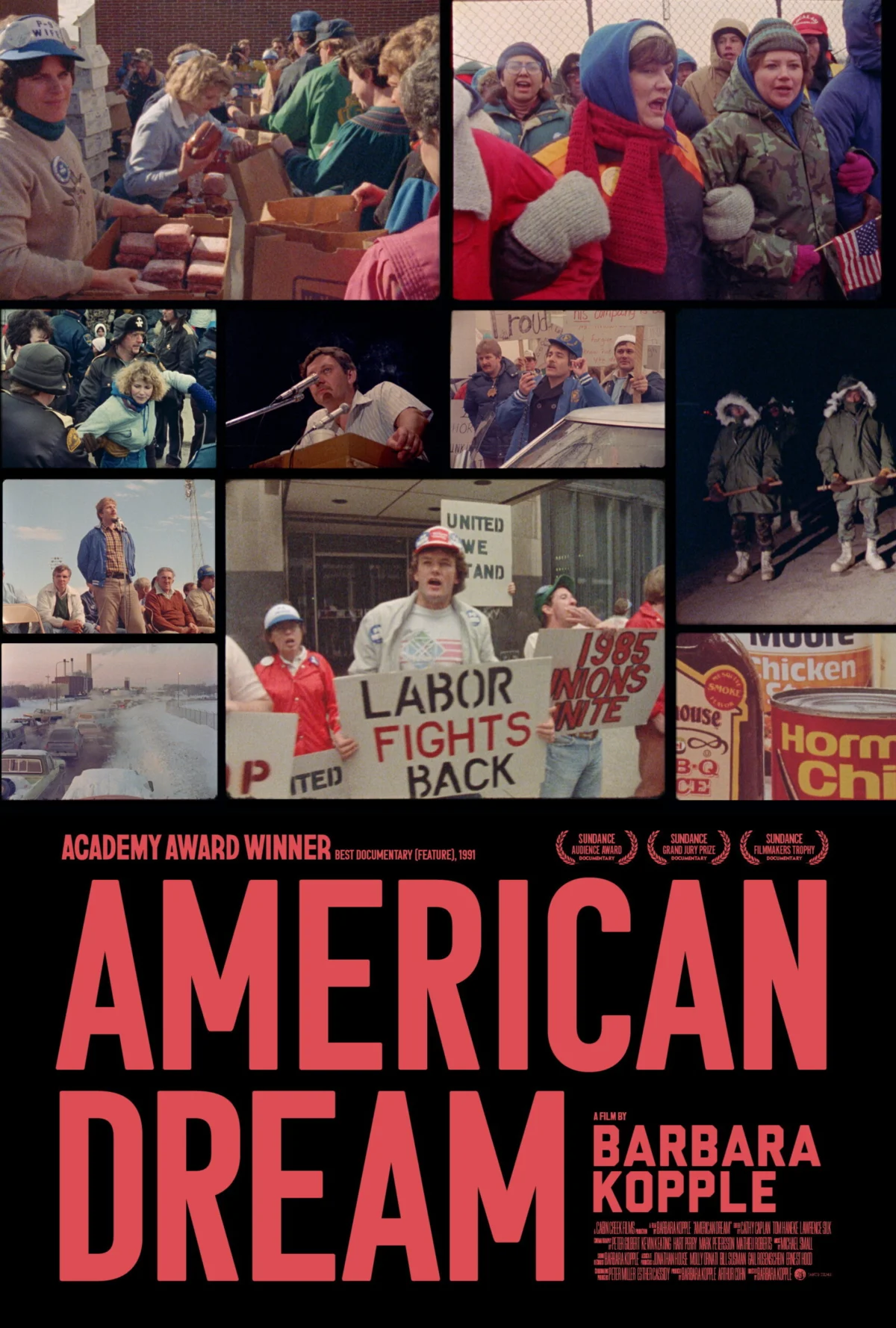
Janus Films has unveiled a new trailer for the meticulously crafted 4K restoration of Barbara Kopple’s Academy Award-winning documentary, American Dream. Set for a re-release in select U.S. theaters starting May 1, 2026, with an accompanying nationwide art house tour, this cinematic masterpiece offers a renewed, vivid look into one of America’s most poignant labor disputes. The restoration, supervised and approved by director Barbara Kopple herself, promises to deliver an unprecedented viewing experience, making this essential historical document more accessible and impactful than ever before.
The documentary, which first premiered in 1990 and garnered an Oscar for Best Documentary Film after its wider release in 1991, stands as a critical follow-up to Kopple’s equally renowned Harlan County, USA (1976). While both films chronicle the intense struggles of American workers, American Dream delves into a particularly harrowing chapter, depicting a labor dispute with results far more somber for the striking workers. It meticulously recounts the 1985-1986 strike against the Hormel Foods Corporation in Austin, Minnesota, a conflict ignited by drastic cuts to employees’ wages and benefits.
A Deep Dive into the Hormel Strike: Anatomy of a Community Divided
The Hormel strike was not merely a local dispute; it became a national symbol of the shifting landscape of American labor in the 1980s, an era defined by aggressive corporate restructuring, a weakening of union power, and the broader economic policies of "Reaganomics." Hormel, a long-standing pillar of the Austin, Minnesota community, had been a source of stable, well-paying jobs for generations. However, by the mid-1980s, facing increased competition and a perceived need for greater efficiency, the company sought significant concessions from its workforce. In October 1984, Hormel announced plans to cut wages by 23% and reduce benefits, citing the need to remain competitive in a rapidly changing meatpacking industry. This move was a direct challenge to the living standards that Hormel workers had come to expect and had fought for over decades.
The proposed cuts were devastating. For many, it meant a substantial drop in income, jeopardizing their ability to support families and maintain their homes. The local union, United Food and Commercial Workers (UFCW) Local P-9, found itself at a crossroads. Despite the counsel of the UFCW International Union, which advocated for negotiation and a more cautious approach, Local P-9, fueled by a deep sense of betrayal and a fierce determination to protect their livelihoods, voted overwhelmingly to strike. On August 17, 1985, approximately 1,500 workers walked off the job, initiating a strike that would tear apart the fabric of Austin and capture national attention.
The Strategy of Confrontation: Ray Rogers and the Corporate Campaign
Central to Local P-9’s strategy was the involvement of labor activist Ray Rogers, known for his aggressive "corporate campaign" tactics. Rogers’ approach focused on publicly shaming the company and its financial backers, aiming to damage Hormel’s reputation and pressure its leadership through consumer boycotts, shareholder actions, and protests against banks associated with Hormel. This was a departure from traditional strike tactics, signaling a more confrontational and media-savvy approach to labor disputes.
However, Rogers’ strategy also created significant friction with the UFCW International Union. The International viewed Local P-9’s defiance and Rogers’ tactics as unauthorized and potentially detrimental to the broader labor movement, fearing that such aggressive actions could backfire and set a dangerous precedent. This internal conflict within the union hierarchy added another layer of complexity to the strike, isolating Local P-9 and exacerbating the divisions within the community.

Escalation and Division: A Community Under Siege
As the strike dragged on, the initial solidarity among the workers began to fray under the immense pressure of economic hardship. Hormel, determined to maintain production, began hiring replacement workers, or "scabs," further inflaming tensions on the picket lines. The scenes captured by Kopple’s camera are visceral: angry confrontations, blockades, and a palpable sense of desperation. Families were torn apart, with some members choosing to cross the picket line out of financial necessity, leading to profound personal and social rifts. Friends became enemies, and the tight-knit community of Austin became a battleground.
The conflict escalated to such an extent that Minnesota Governor Rudy Perpich eventually called in the National Guard in January 1986 to maintain order and ensure that replacement workers could enter the plant. This intervention marked a significant moment, highlighting the state’s role in protecting corporate interests and suppressing labor unrest. The presence of armed guardsmen patrolling the streets of Austin underscored the gravity of the situation and the depth of the societal breakdown.
Barbara Kopple’s Unflinching Gaze: Documenting Human Costs
Barbara Kopple’s American Dream excels in its ability to present this complex narrative with remarkable objectivity, allowing viewers to witness the human costs of the strike from multiple perspectives. The film features extensive, raw footage of impassioned union meetings where workers grapple with impossible choices, alongside carefully curated Hormel press releases and local news broadcasts that offer a contrasting corporate narrative. Crucially, Kopple includes in-depth interviews with individuals on both sides of the issue – striking workers, replacement workers, union officials, Hormel management, and even civil rights leader Jesse Jackson, who attempted to mediate the dispute. This multi-faceted approach ensures a comprehensive and empathetic portrayal of the struggle, avoiding simplistic heroes and villains.
Kopple’s filmmaking style, honed in Harlan County, USA, is characterized by its immersive, direct cinema approach. She and her crew spent months embedded within the community, capturing the daily lives, hopes, and despair of the striking workers. This intimate access allows American Dream to transcend mere reporting, becoming a deeply personal testament to the resilience and vulnerability of working-class Americans. Her camera does not judge but observes, allowing the raw emotions and stark realities of economic conflict to speak for themselves. The film’s opening quote, "They want to freeze us out. They want to starve us out." "It’s a war." immediately sets the tone for the profound struggle documented within.
The Legacy of the Strike and the Film’s Enduring Relevance
The Hormel strike ultimately ended with a bitter defeat for Local P-9. The International Union took control of the local, fired its leadership, and eventually brokered a deal that saw many striking workers permanently replaced. The outcome was a significant setback for organized labor, demonstrating the increasing difficulty of challenging corporate power in the Reagan era. It served as a stark lesson in the shifting balance of power, where corporations, often backed by state apparatus, could effectively break strikes and reshape labor relations to their advantage.
Beyond its immediate impact, the Hormel strike remains a powerful case study in labor history, illustrating the complexities of union democracy, the pressures of globalization on domestic industries, and the profound social divisions that economic hardship can create within a community. American Dream captured this pivotal moment with unparalleled intimacy and detail, earning its place as a cornerstone of documentary filmmaking.

The film’s exploration of themes such as corporate greed, worker exploitation, union politics, and the erosion of the middle class resonates profoundly with contemporary issues. As discussions around income inequality, precarious employment, and the power of organized labor continue to dominate public discourse, American Dream serves as a powerful historical mirror, reflecting struggles that, in many ways, remain unresolved.
The 4K Restoration: Preserving a Vital Historical Record
The significance of this 4K restoration cannot be overstated. Undertaken by Janus Films and the Criterion Collection from a scan of the original 16 mm internegative, and supervised and approved by Barbara Kopple, this project ensures that American Dream will be preserved and presented in its highest possible quality for future generations. The meticulous digital restoration addresses decades of wear and tear, enhancing the visual clarity and detail of Kopple’s original footage. The original monaural soundtrack has also been remastered from the 35 mm DME magnetic track, promising an auditory experience as authentic and impactful as the visual one.
This technical upgrade is crucial for a film of American Dream‘s historical import. It allows modern audiences, accustomed to high-definition content, to engage with the film without the distractions of outdated visual or audio quality. The crisp images and clear sound bring the intense emotions and dramatic events of the Hormel strike into sharp relief, ensuring that the stories of these workers and the lessons of their struggle remain potent and accessible.
The restoration is part of a broader effort by organizations like Janus Films and the Criterion Collection to safeguard cinematic heritage, particularly independent and documentary films that might otherwise be lost to time or neglect. By making American Dream available in 4K, they are not just re-releasing a film; they are re-presenting a vital piece of American social and labor history, allowing its powerful message to reach new audiences and continue to provoke thought and discussion.
Re-release and Contemporary Relevance
Janus Films’ decision to re-release American Dream in theaters, beginning May 1, 2026, with a nationwide art house tour, is timely. In an era marked by renewed interest in labor organizing, high-profile strikes (e.g., Hollywood writers and actors, auto workers), and ongoing debates about corporate responsibility and workers’ rights, the documentary offers invaluable historical context. It serves as a reminder of the sacrifices made in the fight for fair labor practices and the complex dynamics that underpin such conflicts.
For educators, labor activists, and anyone interested in American history, economics, or documentary filmmaking, the re-release of American Dream is an unmissable event. It offers a unique opportunity to witness, in stunning clarity, a pivotal moment in the American labor movement and to reflect on its enduring implications for workers, corporations, and communities across the nation. Barbara Kopple’s masterpiece remains as relevant today as it was over three decades ago, a testament to its profound insight into the human condition amidst economic strife.