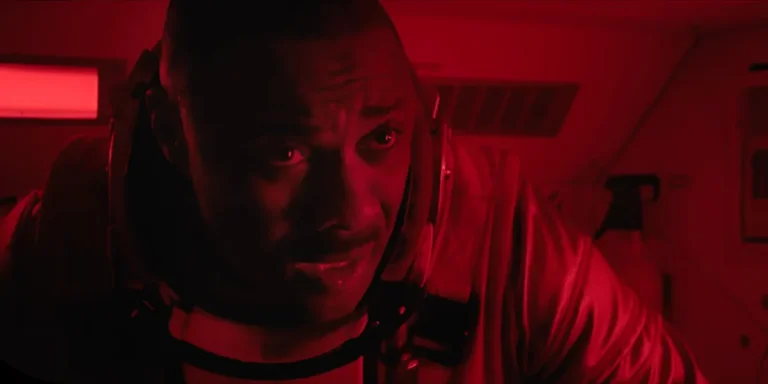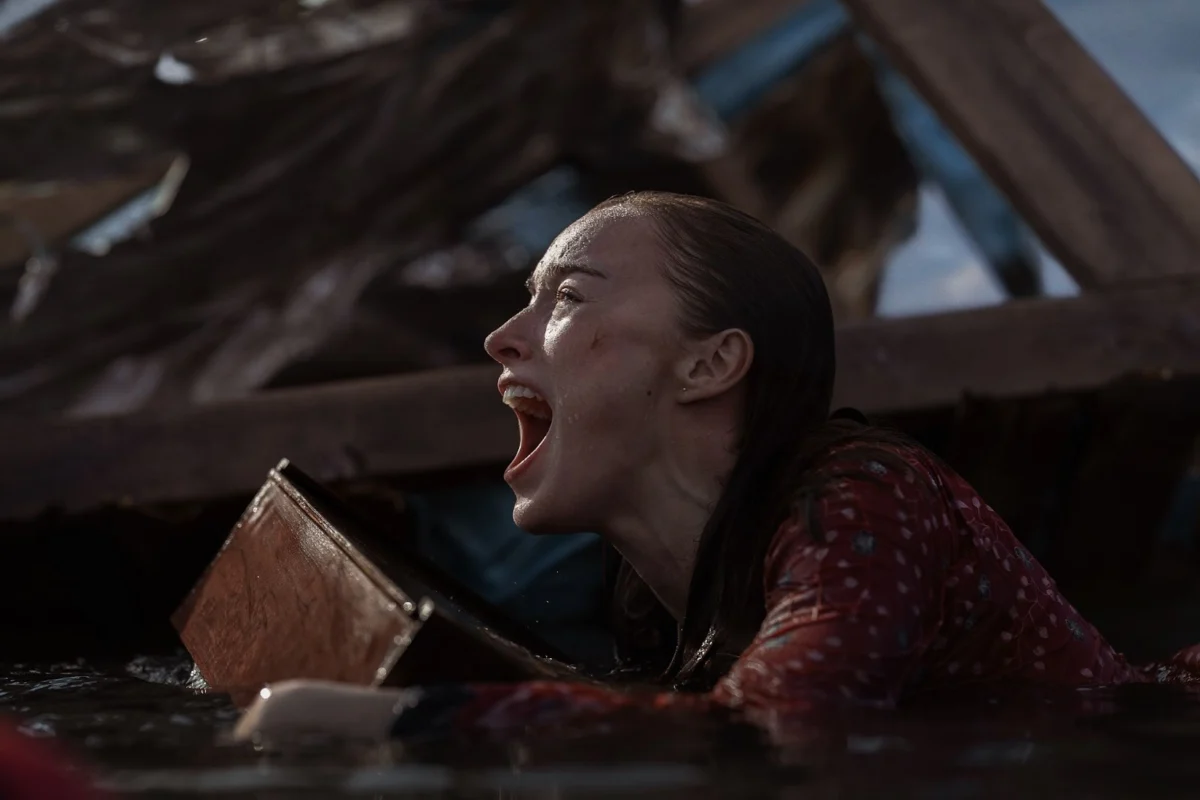
The cinematic landscape is no stranger to the primal fear evoked by nature’s fury and the predatory instinct. Director Tommy Wirkola’s latest offering, "Thrash," attempts to fuse these potent elements, presenting a survival thriller set against the backdrop of a devastating Category 5 hurricane that unleashes not only torrential rain and destructive winds but also a terrifying surge of apex predators into a coastal town. While the premise promises a visceral and heart-pounding experience, the film, despite its talented cast and ambitious concept, ultimately struggles to deliver a cohesive and compelling narrative, leaving audiences with a sense of unfulfilled potential.
The Devastating Premise: Hurricane Meets Predator
The core narrative of "Thrash" is built upon a harrowing scenario: a coastal community in South Carolina is battered by a Category 5 hurricane. As the storm surge breaches defenses, it transforms the familiar landscape into a watery labyrinth, bringing with it an unexpected and far more sinister threat – a swarm of hungry sharks. This confluence of natural disaster and primal terror forms the foundation of the film’s survival stakes. The story introduces a diverse group of characters caught in the maelstrom: Lisa (Phoebe Dynevor), a pregnant woman facing the imminent arrival of her child amidst chaos; Dakota (Whitney Peak), a young woman whose agoraphobia is severely challenged by the need to evacuate; and her uncle Dale (Djimon Hounsou), a marine biologist whose expertise becomes critically relevant. Adding to the ensemble are a trio of foster siblings, Dee, Ron, and Will, who are trapped in a precarious situation with their neglectful guardian, Mr. Olson, a man whose dismissive attitude towards the impending storm proves tragically shortsighted. All these individuals find themselves at the mercy of the relentless storm surge, which acts as a deadly conveyor belt for the ravenous sharks that have infiltrated their inundated town.
A World on the Brink: Background and Context
The film’s premise, while fictional, taps into real-world anxieties surrounding climate change and its impact on extreme weather events. Scientific consensus increasingly points to a rise in the intensity and frequency of hurricanes. According to data from the National Oceanic and Atmospheric Administration (NOAA), the number of Category 4 and 5 hurricanes in the Atlantic basin has shown a significant upward trend since the 1980s, a statistic that is subtly underscored in the film’s opening moments. This escalating climatic reality lends a chilling plausibility to the catastrophic scenario depicted.
Coastal communities worldwide are increasingly vulnerable to the dual threats of powerful hurricanes and rising sea levels. The storm surge, a phenomenon where the hurricane’s winds push ocean water ashore, is often the most destructive aspect of such storms. In "Thrash," this surge is not merely a force of destruction but a vector for a more terrifying danger, blurring the lines between natural disaster and a primal hunt. The film’s setting in coastal South Carolina places it within a region historically susceptible to tropical cyclones, adding another layer of grounded reality to the fictional crisis.
Chronology of Terror: The Storm’s Unfolding Impact
The narrative of "Thrash" unfolds in a compressed timeline, dictated by the rapid escalation of the hurricane and its subsequent aftermath.
- Pre-Storm Vigilance and Denial: The initial phase of the film likely depicts the growing awareness of the approaching storm. Warnings are issued, evacuation orders are given, but denial or a underestimation of the threat persists, as exemplified by Mr. Olson’s callous dismissal of the hurricane. This period highlights the human tendency to resist acknowledging extreme danger.
- The Eye of the Storm: As the Category 5 hurricane makes landfall, the full force of its destructive power is unleashed. Torrential rains, gale-force winds, and the relentless rise of the storm surge inundate the coastal town. This is the period of maximum physical destruction and the initial infiltration of the sharks.
- The Surge’s Fury and the Predator’s Arrival: The defining element of the film’s crisis begins as the storm surge breaches natural and man-made barriers. Floodwaters rise, submerging streets, homes, and businesses. It is during this inundation that the sharks, disoriented and driven by instinct, are swept inland, transforming the flooded streets into hunting grounds.
- Desperate Survival: The subsequent narrative focuses on the characters’ desperate attempts to survive in a flooded, shark-infested environment. They are forced to navigate treacherous waters, seek higher ground, and evade both the lingering effects of the storm and the predatory attacks. The characters’ individual struggles – Lisa’s impending childbirth, Dakota’s agoraphobia, and the foster siblings’ vulnerability – are amplified by the constant threat of the sharks.
- The Hunt for Safety: The latter part of the film likely details the characters’ efforts to reach safety, whether it be a designated shelter, a boat, or a higher, more secure location. This journey is fraught with peril, as they must contend with the flooded terrain, limited resources, and the ever-present danger of the sharks.
Characters Under Duress: Exploring Individual Plights
"Thrash" endeavors to weave individual character arcs into the larger narrative of survival. Phoebe Dynevor portrays Lisa, a pregnant woman whose vulnerability is heightened by her condition. The impending birth of her child in such perilous circumstances presents a poignant juxtaposition of creation and destruction, life and death. The film hints at the potential for exploring the unique anxieties and physical challenges of childbirth amplified by the immediate threat of predators.
Whitney Peak as Dakota embodies the struggles of agoraphobia, a condition that renders the outside world a source of intense anxiety. In the context of a devastating hurricane, an evacuation order becomes a cruel paradox, forcing her to confront her deepest fears to survive. The film suggests a narrative opportunity to explore how phobias can either cripple or, under extreme duress, be overcome or managed in the face of even greater existential threats.
Djimon Hounsou takes on the role of Dale, a marine biologist. His character’s professional knowledge offers a potential avenue for understanding and strategizing against the shark threat. However, the film appears to underutilize this potential, suggesting that his expertise, while present, does not significantly alter the trajectory of the survival narrative. The plight of the foster siblings, Dee, Ron, and Will, alongside their neglectful guardian, Mr. Olson, introduces a layer of social commentary. Their vulnerability within a broken system is amplified by the natural disaster, highlighting the precariousness of their situation even before the shark attacks begin. The film attempts to imbue these characters with "emotional weight," but the execution, as noted in initial assessments, feels more like a perfunctory addition than an organically developed aspect of the story.
Technical Prowess and Narrative Shortcomings
Tommy Wirkola’s directorial approach in "Thrash" showcases moments of technical brilliance, particularly in its atmospheric construction and sound design. The film’s opening, with its stark factual pronouncements on hurricane intensity, effectively grounds the disaster in a plausible scientific context. The escalating intensity of the storm is conveyed through compelling soundscapes; the "monstrous growl" of shifting houses and the explosive crack of cement levees contribute significantly to the build-up of tension. Underwater cinematography, when characters venture into the murky depths, is designed to keep the audience on edge, a testament to the film’s technical ability to create suspense.
However, these technical achievements are frequently undermined by what appears to be a narrative reliance on "dumb characters making dumb decisions." The critique suggests a lack of logical progression in the characters’ actions, with adults dismissing the threat until it’s too late and crucial decisions being made under pressure that feel more like narrative convenience than believable human responses. This perceived deficiency in character agency and logical decision-making detracts from the film’s effectiveness as a survival thriller, where the protagonists’ ability to outwit their adversaries is paramount.
Comparative Analysis: "Fair Play" and the Art of Tension
The film’s shortcomings are further illuminated when contrasted with other recent thrillers, notably Phoebe Dynevor’s prior Netflix project, "Fair Play." In "Fair Play," director Chloe Domont is lauded for her masterful ability to build and sustain tension through a character-driven narrative. The escalating volatility and the gradual build-up to a "volcanic heat" are presented as hallmarks of that film’s success. "Fair Play" is described as fully immersing the audience in the protagonist’s plight, navigating complex themes of power and intimacy through an internal lens.
In contrast, "Thrash" is perceived as relying almost entirely on an external, visceral threat. While the action sequences, the "red waters," and the sounds of "crunching bone" provide undeniable intensity, the film is criticized for lacking the sophisticated vocabulary and thematic framing that elevate a thriller to enduring status. The technical world-building in "Thrash" fails to translate into a truly emotional connection with the audience, a deficiency that is starkly apparent when compared to the more nuanced and psychologically driven tension of "Fair Play."
Missed Opportunities and the Specter of "Jaws"
"Thrash" is perceived as a collection of missed opportunities. While the performances, particularly that of Djimon Hounsou, are acknowledged as believable and deserving of stronger material, the film ultimately falls short of its ambitious goals. The aspiration to be the next "Jaws," a benchmark in creature-feature thrillers, appears to be a guiding influence, yet "Thrash" falters in its commitment to human drama. The film delivers the expected thrills – the intense action, the gore, the jump scares – but it neglects to build a compelling human narrative that would anchor these visceral moments.
The film’s ultimate failing, as suggested by the critique, lies in its inability to imbue its external threat with sufficient narrative depth. The external, visceral threat of the sharks, while undeniably terrifying, is not enough to sustain a truly memorable or impactful thriller. Without a stronger foundation in character development and thematic exploration, "Thrash" risks being overshadowed by the very natural forces it seeks to exploit for cinematic terror, leaving audiences with a sense of having witnessed a spectacle rather than an enduring story. The film provides the fleeting adrenaline rush of a shark attack, but it leaves the audience "hungry for a story with actual depth to its waters," a desire for narrative substance that remains unmet. The technical execution may be present, but the emotional resonance and thematic complexity that define truly great thrillers are conspicuously absent.