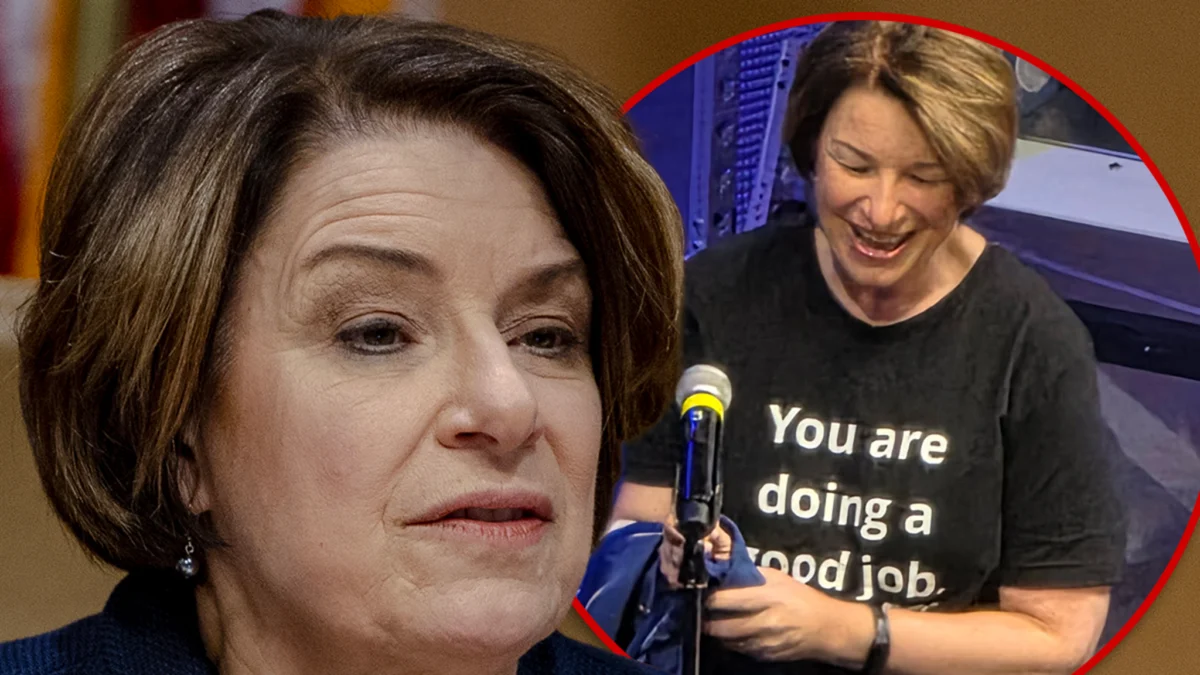
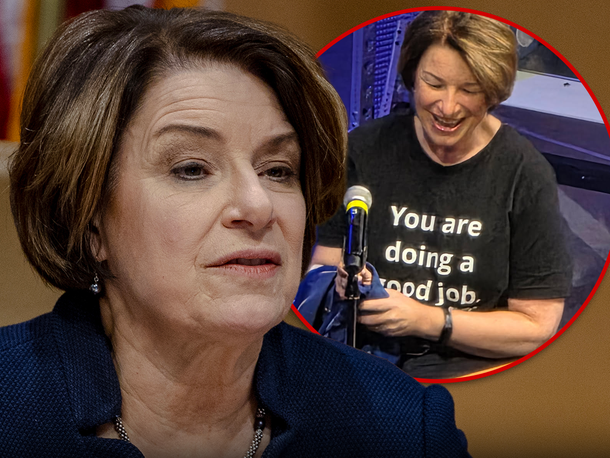
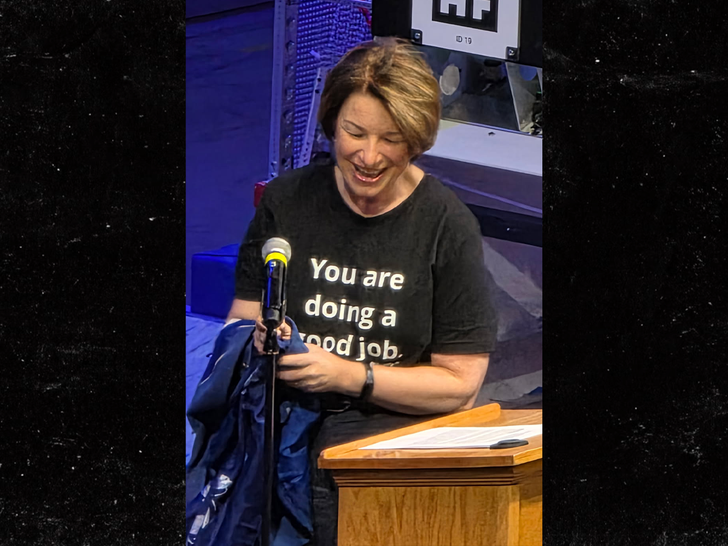
Minneapolis, MN – Senator Amy Klobuchar (D-MN) made an appearance at a high school robotics conference in Minneapolis on Friday, March 28, 2026, opting to engage with local students and educators amidst the ongoing, protracted federal government shutdown. Her presence, particularly notable due to a t-shirt emblazoned with the words, "You’re Doing A Good Job," drew attention against the backdrop of a 42-day partial government shutdown that has paralyzed key federal agencies and left hundreds of thousands of federal employees without paychecks. The senator’s visit to the North Star STEM Robotics Challenge highlighted the stark contrast between the vibrant local innovation and the gridlock gripping Washington D.C.
A Senator’s Message Amidst National Gridlock
The North Star STEM Robotics Challenge, held at the Minneapolis Convention Center, brought together high school teams from across Minnesota to compete in complex engineering and programming tasks. Senator Klobuchar, a long-time advocate for science, technology, engineering, and mathematics (STEM) education, addressed the enthusiastic crowd of students, mentors, and parents. Her speech reportedly focused on the importance of fostering critical thinking, problem-solving skills, and innovation among the next generation, underscoring how such competitions prepare students for future careers and contribute to the nation’s technological advancement.
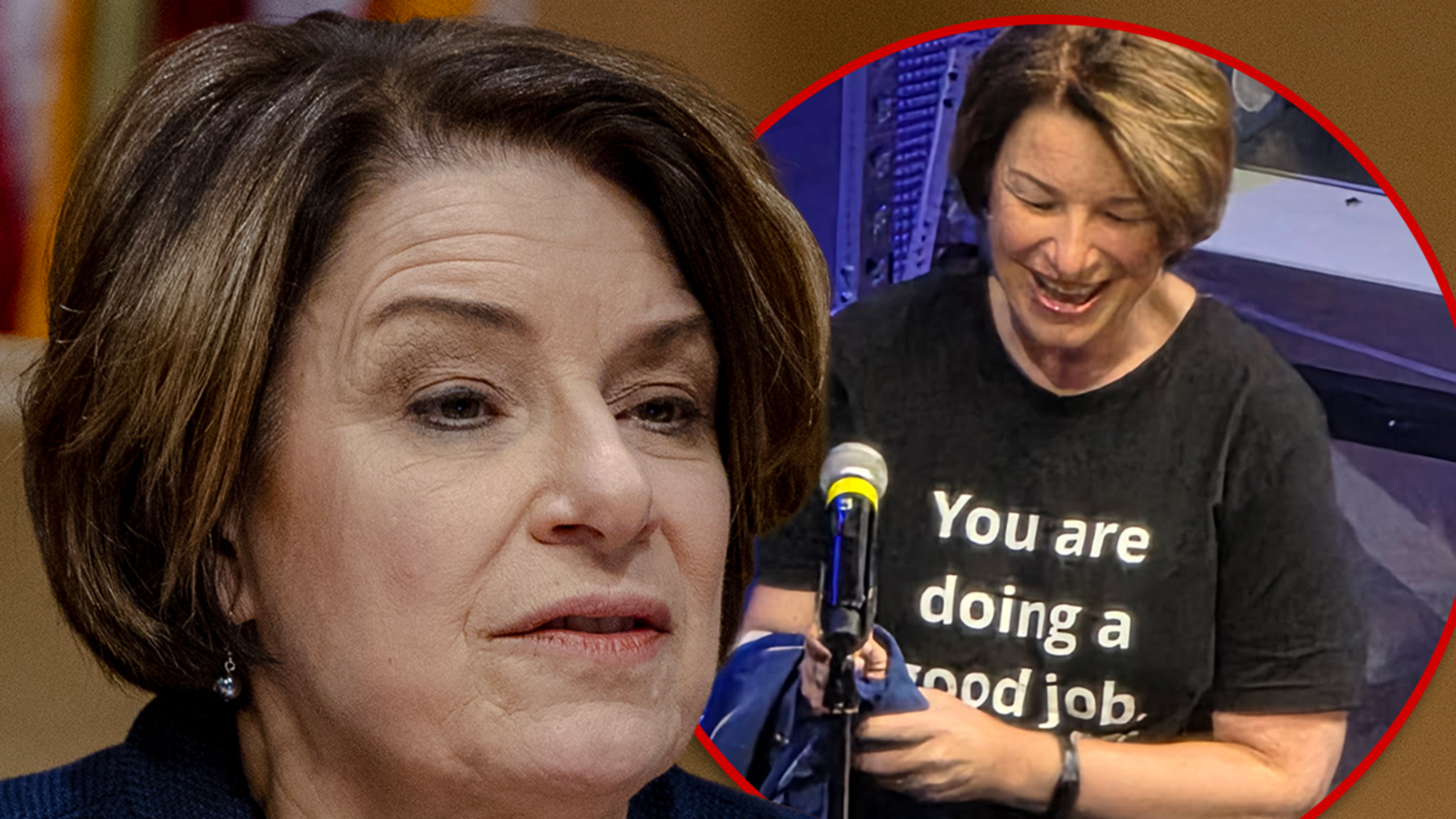
Sources at the event noted Klobuchar’s choice of attire—a casual t-shirt with the affirming message—as a subtle, yet perhaps pointed, commentary on the political climate. While her office did not immediately provide an official statement on the sartorial choice, observers speculated it could be interpreted in multiple ways: a direct encouragement to the diligent students and their mentors, a self-referential nod to her own perceived efforts during the shutdown, or even a quiet critique of the performance of her colleagues in the nation’s capital. Regardless of intent, the visual served as a poignant symbol of a politician engaging in grassroots community work while national governance remained in limbo.
The Lingering Shadow of the Shutdown: A Chronology of Crisis
The current partial government shutdown, which commenced on February 15, 2026, primarily targets the Department of Homeland Security (DHS), but its ripple effects have been felt across various sectors of the federal government and the national economy. The impasse originated from a fundamental disagreement between the Democratic-controlled Senate and the Republican-controlled House of Representatives, exacerbated by the White House, over funding for border security and broader immigration reform.
- February 15, 2026: The previous short-term funding resolution for DHS expires, triggering the partial shutdown. Initial impacts include furloughs for non-essential DHS staff and essential personnel, such as Transportation Security Administration (TSA) officers and Customs and Border Protection (CBP) agents, working without pay.
- Early March: Reports begin to surface of federal employees facing severe financial hardship. Food banks experience increased demand, and stories of individuals taking on second jobs, selling personal belongings, or even resorting to plasma donations to cover basic expenses become widespread.
- March 10, 2026: The White House issues a directive allowing certain essential federal workers, particularly within critical security functions, to receive back pay upon the shutdown’s resolution, but this does little to alleviate immediate financial strain.
- March 20, 2026: Public opinion polls indicate growing frustration with both political parties, with approval ratings for Congress plummeting to historic lows. A significant majority of Americans express concern over the shutdown’s impact on national security and public services.
- March 27, 2026: The House of Representatives, after weeks of internal debate and failed attempts at compromise, passes a short-term legislative package designed to fund the entire Department of Homeland Security for 60 days. This bill, championed by House Republicans, aimed to provide immediate relief for federal workers and ensure continued operations for agencies like Immigration and Customs Enforcement (ICE) and the TSA.
- March 28, 2026: On the same day Senator Klobuchar attended the robotics conference, the legislative focus shifted to the Senate. However, the Senate had just entered a two-week recess, effectively shelving any immediate action on the House-passed bill. Senate Democratic Minority Leader Chuck Schumer (D-NY) promptly declared the House plan "dead on arrival," reiterating his caucus’s demand for comprehensive immigration reform to be included in any funding package, rather than a standalone measure.
- Presidential Intervention: Amidst the legislative stalemate, President Trump signed an executive order intended to authorize payments to TSA workers as early as Monday, March 31. While offering a glimmer of hope for one critical group, the order’s legal standing and practical implementation remained subject to scrutiny, and it did not address the plight of thousands of other affected federal employees.
The Human and Economic Cost
The 2026 shutdown, now extending past its sixth week, has surpassed several historical shutdowns in duration and impact, nearing the record set by the 2018-2019 shutdown, which lasted 35 days. Economists estimate the daily cost of the shutdown to the U.S. economy in the hundreds of millions of dollars, primarily due to lost productivity, delayed government services, and reduced consumer confidence. Agencies responsible for processing loan applications, conducting inspections, and issuing permits have seen their operations curtailed, creating a bottleneck for businesses and individuals alike.
The immediate and most visible victims, however, are the approximately 420,000 federal employees deemed "essential" who are compelled to work without pay, and another 380,000 who have been furloughed. Testimonies from federal workers paint a grim picture:
- TSA Officer Maria Rodriguez (Minneapolis): "I’ve been a TSA officer for ten years, and I love my job protecting travelers. But with no paycheck for weeks, I’ve drained my savings. My mortgage payment is due, and I’m rationing groceries. The President’s order is a hopeful sign, but until the money is in my bank, the anxiety is still crippling."
- Border Patrol Agent David Chen (Arizona): "We’re on the front lines, securing the border, but our families are struggling at home. It’s incredibly demoralizing to be considered essential to national security but disposable when it comes to pay. We’re doing our jobs, but D.C. isn’t doing theirs."
- FBI Analyst Sarah Miller (Washington D.C.): "My family relies on my income. We’ve had to put off medical appointments and cancel plans. The uncertainty is the worst part. We feel like pawns in a political game."
Beyond individual hardship, the shutdown has tangible effects on national security and public safety. While core functions are maintained, training exercises are postponed, intelligence gathering is hampered, and morale among law enforcement agencies like CBP and ICE is dangerously low. The strain on air travel security, with increased sick calls among unpaid TSA agents, has raised concerns about potential vulnerabilities.
Political Standoff and Broader Implications

The political motivations underpinning the shutdown are complex and deeply entrenched. House Republicans, emboldened by a recent electoral victory that expanded their majority, have framed their 60-day funding bill as a reasonable step towards fiscal responsibility and border security, accusing Democrats of prioritizing ideological immigration demands over the immediate needs of federal workers and national security. "We have offered a clear path forward to fund DHS and get our agents paid," stated House Speaker Kevin McCarthy (R-CA) in a press briefing following the House vote. "It’s time for the Senate to put politics aside and act."
Senate Democrats, conversely, view the House’s proposal as an insufficient stopgap measure designed to bypass a broader discussion on immigration reform. Senator Schumer’s unequivocal rejection underscores the Democratic caucus’s strategy to leverage the shutdown crisis to force concessions on issues such as pathways to citizenship for undocumented immigrants and protections for Dreamers. "A temporary fix that ignores the fundamental need for comprehensive immigration reform is not a solution," Schumer asserted. "We need a permanent solution that addresses both border security and the humanitarian crisis, not political gamesmanship."
The President, meanwhile, has maintained a firm stance on securing robust funding for a border wall, a key campaign promise, and has shown little willingness to compromise on this point, contributing to the prolonged impasse. His administration has consistently blamed Democrats for obstructing efforts to fund critical border security measures.
Political analysts suggest that both parties are engaged in a high-stakes game of chicken, each believing the other will ultimately buckle under public pressure. However, the extended duration of this shutdown indicates a deeper ideological chasm that is proving difficult to bridge. Dr. Evelyn Reed, a political science professor at the University of Minnesota, commented, "This shutdown is less about specific dollar amounts and more about fundamental disagreements on immigration policy and the role of government. Both sides are digging in, calculating that the political cost of appearing to concede is higher than the cost of the shutdown itself. The human impact, sadly, becomes collateral damage."
The decision by some D.C. politicians, like Senator Marsha Blackburn (R-TN), to depart the capital for recess further fueled public anger, creating a narrative of disconnected leadership. This perception of politicians "slinking out" while federal employees suffer only intensifies the public’s disillusionment with Washington. Senator Klobuchar’s choice to remain active in her home state, engaging with constituents and supporting local initiatives, could be seen as an attempt to counter this narrative, demonstrating continued public service even as the federal machinery grinds to a halt.
The Path Forward
With the Senate on recess for two weeks, any resolution to the DHS funding crisis is unlikely before mid-April. This extended delay guarantees further financial hardship for federal workers and continued disruption to government services. Upon the Senate’s return, the pressure to negotiate a compromise will be immense, potentially involving bipartisan talks to craft a new funding bill that addresses both immediate DHS needs and at least some elements of immigration reform, or another short-term continuing resolution to avert further economic damage.
The optics of the shutdown, particularly the sight of politicians like Senator Klobuchar engaging in seemingly normal activities while hundreds of thousands struggle, underscore the profound disconnect between Washington D.C. and the realities faced by ordinary Americans. The "You’re Doing A Good Job" t-shirt, while perhaps well-intentioned, served as a stark reminder of the job that D.C. itself has yet to accomplish: governing effectively. The future of DHS funding and the broader immigration debate remains uncertain, with millions of lives hanging in the balance, awaiting a resolution that appears increasingly distant.