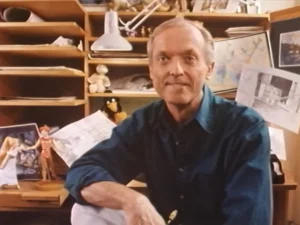

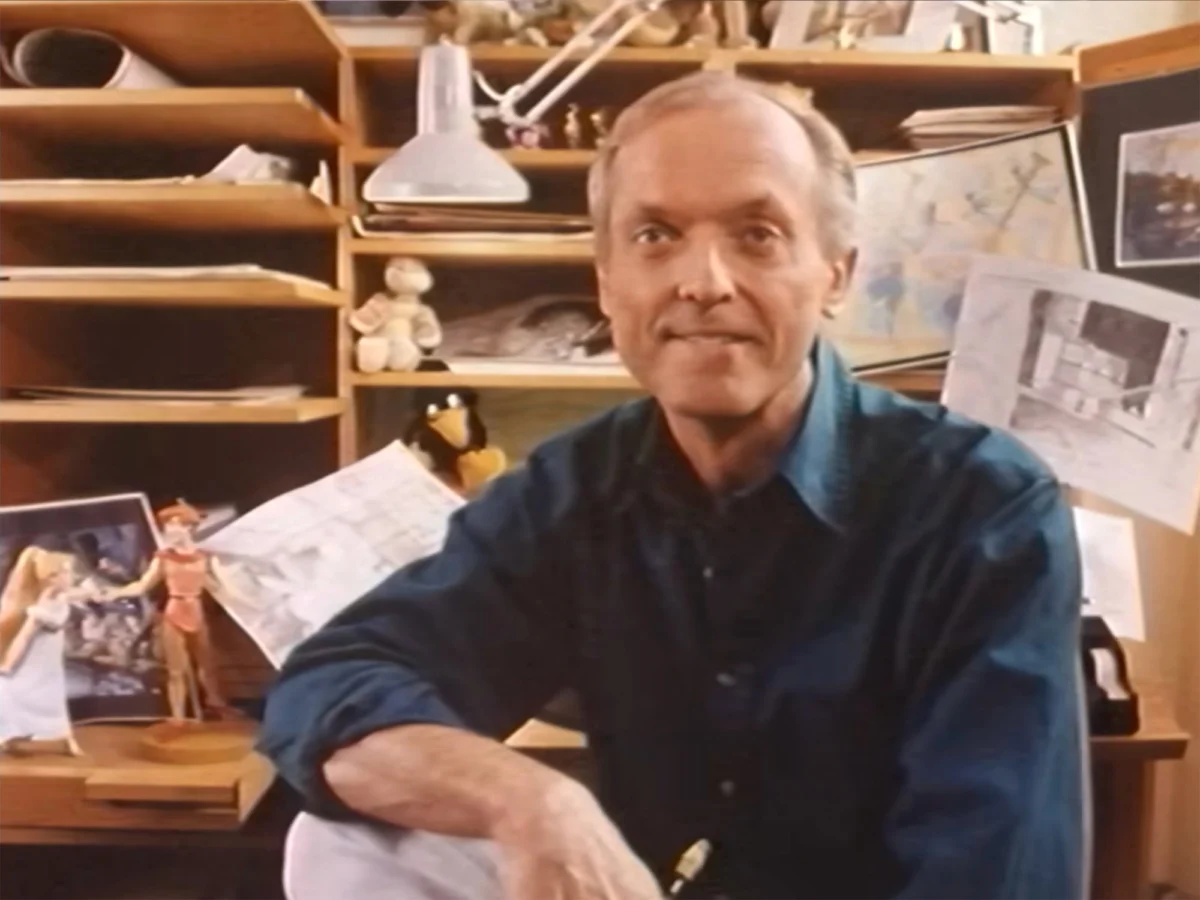
Copper Pot Pictures has officially released the first trailer for Don Bluth: Somewhere Out There, a comprehensive documentary feature film chronicling the extraordinary life, turbulent career, and enduring legacy of legendary animator Don Bluth. Scheduled for a direct-to-VOD release on November 20, 2026, the documentary offers an unfiltered look at a creative force who fundamentally shaped the landscape of traditional animation. Directed by the documentary filmmaking duo Dave LaMattina and Chad N. Walker, known for acclaimed biographical works such as I Am Big Bird: The Caroll Spinney Story, the film promises an intimate portrait of an artist caught in a perpetual tug-of-war between artistic integrity, commercial viability, and personal faith.
The documentary weaves contemporary interviews with the legendary animator alongside an extensive cache of hundreds of hours of never-before-seen personal archives and home videos. Following its initial premiere at the SCAD Savannah Film Festival—held in conjunction with the prestigious Don Bluth Collection housed at the Savannah College of Art and Design—the film is poised to reach a wide audience of animation historians, nostalgic fans, and cinephiles eager to understand the inner workings of a man who dared to challenge the Walt Disney Company at the height of its mid-century dominance.
Main Facts and Production Background
Don Bluth: Somewhere Out There stands as a definitive retrospective of a creative pioneer whose filmography defined the childhoods of generations throughout the 1980s and 1990s. As the master craftsman behind enduring cinematic treasures such as The Secret of NIMH (1982), An American Tail (1986), The Land Before Time (1988), and Anastasia (1997), as well as the groundbreaking laserdisc arcade video game Dragon’s Lair (1983), Bluth’s cultural footprint is vast.
Co-directors Dave LaMattina and Chad N. Walker approached the project with a commitment to unvarnished truth, steering away from hagiography to investigate the human cost of Bluth’s creative ambitions. Produced by Dave LaMattina under the Copper Pot Pictures banner, the production utilizes archival materials that have remained locked away for decades. These rare materials offer viewers a seat at the drafting table, capturing the grueling hours, moments of intense creative friction, and the high-stakes financial gambles that characterized Bluth’s independent studios.

The documentary addresses central themes of Bluth’s life: his departure from the comfort of the corporate studio system, his ongoing battle with his own perfectionism and ego, and the profound influence of his personal faith on his artistic output. In the newly released trailer, Bluth is heard reflecting on his unique path with a poignant philosophy: "I’m a different flower in another part of the garden. And I’ll do something else that won’t be the same." This sentiment encapsulates the outsider ethos that defined his career as he carved out a distinct space for high-quality, emotionally resonant traditional animation outside the mainstream studio monopoly.
Chronology: The Rise, Exodus, and Independence of Don Bluth
To fully grasp the narrative arc of Don Bluth: Somewhere Out There, industry analysts and historians must examine the specific timeline that defined the animator’s career and his pivotal ideological war with the corporate establishment.
The Disney Years (1955–1979)
Don Bluth’s animation career began in the mid-1950s when he joined The Walt Disney Studios, initially working as an in-betweener on Sleeping Beauty (1959). After a brief hiatus from the industry to complete a two-year mission for the LDS Church and pursue academic interests, Bluth returned to Disney in the 1970s. He rapidly ascended the ranks, serving as an animator and eventually an animation director on projects such as Robin Hood (1973), The Many Adventures of Winnie the Pooh (1977), and The Rescuers (1977). By the time production was underway on The Fox and the Hound (1981), Bluth had become disillusioned with the studio’s declining artistic standards, rigid corporate bureaucracy, and reluctance to invest in the meticulous, labor-intensive hand-drawn techniques of Disney’s golden age.
The Great Exodus and Independent Stardom (1979–1989)
In September 1979, on his 42nd birthday, Don Bluth led a mass walkout from Disney, accompanied by fellow animator Gary Goldman, producer John Pomeroy, and roughly a dozen other disgruntled artists. This exodus constituted nearly seventeen percent of Disney’s animation staff at the time, delivering a severe blow to the studio’s production pipeline.
Bluth and his colleagues founded Don Bluth Productions, striving to revive the rich aesthetic, dark emotional weight, and intricate character animation reminiscent of classic Disney films. Their first major test was the featurette Banjo the Woodpile Cat, followed by their monumental feature film debut, The Secret of NIMH (1982). Despite critical acclaim and a devoted cult following, the film struggled at the box office due to limited distribution.

Undaunted, Bluth pivoted to interactive entertainment, partnering with Advanced Micro Devices (AMD) and Cinematronics to create Dragon’s Lair (1983). Utilizing revolutionary laserdisc technology, the arcade game became a massive cultural phenomenon, proving the commercial viability of Bluth’s distinct visual style.
The peak of Bluth’s independent career arrived through a high-profile partnership with filmmaker Steven Spielberg. Together, they produced An American Tail (1986), which shattered box office records for non-Disney animated features upon its release, followed shortly by The Land Before Time (1988). These successes established Bluth as the primary commercial rival to the Walt Disney Company, forcing the corporate giant to reevaluate its own animation department and sparking the historic Disney Renaissance of the late 1980s and 1990s.
International Expansion and Later Ventures (1990–Present)
Following the commercial success of his early features, Bluth faced financial instability due to distribution disputes and shifting studio partnerships. In the early 1990s, he relocated his production operations to Dublin, Ireland, establishing an animation studio in collaboration with the media conglomerate 20th Century Fox. During this era, he directed Anastasia (1997), which achieved significant critical and commercial success, earning two Academy Award nominations. Subsequent projects, such as Titan A.E. (2000), faced steep box office hurdles amid the industry’s rapid transition toward computer-generated imagery (CGI), leading to the eventual closure of his studio facilities. In subsequent decades, Bluth transitioned into a beloved elder statesman of the animation community, engaging with fans, teaching, and attempting to mount crowdfunded revivals of his classic properties.
Supporting Data and Contextual Significance
The release of Don Bluth: Somewhere Out There arrives at a time of intense industry-wide reflection regarding the value and preservation of traditional, hand-drawn 2D animation. Data from box office tracking firms and animation archives indicate a growing cultural appetite for documentaries that explore the behind-the-scenes mechanics of classic cinema.
- The SCAD Savannah Film Festival, which hosted the world premiere of LaMattina and Walker’s documentary, serves as a primary custodian of the Don Bluth Collection. The collection houses thousands of original animation cels, developmental sketches, storyboards, and personal correspondence that trace the evolution of Bluth’s artistic vision.
- Copper Pot Pictures, known for meticulous biographical documentaries, invested years in curating the archival footage featured in the film. The directors conducted dozens of contemporary interviews to contextualize the historical documents, ensuring the narrative balances Bluth’s artistic triumphs with the heavy professional toll exacted by his independent ventures.
- The historical impact of Bluth’s 1979 departure from Disney cannot be overstated. Industry historians frequently credit the "Bluth Exodus" as the catalyst that forced Disney management to restructure its animation division, ultimately paving the way for the blockbusters of the 1990s, including The Little Mermaid (1989), Beauty and the Beast (1991), and The Lion King (1994).
Critical Analysis and Industry Implications
The documentary’s examination of Bluth’s internal conflicts—specifically the intersection of artistic purity, corporate commerce, and personal faith—provides critical insights into the vulnerabilities of independent creators working within a high-capital entertainment landscape. While Bluth is celebrated for injecting emotional depth, sophisticated storytelling, and darker thematic elements into family animation, his career also serves as a cautionary tale regarding the immense financial risks inherent in challenging entrenched studio monopolies.

By highlighting Bluth’s battles against studio interference, distribution hurdles, and his own uncompromising perfectionism, Don Bluth: Somewhere Out There elevates the conversation surrounding artistic autonomy. Film critics note that the documentary arrives at a particularly poignant cultural moment, as contemporary animators increasingly advocate for traditional craft techniques amidst the omnipresence of artificial intelligence and automated digital rendering.
Furthermore, the film’s direct-to-VOD distribution model, facilitated by Copper Pot Pictures for its November 20, 2026 release, reflects the modern strategy of delivering niche, high-value documentary content directly to global audiences via digital platforms. This approach ensures that the retrospective reaches not only dedicated animation enthusiasts and nostalgic millennials, but also younger generations discovering the rich history of hand-drawn cinema for the first time.
As viewers prepare to stream Don Bluth: Somewhere Out There this fall, the documentary stands ready to cement Don Bluth’s legacy not merely as a former Disney dissident, but as a resilient visionary who permanently altered the trajectory of global animation history through sheer tenacity, faith, and an unwavering commitment to his craft.