

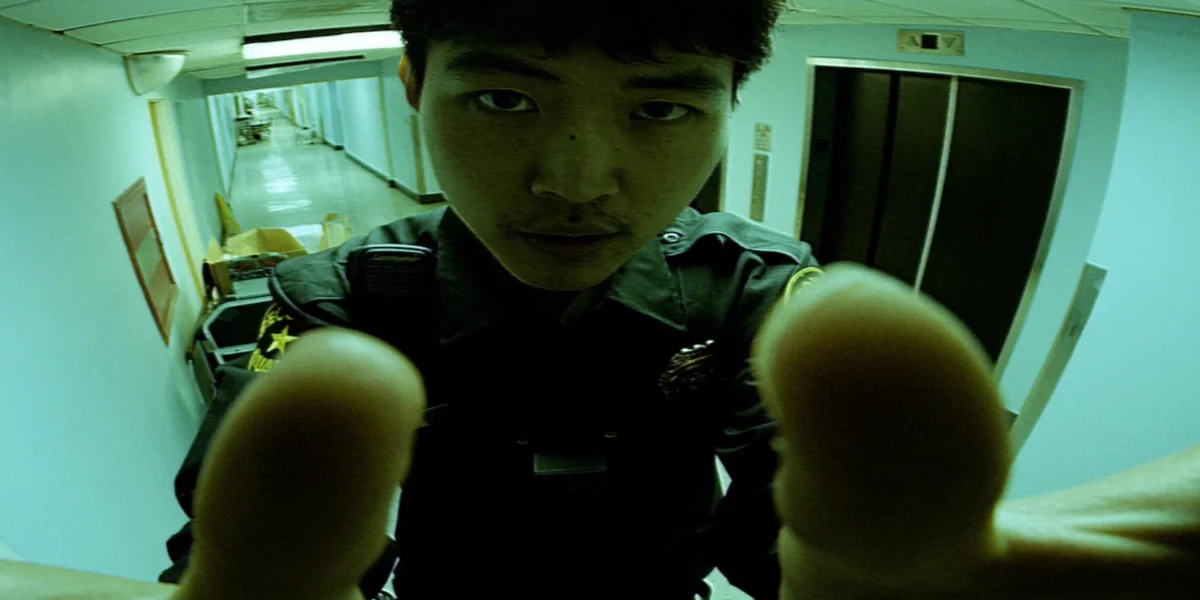
The disappearance of a security guard during his inaugural shift at a decommissioned psychiatric facility in 2023 has sparked a renewed interest in the subgenre of found footage horror, as investigators continue to analyze over 87 minutes of recovered bodycam and security surveillance data. The footage, which captured the final hours of two individuals within the Los Angeles-based medical complex, has become a focal point for both law enforcement agencies and film critics attempting to reconcile the technical inconsistencies of the recovered evidence with the visceral nature of the events recorded. Directed by Nicholas Pineda and written by Katy Krauland, the resulting feature, Infirmary, utilizes this raw material to reconstruct a narrative that explores the boundaries of isolation, institutional decay, and the psychological impact of paranormal phenomena.
Chronology of the 2023 Incident
The events leading to the facility’s closure and the subsequent investigation began on the evening of the guard’s first shift. The primary subject, Edward (portrayed by Paul Syre), a military veteran transitioning into civilian security work, reported to the facility at sunset to begin his duties. According to the recovered logbooks and administrative paperwork provided by the facility’s manager, Ms. Downey (Danielle Kennedy), Edward was assigned to shadow a senior security officer, Lester (Mark Anthony Williams).
The timeline of the evening is established through the timestamps on the facility’s high-definition surveillance network and the individual body-worn cameras. At approximately 20:00 hours, the pair commenced a standard perimeter check. By 22:30, the footage indicates a shift in the environmental conditions of the hospital, characterized by the subjects reporting anomalous audio phenomena and a breakdown in standard communication protocols. The most critical period of the footage occurs between 01:00 and 02:30, during which the cameras record the movement of medical equipment and the displacement of anatomical mannequins, which had previously been stored in the facility’s chapel and morgue.
Technical Analysis of Recovered Media
The "found footage" medium is defined by the narrative conceit that the audience is witnessing raw, unedited evidence. In the case of the 2023 hospital footage, the production team faced the challenge of justifying the presence of high-fidelity audio and video in an abandoned, low-budget environment. Forensic analysts note that while the facility’s security infrastructure was surprisingly robust for a condemned building, the presence of non-diegetic sound elements within the final edit—specifically, musical scores and dramatic aural stings—presents a departure from the "original and uncensored" promise made by the film’s marketing and introductory FBI warnings.
From a cinematic standpoint, the film relies heavily on the "Backrooms" aesthetic—a trend in digital horror characterized by liminal spaces and a sickly, yellow-green color palette that emphasizes the vast, empty corridors of the hospital. While the visual language effectively communicates the claustrophobia of the setting, the inclusion of Hollywood-style sound design has been a point of contention. Critics argue that such auditory layering undermines the authenticity of the "found" premise, as the presence of a soundtrack contradicts the notion that the recording is an objective account of a real-time event.
Character Dynamics and Institutional Context
The human element of the 2023 incident is anchored by the strained relationship between the veteran guard, Lester, and the newcomer, Edward. The archival footage provides insight into the toxic workplace culture that existed within the facility’s final days. Lester, characterized by an abrasive and hostile demeanor, serves as an antagonist not only to the internal supernatural forces but also to his colleague.
The psychological profile of the security staff appears to have been exacerbated by the environment itself. The facility, which had been slated for demolition, functioned as an isolated site where the lack of oversight allowed for the deterioration of professional standards. Ms. Downey’s role as the supervisor remains under scrutiny, as the incomplete paperwork found on-site suggests a lack of vetting and standard operational security protocols. The contrast between Edward’s disciplined military background and Lester’s volatile, nihilistic approach to his duties serves as a microcosm of the tension inherent in high-stress, low-reward occupations.
Sociological Implications of Found Footage Horror
The release of Infirmary brings to the forefront the broader implications of how media frames the "unknown." By presenting the narrative as a case file, the film taps into a cultural obsession with digital documentation. In the digital age, the "found footage" subgenre serves as a surrogate for our own reliance on surveillance technology to interpret reality. When the footage fails to provide definitive answers—as is the case with the 2023 hospital incident—the audience is left to fill in the gaps, often projecting their own fears onto the static-filled, low-light imagery.
Furthermore, the use of medical mannequins as the primary catalyst for terror highlights a common trope in horror: the uncanny valley. By placing inanimate objects in locations where they do not belong, the filmmakers evoke a primal response to the disruption of order. This thematic choice mirrors the real-world decay of the hospital, where the abandonment of medical equipment serves as a haunting reminder of the institution’s former utility.
Critical Response and Public Perception
The reception of the film has been polarized. On one hand, the cinematography successfully captures the inherent terror of a flashlight beam cutting through absolute darkness in a sprawling, dilapidated structure. The pacing, though occasionally hindered by the film’s reliance on jump scares, maintains a consistent level of dread. On the other hand, the film’s reliance on artificial atmospheric elements—such as the aforementioned non-diegetic music—has been identified as a failure to trust the audience’s capacity for sustained tension.
The performance of Mark Anthony Williams as Lester has been noted for its intensity, though some viewers find the character’s relentless hostility to be a barrier to emotional investment. Conversely, the portrayal of Edward by Paul Syre has been described as a grounded performance that highlights the vulnerability of the character, even if it lacks the high-octane panic typically associated with the horror genre.
Broader Impact on the Horror Genre
The 2023 disappearance at the hospital serves as a reminder of the risks associated with the exploration of abandoned sites, a practice often fueled by social media trends. The film acts as a cautionary tale, though its effectiveness is mediated by the artistic liberties taken by Pineda and Krauland. By blending the reality of a tragic disappearance with the conventions of horror cinema, the project occupies a complex space between documentation and entertainment.
As the industry continues to evolve, the demand for "authentic" experiences remains high. However, the success of such projects depends on the delicate balance between the raw, often chaotic nature of reality and the structured, polished nature of film. Infirmary succeeds in its atmospheric construction but ultimately highlights the difficulty of maintaining the "found footage" illusion in an era where audiences are increasingly sophisticated regarding the artifice of cinema.
Conclusion: The Legacy of the 2023 Incident
The investigation into the 2023 hospital incident remains technically open, with the recovered footage serving as the primary record of the events. While the film version of these events may be subject to creative embellishment, the underlying facts of the case—the disappearance of a security guard on his first night and the eerie, unexplained state of the facility—continue to intrigue those who study the intersection of urban exploration and the paranormal.
Whether the film is viewed as a definitive record or a dramatized interpretation, its release marks a significant moment in the history of the found footage subgenre. By examining the structural, character-driven, and technical aspects of the film, we gain a better understanding of how narratives are constructed around the things we cannot explain. The story of the hospital, and the individuals who walked its halls on that final night, will likely continue to be a subject of discussion as long as the footage remains available for public review.