

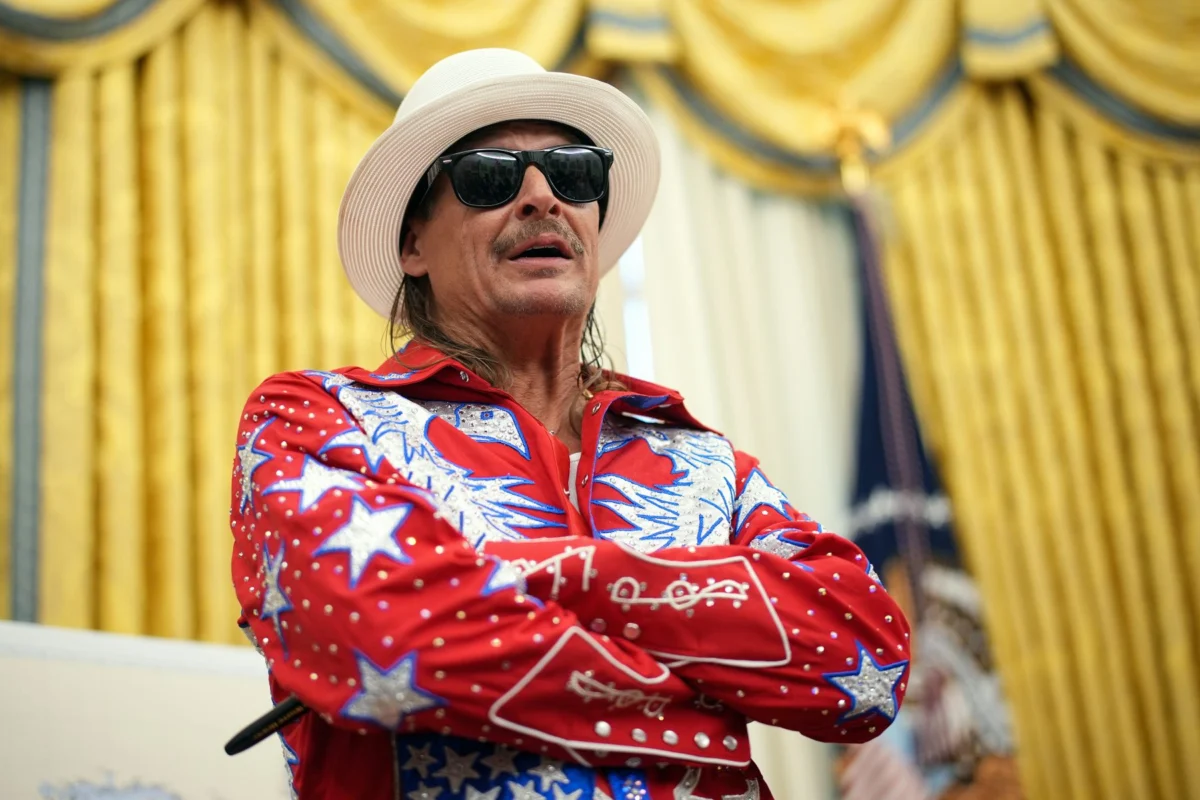
In a career pivot that marks a significant departure from his decades-long persona as a hard-rocking, convention-flouting entertainer, Robert James Ritchie—globally known as Kid Rock—has officially announced his transition into the faith-based music genre. The multi-platinum artist revealed plans to release a 17-track Christian studio album titled Halfway to Jesus on October 17. The upcoming record represents a profound spiritual journey for the musician, blending elements of classic rock, country, and gospel, and features notable collaborations with prominent industry peers, including fellow Detroit native and legendary rapper Eminem.
The announcement was accompanied by the release of the project’s lead single, "James 1:17 (Jesus Is King)," a gospel-rock track infused with musical arrangements reminiscent of Bob Seger. The song serves as a lyrical reflection on redemption, personal accountability, and spiritual awakening, capturing Ritchie’s introspective look at his public life and past controversies.
Main Facts and Project Details
Set for release on October 17, Halfway to Jesus spans 17 tracks and showcases a diverse array of musical styles and guest contributors. Alongside the lead single, the tracklist features high-profile collaborations such as "7 Sins," which brings Ritchie together with Eminem, and the title track, which includes vocal contributions from Rascal Flatts frontman Gary LeVox and country artist Jimmie Allen.
Additional song titles included in the tracklist—such as "Why Don’t You Look Into Jesus," "Water Into Wine," "Me and Jesus," "God Is Good," and "High Road"—signal a deeply thematic exploration of Christian theology and personal devotion. The album concludes with a cover of Lee Greenwood’s iconic patriotic anthem, "God Bless the USA."
The project’s visual and promotional materials further emphasize its spiritual core. The album’s cover art depicts Ritchie ascending a steep mountain toward a radiant crucifix, pursued by symbolic imagery representing the adversary. In promotional content shared across social media platforms, Ritchie has recited verses and lyrics that emphasize the rejection of moral compromise and the pursuit of spiritual salvation.
Chronology and Background Context
The roots of Ritchie’s transition trace back to a lifelong engagement with faith that was complicated by his perceptions of traditional religious services. Raised in a Catholic household, the artist has recounted feeling disconnected from the conventional musical arrangements and solemn atmospheres typical of the churches he attended in his youth. Seeking an environment that resonated with his artistic sensibilities, he later explored Baptist and non-denominational congregations, though he frequently found the musical offerings misaligned with his preferred genres of rock, country, and hip-hop.
The catalyst for Halfway to Jesus emerged from a personal and spiritual awakening prompted by biblical scripture. In media appearances, including an interview in August on Fox & Friends, Ritchie explained that his artistic pivot was directly inspired by James 1:17, a biblical passage that states every good and perfect gift comes from above. Noting the coincidence that his middle name is James and his birthday falls on January 17 (1/17), the artist viewed the verse as a personal calling to channel his musical talents toward celebrating his faith.
This project also continues a long-standing creative and personal relationship between Ritchie and Eminem. The two Detroit artists previously collaborated on tracks such as "F—k Off" from Ritchie’s 1998 breakthrough album Devil Without a Cause, as well as Trick-Trick’s 2013 single "From tha D," in addition to Ritchie’s cameo appearance in Eminem’s 2013 music video for "Berzerk."
Supporting Data and Industry Context
The intersection of mainstream popular music and contemporary Christian or gospel genres has a long history, with numerous secular artists releasing faith-based projects later in their careers. Artists ranging from Bob Dylan and Johnny Cash to Brian "Head" Welch of Korn have documented their spiritual transitions through music, often finding receptive audiences within both traditional secular markets and the robust contemporary Christian music (CCM) sector.
According to advance materials and excerpts obtained by outlets like Complex, the inclusion of Eminem on the track "7 Sins" carries a deliberate message concerning societal polarization. In the album’s forward, Ritchie addresses the collaborative effort, emphasizing that despite well-documented political and personal differences, his enduring friendship with Eminem serves as an intentional model for bridge-building in a divided nation. The artists hope that their continued creative partnership encourages individuals who have experienced fractured personal relationships due to ideological disagreements to seek common ground.
Official Responses and Public Statements
Public reaction to the announcement has reflected the polarizing nature of Ritchie’s career. While core supporters and segments of the contemporary Christian music audience have praised the artist for openly embracing his faith, cultural commentators have analyzed the move within the broader context of his public profile, which has frequently intersected with conservative politics and high-profile cultural commentary, including appearances alongside political figures such as President Donald Trump.
Despite the varied public reception, Ritchie has maintained that the album is fundamentally a personal testimony rather than a political statement. In promotional statements, he described the project as an effort to write the celebratory faith-based music he wished existed during his spiritual search—music that merges the energy of rock and roll and hip-hop with messages of grace and redemption.
Broader Impact and Implications
The release of Halfway to Jesus represents a notable moment in contemporary music marketing and genre crossover. By integrating traditional gospel themes with Detroit hip-hop and heartland rock, Ritchie is positioning the album to capture the attention of multiple demographic segments, bridging country, rock, and gospel listener bases.
Furthermore, the collaboration between two of Detroit’s most recognizable musical exports—Ritchie and Eminem—highlights the enduring power of hometown ties to transcend ideological boundaries. As the release date of October 17 approaches, industry analysts will be monitoring the commercial performance of the album and its singles to gauge the mainstream market viability of a hard-rock and hip-hop artist transitioning into the faith-based sector.