The Ottawa International Animation Festival (OIAF) marked a major milestone in global cinema by celebrating its golden jubilee. For nearly a week, the National Capital Region of Canada transformed into the epicenter of the international animation community, hosting four days of rigorous juried competitions, industry retrospectives, masterclasses, and packed screenings. Culminating in a high-profile awards ceremony at the National Arts Centre, the 50th-anniversary edition underscored the enduring vitality, artistic evolution, and cultural significance of independent animation on the world stage.
Landmark Achievements and Historic Wins
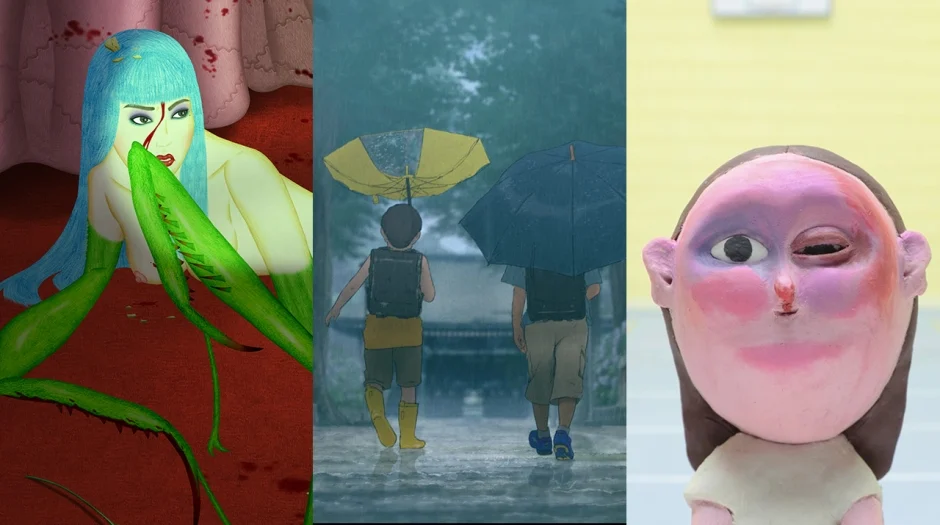
The festival’s golden anniversary was defined by unprecedented creative triumphs, led most notably by Montreal-based animator Laurence Thérien. With her clay-animated short film Ball Face, Thérien etched her name into OIAF history by becoming the first filmmaker to capture four distinct awards in a single festival year. A poignant, darkly humorous exploration of adolescent anxiety and the awkward mechanics of social assimilation, Ball Face swept the Public Prize, the Canadian Student Award, the Bento Box Award for Best Student Animation, and the Hélène Tanguay Award for Humour.
The jury for the Hélène Tanguay Award praised the film’s unique approach to physical comedy and psychological distress, noting how the tactile nature of clay animation mirrored the emotional vulnerability of its young protagonist. "What begins as the familiar nightmare of school gym class becomes something wonderfully strange, funny, and increasingly unhinged," the jury remarked in their official statement, highlighting the medium’s capacity to visually literalize the agony of trying to fit in.

On the feature film front, Japanese auteur Kohei Kadowaki claimed the Grand Prize for Feature Animation with We Are Aliens. Having previously made waves during its premiere in the Directors’ Fortnight (Quinzaine des Cinéastes) at the Cannes Film Festival, Kadowaki’s work resonated deeply with the OIAF feature jury. Praised for its intricate web of everyday tableaux, the film weaves a dark, poetic musicality out of mundane coincidences and painful misunderstandings. The feature jury lauded the project as "a feast for the eyes and the senses," commending its unconventional perspective on human isolation and societal traps.
Meanwhile, Joe Hsieh’s Praying Mantis secured the Grand Prize for Short Animation. Exploring the raw and uncompromising depths of maternal instinct through striking metaphorical imagery and purposeful violence, Hsieh’s victory carries substantial industry weight: the OIAF win qualifies Praying Mantis for consideration in the animated short category at the upcoming Academy Awards.
The Evolution of OIAF Competitions
Celebrating half a century of operation requires an institution to continuously balance historical reverence with forward-looking curation. Founded in 1976, OIAF has expanded from a modest regional showcase into one of the world’s premier animation festivals, alongside counterparts in Annecy, Zagreb, and Hiroshima.
A notable structural evolution at this year’s festival was the debut of the Platform Animation competition, which successfully replaced the long-standing Animated Series competition. This new tier was designed to highlight boundary-pushing episodic and multi-part storytelling that defies traditional linear broadcast formats. The inaugural Platform prize was awarded to Adult Swim’s The Elephant, an ambitious "anijam" executed in the spirit of the traditional exquisite-corpse game. Directed by an all-star roster of contemporary animation luminaries—including Pendleton Ward, Rebecca Sugar, Ian Jones-Quartey, Patrick McHale, Mike L. Mayfield, Humberto Irigoyen, Remus Buznea, and Kyriaki Kyriakou—the project brought together distinct creative teams working in total isolation from one another.

The resulting three-part experiment earned high praise from the jury for defying conventional studio formulas. By forcing disparate artistic visions to coalesce into a single narrative organism, The Elephant demonstrated a rare industry boldness, signaling to major studios that audiences and creators alike are eager for non-traditional narrative structures.
Craft Excellence and Juried Recognition
The breadth of global talent was reflected across a diverse array of craft and category awards, evaluated by distinct panels of industry professionals, critics, and young audiences.
In the competitive short film categories, Honami Yano’s Eri captured the Best Animated Short Award, celebrated by the jury for its painterly strokes and poetic exploration of unrequited love. In the commissioned category, Dante Zaballa’s vibrant, tactile music video for Juana Molina’s Desinhumano won Best Commissioned Animation, offering a refreshing return to handmade forms in an era dominated by computer-generated workflows.
Technical mastery was further spotlighted through the craft awards. Don Hertzfeldt continued his legacy of critical acclaim by securing Best Sound Design for Paper Trail, a film the jury described as a "claustrophobic symphony of tactile foley scratches, squeaks, scrapes, and rubs." Additional craft honors included Henri Veermäe’s Uka-uka for Best Script, Mamuka Tkeshelashvili’s When the Sea Was Calm for Best Design (awarded by The Animation Guild), and Elizabeth Hobbs’s Daughters of the Late Colonel for Best Animation Technique (recognized by the XPPen Craft Award).

In the Canadian specific categories, Julie Charette’s La comète (The Comet) earned the Canada Media Fund Award for Best Canadian Animation, praised for its perceptive and understated examination of coming-of-age pains.
True to festival tradition, the physical awards presented to the winners were pieces of kinetic art in their own right. Designed by Ottawa scrap metal artist Tick Tock Tom, each trophy functioned as a working phenakistoscope embedded with original animation loops created by New York artist George Griffin.
Broader Industry Implications and Future Outlook
The 50th edition of the Ottawa International Animation Festival arrives at a pivotal juncture for the global animation industry. Amid economic contractions, shifting streaming paradigms, and the disruptive emergence of generative artificial intelligence, independent festivals serve as vital sanctuaries for authentic human expression, material craftsmanship, and risk-taking storytelling.
The strong showing of handmade mediums—ranging from claymation and woodcuts to ink paintings and tactile foley work—demonstrates a persistent industry counter-movement against algorithmic homogenization. Juried selections like Sun Xun’s woodcut feature Magic Atlas, which received an honorable mention for its courageous political critique of authoritarianism, reinforce animation’s historic role as a vehicle for complex socio-political commentary.

As the festival wraps up its five-day run, organizers are already looking ahead to the future. The 51st edition of OIAF has been officially scheduled to take place from September 24 to September 28, 2027. Signaling the visual tone for next year’s event, the official festival poster will be designed by renowned artist Sun Xun, bridging the momentum of the golden anniversary directly into the next half-century of independent animation.
Complete List of OIAF Winners
- Grand Prize for Short Animation: Praying Mantis (Dir. Joe Hsieh)
- Grand Prize for Animated Feature: We Are Aliens (Dir. Kohei Kadowaki)
- Honorable Mentions: Magic Atlas (Dir. Sun Xun); Tangles (Dir. Leah Nelson)
- Public Prize: Ball Face (Dir. Laurence Thérien)
- The Canada Media Fund Award for Best Canadian Animation: La comète / The Comet (Dir. Julie Charette)
- Honorable Mentions: Bisou Sauvage (Dir. Bahji Jaroudi); Knowing Gaze (Dir. Dylan Glynn)
- Hélène Tanguay Award for Humour: Ball Face (Dir. Laurence Thérien)
- Best Animated Short Award: Eri (Dir. Honami Yano)
- Best Commissioned Animation: Juana Molina, Desinhumano (Dir. Dante Zaballa)
- Bento Box Award for Best Student Animation: Ball Face (Dir. Laurence Thérien)
- Canadian Student Award: Ball Face (Dir. Laurence Thérien)
- Honorable Mentions: Mortal Lace (Dir. Lucas Piperias); Expo Inferno (Dir. A. John Yates)
- Animation for Teen Audiences 13+ Competition: Blue Flavored (Dir. Jett Ulysses)
- Honorable Mention: La comète / The Comet (Dir. Julie Charette)
- Animation for Young Audiences 7+ Competition: Candy Caries (Dir. Tomoki Misato)
- Honorable Mention: Bats and Bugs (Dir. Lena von Döhren)
- Platform Animation Competition: Adult Swim’s The Elephant (Dirs. Pendleton Ward, Rebecca Sugar, Ian Jones-Quartey, Patrick McHale, Mike L. Mayfield, Humberto Irigoyen, Remus Buznea, and Kyriaki Kyriakou)
- Best Script: Uka-uka (Dir. Henri Veermäe)
- The Animation Guild Craft Award for Best Design: When the Sea Was Calm (Dir. Mamuka Tkeshelashvili)
- XPPen Craft Award Prize for Best Animation Technique: Daughters of the Late Colonel (Dir. Elizabeth Hobbs)
- Best Sound Design: Paper Trail (Dir. Don Hertzfeldt)
- 50 in 50 Canadian Animated Shorts – OIAF Team Choice: The Big Snit (Dir. Richard Condie)
- 50 in 50 Canadian Animated Shorts – Public Prize: Meneath: The Hidden Island of Ethics (Dir. Terril Calder)