


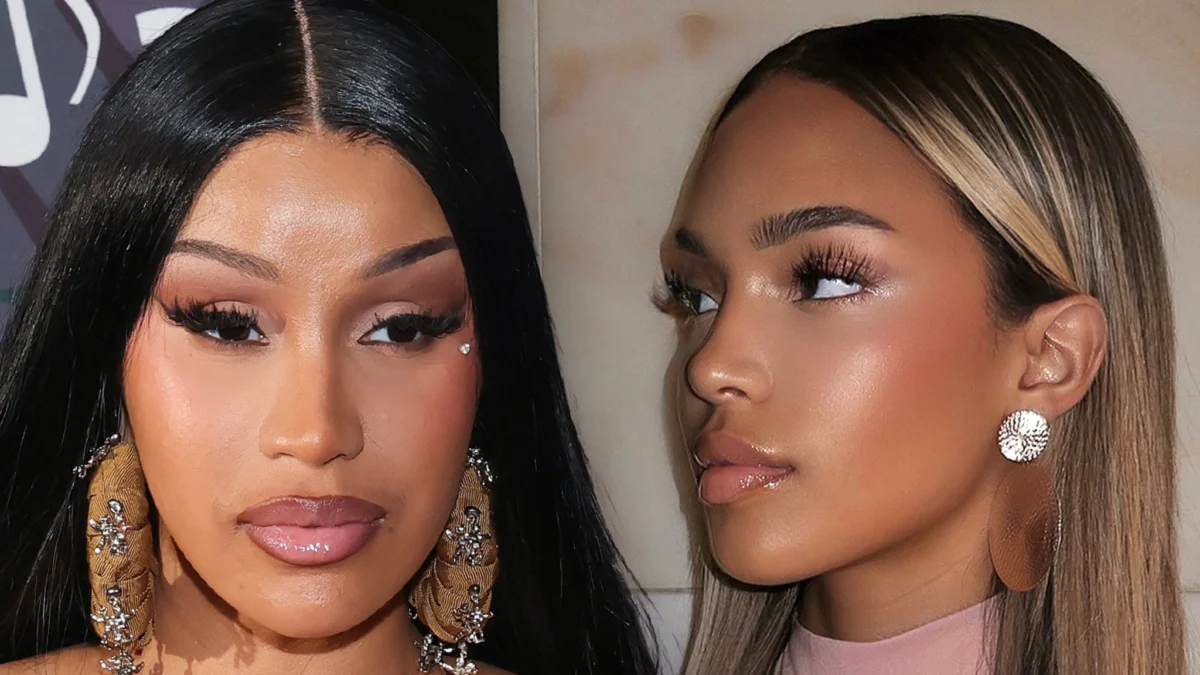
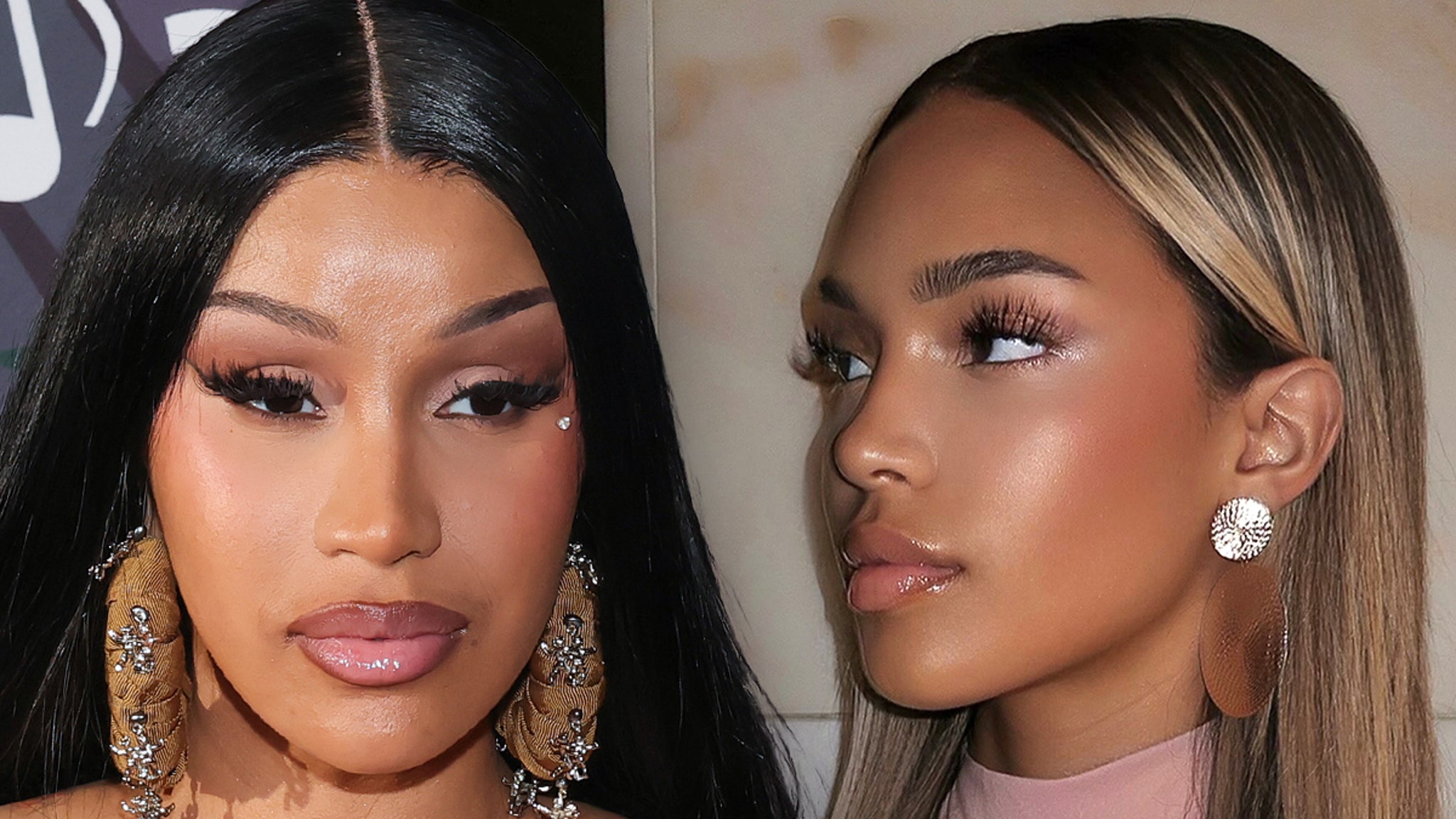
Grammy-winning artist Cardi B has vehemently dismissed swirling rumors regarding her romantic life and an alleged "baby mama drama" involving Nigerian professional footballer Maduka Okoye and his former partner, Jelicia Westhoff. In an audio clip that rapidly circulated across social media platforms on July 22, 2026, the rapper expressed profound frustration with the incessant speculation that shadows her every public interaction, particularly when it involves a male acquaintance. Her direct and unvarnished statement underscores a pervasive challenge faced by high-profile celebrities: the relentless intrusion into their personal affairs and the rapid proliferation of often unfounded narratives.
The Genesis of the Rumors: A Chronology of Public Scrutiny
The current wave of media attention began to crest in mid-July 2026, following a series of public appearances that linked Cardi B with Maduka Okoye, the acclaimed Super Eagles goalkeeper. On July 19, 2026, images and reports emerged depicting Cardi B and Okoye in Venice, Italy, where they were observed in what many interpreted as a romantic encounter. The pair were photographed in close proximity, enjoying dinner and other activities, fueling immediate speculation across entertainment news outlets and fan communities that a new celebrity romance might be brewing. These initial sightings, while seemingly innocuous to the individuals involved, ignited a firestorm of online commentary, characteristic of the intense scrutiny celebrity relationships attract.
The narrative took a dramatic turn just a day later, on July 20, 2026, when Jelicia Westhoff, identified as the mother of Maduka Okoye’s child and his former partner, publicly intervened. Westhoff utilized her social media platforms to launch a scathing attack on Okoye. Her posts, which quickly went viral, contained serious allegations, accusing the footballer of infidelity, specifically claiming he had cheated on her with both men and women. This public denunciation immediately transformed what might have been a simple celebrity dating rumor into a full-blown scandal, embedding it within the contentious and often sensationalized framework of "baby mama drama." Westhoff’s statements introduced a layer of complexity and personal turmoil that amplified the story’s reach and intensity, drawing millions of eyes to the developing situation.
The rapid succession of events—from the initial sightings to Westhoff’s accusations—demonstrates the accelerated pace of information dissemination in the digital age. Within mere hours, a private dinner in Italy had escalated into a global headline, illustrating the precarious balance public figures must maintain between their personal lives and the insatiable appetite of the public for celebrity gossip. The online sphere, with its capacity for instantaneous sharing and viral amplification, proved to be both the origin point and the primary battleground for this unfolding drama.
Cardi B’s Stance: "Y’all See What Happens As Soon As I Sneeze on Somebody?"
Cardi B’s reaction to the burgeoning scandal arrived on July 22, 2026, via an audio recording obtained and circulated by "The Neighborhood Talk." In the clip, the artist’s exasperation was palpable as she directly addressed the pervasive rumors. "Y’all see what happens as soon as I sneeze on somebody?" she queried, a rhetorical question laden with frustration, implicitly referring to the immediate and often exaggerated interpretations of her interactions with men. This statement, delivered with her characteristic candor, served as a powerful rebuke to the ongoing narrative that had quickly taken root.
She further articulated her weariness, asserting that she has been subjected to "lies and bulls***" concerning her romantic interests since she was barely twenty years old. This candid admission highlights a long-standing pattern of media scrutiny that has accompanied her meteoric rise to fame. For Cardi B, the current situation with Okoye and Westhoff is not an isolated incident but rather another chapter in a protracted struggle against public narratives that often distort or fabricate the realities of her personal life. She pragmatically observed that as long as any man she dates has an ex-partner, such dramas are "going to happen," implying a cyclical and unavoidable aspect of celebrity dating. This perspective suggests a resignation to the relentless nature of public scrutiny, yet simultaneously, a refusal to be defined or silenced by it.
In a moment of characteristic wit, and perhaps as a coping mechanism, Cardi B even joked about potentially "rage baiting" the public by stepping out with her cousin next. This quip, while humorous, underscores the immense pressure she faces. "Rage baiting" refers to intentionally provoking an emotional response, often negative, from an audience. Her suggestion, even in jest, reflects a cynical understanding of how media narratives are constructed and consumed, particularly those designed to elicit strong reactions and generate engagement, regardless of their factual basis. It also reveals a potential strategy for reclaiming agency in a public sphere where her personal life is constantly under attack.
The Figures Involved: Profiles in the Public Eye
Understanding the individuals at the center of this controversy provides crucial context for the unfolding events and the broader implications of their public exposure.
Cardi B (Belcalis Marlenis Almánzar): A powerhouse in the music industry, Cardi B rose from a social media personality to a global superstar. Known for her unfiltered personality, distinctive flow, and chart-topping hits, she has cultivated a fiercely loyal fanbase. Her public persona is marked by authenticity and a willingness to speak her mind, which, while endearing to many, also makes her a frequent target for media sensationalism. Her previous high-profile relationship and marriage to rapper Offset, marked by its own share of public ups and downs, has consistently placed her personal life under an intense microscope. This history has likely contributed to her current exasperation, as she navigates the complexities of dating while being one of the most recognizable women in entertainment.
Maduka Okoye: A prominent Nigerian professional footballer, Maduka Okoye serves as a goalkeeper for Udinese in Serie A and for the Nigerian national team, the Super Eagles. His athletic prowess and rising profile in European football have garnered him a significant following, particularly within Nigeria and among football enthusiasts globally. Athletes, much like musicians and actors, are increasingly subject to intense media scrutiny beyond their professional achievements. Okoye’s relatively lower profile compared to Cardi B in the global entertainment sphere means that this sudden surge of intense celebrity gossip, particularly involving such a high-caliber star, represents a significant shift in his public image management. The allegations against him, therefore, carry a substantial weight, potentially impacting not only his personal life but also his professional reputation and endorsements.
Jelicia Westhoff: Identified as Maduka Okoye’s former partner and the mother of his child, Jelicia Westhoff’s public profile was significantly amplified by her social media posts. While not a public figure in the traditional sense, her connection to a celebrity like Okoye, and her decision to voice her grievances publicly, thrust her into the spotlight. The term "baby mama drama" itself is a contentious label, often used in celebrity gossip to describe conflicts between former partners, particularly when children are involved. Westhoff’s accusations, regardless of their veracity, became a critical component of the rapidly constructed narrative, demonstrating the power of individuals connected to celebrities to influence public discourse, especially through direct social media engagement. Her actions highlight the often-unseen collateral damage of celebrity relationships, where personal disputes can quickly spill into the public domain, affecting all parties involved.
The Broader Landscape of Celebrity Relationships and Social Media
The incident involving Cardi B, Maduka Okoye, and Jelicia Westhoff is not an isolated event but rather a microcosm of the larger ecosystem of celebrity culture, media scrutiny, and the pervasive influence of social media.
The "Baby Mama/Daddy Drama" Trope: This narrative archetype is a recurring feature in celebrity gossip, often sensationalizing the complex dynamics of co-parenting and past relationships. Such stories frequently exploit emotional conflict for entertainment value, reducing nuanced human experiences to simplified, dramatic headlines. For public figures, navigating these narratives can be particularly challenging, as they are often stripped of their privacy and subjected to widespread judgment based on incomplete or biased information. The public’s fascination with these personal sagas speaks to a broader cultural interest in the private lives of the famous, often fueled by a desire for voyeurism or moralistic judgment.
The Impact of Social Media as an Amplifier: Social media platforms like Instagram, X (formerly Twitter), and TikTok have fundamentally reshaped the landscape of celebrity news. They serve as both the initial battleground for personal disputes (as seen with Westhoff’s posts) and the primary channel for rapid dissemination and reaction. A single post can go viral within minutes, reaching millions globally and bypassing traditional media gatekeepers. This immediacy means that celebrities and their associates have less control over the narrative, as information—or misinformation—can spread unchecked. While offering celebrities a direct channel to communicate with their fans (as Cardi B did with her audio), it also exposes them to an unprecedented level of public commentary, criticism, and often, harassment. The speed and reach of these platforms mean that once a story gains traction, it becomes incredibly difficult to contain or correct.
The Price of Fame and Privacy: The saga underscores the constant tension between fame and the right to privacy. Celebrities, by virtue of their public careers, implicitly trade a degree of personal anonymity for their professional success. However, the extent of this trade-off is perpetually debated. The expectation that every aspect of a celebrity’s life, especially their romantic relationships, is fodder for public consumption, raises ethical questions about media practices and societal norms. For figures like Cardi B, who have built their brands on authenticity, the line between sharing genuine experiences and protecting personal boundaries becomes increasingly blurred and difficult to maintain. The digital age has intensified this struggle, as every interaction, every comment, and every perceived slight can be captured, analyzed, and disseminated globally.
The Role of Media Outlets: Mainstream entertainment news outlets, while often criticized for contributing to sensationalism, also play a role in contextualizing and reporting on these events. They navigate the delicate balance of satisfying public curiosity while upholding journalistic standards. In cases like this, outlets like TMZ, which initially broke the story of Cardi B and Okoye, act as key aggregators and disseminators of information, drawing on social media trends, eyewitness accounts, and official statements (or the lack thereof) to construct a coherent narrative for their audience. The challenge lies in presenting these stories factually, avoiding undue speculation, and respecting the privacy of individuals, even those in the public eye.
Implications and Future Outlook
The "baby mama drama" surrounding Cardi B and Maduka Okoye carries several implications, both for the individuals involved and for the broader celebrity ecosystem.
Public Relations Management: For all parties, effective public relations management becomes paramount. Cardi B’s direct audio statement is a classic example of a celebrity taking control of their narrative, rather than letting external forces define it. Her team will likely continue to monitor public sentiment and strategize responses that align with her established brand of authenticity and outspokenness. For Maduka Okoye, whose public image is primarily tied to his athletic career, the allegations present a different challenge. His representatives may opt for a more discreet approach, focusing on damage control and emphasizing his professional commitments, potentially issuing a formal denial or statement at a later stage, or choosing to let the controversy subside naturally. Jelicia Westhoff’s public actions, while drawing attention to her grievances, also place her under public scrutiny, requiring careful consideration of the long-term impact on her and her child.
Impact on Public Perception: The incident inevitably influences public perception. For Cardi B, her strong stance against "bulls***" is likely to resonate with fans who appreciate her no-nonsense attitude and sympathize with her constant battle against media intrusion. It reinforces her image as a resilient and authentic figure. For Maduka Okoye, the allegations, regardless of their truthfulness, may cast a shadow over his public persona, potentially affecting endorsement deals or fan perceptions, at least in the short term. The court of public opinion can be harsh and unforgiving, and reputation management in the digital age is an ongoing and complex endeavor.
The Unending Cycle of Celebrity Gossip: This episode serves as a powerful reminder of the cyclical nature of celebrity gossip. As Cardi B herself lamented, as long as public figures engage in relationships, especially those with past partners, the potential for similar "drama" will persist. The demand for celebrity content remains insatiable, and the personal lives of stars will continue to be a primary source of interest and speculation. This reality forces celebrities to constantly adapt their strategies for privacy, communication, and self-preservation in an environment that often prioritizes sensationalism over factual accuracy or personal well-being.
Ultimately, Cardi B’s vocal dismissal of the "baby mama drama" surrounding her alleged relationship with Maduka Okoye is more than just a reaction to a specific rumor; it is a broader statement on the challenges of maintaining personal boundaries in the glaring spotlight of global fame. Her willingness to confront these narratives head-on, even with exasperation, reinforces her enduring appeal and her unwavering commitment to her own truth, even when the public sphere attempts to dictate it. The incident highlights the intricate dance between celebrity, media, and social media, a dance where privacy is often the casualty and authenticity, a precious commodity.