


The Walt Disney Company on Wednesday reported fiscal second-quarter revenue that surpassed Wall Street’s expectations, fueled by a resurgence in its streaming business and continued profitability within its global theme park and cruise ship operations. Following the release of the earnings report for the period ending March 28, shares of the entertainment giant surged approximately 7% in after-hours trading, reflecting investor confidence in the company’s strategic pivot under its new executive leadership. The report arrives at a critical juncture for Disney as it navigates a transition in the CEO office and a rapidly evolving media landscape characterized by the decline of traditional linear television.
Financial Performance and Revenue Breakdown
For the fiscal second quarter, Disney reported overall revenue of $25.17 billion, marking a 7% increase from the $23.51 billion recorded during the same period in the previous fiscal year. This figure comfortably beat the consensus estimates provided by analysts via LSEG. However, the company’s net income saw a contraction, falling to $2.47 billion, or $1.27 per share, compared to $3.4 billion, or $1.81 per share, a year earlier. This decline in net income was largely attributed to restructuring charges and costs associated with recent acquisitions.
When adjusting for one-time items—most notably the integration of NFL Network and other media assets into the ESPN portfolio—Disney reported an adjusted earnings per share (EPS) of $1.57. This adjusted figure provided a clearer picture of the company’s operational health, suggesting that despite the headline drop in net income, the underlying business segments are generating significant cash flow.
The company also took the opportunity to update its forward-looking guidance. Disney now anticipates full-year adjusted earnings growth of approximately 12% for fiscal 2026. Furthermore, the company increased its target for share repurchases, now aiming to buy back at least $8 billion in stock, up from its previous projection of $7 billion. Looking further ahead, Disney’s management expressed optimism for fiscal 2027, forecasting double-digit growth in adjusted earnings as its investments in technology and intellectual property (IP) begin to yield higher margins.
The Experiences Segment: Theme Parks and Cruises
Disney’s "Experiences" segment, which serves as a primary engine for the company’s bottom line, reported revenue of nearly $9.5 billion, representing a 7% year-over-year increase. This segment includes the company’s domestic and international theme parks, Disney Cruise Line, and consumer products.
The data revealed a complex picture of consumer behavior. While global guest attendance grew by 2%, domestic park visitation—specifically at Walt Disney World in Florida and Disneyland Resort in California—dipped by 1% compared to the previous year. Disney officials noted that "softer" international visitation to domestic parks, a trend first identified in the prior quarter, continued to persist. Analysts suggest this may be due to the strengthening of the U.S. dollar making domestic vacations more expensive for overseas travelers, as well as a normalization of travel patterns following the post-pandemic "revenge travel" surge.
Despite the slight dip in domestic attendance, the segment’s revenue growth was sustained by a significant increase in per-guest spending. Disney has successfully utilized dynamic pricing, premium offerings like Genie+, and increased food and beverage costs to offset lower foot traffic.
Disney CFO Hugh Johnston addressed concerns regarding the broader economy, including the impact of geopolitical instability. In late February, U.S.-Israel tensions involving Iran led to a spike in global oil prices, raising fears that higher fuel costs would dampen consumer demand for travel. However, Johnston remained bullish. "We continue to see a strong consumer," Johnston told CNBC. "While there may be some concerns around the macros and specifically around the price of fuel, we have not seen any evidence of that in our booking data." He added that reservations for the second half of the fiscal year remain "quite strong."
Entertainment and the Streaming Pivot
Disney’s Entertainment segment, which encompasses traditional television networks, the Disney+ and Hulu streaming platforms, and theatrical film releases, saw revenue climb 10% to $11.72 billion. This growth was partially aided by the consolidation of the Fubo deal, which contributed a 4% boost to the segment’s top line.
A major driver of success within this unit was the 14% jump in subscription and affiliate fees, which reached $7.8 billion. This increase was primarily the result of aggressive price hikes implemented across Disney+ and Hulu over the past year. Furthermore, advertising revenue within the streaming space grew by 5%, as the company’s ad-supported tiers attracted more brand interest and higher impression volumes.
The theatrical side of the Entertainment segment also provided a much-needed lift. After a period of underperformance at the box office, Disney saw strong returns from "Avatar: Fire and Ash" and "Zootopia 2," signaling that the company’s strategy of leaning heavily into established franchises remains a viable path for theatrical revenue.
Notably, Disney continued its new policy of withholding specific granular data for its linear TV networks and quarterly streaming subscriber counts. This shift in reporting reflects a broader industry trend where media conglomerates prefer to focus on total segment profitability rather than the fluctuating "churn" of individual subscribers. The company did acknowledge, however, that the ongoing decline in linear TV viewership continues to be a headwind, as more consumers migrate toward on-demand digital content.
Sports and the Evolution of ESPN
The Sports segment, dominated by ESPN, reported a 2% revenue increase to $4.61 billion. This growth was attributed to higher subscription fees and the strategic acquisition of NFL Media assets. However, the segment faced rising operational costs due to the escalating price of sports broadcast rights and new contract rates.
The highlight of the sports portfolio was the performance of the ESPN direct-to-consumer (DTC) app, which launched in August. Disney reported that revenue from digital subscribers successfully offset the losses incurred from the shrinking traditional cable "bundle."
CFO Hugh Johnston also addressed the NFL’s recent moves to renegotiate media rights deals earlier than anticipated. Reports indicate the NFL may seek to eliminate opt-out clauses in exchange for higher revenue. "We haven’t engaged yet with the league on early renewal conversations, but we’re not dogmatic about the process," Johnston stated during the earnings call. He emphasized that Disney intends to remain a long-term partner with the NFL, provided the deals align with shareholder value and financial discipline.
Leadership Transition and Strategic Vision
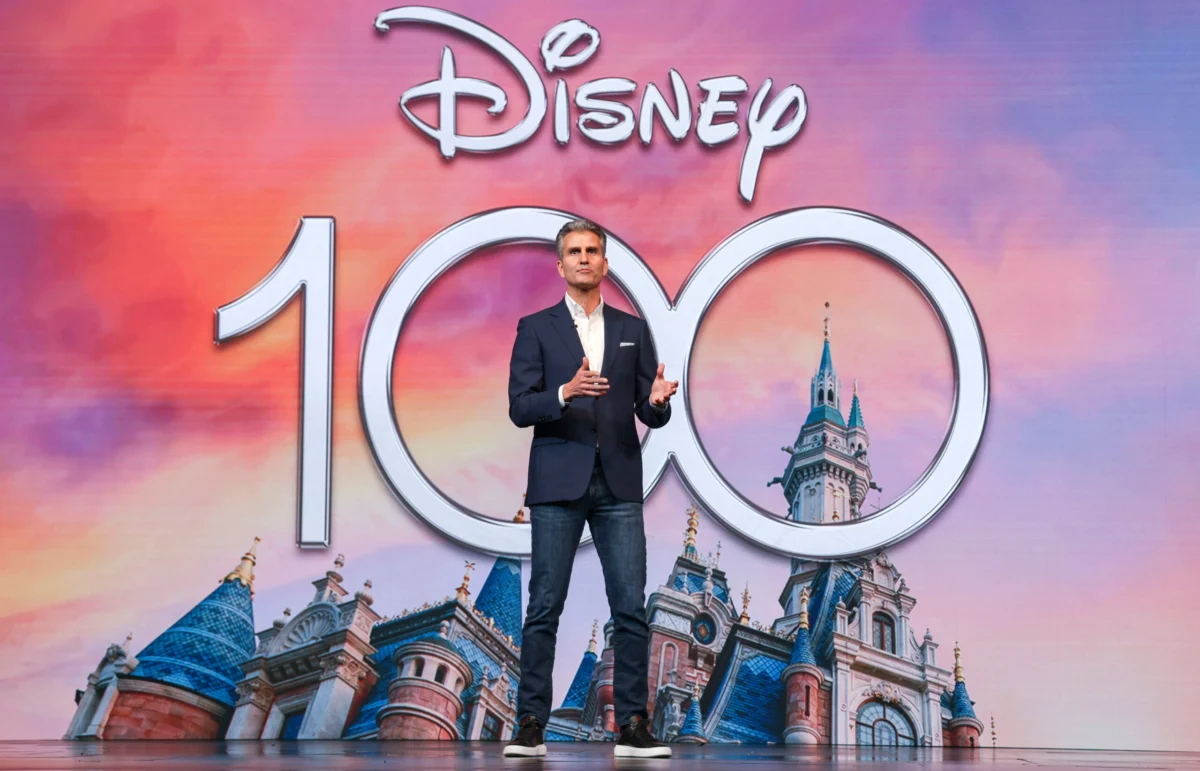
This earnings report is the first under the tenure of Josh D’Amaro, who took over as CEO in March, succeeding the legendary Bob Iger. D’Amaro, who previously headed the Parks and Experiences division, inherited a company undergoing significant structural changes. Since taking the helm, D’Amaro has overseen a round of strategic layoffs aimed at streamlining operations and reducing the company’s debt load.
D’Amaro’s leadership has also been tested by external pressures. The company has faced ongoing political scrutiny, particularly regarding its ABC late-night host Jimmy Kimmel, and has had to navigate the complexities of the U.S. political landscape while maintaining its brand image as a provider of family-friendly entertainment.
During the earnings call, D’Amaro outlined a vision focused on "technological storytelling." He emphasized that the future of Disney lies in the deep integration of intellectual property across all platforms. "It’s a competitive streaming marketplace out there right now," D’Amaro admitted. "Despite that, we saw an increase in engagement in the quarter, and then when we look ahead, our key drivers for engagement growth include content and product enhancements."
Chronology of Recent Key Events
To understand Disney’s current position, it is essential to look at the timeline of events leading up to the Q2 2026 report:
- August 2025: ESPN launches its standalone direct-to-consumer streaming app, marking a major shift in the company’s sports strategy.
- September 2025: Disney implements significant price hikes for Disney+ and Hulu, focusing on profitability over subscriber volume.
- January 2026: Disney completes the acquisition of NFL Media assets, including the NFL Network, integrating them into the ESPN segment.
- March 2026: Bob Iger officially retires for the second time; Josh D’Amaro is named CEO.
- April 2026: D’Amaro announces a round of corporate layoffs to cut costs and improve segment margins.
- May 2026: Disney reports Q2 earnings, beating revenue expectations and raising share buyback targets.
Analysis of Implications
The Q2 earnings report suggests that Disney is successfully navigating the "messy middle" of the media transition. By leveraging its theme parks to fund the expensive shift into streaming, the company has created a financial buffer that its competitors lack.
The increase in share repurchases to $8 billion is a clear signal to Wall Street that the company believes its stock is undervalued and that it has reached a level of capital stability. However, the "softness" in domestic park attendance remains a point of concern. If inflation persists or fuel prices continue to rise, the "guest spending" lever may eventually hit a ceiling.
Furthermore, the focus on IP—while safe for the box office—raises questions about original content innovation. D’Amaro’s emphasis on "advancing technology around storytelling" suggests that Disney may look toward augmented reality (AR) or more immersive park experiences to maintain its competitive edge in the Experiences segment.
In conclusion, Disney’s second-quarter results provide a narrative of resilience. With a new CEO at the helm and a clear focus on making streaming a profitable enterprise, the company appears to be moving past the era of uncertainty that defined the early 2020s. While macroeconomic risks remain, Disney’s diverse portfolio of assets and its ability to extract higher value from its existing customer base have positioned it as a leader in the global entertainment recovery.