


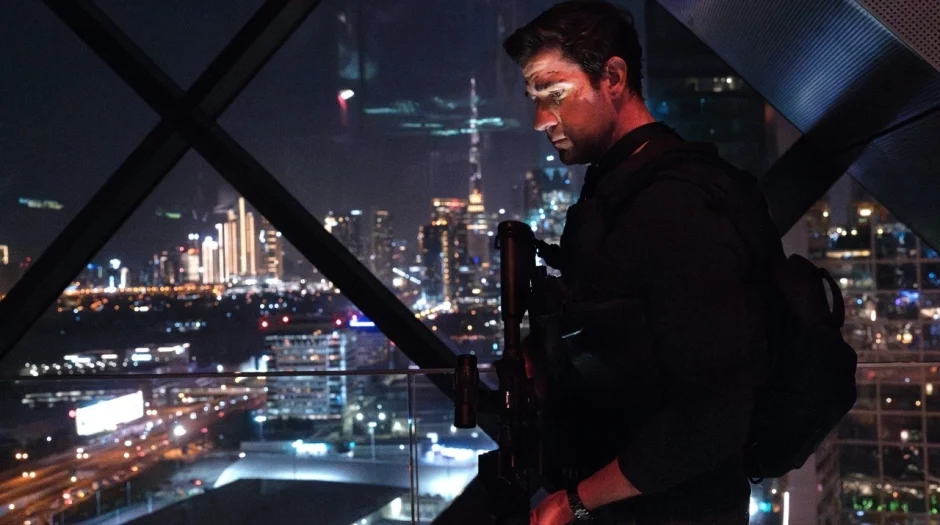
The visual effects studio BlueBolt has unveiled its comprehensive contribution to Prime Video’s latest installment in the Tom Clancy universe, Jack Ryan: Ghost War. The feature-length continuation of the acclaimed series, which premiered on May 20th, saw BlueBolt deliver a staggering 365 visual effects shots, meticulously crafting the high-octane action and expansive global landscapes that define the Jack Ryan franchise. Their work encompassed a broad spectrum of complex digital artistry, from catastrophic environmental destruction to the seamless integration of CG elements within real-world settings.

BlueBolt’s Integral Role in a Globe-Trotting Thriller
As the principal visual effects studio for Jack Ryan: Ghost War, BlueBolt was instrumental in translating the script’s ambitious narrative into breathtaking cinematic sequences. The film, which sees John Krasinski reprise his role as the titular CIA analyst, plunges Ryan into a dangerous international conspiracy that forces him back into the field alongside trusted allies Greer and November, and new recruit Marlowe. The mission’s escalating stakes demanded a visual approach that could match the breakneck pace of the storytelling, a challenge BlueBolt embraced with a diverse array of visual effects.

Under the guidance of overall production VFX supervisor Richard Frazer, BlueBolt’s team was responsible for bringing to life a series of pivotal moments. These included monumental explosions that punctuated intense gunfights, the creation of intricate CG urban environments spanning iconic global cities like London, Dubai, and New York, and the realistic rendering of various CG vehicles, aircraft, and boats. Perhaps most strikingly, their work included the dramatic fracturing and collapse of an entire glass floor within a skyscraper, leading to a climactic shootout atop a towering structure.
A Deeper Dive into Key Visual Effects Sequences

The creation of these impactful visual effects was a multi-faceted process, requiring close collaboration between the VFX team and the film’s director, Andrew Bernstein. Frazer’s involvement began in pre-production, where he worked hand-in-hand with Bernstein to conceptualize and design the film’s most pivotal visual effects sequences. This collaborative foresight was crucial, particularly for complex set pieces like the glass floor collapse, where meticulous shot-by-shot planning was essential to ensure both narrative coherence and visual authenticity. Furthermore, Frazer played a key role in overseeing virtual production elements, including the implementation of LED volume work, a technology increasingly vital in modern filmmaking for its ability to create immersive environments in-camera.
The Vertiginous Terror of the Glass Floor Collapse

One of the most memorable and technically demanding sequences orchestrated by BlueBolt is the harrowing glass floor collapse. This pivotal scene places one of the protagonists in a perilous situation, suspended precariously above a dizzying drop. The primary filming location for this sequence was a nightclub situated within Dubai’s One Za’abeel, a real-world architectural marvel boasting a glass floor situated twenty stories above the ground. Complementing the on-location shooting, additional scenes were captured in a UK studio, incorporating extensive stunt rigging and bluescreen work to simulate the fracturing glass panels.
BlueBolt’s artists embarked on creating a fully realized CG replica of the nightclub set. Every surface within this digital environment was meticulously constructed from glass, a decision that necessitated the complex layering of reflections, adding an unparalleled sense of depth and realism. The simulation of the floor’s structural failure – its cracking and eventual collapse – was achieved using the sophisticated procedural capabilities of Houdini. This CG environment was then seamlessly integrated with the bluescreen photography and the footage captured at the practical Dubai location, resulting in a terrifyingly believable visual spectacle. The careful compositing of these elements ensured that the audience would experience the full visceral impact of the collapsing floor.

Ascending to a Perilous Climax: The Dubai Tower Finale
The film’s explosive conclusion unfolds at the apex of Dubai’s Damac Tower, a genuine skyscraper that was still under construction during the production phase. The filmmakers secured the necessary permissions to utilize this impressive structure, and BlueBolt’s contributions were vital in transforming it into the film’s climactic battleground. The studio was tasked with digitally augmenting the existing tower, adding multiple fabricated floors to accommodate the heroes’ arduous ascent to the summit. Furthermore, BlueBolt constructed an additional 24 floors of CG architecture to create the fictional server floor environment for crucial exterior shots.

Given that the specific server floor environment did not exist at the real-world filming location, this critical area was meticulously recreated on a bluescreen stage in London. This allowed for maximum control over the action and the integration of numerous visual effects. This segment alone demanded approximately 230 VFX shots, a testament to its complexity. The team’s responsibilities included crafting the expansive Dubai skyline visible through the tower’s windows, generating realistic muzzle flashes from intense firefights, simulating massive CG glass shattering under duress, and orchestrating devastating explosions. A particularly challenging element was the inclusion of a CG helicopter gunship unleashing a barrage of fire from its minigun, requiring both interior and exterior perspectives to be realized with chilling authenticity. The majority of the exterior shots of this climactic sequence were entirely CG-generated, showcasing BlueBolt’s ability to construct entire environments from scratch.
Enhancing the Dubai Marina Boat Chase

Beyond the static architectural challenges, BlueBolt also injected a heightened sense of urgency and danger into the Dubai Marina boat chase. To amplify the thrill of the pursuit, the studio strategically introduced additional CG boats into the existing footage, creating a more crowded and perilous environment for the protagonists. Their work extended to meticulously removing camera and safety boats that were present during the practical filming, ensuring a clean and immersive visual experience. The dynamic nature of water provided another canvas for their expertise; BlueBolt replaced missing water elements with high-fidelity CG water, adding realism to the splashes and waves generated by the speeding vessels.
In instances where stunt performers were utilized, BlueBolt employed sophisticated face replacement techniques to seamlessly integrate the actors’ likenesses into the action. The chase culminates in a dramatic collision with a bridge wall, a moment that required the digital removal of practical protection elements that were in place during filming. This meticulous post-production work ensured that the visual narrative of the crash was both impactful and believable, a hallmark of BlueBolt’s attention to detail.

The Art and Science of Visual Effects in Modern Cinema
The extensive work undertaken by BlueBolt on Jack Ryan: Ghost War highlights the evolving landscape of visual effects in blockbuster filmmaking. The studio’s ability to seamlessly blend practical cinematography with complex CG elements, create entirely digital environments, and execute intricate simulations underscores the technical prowess and artistic vision required to deliver modern action cinema. The 365 shots delivered represent not just raw output, but a nuanced application of technology to serve storytelling, enhancing the audience’s immersion and emotional engagement with the narrative.

The film’s reliance on virtual production techniques, particularly the use of LED volumes, suggests a forward-thinking approach to filmmaking, enabling directors to visualize and interact with digital environments in real-time. This integration allows for greater creative flexibility and can significantly streamline the post-production process. As technology continues to advance, studios like BlueBolt are at the forefront of pushing the boundaries of what is visually possible on screen, ensuring that franchises like Jack Ryan can deliver the global scale and visceral excitement that audiences have come to expect.
The breakdown reel released by BlueBolt, offering a glimpse into their creative process and the complexity of their digital artistry, serves as a valuable insight into the intricate collaboration between creative vision and technical execution that defines contemporary visual effects. The sheer volume and diversity of the shots involved, from environmental destruction to character-centric enhancements, demonstrate the studio’s comprehensive capabilities and their vital role in shaping the cinematic experience of Jack Ryan: Ghost War. The film’s success in delivering thrilling action sequences is, in no small part, a testament to the behind-the-scenes dedication and ingenuity of visual effects teams like BlueBolt.