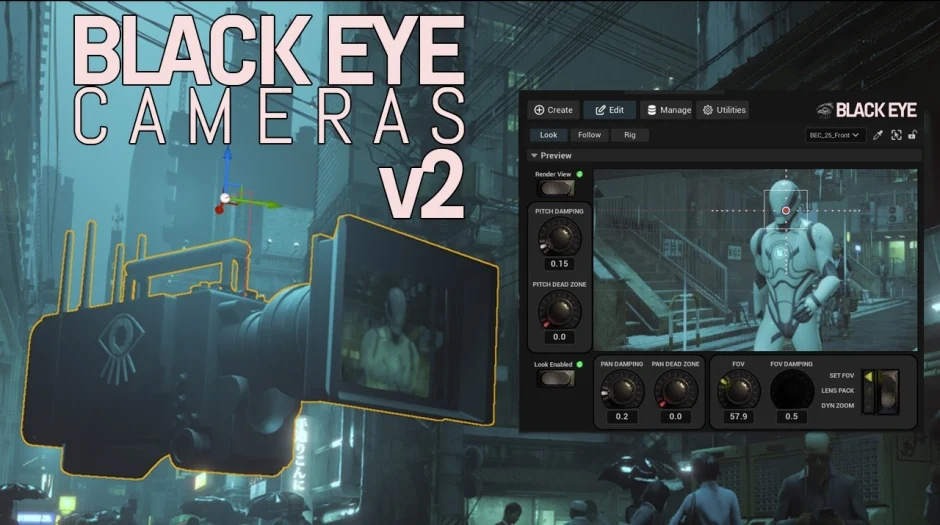
Black Eye Technologies has unveiled Black Eye 2.0, a significant advancement in its dynamic camera system, engineered exclusively for Unreal Engine. This latest release aims to equip development teams with a modular and highly adaptable suite of tools, poised to revolutionize the creation of gameplay, cinematics, marketing content, virtual production, and immersive in-engine storytelling experiences. The system is designed to intelligently respond to gameplay and scene shifts, eliminating the need for extensive manual adjustments or the reconstruction of camera logic from the ground up.
Addressing Evolving Production Demands
The introduction of Black Eye 2.0 arrives at a critical juncture for the real-time production industry. As video games and interactive experiences increasingly adopt cinematic qualities, the complexity of managing camera systems has escalated dramatically. Traditional approaches often result in gameplay cameras being tethered to brittle, custom-coded solutions that are difficult to maintain and prone to breaking with minor project alterations. Similarly, cinematic cameras, while offering artistic control, frequently become unmanageable when animation, scene timing, or layout undergo changes during the production pipeline. Black Eye 2.0 is specifically architected to mitigate these pervasive challenges, offering a more robust and flexible alternative.

A Legacy of Expertise in Camera Systems
The driving force behind Black Eye Technologies is a team with a deep and proven track record in camera system development. Founded by Adam Myhill and Gerald Orban, the same individuals who were instrumental in the creation of Cinemachine, a highly regarded camera system for Unity, their expertise is now being channeled into the Unreal Engine ecosystem. This pedigree suggests a profound understanding of the intricacies involved in creating intuitive, powerful, and production-ready camera tools. Their previous work has established a benchmark for dynamic camera solutions, and Black Eye 2.0 represents a continuation and expansion of that commitment within the Unreal Engine environment.
Vision for a Streamlined Camera Workflow
Adam Myhill, co-founder of Black Eye Technologies, articulated the core philosophy behind Black Eye 2.0, emphasizing the fundamental role of cameras in shaping audience perception. "Cameras are the viewport to the experience," Myhill stated. "But for most teams, cinematic cameras mean endless keyframes that break the moment things change and gameplay cameras are these giant, fragile ball of code systems that are complicated to build and maintain. We built Black Eye 2.0 to solve that. It gives Unreal Engine teams a much faster, more powerful way to create great cameras in any project. Small teams can now punch way above their weight in camera work. Good cameras make great projects." This sentiment highlights the system’s ambition to democratize sophisticated camera control, enabling smaller teams or those with limited resources to achieve professional-grade results.
Enhanced Presentation Capabilities and Gameplay Integration
Black Eye 2.0 introduces a raft of enhancements designed to broaden presentation capabilities and deepen integration with gameplay mechanics. A re-engineered workflow forms the foundation, complemented by a comprehensive array of gameplay-centric systems. These include sophisticated orbit cameras, robust collision handling to prevent unwanted camera clipping, seamless camera blending between different viewpoints, intuitive trigger-driven camera transitions, a priority system for managing competing camera demands, and a high-level camera manager for overarching control. This unified approach is meticulously crafted to serve a diverse range of applications, from fast-paced action sequences to meticulously crafted narrative moments and the demanding requirements of virtual production.

Supporting Data and Industry Trends
The demand for sophisticated real-time content creation tools is reflected in the rapid growth of the gaming and virtual production markets. The global video game market, for instance, was valued at approximately USD 184.3 billion in 2023 and is projected to expand at a compound annual growth rate (CAGR) of 7.1% from 2024 to 2030, according to Grand View Research. This growth is intrinsically linked to the increasing sophistication of game engines like Unreal Engine, which are becoming the backbone for not only games but also film, television, and architectural visualization. The rise of virtual production, which leverages real-time rendering for pre-production, production, and post-production, further amplifies the need for dynamic and adaptable camera systems that can keep pace with the iterative nature of these workflows. The market for virtual production technology is also experiencing significant expansion, with projections indicating substantial growth in the coming years, driven by its adoption in major Hollywood productions.
Chronology of Development and Release
While specific historical data for Black Eye Technologies’ development cycle is not publicly detailed in the initial announcement, their background with Cinemachine provides context. Cinemachine, developed by Unity Technologies, has undergone continuous iteration and improvement since its initial introduction, reflecting a commitment to evolving camera system technology. The transition to developing a dedicated solution for Unreal Engine signifies a strategic expansion and a response to the distinct needs and architecture of this popular game engine. The launch of Black Eye 2.0 marks the culmination of dedicated development efforts focused on addressing the specific challenges faced by Unreal Engine users. The product is now available for purchase, signaling the completion of its primary development and testing phases.
Official Statements and Industry Reactions
Beyond the foundational statement from Adam Myhill, further industry reactions are anticipated as more developers integrate Black Eye 2.0 into their projects. However, the pedigree of the founding team, combined with the clear articulation of the problems Black Eye 2.0 aims to solve, suggests a strong potential for positive reception. Developers who have previously relied on custom camera solutions or struggled with the limitations of existing systems are likely to view Black Eye 2.0 as a significant step forward. The emphasis on modularity and adaptability directly addresses common pain points in real-time production, where flexibility is paramount.

Broader Impact and Implications for Content Creation
The availability of Black Eye 2.0 has several significant implications for the broader landscape of content creation within Unreal Engine.
- Democratization of High-Quality Cinematics: By simplifying the creation and maintenance of sophisticated camera work, Black Eye 2.0 empowers smaller studios and independent developers to achieve cinematic quality that was previously only accessible to larger, more resource-intensive teams. This can lead to a richer and more diverse ecosystem of visually stunning real-time experiences.
- Increased Efficiency in Virtual Production: The demands of virtual production are immense, requiring seamless integration between virtual assets, actor performance, and camera movement. A dynamic and intelligent camera system like Black Eye 2.0 can significantly streamline this process, allowing for faster iteration and more responsive adjustments during live shoots. This could accelerate the adoption of virtual production techniques across film, television, and live events.
- Enhanced Player Immersion and Engagement: For gameplay, the ability to create more dynamic and responsive camera behaviors can directly translate to a more engaging and immersive player experience. Cameras that intelligently track action, react to environmental changes, or provide contextually relevant viewpoints can elevate the overall quality of a game.
- Streamlined Marketing and Promotional Content: The creation of compelling marketing materials, trailers, and promotional videos is crucial for game launches and product showcases. Black Eye 2.0’s versatility in handling both gameplay and cinematic camera styles can expedite the process of generating high-quality visual assets for these purposes, ensuring a stronger market presence.
- Innovation in In-Engine Storytelling: As game engines become increasingly powerful storytelling platforms, the tools available to narrative designers and directors become critical. Black Eye 2.0 provides a robust foundation for crafting unique and compelling narrative sequences directly within the engine, allowing for greater creative freedom and more integrated storytelling experiences.
In conclusion, the launch of Black Eye 2.0 by Black Eye Technologies represents a significant contribution to the Unreal Engine ecosystem. By offering a dynamic, modular, and intelligent camera system, the company is addressing pressing industry needs and providing developers with powerful new tools to push the boundaries of real-time content creation across a wide spectrum of applications. The system’s potential to enhance efficiency, democratize advanced techniques, and ultimately elevate the quality of interactive and cinematic experiences positions it as a noteworthy development for the future of digital media production.