


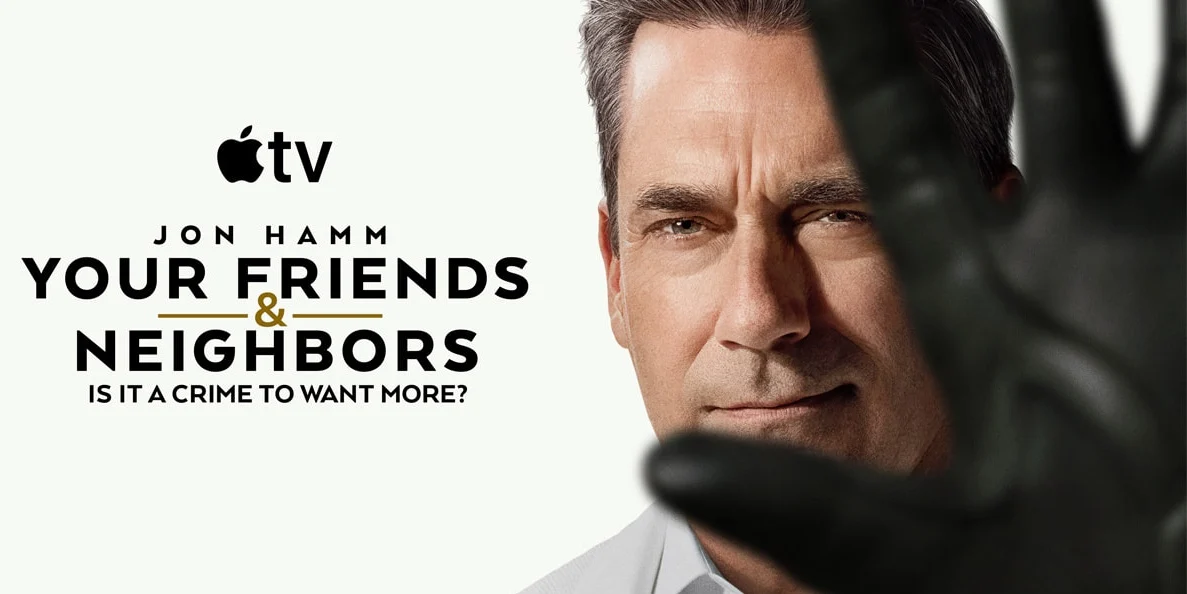
The landscape of modern television has been significantly reshaped by the enduring talent of Jon Hamm, whose post-Mad Men career has seen a remarkable resurgence. This second act is not merely a fleeting moment but a sustained demonstration of his versatility, most recently highlighted by his Emmy-nominated performances in "The Morning Show" and "Fargo," alongside a pivotal role in Taylor Sheridan’s burgeoning hit, "Landman." These acclaimed appearances underscore a broader realization: Hamm, long associated with the iconic Don Draper, possesses a magnetic presence capable of anchoring series, not just as a dramatic force but also, surprisingly, as a comedic lead. This understanding of his multifaceted appeal is clearly at the core of Jonathan Tropper’s "Your Friends & Neighbors," a series that, with its second season, solidifies Hamm’s position as a leading man of a caliber increasingly rare in today’s television ecosystem.
The narrative of "Your Friends & Neighbors" picks up with Andrew "Coop" Cooper, portrayed by Hamm, deepening his entanglement in a clandestine world of petty larceny. Following his unsuccessful attempts to re-enter the cutthroat, high-risk finance sector, Coop finds himself increasingly dissatisfied with his current circumstances. The aspiration of his former life remains just out of reach, propelling him to operate more autonomously. In this new phase, he forms an unlikely alliance with Elena, a housemaid played by Aimee Carrero. Elena’s discreet pilfering from the affluent residents of Westmont Village has been a sufficient, albeit precarious, means of financial sustenance. However, this fragile equilibrium is abruptly shattered by the arrival of Owen Ashe, a formidable multi-millionaire shipping magnate, embodied by James Marsden. Ashe’s enigmatic presence casts a shadow over the community, posing a direct threat to Coop’s burgeoning criminal enterprise.
While the series offers moments of wry amusement, such as Coop assembling a chainsaw from a limited edition "Texas Chainsaw Massacre" release or his post-heist unwinding with the Blank Check Podcast, its progression beyond a simple "robbery-of-the-week" format was crucial for its evolution. The introduction of James Marsden’s character provides precisely the injection of dynamism the show needed. Marsden’s unhinged portrayal injects fresh energy and serves as an effective foil to Hamm’s more restrained protagonist. Coop is depicted as navigating a fresh iteration of his midlife crisis, grappling with perceived physical decline and a pervasive sense of existential dread. Both Coop and Owen, in their own ways, are men defined by the carefully constructed personas they project, and their paths converge in a dynamic that suggests a complex, potentially unreciprocated entanglement. As the season unfolds, Hamm’s performance continues to gain strength, reinforcing his status as one of television’s preeminent actors, even when the surrounding narrative elements occasionally lag.
Jonathan Tropper, serving as showrunner, director, and co-writer, continues to weave a complex tapestry of challenges into Coop’s already convoluted life. This is achieved through both the expansion of the supporting cast and the further development of storylines initiated in the inaugural season. Amanda Peet’s Mel Cooper, Coop’s wife, embarks on a personal journey of self-discovery, which amusingly manifests as an escalating feud with a neighbor’s rescue dog. Hoon Lee’s character, Barney Choi, is granted a more substantial role, as his own mounting financial difficulties push him towards morally ambiguous decisions, a trajectory that mirrors Coop’s descent into illicit activities. While Lee effectively navigates the increased material, this expanded focus inadvertently sidelines Carrero, whose chemistry with Hamm was a significant asset in the first season.
Elena, once a central figure in the narrative, becomes increasingly peripheral as Coop becomes more deeply embroiled in the corporate underworld he initially sought to escape. This narrative shift, while seemingly deliberate, contributes to a sense of imbalance. Even the domestic conflicts within Coop’s immediate family begin to feel somewhat repetitive. The series’ departure from its initial formula emerges as both its most significant strength and its most discernible weakness. While "Your Friends & Neighbors" may not yet have achieved "must-see-television" status, it consistently maintains an engaging quality. Tropper and his creative team demonstrate a growing confidence in their characters and storytelling, resulting in some of the series’ most visually dynamic episodes to date.
The humor remains sharp, the stakes are demonstrably higher, and Hamm continues to deliver a performance that warrants significant audience investment. The addition of James Marsden, with his revitalized intensity, further underscores his standing as one of the industry’s most undervalued performers. Ultimately, "Your Friends & Neighbors" offers a breezy viewing experience. Like Coop’s own criminal endeavors, the series hints at greater untapped potential, even if it has not yet fully realized it. For the present, however, each installment provides sufficient reward, particularly when it allows for the observation of Hamm operating at the zenith of his considerable abilities.
The Premise: A Financial Downfall Fuels Criminal Ambition
The core premise of "Your Friends & Neighbors" centers on the dramatic fall from grace of a high-flying hedge fund manager. After losing his lucrative position, the protagonist finds himself unable to maintain the opulent lifestyle his family has grown accustomed to. Faced with the stark reality of financial ruin and the potential loss of his social standing, he resorts to increasingly desperate measures. The narrative chronicles his descent into burglary, targeting his wealthy neighbors in a bid to sustain their privileged existence. This audacious plan, however, is predicated on a critical miscalculation: a fateful error occurs when he breaks into the wrong home, setting in motion a chain of events with unforeseen consequences.
The Ensemble Cast: A Stellar Lineup
The series boasts an impressive ensemble cast, led by the always compelling Jon Hamm. His portrayal of Andrew "Coop" Cooper anchors the show, navigating the complexities of a man confronting his own limitations and societal expectations. James Marsden joins as the enigmatic Owen Ashe, bringing a potent dose of unpredictable energy to the proceedings. Amanda Peet returns as Mel Cooper, Coop’s wife, whose own arc offers a contrasting exploration of personal growth amidst marital strain. Other key cast members include Olivia Munn, Hoon Lee, Mark Tallman, Lena Hall, Aimee Carrero, Eunice Bae, Isabel Gravitt, and Donovan Colan, each contributing to the intricate web of relationships and escalating tensions that define the series.
The Creative Vision: Jonathan Tropper’s Direction
Jonathan Tropper’s multifaceted role as showrunner, director, and co-writer is instrumental in shaping the distinctive tone and narrative thrust of "Your Friends & Neighbors." His vision is evident in the show’s blend of dark comedy, domestic drama, and escalating thriller elements. Tropper’s ability to craft compelling characters and intricate plotlines has been a hallmark of his career, and "Your Friends & Neighbors" continues to showcase this talent. The series’ sophomore season sees Tropper further exploring the thematic underpinnings of its characters’ motivations, particularly their struggles with identity, ambition, and the societal pressures of wealth and status.

A Chronology of Descent and Disruption
The narrative arc of "Your Friends & Neighbors" can be traced through a series of escalating events:
- Season 1: Introduced Coop Cooper, a hedge fund manager whose professional life implodes. Faced with financial hardship, he begins a clandestine life of petty crime, often in partnership with Elena, a housemaid. The season established the core dynamics of Coop’s crumbling life and his attempts to maintain appearances.
- Transition to Season 2: Coop’s rejection from the high-risk finance world solidifies his commitment to his illicit activities. He becomes more independent in his criminal pursuits, no longer solely reliant on Elena’s modest pilfering.
- Arrival of Owen Ashe: The introduction of James Marsden’s character, Owen Ashe, marks a significant turning point. Ashe’s mysterious presence and considerable wealth disrupt the established order of Westmont Village and directly impact Coop’s criminal operations.
- Deepening Entanglements: Coop becomes increasingly drawn into the darker aspects of his criminal enterprise, paralleling his earlier immersion in the cutthroat financial world. This leads to strained relationships and moral compromises.
- Subplot Developments: Other characters, such as Mel Cooper and Barney Choi, experience their own personal and professional challenges, adding layers of complexity to the overarching narrative. Mel’s journey of self-discovery and Barney’s financial woes mirror Coop’s struggles, highlighting the pervasive nature of dissatisfaction and moral ambiguity within the community.
- Shifting Dynamics: The narrative shifts focus, with Elena’s role becoming more peripheral as Coop delves deeper into more significant criminal undertakings. This adjustment impacts the show’s initial dynamic but aims to raise the stakes for Coop’s personal journey.
Supporting Data and Context
The appeal of Jon Hamm’s continued success in television can be partly attributed to evolving audience preferences and the increased demand for charismatic leads who can carry complex narratives. Hamm’s previous role in "Mad Men" (2007-2015) showcased his ability to portray morally ambiguous characters with captivating depth, a skill that translates effectively to his current work. The success of streaming platforms like Apple TV+ has also provided a fertile ground for such character-driven dramas, allowing for nuanced storytelling that might not find a home on traditional broadcast networks.
The genre of dark comedy and crime drama, often exploring the underbelly of affluent societies, has seen a resurgence in popularity. Series like "Succession" and "Barry" have demonstrated the audience’s appetite for narratives that dissect the lives of the wealthy and the moral compromises made in pursuit of status and security. "Your Friends & Neighbors" taps into this trend by examining the pressures of maintaining a certain lifestyle in an increasingly precarious economic climate, using Coop’s criminal activities as a metaphorical, and literal, descent into desperation.
Inferred Reactions and Broader Implications
While direct statements from the cast and crew regarding the specific nuances of Season 2 are not provided in the original text, the critical reception suggests a positive outlook on the show’s direction. The praise for Jon Hamm’s performance and the addition of James Marsden indicate that the creative team is successfully leveraging its talent.
The broader implications of "Your Friends & Neighbors" extend to its commentary on wealth disparity and the psychological toll of societal pressure. The series, through Coop’s narrative, implicitly raises questions about the definition of success and the lengths to which individuals will go to achieve or maintain it. The "fateful error" of breaking into the wrong home serves as a narrative catalyst, but it also symbolizes the inherent risks and unpredictable consequences of a life built on deception and illicit means. The show’s exploration of midlife crises, particularly within the context of financial insecurity, resonates with contemporary anxieties, making its themes relatable to a wider audience.
Analysis of Strengths and Weaknesses
The series’ primary strength lies in Jon Hamm’s commanding performance, which continues to anchor the show with gravitas and charm. The introduction of James Marsden injects a vital unpredictability that elevates the dramatic tension and entertainment value. The writing, under Jonathan Tropper’s guidance, remains sharp and often witty, particularly in its comedic elements. The visual direction also appears to be improving, contributing to a more engaging viewing experience.
However, the shift in narrative focus, while intended to deepen the plot, has led to a dilution of the ensemble’s impact. The sidelining of characters who were integral to the first season’s success, such as Elena, creates a sense of imbalance. The repetition of domestic conflicts, while perhaps intended to reflect the mundane realities of Coop’s life, can detract from the momentum of the more compelling plotlines. Despite these drawbacks, the series remains a consistently engaging watch, demonstrating a growing confidence in its storytelling and character development.
Emmy Prospects and Final Verdict
The article highlights potential Emmy prospects for both Jon Hamm in the Outstanding Lead Actor in a Drama Series category and for supporting cast members in the Outstanding Supporting Actor in a Drama Series category. This recognition underscores the perceived quality of the performances and the series’ standing within the competitive television landscape.
With a final score of 7/10, "Your Friends & Neighbors" is characterized as a breezy, yet promising, series. It successfully delivers on its core premise, offering an engaging narrative fueled by strong performances and sharp writing. While it may not have fully realized its ultimate potential, its current trajectory suggests continued critical appreciation and audience interest, particularly for those drawn to Hamm’s magnetic screen presence and narratives that explore the darker side of suburban affluence. The series stands as a testament to Hamm’s enduring talent and Tropper’s adept storytelling.