


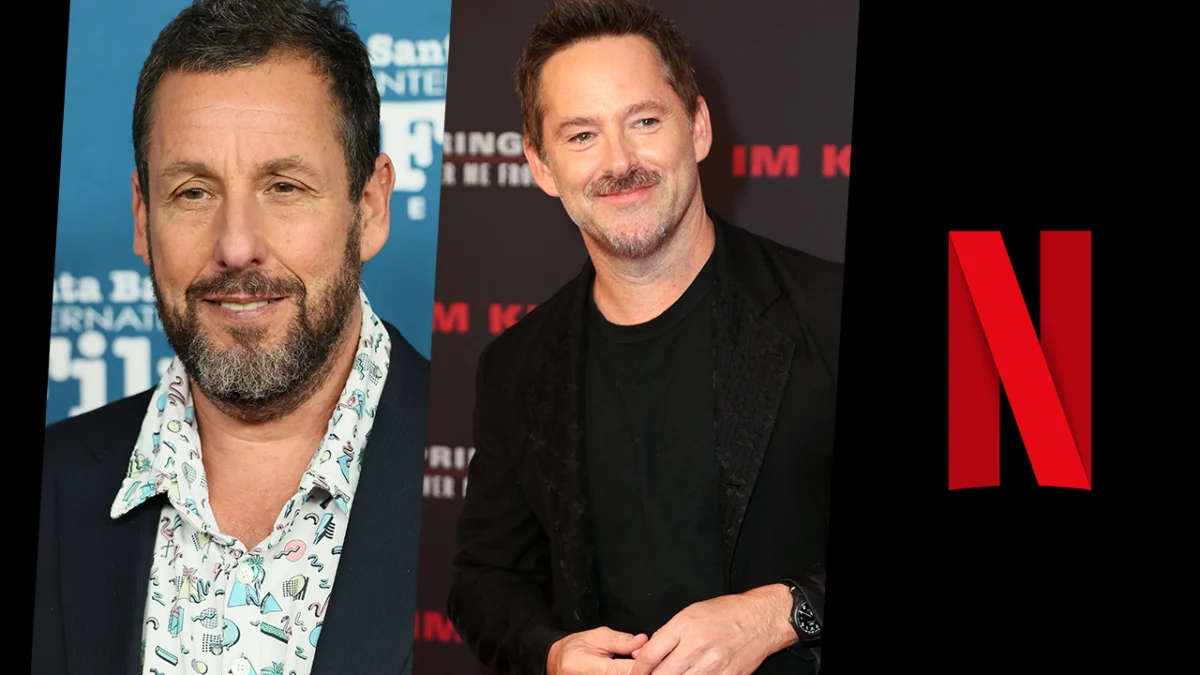
Adam Sandler, fresh off a critically lauded year that included the fictional yet highly impactful dramedy Jay Kelly and the record-breaking streaming success of Happy Gilmore 2, is poised to further solidify his dramatic credentials with his next feature for Netflix. The acclaimed actor is collaborating with writer-director Scott Cooper, known for his compelling and often dark narratives in films like Crazy Heart, Hostiles, and Netflix’s The Pale Blue Eye, on a new psychological family drama titled Time Out. This project, which has been quietly gathering significant industry momentum since the beginning of the year, is now entering its critical production phase, boasting an exceptionally talented and star-studded ensemble cast. With cameras slated to roll imminently, anticipation within the film community is rapidly building, positioning Time Out as an early frontrunner for the 2027 awards season.
The Genesis of a Timely Remake: Scott Cooper’s Long-Held Vision
Time Out is an English-language adaptation of Laurent Cantet and Robin Campillo’s critically acclaimed 2001 French film, L’Emploi du temps (English Time Out). Scott Cooper has not only undertaken the task of writing the adaptation but will also helm the directorial duties. The original French film garnered significant international praise, including a Golden Lion nomination at the Venice Film Festival, for its stark portrayal of a man living a life of elaborate deception. Its exploration of themes surrounding identity, the relentless pressure of professional life, and the societal expectations tied to one’s career resonated deeply with critics and audiences alike.
Cooper’s connection to the source material dates back over two decades. Speaking to Deadline in March 2026, he revealed, “I first encountered Laurent Cantet’s film in 2001, and it’s lived with me ever since. I’ve been thinking about revisiting it for years, but now felt like the right moment – we’re living in a time where questions of identity, work, and self-worth have become impossible to ignore.” This statement underscores the director’s belief in the enduring relevance of the narrative, particularly in an era characterized by economic anxieties, evolving work cultures, and a heightened focus on mental well-being and authenticity. Cooper’s decision to adapt L’Emploi du temps now suggests a keen awareness of contemporary societal currents, aiming to translate the original’s timeless themes into a narrative that speaks directly to a modern, global audience.
Plot Deep Dive: The Unraveling World of Vincent
The central premise of Time Out delves into the intricate web of lies spun by its protagonist, Vincent. According to official production listings and synopsis details, the film will explore profound themes of identity, the inherent value (or perceived lack thereof) in one’s work, and the insidious pressure exerted by societal expectations.
The detailed logline paints a vivid picture of Vincent’s predicament: “Vincent appears to happily spend his weeks on the road, busy with business trips and meetings. He shares vague details with his loving wife, Muriel, and their three children… But Vincent’s professional life is actually fictional. He hasn’t been able to tell his family and friends about losing his long-time consulting job weeks ago.”
This initial deception rapidly escalates, forcing Vincent to invent a prestigious new job for himself in Geneva. The act of maintaining this elaborate fabrication consumes his life, turning "telling lies" into a full-time occupation. Desperate to sustain his family’s lifestyle and mask his lost income, he plunges into morally ambiguous territory, betraying the trust of even his closest friends through shady investment deals. The narrative highlights Vincent’s yearning for a "time out" from a suffocating professional life, a desire to pause the relentless pace without disrupting the facade of normalcy for his family. However, the burgeoning tension of his manufactured reality threatens to collapse, exacerbated by the judgmental gaze of a provincial community where one’s job often defines one’s identity, the insistent concern of a former colleague, and the overbearing expectations of his own father for his son’s success.
The film promises a gripping psychological study of a man trapped by his own deceptions, exploring the profound impact of professional failure on personal identity and the lengths one might go to preserve a perceived image. The themes of economic anxiety, the pressure to maintain appearances, and the psychological toll of a dual life are incredibly potent, offering fertile ground for intense dramatic exploration.
Adam Sandler’s Dramatic Renaissance: A Strategic Evolution
Adam Sandler’s casting in the lead role of Vincent is a pivotal element that significantly elevates Time Out‘s awards prospects. For over a decade, Sandler has maintained a primary creative partnership with Netflix, producing and starring in a diverse array of films. While he remains beloved for his comedic output, recent years have seen a deliberate and highly successful pivot towards more dramatic and nuanced roles. Films like the critically acclaimed Uncut Gems (2019), Hustle (2022), and Spaceman (2024) have showcased a remarkable depth and versatility previously untapped by mainstream audiences. His performance in Uncut Gems, in particular, earned him widespread critical accolades and demonstrated his capability to carry complex, intense dramatic narratives.
Time Out appears to be firmly in this dramatic vein, akin to the caliber of Spaceman or Hustle, where his acting talents are front and center, rather than his producing ventures. His recent, albeit fictional, success with Jay Kelly further reinforces this trajectory. This strategic evolution in Sandler’s career is not merely a personal artistic endeavor but also a significant boon for Netflix, as the platform actively seeks prestige content to compete in the highly competitive awards landscape. Sandler’s ability to draw both comedic and dramatic audiences, combined with his proven dramatic chops, makes him a compelling choice for a role as psychologically demanding as Vincent.
Beyond Time Out, Sandler continues to be a prolific figure at Netflix. He is currently developing the sequel to the animated hit Leo, anticipated in another year or two. While a previously rumored Safdie brothers project focusing on baseball cards is reportedly on permanent hold, Sandler’s production company, Happy Madison Productions, remains active. He is also producing two films slated for release in 2026, both starring his daughters: Roommates, a comedy arriving in April, and Don’t Say Good Luck, a musical film set for later in the year. This diverse portfolio underscores his multifaceted relationship with the streaming giant.
The Powerhouse Ensemble: A Confluence of Acclaimed Talent
The ensemble cast assembled for Time Out is indeed star-studded, promising a rich tapestry of performances to support Sandler’s lead. While the specific roles for each actor beyond Sandler’s Vincent are yet to be officially detailed in the main body of the article, the prominent mention of Willem Dafoe and F. Murray Abraham in the headline signals their significant involvement, cementing the film’s status as a major awards contender.
Willem Dafoe, a four-time Academy Award nominee known for his intense character work and ability to embody complex figures, would bring an unparalleled gravitas to any role. His filmography spans a remarkable range, from art-house darlings like The Lighthouse to blockbuster franchises, consistently delivering memorable performances that resonate with critics and audiences. His presence could signify a pivotal supporting role, perhaps a suspicious former colleague of Vincent’s, a figure from his past, or even a client in his shady investment dealings, providing a foil or catalyst for Vincent’s unraveling.
F. Murray Abraham, an Academy Award winner for his iconic portrayal of Antonio Salieri in Amadeus, possesses a commanding presence and a profound understanding of dramatic nuance. His ability to convey both wisdom and subtle menace would make him an ideal candidate for an authoritative figure, such as Vincent’s overbearing father, whose high expectations contribute to Vincent’s pressure, or perhaps a powerful, discerning investor whom Vincent attempts to deceive. The inclusion of actors of Dafoe and Abraham’s caliber not only elevates the artistic profile of Time Out but also provides Sandler with formidable scene partners, pushing the dramatic intensity of the film.
Earlier in the development process, there were rumors of Christian Bale being eyed for a role, though it appears that did not materialize. Similarly, Canadian production listings at one point cited two-time Oscar winner Dustin Hoffman as part of the cast. While these initial reports did not pan out, it is plausible that the role initially considered for Hoffman may have eventually gone to an actor of similar stature, like Willem Dafoe, further highlighting the caliber of talent sought for this project. The casting process itself was handled by a team of highly respected professionals: Francine Maisler, Molly Rose, Corinne Clark, and Jennifer Page, whose expertise in assembling top-tier ensembles is well-regarded in Hollywood.
Behind the Camera: Scott Cooper’s Distinctive Vision and Crew
Scott Cooper’s involvement as writer, director, and producer underscores his deep commitment to Time Out. Cooper has established himself as a filmmaker with a distinctive voice, often exploring themes of morality, masculinity, and the darker facets of the human condition within atmospheric and character-driven narratives. His filmography includes:
- Crazy Heart (2009): Won Jeff Bridges an Academy Award for Best Actor, showcasing Cooper’s ability to guide powerful performances.
- Out of the Furnace (2013): A gritty crime drama starring Christian Bale, further solidifying Cooper’s reputation for intense storytelling.
- Hostiles (2017): Another collaboration with Christian Bale, a critically acclaimed Western that delved into complex moral dilemmas.
- The Pale Blue Eye (2022): A gothic detective thriller for Netflix, starring Christian Bale, which demonstrated Cooper’s skill in crafting atmospheric period pieces with psychological depth.
His recurring collaboration with cinematographer Masanobu Takayanagi is another strong indicator of Time Out‘s visual ambitions. Takayanagi, who previously worked with Cooper on Hostiles, Out of the Furnace, and The Pale Blue Eye, is known for his evocative and often somber visual style, perfectly suited for the psychological intensity of Time Out. Their established artistic synergy promises a visually compelling and mood-rich cinematic experience.
Cooper is joined by veteran producer Jon Kilik, whose impressive credits include blockbusters like The Hunger Games franchise and critically acclaimed dramas such as Foxcatcher. Kilik’s experience in managing large-scale productions while maintaining artistic integrity will be invaluable. Tracey Landon, known for her executive producing work on films like Maestro, also joins the team as an Executive Producer, further bolstering the production’s leadership. The convergence of such experienced talent both in front of and behind the camera positions Time Out as a meticulously crafted and artistically ambitious project.
Production Timeline and Strategic Locations
The development of Time Out has followed a clear trajectory, with initial whispers of the project surfacing in January 2026. Canadian production listings at that time hinted at a spring shoot, reports that have since been entirely corroborated. The film is currently in pre-production, meticulously preparing for principal photography.
Filming is officially scheduled to commence on March 31, 2026, with wrapping anticipated by May 30, 2026. While Deadline suggested a potential start in April, the overall spring timeline remains consistent. The primary filming location will be Vancouver, British Columbia, Canada, a bustling hub for film and television production known for its versatile urban and natural landscapes, experienced crews, and competitive incentives. This makes it an ideal backdrop for a contemporary psychological drama that requires both intimate interior settings and broader cityscapes.
Additionally, on-location shooting is expected to take place in San Francisco, California. The iconic and diverse architecture of San Francisco, from its bustling financial district to its picturesque residential areas, could provide a stark contrast or a crucial backdrop to Vincent’s fabricated life, potentially symbolizing the aspirations and pressures he grapples with. The combination of these locations will likely contribute to the film’s visual richness and atmospheric depth.
Early Awards Buzz: Why Time Out is a 2027 Contender
The buzz surrounding Time Out as a major 2027 awards contender is not unfounded; it stems from a strategic alignment of several critical factors:
- Adam Sandler’s Continued Dramatic Ascent: Following his widely praised dramatic performances, a lead role in a Scott Cooper film positions Sandler as a serious contender for Best Actor. The narrative of an actor evolving beyond their comedic roots is often appealing to awards bodies.
- Acclaimed Director and Prestige Source Material: Scott Cooper’s track record of directing actors to Oscar nominations and wins, combined with his skill in crafting compelling narratives, makes him a formidable presence. Adapting a critically lauded French film like L’Emploi du temps provides an inherent prestige and a strong foundation for an adapted screenplay award.
- Star-Studded Ensemble: The confirmed involvement of acting titans like Willem Dafoe and F. Murray Abraham, alongside Sandler, adds immense weight to the cast. These actors have a history of garnering individual nominations, potentially for Best Supporting Actor, and collectively elevate the film’s performance gravitas.
- Timely and Resonant Themes: The film’s exploration of identity, work-life balance, societal pressure, and deception resonates deeply with contemporary anxieties. Such themes often appeal to awards committees looking for films that reflect and comment on the current human condition.
- Netflix’s Awards Season Prowess: Netflix has proven itself a formidable force in awards campaigns, often investing heavily in promoting its prestige dramas. With Time Out positioned as a major release for 2027, the streaming giant is likely to mount an aggressive campaign, leveraging its global reach and marketing capabilities.
- Early Production and Release Window: While a 2027 release date is anticipated, wrapping production in May 2026 provides ample time for post-production, potential festival premieres (Venice, Telluride, Toronto are common launchpads for awards hopefuls), and a carefully orchestrated release strategy in late 2027 to maximize awards visibility.
Collectively, these elements create a compelling case for Time Out to be a significant player in the 2027 awards race, potentially vying for nominations in major categories such as Best Picture, Best Director, Best Actor, Best Supporting Actor, and Best Adapted Screenplay.
Broader Implications for Netflix and the Industry
Time Out represents more than just another film; it signifies Netflix’s continued strategic pivot towards high-quality, prestige content. By investing in projects with acclaimed directors, A-list talent known for dramatic depth, and compelling narratives, Netflix aims to cement its reputation not just as a content aggregator but as a producer of critically respected cinema. This strategy is crucial for attracting and retaining subscribers in a competitive streaming landscape, as well as for competing with traditional studios at prestigious film festivals and awards ceremonies.
Furthermore, the remake of L’Emploi du temps highlights a recurring industry trend: the adaptation of critically successful foreign-language films for English-speaking audiences. While sometimes met with skepticism, such remakes, when handled with care by talented filmmakers like Scott Cooper, can introduce powerful stories and themes to a wider global viewership, breathing new life into established narratives.
For Adam Sandler, Time Out marks another crucial step in his remarkable career evolution. It underscores his commitment to challenging himself artistically and his ability to leverage his enduring star power to attract audiences to more serious fare. This continued success in dramatic roles reshapes his legacy and cements his place as one of Hollywood’s most versatile and enduring performers.
In conclusion, Time Out stands as one of the most anticipated dramatic releases on the horizon. With Scott Cooper’s visionary direction, Adam Sandler’s compelling lead performance, and the formidable talents of Willem Dafoe and F. Murray Abraham, coupled with Netflix’s strategic backing, the film is exceptionally well-positioned to make a significant impact, both critically and during the 2027 awards season. The exploration of universal themes through a deeply psychological lens promises a thought-provoking and emotionally resonant cinematic experience.