
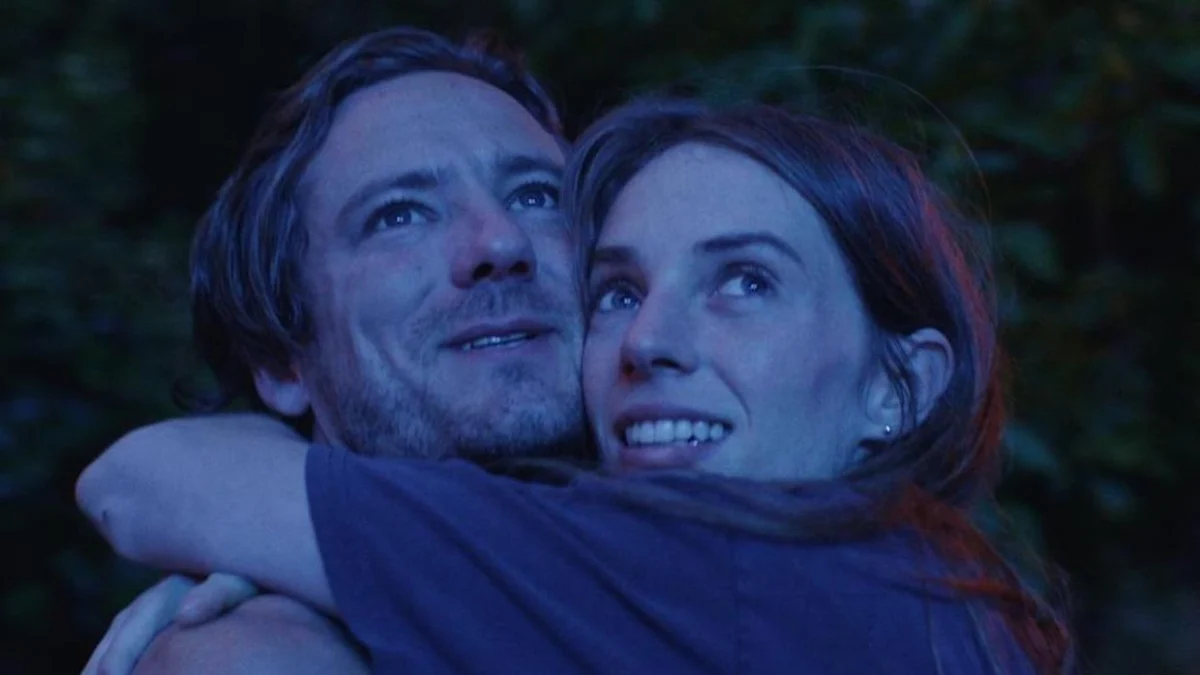
Wishful Thinking, the feature-length directorial debut of American filmmaker Graham Parkes, secured the prestigious Narrative Feature Prize at the South by Southwest (SXSW) Film & TV Festival following its world premiere on March 12 in Austin, Texas. The film represents a sophisticated exploration of modern intimacy, blending grounded romantic drama with a "lo-fi" science fiction conceit that examines the psychological weight of emotional co-dependence. Starring Lewis Pullman as Charlie and Maya Hawke as Julie, the production utilizes the atmospheric backdrop of Portland, Oregon, to tell a story where the internal fluctuations of a romantic relationship exert a literal, physical influence on the external world.
The narrative follows a couple whose domestic life is transformed after attending a specialized couples therapy summit. This encounter unlocks a latent, supernatural ability: their collective emotional state begins to manifest tangible reality. When their relationship is harmonious, the world around them reflects that positivity through fortunate coincidences and serene environments. Conversely, periods of conflict or individual anxiety trigger destructive consequences for their surroundings, effectively making the stability of the global fabric dependent on the health of their private union.
The Genesis of a Supernatural Conceit
The conceptual origin of Wishful Thinking stems from Parkes’ fascination with the cultural phenomenon of "manifesting," specifically as popularized by the 2006 self-help book and documentary The Secret by Rhonda Byrne. While The Secret presents the "Law of Attraction"—the idea that positive thoughts bring positive results—as an empowering tool for personal success, Parkes identified a latent horror in the premise. From a journalistic perspective, the film recontextualizes this New Age philosophy through the lens of clinical anxiety.
Parkes noted that the pressure to maintain a positive mood to ensure external safety is inherently terrifying for those who struggle with emotional regulation. The script evolved from a dark comedic observation—the idea that a bad mood could cause a localized catastrophe—into a dramatic exploration of how two people navigate the burden of having their private neuroses projected onto a public scale. By shifting the focus from an individual to a couple, the film explores the "two-hander" dynamic, where the manifestation is a product of shared energy rather than singular intent.
Chronology of Production and Casting
The development of Wishful Thinking followed a multi-year trajectory involving key collaborators from Parkes’ earlier short film projects. Lewis Pullman, known for his roles in Top Gun: Maverick and Outer Range, was an early attachment to the project, having established a professional rapport with Parkes on previous sets. The casting of Maya Hawke, a rising star recognized for her work in Stranger Things and Asteroid City, occurred through a combination of industry networking and serendipity.
The production timeline highlights a notable "fated" encounter: three years prior to the film’s casting phase, Parkes met Hawke’s manager during a commercial flight delay. This prior connection facilitated a more direct and expedited casting process when the script for Wishful Thinking reached Hawke’s team. Despite a compressed rehearsal schedule—with Hawke arriving only a day before principal photography commenced—the lead actors developed a chemistry that Parkes describes as intuitive and improvisational.
The filming process in Portland was characterized by a high-intensity schedule. Parkes adopted a technique he refers to as "Supermarket Sweep," a method prioritizing the capture of a high volume of varied takes and improvisational flourishes over rigid perfectionism. This approach was designed to "direct for the edit," providing the post-production team with a diverse array of emotional textures to build the final narrative.
Technical Innovation: The Use of Split-Screen
A defining technical characteristic of Wishful Thinking is its strategic deployment of split-screen cinematography. Developed in collaboration with Director of Photography Christopher Ripley, this visual choice serves as a narrative metaphor for the dual perspectives inherent in any long-term relationship. Unlike traditional uses of split-screen that often denote simultaneous actions in different locations, Ripley and Parkes utilized the format to show shared perspectives and diverging emotional reactions within the same space.

The film’s visual language evolves alongside the characters’ emotional states. The first half of the film employs longer lenses and a more chaotic editing rhythm to simulate the sensation of an escalating panic attack. As the characters are forced to confront the reality of their situation, the cinematography shifts toward a more stabilized, "breathable" composition. The technical team also utilized visual effects (VFX) to align environmental elements—such as cloud formations—across the split-screen frames, creating a sense of "found" supernatural synchronicity that reinforces the manifestation theme.
Contextualizing the SXSW Narrative Feature Win
Winning the Narrative Feature Prize at SXSW places Wishful Thinking in a lineage of influential independent films. SXSW has historically served as a launchpad for filmmakers who blend genre elements with auteur sensibilities. The jury’s recognition of Parkes’ debut underscores a current industry trend: the "lo-fi sci-fi" movement, where high-concept supernatural elements are used as allegories for internal psychological states rather than as spectacles for action.
The film’s success at the festival is also a testament to the strength of its production team, including producers Matt Smith and Dan Gedman. The win provides the film with significant momentum for domestic and international distribution, particularly within the independent circuit that values original intellectual property (IP) over franchise-based content.
Analysis of Themes and Modern Relationships
Wishful Thinking functions as a cinematic meditation on the limitations of self-improvement culture. By literalizing the "manifestation" trend, the film critiques the modern obsession with controlling one’s internal environment to achieve external perfection. Parkes’ narrative suggests that such control is an illusion and that true intimacy requires an acceptance of "the winds" of one’s inherent nature.
The film’s conclusion departs from traditional romantic tropes by offering a pragmatic view of love. Rather than a total resolution of the supernatural conflict, the story emphasizes the necessity of slowing down to allow the "truth" of the characters’ identities to emerge. This thematic focus aligns with a broader cinematic shift toward stories that prioritize emotional vulnerability and the acknowledgment of inevitable sadness within healthy relationships.
Broader Implications for Independent Cinema
The reception of Wishful Thinking highlights several key indicators for the future of the independent film market:
- Genre Hybridization: The success of the film suggests that audiences and critics are increasingly receptive to "hybrid" narratives that defy easy categorization. By blending romance, comedy, and science fiction, Parkes targets a demographic that seeks intellectual depth alongside high-concept entertainment.
- The "Auteur-Actor" Connection: The long-standing collaboration between Parkes and Pullman, combined with the rapid integration of Hawke into the creative process, emphasizes the importance of trust-based ensembles in low-budget filmmaking.
- Visual Storytelling as Narrative: The use of split-screen and specific lens choices as primary storytelling tools—rather than mere aesthetic flourishes—points toward a renewed interest in formalist filmmaking in the indie space.
- Portland as a Production Hub: The choice of Portland, Oregon, as a filming location continues to solidify the Pacific Northwest’s reputation as an ideal setting for moody, atmospheric independent dramas, offering a distinct aesthetic alternative to the traditional hubs of Los Angeles or New York.
Conclusion and Future Outlook
As Wishful Thinking moves from its festival debut into the broader marketplace, it stands as a significant achievement for Graham Parkes and his team. The film manages to navigate the difficult balance of being both a personal, vulnerable exploration of relationship anxiety and a high-concept genre piece with broad appeal.
The Narrative Feature Prize win at SXSW ensures that the film will be a central part of the conversation regarding the best independent releases of the year. For Lewis Pullman and Maya Hawke, the film serves as a showcase for their range as dramatic leads, capable of carrying a narrative that is both grounded in human emotion and elevated by supernatural stakes. For the industry at large, Wishful Thinking provides a blueprint for how to utilize speculative fiction to probe the most intimate corners of the human experience, proving that sometimes the most powerful forces in the universe are not found in the stars, but in the complex, often messy connections between two people.