
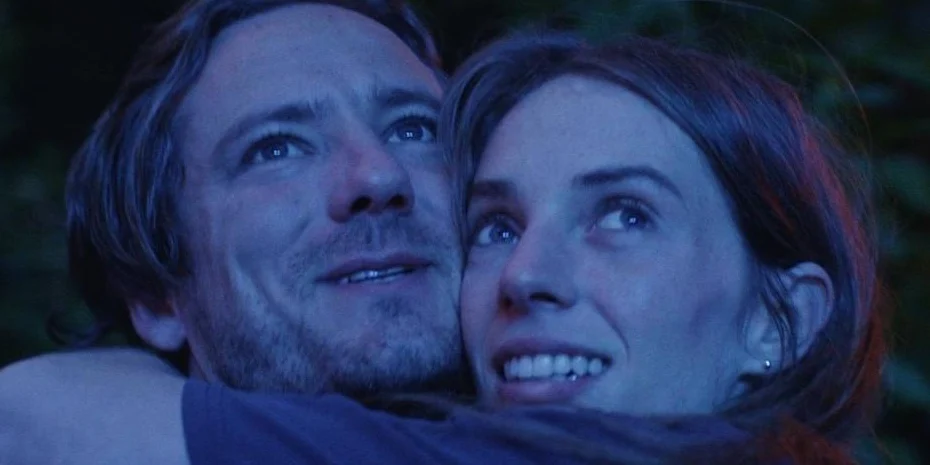
The cinematic landscape is perpetually in search of narratives that can authentically capture the intricate dance of human relationships, particularly when external forces, whether literal or metaphorical, test the bonds of love and commitment. Graham Parkes’ directorial debut, "Wishful Thinking," emerges as a noteworthy entry into this genre, presenting a unique premise that intertwines the emotional lives of its protagonists with tangible, supernatural manifestations in their environment. Starring Lewis Pullman as Charlie and Maya Hawke as Julie, the film explores the profound interconnectedness between internal emotional states and external reality, prompting a critical examination of whether their relationship is a catalyst for growth or a source of unforeseen chaos.
The film’s narrative unfolds through a series of vignettes, offering audiences an intimate glimpse into the tumultuous yet enduring relationship between Charlie and Julie. Early scenes depict the couple navigating the often mundane, yet potent, stressors of everyday life. Their arguments, depicted with a raw authenticity, range from the triviality of unwatered plants to the more significant anxieties surrounding unfulfilled travel aspirations, such as a coveted trip to Italy. These moments are punctuated by cycles of conflict and reconciliation, characterized by tear-filled embraces and promises of change. Julie’s struggle to quit smoking, often triggered by Charlie’s heightened emotional responses, serves as a recurring motif, underscoring the cyclical nature of their challenges and their magnetic pull back to one another, even amidst distress.
Parkes masterfully introduces a fantastical element that elevates the story beyond a typical romantic dramedy. The central conceit of "Wishful Thinking" is the idea that potent emotional energy possesses the power of manifestation, not only influencing the individual experiencing it but also projecting outward to affect their surroundings. This concept is activated following Charlie and Julie’s attendance at a self-help seminar led by the enigmatic Wylden Twins, portrayed by Kate Berlant. This pivotal event irrevocably alters their reality, imbuing their emotional states with a supernatural influence. When their relationship is harmonious, their environment flourishes, bathed in a sense of vibrant optimism. Conversely, moments of discord and negativity manifest as tangible disruptions, with their anxieties and frustrations seemingly rippling outward into the universe. This cosmic "curse" compels the couple to confront the true impact of their interactions, often leading them to suppress their authentic feelings for fear of unleashing uncontrollable consequences.
The film’s inventive premise has drawn comparisons to Pixar’s "Inside Out," albeit with a more mature and adult-oriented sensibility. "Wishful Thinking" appeals to audiences who appreciate romantic dramadies that artfully blend emotional sincerity with comedic relief. Parkes’ screenplay is a significant strength, allowing humor to emerge organically from the characters’ personalities and their spirited, often whimsical, dialogues. The comedic timing is sharp and rhythmic, enabling effortless banter between the actors, even as the situations escalate in their fantastical nature. This success is largely attributed to the ensemble cast’s unwavering commitment to their roles. The humor is meticulously crafted, including a memorable recurring bit involving Jon Hamm, which consistently delivers comedic impact without diminishing its effectiveness over time.
The chemistry between Lewis Pullman and Maya Hawke is a cornerstone of the film’s success. They navigate the intricate emotional and comedic demands of the script with apparent ease, grounding Parkes’ imaginative narrative in a relatable emotional truth. The film skillfully weaves together their individual professional aspirations – Julie’s ambition as a game developer and Charlie’s career as a musical artist – with their shared anxieties and insecurities. These personal struggles propel them towards a fragile equilibrium, achieved through both performative gestures, such as spontaneous "sexy dancing," and moments of hard-won, unvarnished honesty. Hawke delivers a performance of remarkable emotional depth, showcasing a nuanced portrayal that may well be a career highlight. Pullman complements her performance with equal strength, adeptly capturing Charlie’s volatility while retaining an endearing, almost golden-retriever-like charm that makes the character universally appealing.
Parkes’ direction effectively complements his screenplay, fostering an environment where the fantastical elements feel integrated rather than imposed. The score, composed by Oliver Lewin, imbues the film with a whimsical sensibility that aligns perfectly with its overall tone. Christopher Ripley’s cinematography captures the natural beauty of Oregon with a striking visual flair. The use of a handheld camera approach imbues the more elaborate sequences with a sense of immediacy and intimacy, drawing the audience deeper into the characters’ experiences.
Despite its many strengths, "Wishful Thinking" does encounter some limitations, particularly in the predictability of its narrative trajectory, especially concerning the resolution of the central relationship. The exploration of expectation versus reality, a theme deeply ingrained in the romantic dramedy genre, has been extensively examined in previous cinematic works. Consequently, the film’s conclusion, while fitting, may lack the profound emotional resonance of the journey that precedes it. Nevertheless, as a debut feature, "Wishful Thinking" stands as a testament to Parkes’ directorial prowess, particularly his skillful work with actors. The film suggests a promising future for the director, signaling his capacity to craft compelling narratives that resonate with both emotional depth and imaginative scope.
Background and Development
The genesis of "Wishful Thinking" can be traced to Graham Parkes’ distinctive vision for exploring the tangible impact of human emotion. Parkes, known for his work in television comedy, ventured into feature filmmaking with a desire to delve into more complex psychological themes, using a fantastical lens. The initial concept is believed to have emerged from a fascination with the power of positive thinking and its potential, both constructive and destructive, when amplified beyond individual experience.
The casting process for "Wishful Thinking" was crucial in bringing this ambitious concept to life. Lewis Pullman, who has demonstrated a versatility across various genres, was reportedly drawn to Charlie’s blend of emotional vulnerability and underlying strength. Maya Hawke, whose performances often exude a captivating blend of innocence and resilience, was an ideal counterpart for Julie, embodying the complexities of a character grappling with both personal ambition and relational turbulence. The ensemble cast, including Randall Park, Jake Shane, Kate Berlant, Amita Rao, and Eric Rahill, was carefully curated to provide a rich tapestry of supporting characters who could effectively react to and interact with the film’s central premise. Berlant’s portrayal of the Wylden Twins, in particular, was intended to serve as a catalyst for the supernatural shift, their enigmatic presence providing the crucial narrative impetus.
Production of "Wishful Thinking" took place over a period of approximately 45 days, primarily in various scenic locations across Oregon. The choice of Oregon was deliberate, aiming to leverage its diverse natural landscapes – from lush forests to urban settings – to visually represent the shifting emotional states of the protagonists. The film’s production budget, while not publicly disclosed, is estimated to be in the independent film range, suggesting a focus on creative storytelling and resourceful execution over lavish spectacle. The 105-minute running time was meticulously planned to allow for thorough character development and narrative progression without overstaying its welcome.
Thematic Exploration and Critical Reception
"Wishful Thinking" delves into several compelling themes, foremost among them being the profound impact of emotional well-being on interpersonal relationships and external reality. The film posits that unchecked emotional states can have literal, tangible consequences, forcing individuals to cultivate a greater degree of self-awareness and emotional regulation. This exploration resonates with contemporary discussions around mental health and the interconnectedness of our inner lives with the world around us.
The film also examines the inherent challenges of long-term relationships, particularly the delicate balance between individual growth and shared compromise. Charlie and Julie’s journey highlights how external pressures and personal insecurities can strain even the strongest bonds, necessitating a conscious effort to navigate conflict and foster mutual understanding. The supernatural element, rather than serving as a mere plot device, acts as an allegory for the amplified consequences of unresolved emotional issues within a partnership.
Critical reception for "Wishful Thinking" has been largely positive, with many critics lauding its originality and the strong performances of its lead actors. The film has been praised for its ability to blend genres, offering a fresh take on the romantic dramedy by infusing it with elements of fantasy and psychological drama. The screenplay has been commended for its witty dialogue and its thoughtful exploration of complex emotional dynamics.
However, some reviews have pointed to the film’s predictable narrative arc in its latter stages, suggesting that the resolution, while satisfying, does not entirely subvert audience expectations. Nevertheless, the consensus remains that "Wishful Thinking" is a confident and accomplished debut for Graham Parkes, showcasing a unique voice and a keen understanding of character development.
Broader Impact and Future Implications
The success of "Wishful Thinking" could have significant implications for Graham Parkes’ directorial career. His ability to craft a narrative that is both intellectually stimulating and emotionally resonant, while successfully managing a talented ensemble cast, positions him as a filmmaker with considerable potential. The film’s innovative premise might also inspire other storytellers to explore similar fantastical concepts within the realm of relationship dramas, pushing the boundaries of conventional storytelling.
Furthermore, the film’s exploration of the tangible impact of emotional states could contribute to broader cultural conversations about mental well-being and the importance of emotional intelligence. By presenting these concepts in a visually engaging and narrative-driven manner, "Wishful Thinking" offers a unique perspective that may resonate with a wide audience, potentially encouraging introspection and a greater awareness of one’s own emotional influence. The film’s success in a competitive market also underscores the enduring appeal of original storytelling and character-driven narratives, suggesting a continued demand for films that offer both entertainment and thoughtful reflection. As the film garners attention, it is likely to be analyzed for its thematic depth and its contribution to the evolving landscape of independent cinema.