



The global video game industry continues to witness a unique convergence of nostalgia-driven play and the emergence of innovative independent titles, as evidenced by current player engagement patterns observed in early April. While modern hardware like the PlayStation 5 and high-end PCs dominate the market, significant consumer interest remains anchored in legacy titles and experimental "genre-fluid" indie projects. This report examines the technical longevity of 3D platformers, the rise of the "Disco-like" role-playing subgenre, and the persistent cultural footprint of early-2000s massively multiplayer online role-playing games (MMORPGs).
The Continued Relevance of Super Mario Galaxy in the Modern Era
Super Mario Galaxy, originally released for the Nintendo Wii in 2007, remains a focal point of discussion within the platforming genre. Developed by Nintendo EAD Tokyo, the title introduced a revolutionary gravity-based movement system that allowed players to navigate spherical and irregularly shaped planetary environments. As of 2024, the game’s presence on the Nintendo Switch via the "Super Mario 3D All-Stars" collection has facilitated a new wave of accessibility for a younger demographic.
The resurgence of interest in Super Mario Galaxy is partially attributed to the broader success of the Super Mario Bros. cinematic franchise. Following the 2023 film’s gross of over $1.36 billion globally, Nintendo announced a sequel slated for 2026. Industry analysts suggest that parents who played the original titles are increasingly using the games as foundational media for their children prior to theatrical releases. The game’s design, characterized by "spherical walking" and orbital physics, was a technical marvel upon release, utilizing the Wii’s limited hardware to create expansive, seamless celestial environments. Critical consensus maintains that the title’s level design has aged with remarkable grace, largely due to its focus on creative mechanics over high-fidelity graphical realism.
The Emergence of Esoteric Ebb and the Disco-like Subgenre
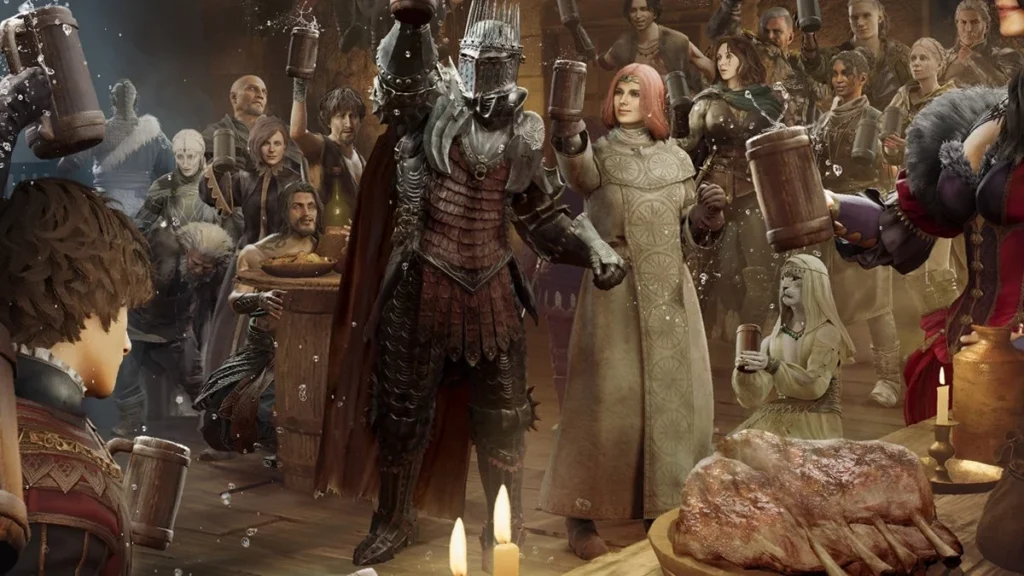
In the independent sector, the title Esoteric Ebb has garnered attention for its adherence to the "Disco-like" design philosophy—a term coined following the critical success of ZA/UM’s Disco Elysium. Developed by solo creator Christoffer Bodegård, Esoteric Ebb combines isometric exploration with a narrative system deeply rooted in tabletop role-playing game (TTRPG) mechanics, specifically those found in the fifth edition of Dungeons & Dragons.
The core innovation of Esoteric Ebb lies in its internal dialogue system. Similar to the "Skills" in Disco Elysium, the protagonist’s attributes—such as Strength, Dexterity, and Wisdom—function as distinct voices within the character’s psyche. These attributes frequently engage in "internal parliamentary debates," forcing the player to navigate conflicting impulses and moral quandaries. This shift toward "narrative-heavy, combat-light" RPGs reflects a growing market appetite for psychological depth and player agency over traditional action-oriented gameplay.
Market data indicates that indie RPGs utilizing these complex dialogue trees see higher engagement rates in the "long-tail" period after launch, as players discuss various branching outcomes on community forums. The inclusion of traditional D&D elements also capitalizes on the massive resurgence of the tabletop hobby, which has seen a 33% increase in player base over the last five years.
Seasonal Traditions and the Speedrunning Culture of Jak and Daxter
The PlayStation 2 classic Jak and Daxter: The Precursor Legacy continues to maintain a dedicated following, particularly through its availability on the PlayStation 5 via the PlayStation Plus Classics Catalog. Released in 2001 by Naughty Dog, the game was a pioneer in seamless open-world design, featuring no loading screens—a feat achieved through advanced background streaming techniques that were revolutionary for the 128-bit era.
A notable trend among the Jak and Daxter community is the practice of "comfort gaming" and personal speedrunning. While the official world record for a 100% completion run stands at approximately 1 hour and 47 minutes, casual players often engage in annual "marathon" sessions. These sessions highlight the game’s replayability and the psychological comfort found in familiar mechanics. The transition of Jak and Daxter from a flagship hardware seller to a "legacy comfort title" illustrates the importance of backwards compatibility in the modern console ecosystem. Sony’s decision to include the title in its premium subscription tiers has ensured that the "Precursor" lore remains relevant more than two decades after the franchise’s debut.
Old School RuneScape and the Power of Progression Milestones
Old School RuneScape (OSRS), the 2013 relaunch of Jagex’s 2007 version of the game, remains one of the most successful examples of community-driven game development. The game’s enduring popularity is sustained by its "polling" system, where players vote on every major content update. A primary driver of player retention in OSRS is the pursuit of "Legendary" status through extensive quest chains, such as "Recipe for Disaster."
"Recipe for Disaster," originally released in 2006 to celebrate RuneScape’s 100th quest milestone, remains a benchmark for MMORPG content. It requires the completion of multiple sub-quests and culminates in a multi-stage boss fight against the "Culinaromancer." The reward for this arduous task—the Barrows Gloves—remains the "Best-in-Slot" (BiS) item for many character builds.
The pursuit of such rewards often spans hundreds of hours of gameplay, illustrating the "sunk cost" and "milestone" psychology that fuels the MMORPG genre. Despite the availability of modern MMOs with superior graphics, OSRS maintains a consistent player count of over 100,000 concurrent users. This success is attributed to the game’s low barrier to entry, its mobile-crossplay functionality, and the deep sense of accomplishment associated with its long-term goals.
Strategic Analysis of Gaming Trends
The current gaming landscape is defined by three distinct pillars:
- Legacy Integration: Companies like Nintendo and Sony are successfully leveraging their back catalogs to bridge the gap between generations. By making titles like Super Mario Galaxy and Jak and Daxter available on modern hardware, they create a continuous brand ecosystem.
- Narrative Innovation: The success of Esoteric Ebb suggests that the "Disco-like" subgenre is not a one-off phenomenon but a viable new path for RPG developers. This indicates a move toward "intellectual gameplay" where the primary conflict occurs within the player’s decision-making process rather than through physical combat.
- Community-Led Growth: The stability of Old School RuneScape proves that player-centric development and transparent communication are more effective for long-term retention than frequent, high-budget expansions that may alienate the core user base.
Broader Industry Implications
The intersection of these various gaming experiences points toward a maturing industry where "new" is no longer synonymous with "better." The high engagement with Super Mario Galaxy (a 17-year-old game) and Jak and Daxter (a 23-year-old game) suggests that the platforming mechanics perfected in the early 2000s remain the gold standard for the genre. Meanwhile, the excitement surrounding indie projects like Esoteric Ebb demonstrates that there is still significant room for innovation in how stories are told and how player attributes are conceptualized.
Furthermore, the "daily quest" mechanics seen in titles like Slay the Spire—also mentioned in recent player reports—highlight a shift toward bite-sized, repeatable content. Slay the Spire 2, recently announced, is expected to build upon the "daily challenge" model which provides unique, rule-bending scenarios to keep the community engaged without the need for constant large-scale updates.
In conclusion, the first week of April has showcased a gaming community that is diverse in its tastes but unified in its appreciation for depth, whether that depth is found in the gravity-defying levels of a Nintendo classic, the internal monologues of a Swedish indie RPG, or the decades-old grind of a British MMORPG. As the industry moves forward, the balance between honoring the past and experimenting with the future will remain the primary driver of consumer satisfaction.