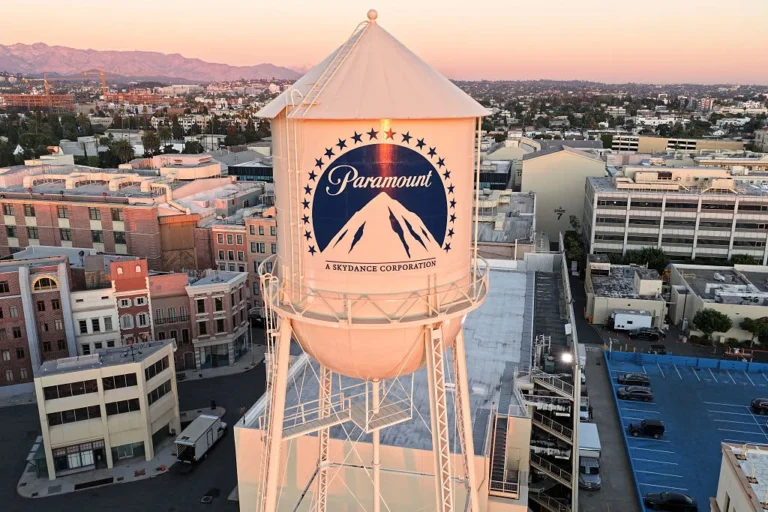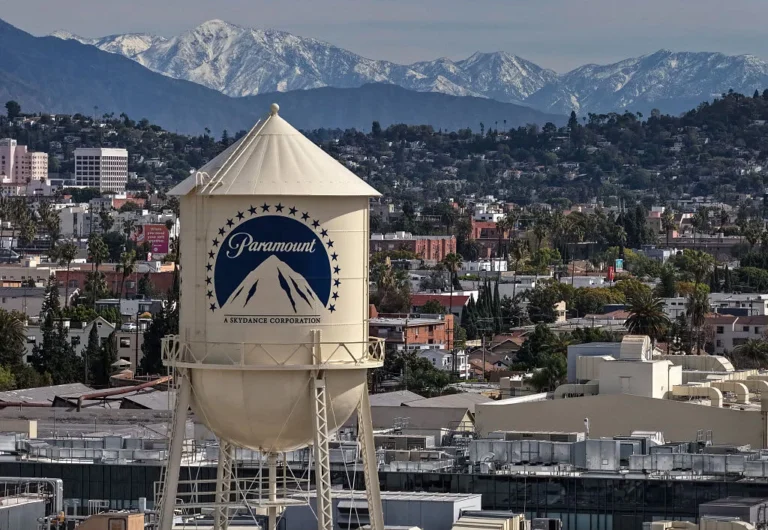




The board of directors at Warner Bros. Discovery is officially evaluating a potential pivot in its massive divestiture strategy, considering a return to the negotiating table with Paramount Skydance after receiving a significantly enhanced acquisition proposal. According to reports from Bloomberg News on Sunday, February 15, 2026, the media giant is weighing whether to abandon or renegotiate its existing agreement with Netflix in favor of a more lucrative, albeit complex, offer from the Paramount-Skydance consortium. This development marks a pivotal moment in the ongoing consolidation of the global media landscape, as the industry’s most iconic film studio and a premier streaming service, HBO Max, hang in the balance.
The shift in stance comes nearly two months after Warner Bros. Discovery appeared to have settled its future by entering into a definitive agreement with Netflix. In December 2025, the companies announced a deal valued at $27.75 per share, which would see Netflix absorb the legendary Warner Bros. film studio and the HBO Max streaming platform. However, the emergence of a hostile, all-cash bid from Paramount—the parent company of CBS and MTV—has forced the board to reconsider its fiduciary duties to shareholders. Paramount’s initial bid of $30 per share represented a premium over the Netflix offer, but it was the recent addition of "sweeteners" and protective financial clauses that finally prompted the Warner Bros. Discovery board to reopen the dialogue.
Financial Architecture of the Competing Bids
The battle for Warner Bros. Discovery has evolved into a high-stakes bidding war characterized by sophisticated financial instruments designed to mitigate the risks of regulatory scrutiny. While the headline price of $30 per share from Paramount is notably higher than Netflix’s $27.75, the true value of the Paramount offer lies in its newly added "ticking fee" and indemnity clauses.
Last week, Paramount Skydance amended its offer to include a ticking fee of 25 cents per share for every quarter that the deal remains unclosed beyond December 31, 2026. This fee is specifically designed to compensate Warner Bros. Discovery shareholders for the "time value of money" and the uncertainty inherent in the lengthy regulatory review process. In practical terms, this ticking fee equates to approximately $650 million in cash value per quarter. This move is a direct response to concerns that a merger between Paramount and Warner Bros. Discovery—two of the "Big Five" legacy studios—would face significantly more antitrust pushback than a merger between a tech-led streamer like Netflix and a legacy studio.
Furthermore, Paramount has committed to assuming the financial burden of the breakup. If Warner Bros. Discovery terminates its existing contract with Netflix to pursue the Paramount deal, Paramount has pledged to cover the $2.8 billion termination fee. Additionally, the revised offer includes the elimination of $1.5 billion in potential debt refinancing costs, further cleaning up the balance sheet of the target company. These incentives are intended to make the Paramount bid "risk-neutral" for the Warner Bros. Discovery board, addressing the primary advantage Netflix held: a perceived smoother path to regulatory approval.
Chronology of a Media Mega-Merger
The current situation is the culmination of a turbulent period for Warner Bros. Discovery, which has struggled with a heavy debt load since the 2022 merger of WarnerMedia and Discovery Inc. The timeline of the current sale process illustrates the rapid escalation of the bidding war:
- December 5, 2025: Warner Bros. Discovery enters into a formal agreement to sell its film studio and HBO Max to Netflix for $27.75 per share. The deal is framed as a way for WBD to deleverage and for Netflix to secure a massive library of premium IP.
- December 8, 2025: Paramount, backed by Skydance Media, launches a hostile bid for Warner Bros. Discovery. The $30-per-share all-cash offer is presented directly to shareholders, bypassing the board’s initial preference for the Netflix deal.
- January 2026: Market analysts express skepticism regarding the Paramount bid, citing the high likelihood of Department of Justice (DOJ) and Federal Trade Commission (FTC) intervention due to the concentration of legacy media assets.
- February 10, 2026: Paramount sweetens the deal. It introduces the ticking fee and the $2.8 billion termination fee coverage, aiming to neutralize the "regulatory risk" argument.
- February 15, 2026: Sources close to the Warner Bros. Discovery board reveal that the directors are officially considering reopening negotiations with Paramount, signaling that the sweetened terms have shifted the board’s internal calculus.
Strategic Context and the Value of IP
The intense interest in Warner Bros. Discovery highlights the enduring value of "prestige" intellectual property (IP) in an era where streaming growth has plateaued and content costs continue to rise. By acquiring the Warner Bros. film studio, any buyer gains control over the DC Universe (including Batman and Superman), the Harry Potter franchise, and the vast Turner Classic Movies library.
For Netflix, the acquisition would represent a final transition from a technology-based aggregator of content to a traditional Hollywood powerhouse. It would provide Netflix with a physical studio infrastructure and a library of content that could reduce its reliance on original production, which has become increasingly expensive.

For Paramount, the acquisition is seen as an existential necessity. As the smallest of the major legacy media players, Paramount (through its merger with Skydance) views the addition of Warner Bros. and HBO Max as the only way to achieve the scale necessary to compete with Disney and Amazon. A combined Paramount-WBD entity would control a massive share of the domestic television market (via CBS, MTV, CNN, and HBO) and a dominant portion of the theatrical box office.
Regulatory Hurdles and Market Implications
The primary obstacle remains the regulatory environment. Under current antitrust guidelines, a merger between Paramount and Warner Bros. Discovery would likely be viewed as a "horizontal merger" that could reduce competition in the film production and television broadcasting sectors. In contrast, a Netflix acquisition is often viewed as a "vertical" or "conglomerate" expansion, which historically has faced less resistance, though the current FTC has shown a willingness to challenge tech giants expanding into adjacent markets.
The "ticking fee" introduced by Paramount is a strategic gamble. By putting $650 million per quarter on the line, Paramount is signaling its confidence that it can navigate the regulatory maze or, at the very least, that it is willing to pay a premium for the delay.
Industry analysts suggest that the Warner Bros. Discovery board is using the Paramount offer as leverage. By reopening talks, the board may be attempting to goad Netflix into raising its $27.75-per-share offer or offering similar financial protections against regulatory delays. Bloomberg’s report indicates that both Netflix and Paramount have expressed a willingness to further increase their bids, suggesting that the final price for the studio could climb well above the $30 mark.
Statements and Reactions
While official spokespeople for Warner Bros. Discovery, Paramount, and Netflix have declined to comment on the ongoing deliberations, the sentiment within the industry is one of high anticipation. James Chadwick, a prominent media analyst, characterized the situation in a recent CNBC interview as a "once-in-a-lifetime opportunity for Paramount." Chadwick noted that if Paramount fails to secure this deal, it risks becoming a permanent "sub-scale player" in a market dominated by giants.
Conversely, some institutional investors in Warner Bros. Discovery have expressed concern over the potential for a protracted legal battle if the Paramount bid is accepted. "The Netflix deal was clean," said one anonymous hedge fund manager with a significant stake in WBD. "Paramount’s offer is flashier, but if it gets tied up in court for three years, the ticking fee might not be enough to compensate for the lost momentum of the business."
Broader Impact on the Entertainment Industry
The outcome of these negotiations will redefine the "Big Five" of Hollywood. If Paramount succeeds, it creates a legacy media titan with unparalleled reach in news, sports, and scripted entertainment. If Netflix prevails, it cements the shift of power from the traditional studio system to the Silicon Valley model of content distribution.
Furthermore, the deal has significant implications for the workforce in Burbank and beyond. A merger with Paramount would likely result in substantial "synergies"—a corporate euphemism for layoffs and department consolidations—as the two companies overlap in many administrative and production areas. A Netflix acquisition might preserve more of the studio’s independent identity, as Netflix currently lacks the redundant legacy infrastructure that Paramount possesses.
As the Warner Bros. Discovery board continues its deliberations this week, the eyes of the financial and entertainment worlds remain fixed on the outcome. Whether the board chooses the perceived safety of Netflix or the aggressive premiums of Paramount, the resulting entity will fundamentally alter how audiences around the world consume media for decades to come. The decision is expected to be finalized before the end of the first quarter of 2026, barring further counter-offers that could extend this high-stakes corporate drama.