


The financial community is turning its collective attention toward Versant Media Group as the newly independent entity prepares to release its first-ever quarterly earnings report this Tuesday. This milestone marks the first comprehensive look into the operational health and fiscal viability of a company composed almost entirely of legacy cable television networks and specialized digital platforms. Spun off from Comcast Corporation in a landmark transaction that concluded in early 2026, Versant Media Group represents a bold, if risky, experiment in the modern media landscape: the creation of a "pure-play" content company at a time when the traditional pay-TV bundle is under unprecedented pressure from streaming services and shifting consumer habits.
The upcoming report will provide granular detail on a portfolio of assets that, until recently, were consolidated within the vast financial reporting of Comcast’s NBCUniversal division. Investors are particularly keen to see how the company’s management, led by CEO Mark Lazarus, intends to navigate the secular decline of linear television while leveraging its stable of high-value news and sports properties to maintain profitability and fund a transition to a more digital-centric future.
The Genesis of Versant: A Strategic Decoupling
The formation of Versant Media Group was the result of a multi-year strategic review by Comcast, which sought to streamline its core operations around high-growth areas such as high-speed broadband, wireless services, and its Peacock streaming service. By spinning off its cable networks, Comcast effectively insulated its primary balance sheet from the accelerating cord-cutting trends affecting the pay-TV industry.
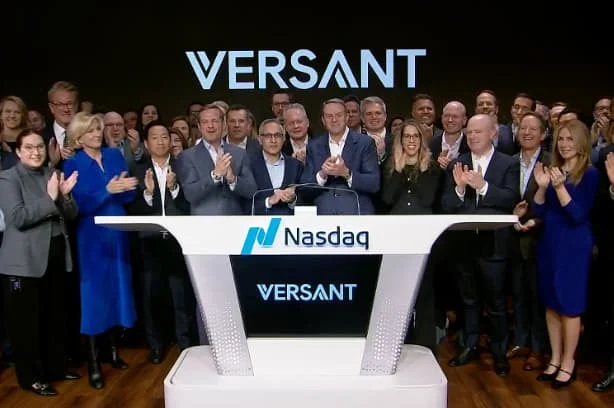
Versant officially debuted on the Nasdaq on January 5, 2026, under the ticker symbol VSNT. The spinoff included a diverse array of household names in the media space. On the television side, the portfolio includes the influential business news network CNBC, the news and commentary outlet MS Now, and general entertainment stalwarts such as USA Network, Syfy, E!, and Oxygen. The package also features niche sports-focused channels, including the Golf Channel.
Beyond traditional cable, Versant inherited a suite of digital properties that are central to its long-term growth strategy. These include Fandango, the leading movie ticketing platform; Rotten Tomatoes, the film and television review aggregator; and specialized digital tools like GolfNow and Sports Engine. This combination of legacy media and transactional digital platforms is designed to provide a diversified revenue stream, though the vast majority of the company’s current income remains tied to the cable ecosystem.
Financial Trajectory and Market Performance
The financial data released prior to the IPO painted a picture of a business in transition. According to Securities and Exchange Commission (SEC) filings, the assets that now comprise Versant Media Group generated $7.1 billion in revenue in 2024. While substantial, this figure represented a steady decline from $7.4 billion in 2023 and $7.8 billion in 2022. This downward trend—a roughly 9% decrease over a three-year period—reflects the broader challenges facing the cable industry as subscriber counts dwindle across the United States.
Since its January debut, Versant’s stock has struggled to find a solid floor, dropping approximately 25% from its initial trading price. Market analysts attribute much of this volatility to technical selling pressure, as institutional investors who received Versant shares as part of the Comcast spinoff rebalanced their portfolios. At current levels, the company’s market capitalization sits at approximately $4.8 billion, a valuation that reflects a cautious outlook from Wall Street regarding the long-term terminal value of linear cable networks.
The Strategy of Live Programming and "Sticky" Content
Central to Versant’s pitch to the investment community is the "stickiness" of its content. Unlike general entertainment networks, which have seen their audiences migrate almost entirely to on-demand streaming, news and sports remain the primary drivers of live television viewership.
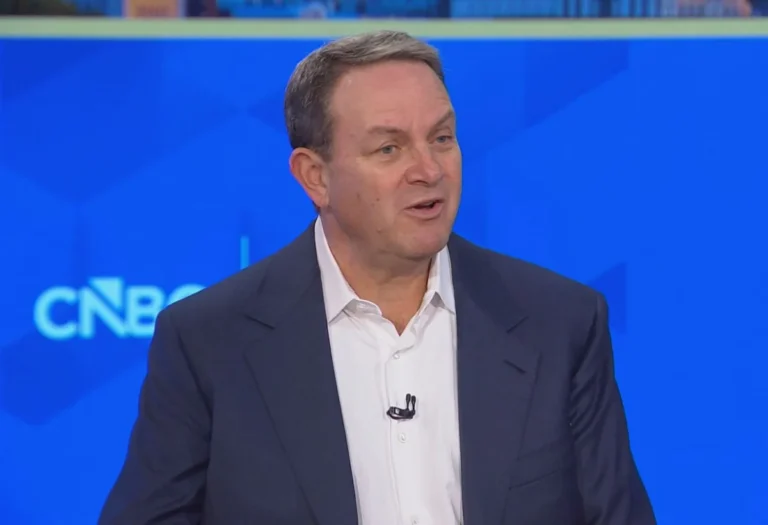
CEO Mark Lazarus emphasized this point during an investor day held in December, noting that 62% of Versant’s audience is drawn to live programming across its sports and news verticals. This focus is intended to make Versant’s networks indispensable to cable and satellite distributors. CNBC remains the gold standard for global business news, while MS Now provides a dedicated platform for political and social commentary.
In the sports arena, while Versant lacks the "Tier One" rights of the NFL or NBA, it maintains a dominant position in "Tier Two" and niche sports that command a loyal and affluent viewership. This includes significant long-term rights for professional golf, WWE, and NASCAR. Analysts at Raymond James have noted that this focus on specialized sports and news provides a significant advantage over competitors who rely more heavily on lower-value general entertainment networks, which are often the first to be dropped during carriage disputes.
Distribution Stability and Upcoming Negotiations
A critical factor in Versant’s near-term stability is its current distribution footprint. Before the spinoff, NBCUniversal successfully negotiated long-term carriage agreements with major providers, including Charter Communications and Google’s YouTube TV. These deals, which included the networks now owned by Versant, remain in effect for at least the next two years.
Anand Kini, Versant’s COO and CFO, has highlighted that more than half of the company’s pay-TV subscribers are governed by agreements that extend through 2028 or beyond. Furthermore, many of the company’s sports rights agreements are secured well into the 2030s. This provides a "cushion" of predictable affiliate fee revenue, even as the total number of pay-TV households continues to shrink.
However, the strength of this position will be tested shortly. Reports indicate that two significant distribution agreements are up for renewal this year. These negotiations will be the first time Versant sits at the table as an independent entity, without the leverage of Comcast’s broader portfolio (which includes local NBC stations and the Olympics). These discussions are increasingly fraught across the industry; blackouts have become a common tactic as distributors seek to lower costs in response to declining subscriber numbers. The outcome of these talks will be a major indicator of Versant’s standalone bargaining power.
The "Business Model Transition" and Digital Expansion
Management has labeled 2026 as the inaugural year of a fundamental "business model transition." The long-term objective is to reach a 50/50 revenue split between traditional pay-TV and a combination of digital, platform-based, and transactional businesses.
To accelerate this shift, Versant has already engaged in targeted mergers and acquisitions. The company recently completed the acquisition of Free TV Networks, a provider of free over-the-air digital broadcast channels, which targets the growing "cord-cutter" and "cord-never" demographics. Additionally, Versant acquired Indy Cinema Group, a cloud-based operating system for movie theaters, and integrated it into the Fandango ecosystem.
These moves suggest a strategy focused on vertical integration within specific niches—such as the movie-going experience and niche sports—rather than a broad attempt to compete with streaming giants like Netflix or Disney+. By owning the ticketing platform (Fandango), the review site (Rotten Tomatoes), and the theater operating system (Indy Cinema Group), Versant aims to capture a larger share of the transactional revenue generated by the film industry.
Industry Context and Competitive Landscape
Versant is not the only media company grappling with these structural shifts. The industry has watched closely as other giants have attempted similar maneuvers. Warner Bros. Discovery (WBD) recently considered a plan to split its linear networks from its streaming and studio assets before ultimately pursuing a merger path. Meanwhile, Newsmax, which went public last year, saw its stock price surge on initial enthusiasm before crashing as the realities of the difficult cable advertising market set in.
A glimmer of hope for Versant emerged from recent reports by Charter Communications, which posted a surprise gain in cable subscribers in the final quarter of 2025—the first such increase since 2020. While other distributors like Comcast continue to report losses, the rate of decline appears to be moderating in some sectors, leading some analysts to speculate that the "great unbundling" may be reaching a point of relative stabilization.
Analyst Sentiment and Tuesday’s Outlook
Wall Street remains divided on Versant’s prospects. While some firms appreciate the company’s strong free cash flow and lack of significant debt, others are wary of the secular headwinds. Goldman Sachs analysts recently initiated coverage with a "Neutral" rating, citing the "secular challenges in the linear networks business" despite being encouraged by the company’s efforts in the platform and digital space.
When the earnings are released on Tuesday, investors will be looking for several key indicators:
- Affiliate Fee Trends: Are the revenues from cable and satellite providers holding steady despite subscriber losses?
- Advertising Resilience: How is the advertising market for news and sports performing relative to general entertainment?
- Digital Growth: Is Fandango seeing a post-pandemic resurgence in theatrical attendance, and how are the newer acquisitions contributing to the bottom line?
- Margin Management: How effectively is the company cutting costs as it separates from the Comcast corporate umbrella?
Tuesday’s report will be more than just a financial statement; it will be a referendum on whether a focused, lean, and live-content-heavy media company can thrive in an era of digital fragmentation. As the first pure-play cable network spinoff of this scale, Versant Media Group’s performance will serve as a bellwether for the entire legacy media industry.