



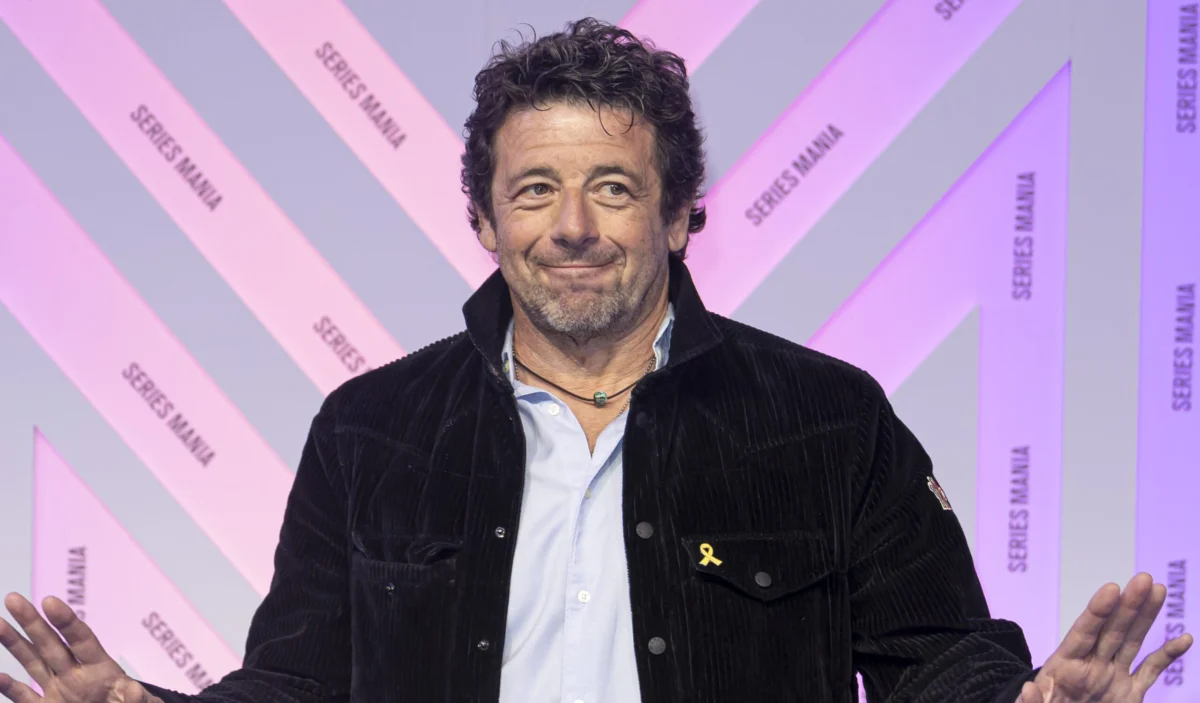
Daniela Elstner, a prominent figure in French cinema as the managing director of Unifrance, has escalated her long-standing, previously anonymous allegations of sexual misconduct by filing a formal police complaint against celebrated French actor and singer Patrick Bruel. The complaint, lodged on March 12, accuses Bruel of attempted rape and sexual assault stemming from an alleged incident in 1997. This significant development comes as France continues to grapple with a belated but increasingly vocal reckoning regarding sexual harassment and abuse within its influential entertainment sector, mirroring the global "MeToo" movement.
The Allegations Unveiled: A 1997 Incident in Acapulco
For years, Elstner had spoken publicly about her harrowing experience, including in a 2022 interview with The Hollywood Reporter, where she described an alleged assault by a high-profile figure in the film industry without disclosing his name. The recent investigation by the French investigative news website Mediapart, published on Wednesday, not only identified Elstner as the accuser but also revealed her complaint as one of eight women who have come forward with accusations of sexual violence against Bruel, with incidents reportedly spanning from 1992 to 2019.
Elstner’s complaint specifically details an alleged assault during Unifrance’s French Film Festival in Acapulco, Mexico, in 1997. At the time, Elstner was 26 years old and working as an assistant at Unifrance, an organization dedicated to promoting French cinema and television worldwide. Bruel, already a well-established star, was attending the festival to promote the French thriller K, in which he held a starring role alongside Isabella Ferrari and Marthe Keller.
Speaking to Mediapart, Elstner recounted a chilling sequence of events. She alleged that Bruel forcibly pushed her into a VIP car, where he then subjected her to unwanted kissing and fondling despite her clear protests. Her vivid memory of the incident includes the unsettling smiles of the Mexican driver reflected in the rearview mirror as she struggled, and Bruel’s dismissive words, which she recalled as, "Who are you? Nobody will believe you. You’re nothing. Do you know who I am?" Elstner emphasized the profound psychological impact of these words, stating they "affected me as much as the physical assault, because it was very clearly intended to tell me that I didn’t exist." The journey back to the bungalow, she described, "felt like it lasted forever." Upon reaching the destination, Elstner alleges Bruel attempted to force her into his room, but she managed to escape after a desperate struggle and screaming.
Broader Pattern of Accusations and Bruel’s Denial
Mediapart‘s extensive investigation brought to light a wider pattern of alleged misconduct surrounding Patrick Bruel. Beyond Elstner’s complaint, the report detailed that a second woman has lodged a separate complaint for rape against Bruel, alleging an incident took place at the Dinard British Film Festival in 2012. Bruel served as the president of the jury at this festival, adding another layer of power dynamics to the accusation.
The investigative report further outlined earlier allegations against Bruel, dating back to 2019. These included complaints from women working as masseuses in various luxury spas across France, who also accused the actor of sexual violence. However, these earlier cases were ultimately dismissed due to insufficient evidence, a common hurdle in prosecuting such sensitive and often unwitnessed crimes.
In response to the mounting allegations, Christophe Ingrain, Patrick Bruel’s lawyer, vehemently denied all claims against his client. Ingrain is quoted by Mediapart as stating that Bruel "never forced anyone into a sexual act or relationship" and "never overruled a refusal." This blanket denial sets the stage for a potentially protracted legal and public battle, even as the formal legal avenues for some of the older alleged incidents face significant challenges.
Patrick Bruel: A Cultural Icon Under Scrutiny
While not a global household name on the scale of some Hollywood figures, Patrick Bruel holds an undeniable and revered status in France. Born Patrick Benguigui, he adopted the stage name Bruel and rose to fame as both a highly successful singer and a prolific actor. His career spans decades, marked by numerous chart-topping albums that have sold millions, cementing his place as a beloved crooner and a significant figure in French pop culture. His acting credits are equally extensive, encompassing dozens of television and film roles, including critically acclaimed performances in films like What’s in a Name? (2012) and The Best Is Yet to Come (2019). His public image has long been one of charm and charisma, making these allegations particularly shocking and difficult for many of his fans to reconcile. The unfolding scandal threatens to profoundly alter his legacy and career trajectory, regardless of the legal outcomes.
Legal Landscape and the Pursuit of "Liberation"
A crucial aspect of Daniela Elstner’s complaint is the acknowledged challenge posed by the statute of limitations under French law. For sexual assault, the general statute of limitations for adults is typically six years, though for rape, it can extend to twenty years from the date of the alleged offense or, in some complex cases, from the victim’s majority. Given that Elstner’s alleged incident occurred in 1997, the conventional legal window for prosecution has long expired.
Speaking to Mediapart, Elstner’s lawyer, Jade Dousselin, articulated the rationale behind her client’s decision to file the complaint despite this obstacle. Dousselin described it as a "painful and significant decision," made with full awareness that the statute of limitations had passed. She clarified that Elstner’s "approach today is less about seeking condemnation than about seeking liberation." This statement highlights a growing trend among survivors of sexual violence, particularly in the wake of the "MeToo" movement, where formal legal justice may be unattainable due to time constraints or evidentiary challenges. For many, public acknowledgment, the act of naming their alleged abuser, and contributing to a broader societal shift towards accountability are forms of justice and healing. Filing a complaint, even when formal prosecution is unlikely, serves as a powerful testament to their experience and a stand against silence. It also opens avenues for civil action, though the primary stated goal here appears to be psychological and societal.
The "MeToo" Movement’s Complex Trajectory in France
The allegations against Patrick Bruel arrive amidst an intensified industry-wide reckoning with sexual harassment and abuse in France, a phenomenon that has seen a unique and often challenging trajectory compared to its counterparts in the Anglo-Saxon world. While the global "MeToo" movement gained traction in 2017, its French equivalent, "Balance Ton Porc" (Expose Your Pig), initially faced resistance and backlash. Critics, including prominent French intellectuals and cultural figures, argued that it threatened the nation’s cherished tradition of "French seduction" and risked puritanical excesses.
However, in recent years, the tide has begun to turn. A new wave of testimonies, often from within the film and cultural industries, has gained significant momentum. This shift has been fueled by several factors: the courage of survivors like Daniela Elstner, the persistent investigative journalism of outlets like Mediapart and Elle magazine, and a younger generation’s refusal to accept historical norms of silence. The public discourse has evolved, moving towards a greater understanding of consent, power dynamics, and the long-term trauma experienced by victims.
This evolving landscape has led to a series of high-profile cases that have shaken the French entertainment establishment. In May of the previous year, iconic French star Gérard Depardieu, once considered untouchable, was convicted of sexually assaulting two members of a film production crew. He was placed on a list of sex offenders and received an 18-month suspended sentence, a significant judgment despite avoiding jail time. Depardieu is also slated to stand trial in a separate, more severe case involving the alleged rape and sexual assault of actress Charlotte Arnould, charges he vehemently denies.
Adding to this roster of accusations, 2024 saw nine women publicly accuse veteran French producer Alain Sarde of rape and sexual assault. These detailed allegations were published in a damning exposé in the French edition of Elle magazine. Sarde, like Bruel and Depardieu, has denied the charges and has not yet been formally charged with any criminal activity.
These cases collectively illustrate a significant cultural and legal shift in France. The initial skepticism surrounding "MeToo" has given way to a more earnest, albeit still contentious, examination of systemic issues of power, gender, and consent. The fact that women are now coming forward against figures as prominent and historically protected as Bruel, Depardieu, and Sarde, even when facing expired statutes of limitations, underscores a profound desire for truth, accountability, and ultimately, a safer and more equitable environment within the French creative industries.
Implications for the French Entertainment Industry and Beyond
The formal complaint against Patrick Bruel by Daniela Elstner, particularly given her senior position at Unifrance, carries substantial implications for both individuals and the broader French entertainment industry. For Bruel, his public image and career are now inextricably linked to these serious allegations. While his lawyer’s denial is firm, the sheer volume and prominence of the accusations, especially those detailed by Mediapart, will undoubtedly impact his professional opportunities, public perception, and potentially his legacy.
For Unifrance, an organization dedicated to upholding the reputation of French cinema globally, the fact that its managing director is at the center of such a high-profile case involving a French star is complex. It highlights the internal struggles and historical issues that the industry is being forced to confront. Elstner’s decision to speak out, despite her professional standing, may also be seen as a powerful act of leadership, demonstrating a commitment to transparency and survivor advocacy within an institution that often represents France on the international stage.
More broadly, this case reinforces the idea that no one, regardless of their fame or influence, is immune to scrutiny in the era of heightened awareness around sexual misconduct. It will likely fuel further discussions about legal reforms regarding statutes of limitations for sexual offenses, and the need for more robust support systems for survivors within industries. The ongoing "liberation" sought by women like Elstner, even in the absence of traditional legal convictions, signifies a profound cultural shift: the power of public testimony and collective action in reshaping societal norms and demanding accountability from those who have historically wielded unchecked power. The French entertainment industry, once perceived as somewhat impervious to such movements, is now undeniably in the midst of a profound and necessary transformation.