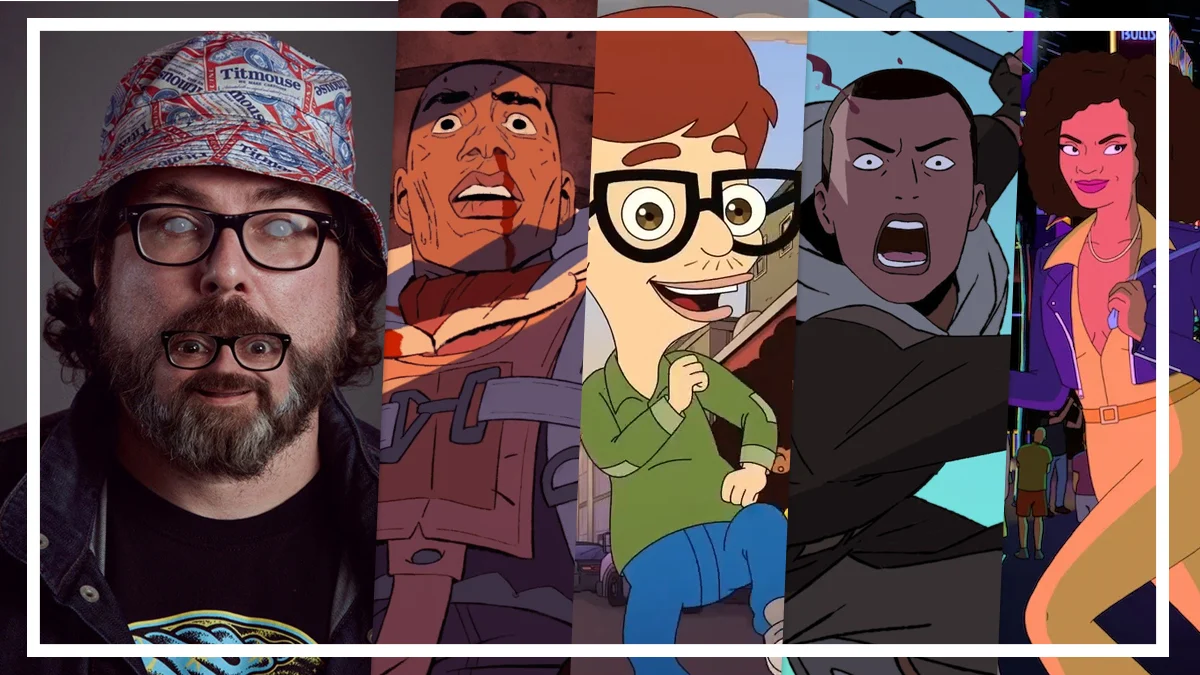
Titmouse, the acclaimed animation studio co-founded by Chris and Shannon Prynoski, marks a significant quarter-century milestone, reflecting on a journey that has seen it evolve into a fountain of creativity and a cornerstone of modern animated entertainment. With a diverse portfolio spanning adult animation, children’s programming, and groundbreaking experimental shorts, Titmouse has consistently championed an "artists-first" philosophy, a principle that has proven instrumental in navigating the often-turbulent waters of the entertainment industry. The studio’s recent work, including the visually striking Netflix series Strip Law, serves as a testament to its enduring commitment to human artistry in an increasingly technology-driven landscape.
A Quarter-Century of Creativity: The Titmouse Journey
Founded 25 years ago by the visionary duo Chris and Shannon Prynoski, Titmouse began as a boutique animation house with a fierce independent spirit. From its humble beginnings, the studio rapidly gained recognition for its distinctive style, innovative storytelling, and a willingness to push the boundaries of animation. Over the past two and a half decades, Titmouse has amassed an impressive body of work, collaborating with major networks and streaming platforms alike. Its credits include critically acclaimed series such as Scavengers Reign, the long-running cult favorite The Venture Bros., the iconic Beavis and Butt-Head, and the popular The Legends of Vox Machina and The Mighty Nein. This diverse output showcases Titmouse’s versatility, from mature, serialized narratives to absurdist comedies and fantastical adventures.
The studio’s growth has mirrored the expansion of the animation industry itself, particularly the surge in demand for adult animated content. What began as a niche market with only a handful of shows on air when Prynoski started his career has blossomed into a global phenomenon, driven in large part by the advent of streaming services. Titmouse has been at the forefront of this expansion, consistently delivering high-quality, creatively ambitious projects that resonate with diverse audiences.
Titmouse and Netflix: A Symbiotic Relationship
A significant portion of Titmouse’s recent success and visibility can be attributed to its extensive collaboration with Netflix. The streaming giant has invested heavily in original animated content, particularly in the adult animation sector, seeking out studios with a proven track record of innovation and distinct artistic voices. Titmouse has emerged as a key partner in this endeavor, contributing to a substantial roster of Netflix originals.
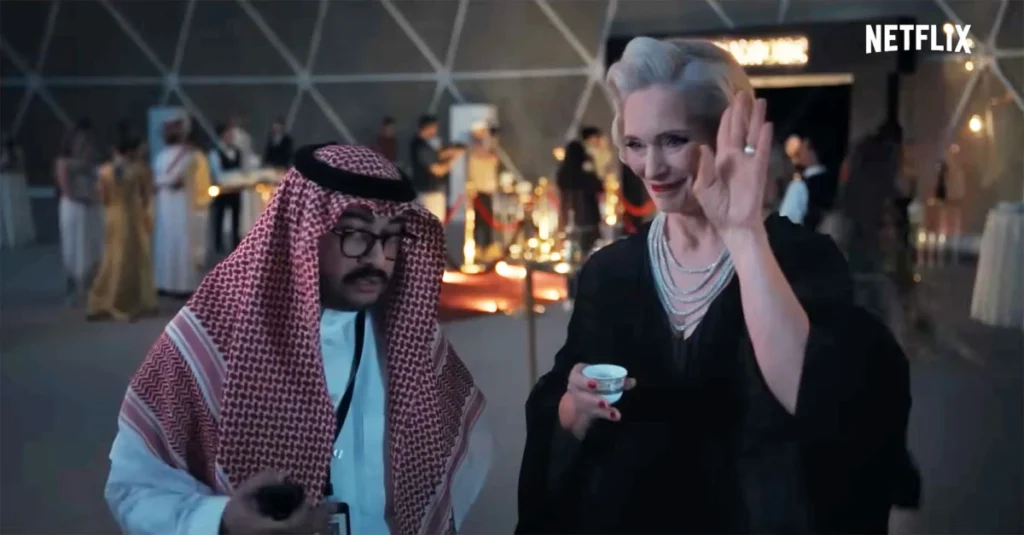
Their most recent collaboration, Cullen Crawford’s Strip Law, exemplifies this partnership. Chris Prynoski expresses immense pride in the show’s meticulous portrayal of Las Vegas, noting that "the environment is a character in the show." This dedication to immersive world-building is a hallmark of Titmouse’s approach, even in its comedic offerings. Beyond Strip Law, Titmouse has lent its creative wizardry to a wide array of Netflix titles, including the darkly comedic Haunted Hotel, multiple visually stunning episodes of the Emmy-winning anthology Love, Death and Robots, the star-studded Agent Elvis, the interactive Trivia Quest, the Chicago-centric Chicago Party Aunt, the educational We The People, the charming musical Arlo the Alligator Boy, the philosophical The Midnight Gospel, and the popular adult comedies Human Resources and Big Mouth.
Furthermore, Titmouse-produced shows originally aired on other platforms have found new life and expanded audiences through licensing deals with Netflix. Notable examples include the critically lauded sci-fi drama Scavengers Reign, the complex animated series Pantheon, and the recently acquired Digman! (for US audiences), an adult animated series co-created by and starring Andy Samberg. This extensive partnership underscores Netflix’s confidence in Titmouse’s ability to consistently deliver engaging and high-quality animated content that resonates with its global subscriber base.
Navigating Hollywood’s Headwinds: A Veteran’s Perspective

The entertainment industry is currently experiencing a period of significant anxiety and fear, marked by recent labor disputes, evolving streaming economics, and technological shifts. As a veteran who has witnessed numerous industry cycles, Chris Prynoski offers a seasoned perspective on these challenges. "I’m always amazed that any of this ever happens," Prynoski stated, emphasizing the miraculous nature of bringing any entertainment project to fruition. He considers himself "a lucky, lucky guy" to have consistently achieved this over two decades.
Prynoski, a self-described "solid Gen X," recalls starting his career when only three adult animated shows were on the air, a number then considered a "boom." He has weathered multiple industry downturns, including the aftermath of 9/11 and the 2008 financial crisis, asserting that "it is not the worst I’ve ever seen." This historical context provides a reassuring, if stark, reminder of the industry’s cyclical nature and its inherent volatility. His observation, "Just hang around long enough and you’ll see a lot of bad shit," speaks to the resilience required for sustained success in Hollywood.
He draws a parallel to the advent of CGI animation, specifically the release of Pixar’s Toy Story in 1995. At the time, traditional animators, including Prynoski himself who was working on Beavis & Butt-Head and Daria, feared the extinction of hand-drawn animation. "We were like, ‘We’re sunk. This is over. Nobody’s going to want this anymore.’" However, the future proved otherwise, demonstrating that "there was a path for both kinds of things." Prynoski believes this historical precedent holds true for new technologies like artificial intelligence, acknowledging that while "it’s crazy times right now," it’s "kind of always crazy times in the entertainment industry." This perspective highlights Titmouse’s adaptability and forward-thinking approach, recognizing that new tools can coexist with and even enhance traditional methods, rather than entirely replacing them.
The Human Touch: Art in the Age of AI
Amidst the current industry-wide debate surrounding artificial intelligence and its potential impact on creative professions, Titmouse stands firm in its commitment to human-led artistry. This conviction is boldly celebrated in the opening credits of Strip Law, which proudly proclaims that humans made the show. For Chris Prynoski, this statement is not merely a stylistic choice but a fundamental declaration of Titmouse’s operational philosophy.
"We employ humans to make all the decisions," Prynoski asserted, acknowledging that while "computers are used in everything," it is ultimately human artists who drive all creative choices. This distinction is crucial in an era where AI-generated content is becoming increasingly sophisticated. Titmouse positions technology as an invaluable tool that aids and augments human creativity, rather than replacing it. This stance resonates with many in the creative community who advocate for the preservation of human authorship and the unique spark that only human imagination can provide. The Strip Law credits, therefore, serve as a public affirmation of Titmouse’s core values, emphasizing the irreplaceable role of human talent in the creation of compelling animated narratives. This commitment is particularly significant as studios grapple with the ethical and practical implications of integrating AI into their workflows, making Titmouse’s clear directive a powerful message to both its artists and the broader industry.
An Artists’ Studio, Run by Artists
Central to Titmouse’s enduring success and its ability to weather industry storms is its unique organizational structure: a business fundamentally run by artists. This ethos, instilled by co-founders Chris and Shannon Prynoski, permeates every level of the company, ensuring that creative considerations are always at the forefront of strategic decisions.
Prynoski explains this philosophy with a simple analogy: "If a statue is made of stone, it’s not made out of metal. So that’s just what it is." This inherent identity as an artist-led studio means that even those in executive and operational roles possess a deep understanding and appreciation for the creative process. Ben Kalina, Titmouse’s Chief Operating Officer, serves as a prime example. Despite primarily handling production and business aspects, Kalina’s background in film school, editing, and compositing provides him with invaluable artistic insight. "Really, everybody who’s running the company is an artist so we all care about it," Prynoski notes, highlighting the collective passion that drives the studio’s output.
This artist-centric leadership, however, comes with its own set of challenges, particularly in the transition from pure artist to business leader. Prynoski candidly shared a personal anecdote about his first experience firing an employee, a moment he described as profoundly difficult. "I was so visibly distraught that the editor at the end of the firing patted me on the shoulder and was like, ‘It’s going to be okay. Don’t worry about it.’" This emotional intensity underscores the human element inherent in an artist-run company. While he acknowledges the necessity of developing "thicker skin" for the business realities, he also expresses a wistfulness for that initial emotional response. This evolution, realizing that "there are times you have to do stuff you don’t want to do for the health of the show or the business," marks a crucial turning point for any creative transitioning into a leadership role, showcasing the delicate balance between artistic empathy and pragmatic business management that defines Titmouse.

Fostering Creativity: A Hands-Off, Supportive Approach
Chris Prynoski’s leadership philosophy for bringing out the best in artists has evolved significantly over his career, moving towards a more supportive, hands-off approach. In his earlier years, Prynoski was directly involved in the creative aspects of one or two projects. However, his current role as an overall studio head necessitates a different strategy. Recognizing that showrunners and creators already receive notes from clients like Netflix or intermediary production companies, Prynoski has adopted a tact designed to empower rather than impose.
"Hey, I’m not going to give you notes, but I’m here for you to ask me any question. If you need help with anything," he explains, outlining his current model. This approach proved highly effective with Strip Law creator Cullen Crawford. Prynoski positions himself as a resource for creative problem-solving, offering fresh perspectives when a creator is "stuck on a joke" or needs an outside opinion. He recalls instances where he would pitch alternative solutions to Crawford, not for them to be directly adopted, but to help the creator "get out of the way he had been thinking of it previously."
This philosophy stems from a deep respect for the creative voice of the artists Titmouse chooses to collaborate with. "You don’t want to make your voice the voice of their show, but you want to help them make the best version of their show," Prynoski emphasizes. He believes that true support involves "lending support rather than saying, ‘Here’s my notes,’" challenging the traditional notion that those in leadership positions must always provide direct feedback to justify their role. This nuanced approach fosters an environment of trust and collaboration, allowing creators the autonomy to develop their vision while knowing expert guidance is readily available.
Crafting Diverse Worlds: From Absurdist Comedy to Nuanced Drama
Titmouse’s reputation for artistic excellence is built upon its ability to adapt its creative processes to the unique demands of each project, spanning a vast spectrum from absurdist comedy to intricate, execution-dependent drama. Prynoski often gauges a creator’s vision by understanding the fundamental requirements of their narrative.
He cites Scavengers Reign, a show that premiered on HBO Max before finding a wider audience on Netflix, as a prime example of an "execution-dependent" project. Co-created by Joe Bennett and Charles Huettner, the show’s success hinged entirely on the quality of its animation, as it was not a dialogue-driven series. The initial seven-minute pilot for Adult Swim famously contained no dialogue, and even for the 22-minute pilot, the inclusion of dialogue was a significant point of debate. Prynoski recalls Joe Bennett wrestling with the decision, ultimately concluding that some dialogue was necessary for a series of extended episodes to avoid painting the narrative into a corner. In such cases, Prynoski’s role shifted to optimizing production value within strict budgetary and scheduling parameters, ensuring that the visual storytelling was impeccable.
Conversely, Titmouse has tackled projects with highly specific, non-traditional animation styles. Beavis and Butt-Head, for instance, presented unique artistic challenges due to the "irregular" construction of the characters’ heads. What might appear simple is deceptively complex, requiring animators to master specific nuances that defy conventional anatomical rules. Prynoski notes that digital tools have somewhat eased this process, allowing for greater consistency through copying and resizing.
Another distinctive approach was seen in projects with Brad Neely, creator of China, IL. While Neely’s absurdist comedy might seem visually simple, his philosophy demanded a surprising degree of realism in character movement and costume physics. For the "Professor Brothers," Neely insisted that their blazers "hang and work like a professor’s blazer would," eschewing typical cartoon shorthand. He challenged artists not to "draw badly, but to try and draw the best drawing they can as fast as possible," allowing speed to naturally contribute to a "rough-around-the-edges style" while maintaining the intention of quality. This adaptability across vastly different artistic requirements underscores Titmouse’s mastery of diverse animation techniques and its commitment to honoring each creator’s unique vision.
The Art of Observation: Beyond the Google Search

In an age of instant digital information, Titmouse maintains a firm belief in the power of deep research and real-world observation as fundamental to authentic animation. While acknowledging the ease of using online resources, Chris Prynoski, along with Chief Creative Officer Antonio Canobbio, cautions against relying solely on "low-hanging fruit" from superficial internet searches.
Canobbio frequently advises art directors and concept designers to "Don’t rely on the first page or even the first few pages of a Google search. Dig deeper." The internet, while expanding global access to references, also homogenizes them. If everyone searches "Vegas" or "circus," the initial results will be remarkably similar, leading to predictable and uninspired visual design. Titmouse encourages its artists to transcend these common references, seeking out unique visual inspirations that imbue their projects with distinctiveness and depth.
Prynoski champions the practice of direct observation, echoing the methods of animation pioneers. "Whenever possible, go out and look at stuff with your eyes," he urges, drawing a connection to the "nine old men at Disney and the early animators" who meticulously studied real life to inform their craft. He highlights a critical challenge facing contemporary animators: after over a century of animation, there’s a natural tendency to use other animation as reference. This can lead to a "bag of tricks" – established visual conventions that work but may lack originality. Breaking free from this cycle requires the discipline to "do something from scratch, to look at the real world, analyze it, and figure out things," a demanding but ultimately more rewarding creative process. This commitment to primary observation and in-depth visual research is key to Titmouse’s ability to create animated worlds that feel fresh, rich, and truly unique, whether depicting the gritty glamour of Las Vegas or the alien ecosystems of Scavengers Reign.
Passion as Prerequisite: Advice for Aspiring Animators
Chris Prynoski offers candid and realistic advice for aspiring and young artists grappling with the challenges of a competitive and demanding industry. His core message is unequivocal: profound passion is not merely an advantage but an absolute prerequisite for a career in animation.
"You got to love it," Prynoski states emphatically. He characterizes animation as a "weird job" and "so labor-intensive" that it must be something one "just can’t not do." For individuals contemplating animation alongside other career paths, such as architecture, based on potential earnings, Prynoski’s advice is clear: "Probably not for you, so be an architect." This stark guidance underscores the immense dedication and sacrifice required to succeed in the field.
He likens the animation industry to professional sports, specifically basketball. Just as a professional basketball player, even one on the bench, must be among the best in the country, an aspiring animator aiming for a staff position as a concept or character designer must strive for unparalleled excellence. "You’ve got to be the best. You’ve got to draw eight hours a day every day, because you can’t not draw eight hours a day every day." This level of sustained effort and inherent drive differentiates those destined for a career from those who might find it frustrating.
Prynoski also provides a compassionate alternative: pursuing art as a hobby. "If you want to do it as a hobby, do it for fun." He illustrates this with the example of a potter who makes ceramics for personal display, not for commercial sale. The distinction is crucial: a hobby offers creative fulfillment without the intense pressures of a career. For those who choose animation as a career, however, the passion must be undeniable. "If you’re not, it might be frustrating." This advice, rooted in decades of experience, serves as a powerful call to self-reflection for anyone considering a path in the intensely creative and fiercely competitive world of animation, emphasizing that true fulfillment comes from an unyielding love for the craft itself.
As Titmouse enters its next quarter-century, its journey stands as a testament to artistic integrity, adaptability, and the unwavering belief in the power of human creativity. Under the leadership of Chris and Shannon Prynoski, the studio continues to not only produce groundbreaking animation but also to champion the artists who bring these worlds to life, ensuring that the "fountain of creativity" continues to flow.