
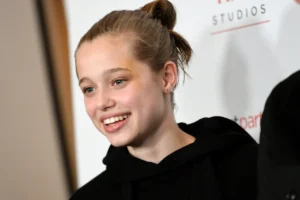


For Lauren Grauer, a talent marketer based in New York City, a recent advertisement on YouTube served as a jarring reminder of her complicated history with the world’s most popular dating application. The advertisement promoted "Double Date," a newly launched feature on Tinder that allows users to pair their profiles with friends to browse other duos. For Grauer, the irony was profound. Four years ago, she had attempted to facilitate a similar social experience by creating a joint profile with a friend, an action that resulted in her being permanently banned from the platform for violating community guidelines regarding account sharing. Today, the very behavior that led to her digital exile is being marketed as the centerpiece of Tinder’s corporate evolution.
Grauer’s experience, shared via a TikTok video that quickly gained traction, highlights a broader tension within Tinder’s current metamorphosis. While the company seeks to modernize and shed its reputation as a "hookup app," it must reconcile its new vision with a decade of rigid enforcement policies and a user base that increasingly feels "gamified" out of meaningful connection. Grauer’s sentiment—feeling like a "delinquent" for innovating ahead of the app’s own development cycle—is a microcosm of the challenges facing Tinder as it attempts to pivot under the leadership of its latest chief executive, Spencer Rascoff.
The Rascoff Era: Shifting the Paradigm from Matches to Connection
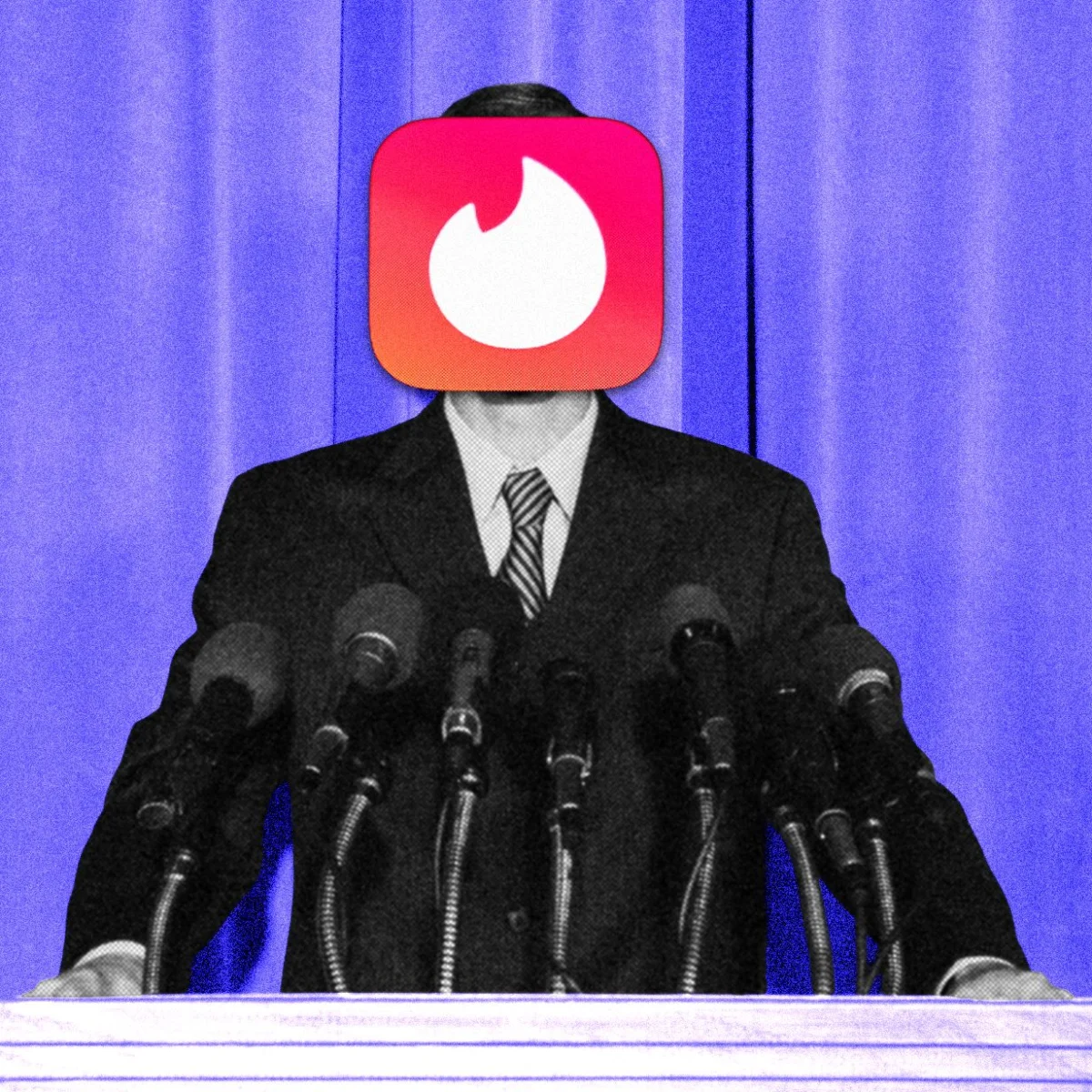
The official reintroduction of Tinder took place earlier this month during a high-profile media event at the El Rey Theater in Los Angeles. Spencer Rascoff, taking the stage in a setting designed to evoke intimacy and theatricality, outlined a future for Tinder that moves away from the "swipe-heavy" mechanics of the past. The central thesis of this rebrand is the transition from quantity to quality. Rascoff noted that while the swipe once served as the ultimate metric of success for the app, the goal has shifted toward fostering "social, low-pressure connections."
The CEO’s address emphasized that "just getting matches is not the goal," a statement that would have been unthinkable during the app’s explosive growth period in the mid-2010s. Instead, Rascoff argued that "humans need humans," positioning Tinder not as a digital catalog of potential partners, but as a bridge to authentic social interaction. This shift is a response to a growing "dating app fatigue" documented across the industry, where users report feeling exhausted by the endless cycle of matching without meeting and chatting without connecting.
A Historical Context: From Disruptor to the "Dating Apocalypse"
To understand the necessity of this rebrand, one must look at the trajectory of Tinder within the broader landscape of digital courtship. While Grindr pioneered geolocation-based dating in 2009, specifically catering to the LGBTQ+ community, Tinder’s arrival in 2012 democratized the "swipe" mechanic for the general public. It transformed online dating from a desktop-based, long-form profile experience into a mobile-first, visual-heavy game.
By 2016, Tinder had secured approximately 25 percent of the U.S. market share with an estimated 50 million users. However, this dominance came with a cultural cost. Critics began to argue that the app’s interface encouraged a disposable view of human relationships. In 2015, a landmark Vanity Fair article titled "The Dawn of the Dating Apocalypse" detailed how the app’s design fostered a culture of fleeting encounters and hindered long-term emotional investment.
In recent years, the financial consequences of this cultural reputation have become apparent. In the final quarter of 2025, Tinder reported an 8 percent drop in paying members, falling to 8.8 million. For Match Group, Tinder’s parent company, this decline signaled a need for drastic intervention. The app was no longer the undisputed standard; competitors like Bumble had carved out niches based on female empowerment, while Hinge marketed itself as the app "designed to be deleted."
The AI Frontier: "Chemistry" and the Ethics of the Camera Roll
The most technologically ambitious aspect of Tinder’s rebrand is its integration of artificial intelligence. Tinder is betting heavily on AI to solve the problem of "profile friction"—the difficulty users face in accurately representing their personalities through static photos and brief bios.
The flagship feature in this AI suite is "Chemistry," a tool designed to analyze a user’s camera roll. By using machine learning to scan photos, the app aims to identify recurring interests, personality traits, and lifestyle habits to create a more holistic profile. For instance, if the AI detects frequent photos of hiking, cooking, or live music, it can automatically suggest bio updates or match the user with others who share those specific passions.
Alongside Chemistry, Tinder has introduced an "Astrology Mode," tapping into the cultural trend of zodiac compatibility to facilitate matches based on celestial alignments. While these features aim to add "flavor" to the experience, they also raise significant privacy concerns. In January, Match Group was the subject of an alleged data breach, prompting skepticism about the security of allowing an app to scan personal photo libraries. Tinder has been quick to clarify that it does not store the raw data analyzed from photos, but the hurdle of re-establishing user trust remains high.
Safety and the Subjectivity of "Harmful Language"
As part of its commitment to user well-being, Tinder has also upgraded its safety algorithms. The "Are You Sure?" feature uses AI to detect potentially offensive or harmful language in real-time, prompting a user to reconsider their message before hitting send. Conversely, the "Does This Bother You?" feature detects incoming profanity or harassment, automatically blurring the text and requiring the recipient to tap to view it.
However, the effectiveness of these tools is often debated. "Harmful language" is a subjective concept that varies across cultures, subcultures, and individual boundaries. For marginalized groups, the experience of using Tinder can still be fraught with difficulty despite these algorithmic safeguards.
Kobe Mehki, a 23-year-old trans woman and singer-songwriter in Los Angeles, shared her experiences with the platform after rejoining in early 2025. Mehki noted that while the app may filter for overt profanity, it often fails to protect users from "hypersexualization" and "identity-based interrogation." She described a pattern where male users would frequently ask, "Are you trans?" in a manner that felt jarring and dehumanizing. "It makes me want to just retreat and not even approach dating," Mehki said, highlighting that for many, the issue is not just "bad words," but a fundamental lack of respect that AI has yet to master.
Market Analysis and Future Implications
The success of Tinder’s rebrand will ultimately be measured by its ability to retain Gen Z users, a demographic that is increasingly skeptical of traditional dating app structures. Data from industry analysts suggests that younger users are moving toward "niche" apps or returning to organic, "in-real-life" (IRL) social settings. By introducing "Double Date," Tinder is attempting to bridge this gap, bringing the comfort of a "wingman" or a group setting into the digital space.
From a business perspective, the stakes are high. Match Group’s stock performance has been closely tied to Tinder’s ability to monetize its user base. The 8 percent drop in paying members is a red flag that suggests the "swipe" has lost its luster as a premium product. If "Chemistry" and "Double Date" can successfully transition Tinder into a "social discovery" platform rather than a "hookup" platform, the company may see a reversal in its subscription declines.
However, the company faces a paradox. To be a social platform, it must allow for more flexibility—the kind of flexibility that Lauren Grauer was seeking four years ago. Yet, to maintain safety and monetization, it must maintain strict control over user behavior.
Conclusion: Can Technology Solve a Human Problem?
As Tinder rolls out its more than a dozen new features, the central question remains: Can an app revitalize a dating landscape that many believe it helped ruin? The pivot under Spencer Rascoff is a bold admission that the previous model is no longer sustainable. By leaning into AI and social-first features, Tinder is trying to recapture the "magic" of early digital connection while stripping away the toxicity that has come to define it.
For users like Lauren Grauer, the rebrand is a bittersweet validation of ideas that were once considered bannable offenses. For users like Kobe Mehki, it is a reminder that technological "safety" tools are only as good as the cultural environment they inhabit. As Tinder moves into its next decade, it is no longer just competing with other apps; it is competing with the growing desire for a dating experience that feels less like a game and more like a human encounter. Whether AI "Chemistry" can truly replicate the spark of a real-life meeting is a gamble that will determine the future of the world’s most famous dating app.