


New York City High-Rise Becomes Labyrinth of Terror as Zazie Beetz Stars in Kirill Sokolov’s "They Will Kill You"
A chilling new thriller, "They Will Kill You," plunges audiences into the heart of a New York City high-rise where a seemingly ordinary housekeeping job unravels into a nightmarish battle for survival. Starring Zazie Beetz, known for her breakout performance in Donald Glover’s acclaimed series "Atlanta," the film, directed and co-written by Russian filmmaker Kirill Sokolov, promises a potent blend of visceral action, dark humor, and escalating horror. The premise centers on Asia Reeves (Beetz), a woman seeking a fresh start after a lengthy prison sentence, who accepts a position at the enigmatic The Virgil, a building with a dark past that is far from ordinary. As she navigates the labyrinthine corridors and discovers the unsettling undercurrents of its community, Asia finds herself ensnared in a terrifying conspiracy that threatens her very existence.
The ensemble cast surrounding Beetz lends significant weight to the production, featuring a roster of respected actors including Myha’la, Paterson Joseph, Tom Felton, Heather Graham, and Patricia Arquette. Sokolov, who has garnered attention for his distinctive brand of black comedy that pushes boundaries, reportedly aims to deliver a ferocious and comically absurd level of violence in "They Will Kill You." While drawing inspiration from a range of influential action and horror films, the narrative, co-written by Alex Litvak, appears to tread familiar genre territory, raising questions about its potential to transcend convention. The film’s reported running time of 94 minutes suggests a tightly paced, relentless descent into chaos.
The Descent into Darkness: Asia Reeves’ Perilous Pursuit
At the core of "They Will Kill You" is Asia Reeves, a character whose past is marked by hardship and separation. Following a nine-year incarceration, Asia is driven by the urgent need to reunite with her sister, Maria, a connection fractured by an abusive father. Her quest for stability leads her to The Virgil, a historic New York City building that, from the outset, exudes an unsettling aura. This palpable sense of unease is amplified upon her initial encounter with the building’s superintendent, Iris, portrayed by veteran actress Patricia Arquette. What begins as a hopeful opportunity to rebuild her life rapidly devolves into a harrowing ordeal as Asia uncovers the building’s sinister secret: a satanic cult operating within its walls, with sinister plans for her as their next sacrificial offering.
The narrative then pivots into a high-octane, "The Raid"-esque struggle for survival. Asia is forced to confront the cult, utilizing her newfound resilience and resourcefulness to escape not only the immediate danger but also to secure her primary objective – her sister. The dynamic between Beetz and Myha’la, who plays Maria, is intended to form the emotional anchor of the film, as the sisters attempt to bridge the chasm of lost time amidst the escalating terror.
A Showcase for Zazie Beetz Amidst Genre Tropes
Sokolov’s decision to place Zazie Beetz at the forefront of "They Will Kill You" is highlighted as a pivotal strength of the production. Beetz is tasked with embodying Asia’s desperation, rage, and burgeoning strength as she fights against a wave of antagonists. Her portrayal is described as channeling a "fervor, rage-filled scream queen" as she engages in brutal combat. However, the film’s script, by Sokolov and Litvak, is critiqued for presenting most characters, including the cult members, as archetypes designed primarily for action sequences rather than complex development. Actors like Tom Felton and Heather Graham, while part of the ensemble, are noted to function more as vehicles for delivering dialogue and participating in elaborate fight choreography.
Patricia Arquette’s performance has drawn specific commentary, with her attempt at a fake Irish accent being described as less believable than the film’s purported New York setting. This critique suggests a potential disconnect between the actors’ efforts and the overall narrative execution.
Myha’la, as Maria, is presented as a contrasting figure to her sister, exhibiting a quieter demeanor that enhances the dynamic between them. Despite the chemistry between the two leads, the film’s ability to establish their fractured relationship as the intended emotional core is questioned, with the screenplay’s treatment of this crucial element being deemed "thinly sketched." The premise itself is acknowledged as the film’s most compelling aspect, yet it is noted to draw heavily from established genre successes such as "Ready or Not" and the "Kill Bill" saga. Nevertheless, the film reportedly incorporates inventive and unsettling moments, including a sequence involving a detached body part and the visceral impact of its prosthetic work, which effectively conveys the brutality of the depicted violence.
Sokolov’s Vision: Campy Energy Meets Repetitive Action
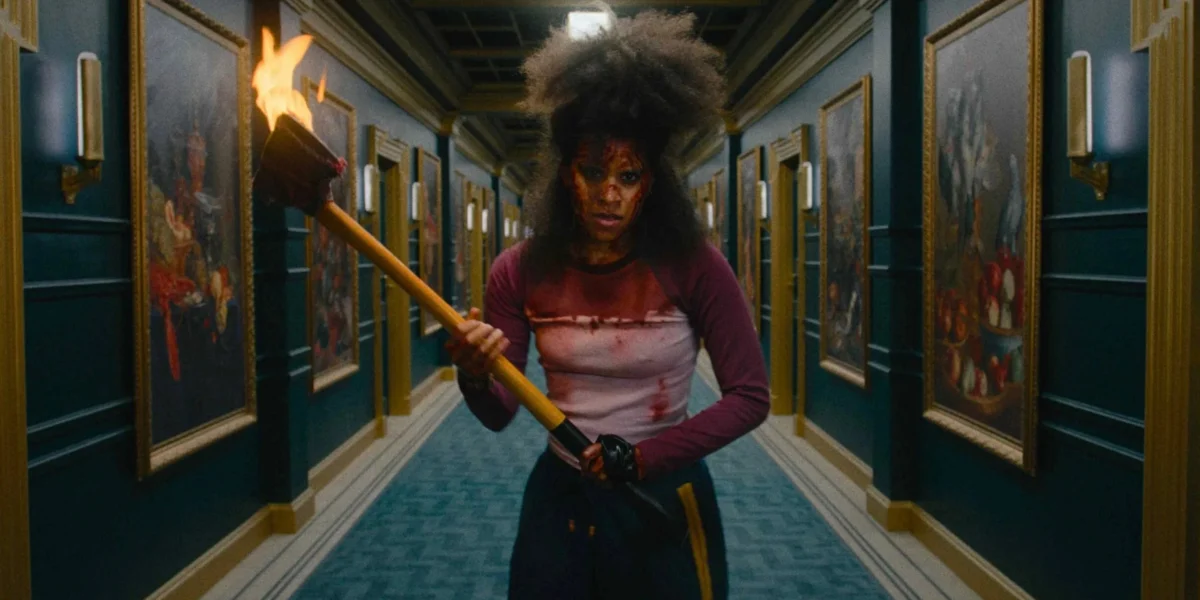
Kirill Sokolov’s direction is credited with injecting a vital energy into "They Will Kill You," drawing upon a campy aesthetic reminiscent of 1970s action cinema. The initial ambush sequence targeting Asia is singled out as a particularly effective scene that sets the tone for the ensuing mayhem. However, as the film progresses, the action sequences are described as failing to consistently match this initial intensity. Even Beetz’s moments of combat, such as wielding a fire axe, are noted to eventually fall into a repetitive pattern that detracts from the fluidity of the action. While Sokolov provides Beetz with opportunities to shine as an action hero, the film’s more imaginative set pieces, like an air-duct crawl, are ultimately overshadowed by what is perceived as an underwhelming overall experience.
Contextualizing the Thriller: The Enduring Appeal of High-Rise Horror and Cult Narratives
The narrative of "They Will Kill You" taps into a long-standing fascination with the claustrophobia and hidden dangers within seemingly secure urban environments. High-rise buildings, often symbols of progress and aspiration, can also serve as potent settings for psychological thrillers and horror narratives. Their verticality creates inherent isolation, while the dense population within them allows for a wide array of potential threats, both individual and collective. The concept of a building with a history of disappearances adds a layer of ominous foreboding, suggesting that the architecture itself may hold secrets or actively contribute to the unfolding terror. This trope has been explored in various forms of media, from classic horror films like "Rosemary’s Baby" (which, while not a high-rise, also features a hidden cult within a residential building) to more contemporary thrillers that explore the dark underbelly of urban life.
Furthermore, the inclusion of a satanic cult aligns with a persistent genre interest in secret societies and ritualistic violence. Such narratives often play on societal anxieties about hidden malevolent forces operating beneath the veneer of normalcy. The idea of a cult recruiting or operating within a seemingly ordinary apartment building presents a stark contrast between the mundane and the monstrous, amplifying the shock value when the truth is revealed. The motivations of such cults in cinematic narratives often revolve around power, transcendence, or appeasement of dark entities, with human sacrifice serving as a common, albeit extreme, plot device. The film’s premise suggests that The Virgil is not merely a location but an active participant in its own sinister lore, with its history of disappearances serving as a chilling prelude to Asia’s ordeal.
Supporting Data and Industry Trends
The market for action-thriller films featuring strong female leads has seen significant growth in recent years. Films like "John Wick," "Atomic Blonde," and "The Old Guard" have demonstrated a strong audience appetite for well-choreographed action sequences anchored by compelling character performances. Zazie Beetz’s involvement in "They Will Kill You" places her within this growing category of actresses capable of headlining such projects. Her previous work in "Atlanta" showcased her versatility, moving seamlessly between dramatic depth and comedic timing, a skillset that would be highly valuable in a film that blends genre elements.
The reported budget and marketing spend for "They Will Kill You" would provide further insight into its production scale and expected box office performance. Without this information, it remains challenging to assess its commercial ambitions relative to its artistic aims. However, the involvement of established actors like Patricia Arquette and Heather Graham suggests a certain level of investment and expectation for the film’s reception. The film’s reported 94-minute runtime aligns with contemporary trends favoring tighter, more focused narrative experiences, which can often translate to higher audience engagement and repeat viewings.
Potential Implications and Broader Impact
The success of "They Will Kill You" could have several implications for the careers of its cast and crew, as well as for the broader genre landscape. For Zazie Beetz, a strong performance in a critically and commercially successful action film could solidify her status as a leading action star, opening doors to more high-profile roles in the genre. For director Kirill Sokolov, "They Will Kill You" represents an opportunity to gain wider international recognition, potentially leading to more significant production opportunities and a larger platform for his distinctive directorial vision.
The film’s approach to violence and dark humor will likely be a key point of discussion and critical analysis. If it manages to strike a successful balance between visceral thrills and comedic absurdity, it could carve out a unique niche within the crowded thriller market. Conversely, if the violence becomes gratuitous or the humor falls flat, it risks alienating audiences. The film’s ability to deliver a satisfying narrative conclusion while exploring its thematic elements of survival, sisterhood, and the hidden dangers of urban life will ultimately determine its lasting impact. The exploration of a cult operating within a residential building also touches upon themes of community, trust, and the subversion of perceived safety, which can resonate with audiences on a deeper level.
The film’s reception by critics and audiences will also provide valuable data points for the industry. A positive reception could encourage further investment in similar genre films, particularly those that empower female protagonists and offer unique directorial perspectives. Conversely, a lukewarm or negative reception might prompt a re-evaluation of current genre trends and narrative approaches. The film’s ability to stand out in a competitive market will depend on its execution of its premise, the strength of its performances, and its capacity to deliver a memorable and impactful cinematic experience that transcends its genre conventions.