



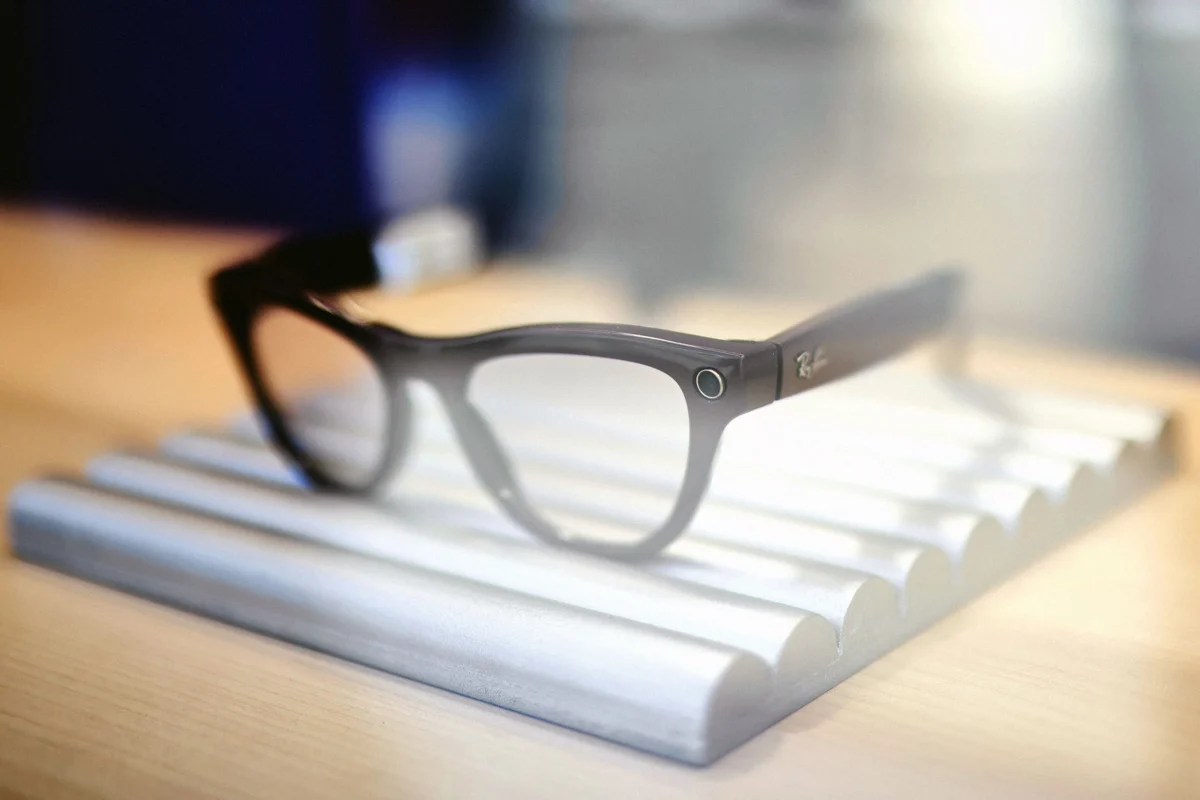
The rapid proliferation of wearable technology has reached a critical inflection point as Meta’s Ray-Ban smart glasses transition from niche gadgetry to a mainstream fashion staple, sparking a global debate over the boundaries of surveillance, consent, and the erosion of anonymity in public spaces. What began as a high-tech collaboration between Mark Zuckerberg’s social media empire and the eyewear giant EssilorLuxottica has increasingly become associated with a culture of non-consensual recording, leading to the emergence of the derogatory moniker "pervert glasses" among critics and privacy advocates. The friction between technological convenience and individual rights was recently highlighted by the experience of Joy Hui Lin, a book researcher in Paris, who found herself the unwitting subject of a recording by two university students in the Le Marais district. The encounter, which Lin described as a "violation," serves as a microcosm of a broader societal shift where the traditional expectation of being unobserved in a crowd is being systematically dismantled by inconspicuous hardware and powerful artificial intelligence.
The Evolution of the Smart Glasses Market: From Google Glass to Meta
To understand the current controversy, one must look at the trajectory of smart wearables over the past decade. In 2013, Google launched Google Glass to significant fanfare, but the product quickly became a symbol of intrusive technology. Users were labeled "Glassholes," and the device’s overtly futuristic, cyborg-like aesthetic made it impossible for bystanders to ignore the presence of a camera. Google eventually pivoted the product to enterprise use before discontinuing it entirely for consumers.
Meta’s approach, however, learned from Google’s failures by prioritizing aesthetics. By partnering with Ray-Ban, Meta integrated its cameras, microphones, and AI processors into classic frames like the Wayfarer. This design choice has been remarkably successful; while Google Glass sold only a few hundred thousand units, Meta reportedly sold 8 million pairs of its smart glasses in 2025 alone. At a price point ranging from $299 to $499, the device has become accessible to a broad demographic, moving beyond tech enthusiasts into the hands of university students, content creators, and everyday commuters.
The Rise of "Rizz" Culture and the Monetization of Harassment
The most visible—and controversial—use of the technology has emerged within the "influencer" economy. Social media platforms like TikTok and Instagram are currently inundated with point-of-view (POV) footage captured via Meta Ray-Bans. While some content is benign, a significant and growing segment involves "pickup artists" (PUAs) and "rizz" coaches who record their unsolicited interactions with women in public spaces.
Influencers such as Sayed Kaghazi (@itspolokid) and Cameron John (@rizzzcam), who boast a combined following of over 3 million, frequently post videos of themselves approaching women on beaches or in nightclubs. These interactions are often framed as "dating advice," but the subjects are rarely aware they are being filmed for a global audience until after the encounter—if they are told at all. In Vancouver, British Columbia, local residents recently organized on Reddit to warn one another about a specific creator known as Sherif (@vibrophone), who was accused of recording uncomfortable interactions with women in the city’s entertainment district.
The monetization of this content adds another layer of ethical complexity. These creators often use their high-engagement videos to promote "dating assistant" AI apps or nicotine products, essentially profiting from the non-consensual use of bystanders’ likenesses. This "predatory" style of content creation has led to calls for stricter platform moderation and legal frameworks that treat such recordings as a form of digital harassment.
Privacy Investigations and the Meta AI Training Loop
Beyond the social implications of public recording, Meta faces severe scrutiny regarding how it handles the data captured by these devices. An investigation by Swedish newspapers in early 2026 revealed that Meta’s AI systems frequently send footage to the company’s servers for processing. In some instances, this footage was reviewed by overseas contract workers to "tune" the AI’s recognition capabilities.
The investigation found that these workers were viewing highly sensitive content that users may have recorded unintentionally or without realizing the data was being uploaded. This included footage of nudity, sexual acts, and private activities in bathrooms. This revelation has triggered a massive consumer protection lawsuit, with plaintiffs arguing that Meta failed to provide adequate transparency regarding the extent of its data collection and the human involvement in reviewing private moments.
Furthermore, Meta has confirmed that it uses the data collected from its smart glasses to train its generative AI models. Every time a user asks the glasses to "look and tell me what I’m seeing," the resulting image or video is fed back into the Meta ecosystem. This creates a perpetual surveillance loop where the public is being used as involuntary training data for Meta’s proprietary technologies.
Legislative Reactions and the Threat of Facial Recognition
The potential for these glasses to be upgraded with facial recognition technology has alarmed lawmakers in the United States and Europe. In early 2026, Democratic Senators Ron Wyden, Ed Markey, and Jeff Merkley sent an open letter to Meta CEO Mark Zuckerberg expressing "serious risks of stalking, harassment, and targeted intimidation" if facial recognition were integrated into the wearable devices.
The senators noted that Meta’s vast database of personal profiles could allow a user to look at a stranger and instantly retrieve their name, workplace, and social media history. Such a capability, they argued, would "chill lawful dissent" and provide a powerful tool for authoritarian regimes or individual stalkers. The letter demanded that Meta explain how it could possibly obtain "express affirmative consent" from bystanders whose biometric data is captured in real-time.
In Europe, Denmark has taken a proactive stance by exploring new individual copyright protections over one’s likeness. This legislative move aims to give citizens the legal right to control how their image is used by AI and recording devices, providing a potential roadmap for other nations seeking to curb the "wild west" environment of public digital surveillance.
The "Stealth Mode" Underground and Technical Countermeasures
In response to privacy concerns, Meta equipped the Ray-Ban frames with a small LED light that glows white when the device is recording. Meta spokesperson Tracy Clayton stated that this light makes it "unequivocally clear" when content is being captured. However, a "stealth mode" subculture has emerged online, providing tutorials on how to circumvent this safety feature.
On platforms like YouTube and TikTok, users demonstrate how to cover the LED with black tape or paint. More extreme "stealth services" have appeared, where individuals like Andres Rodriguez (@asodcutz) offer to physically remove the LED from the glasses for a fee of approximately $120. These modifications are specifically marketed to those who wish to record "discreetly," further fueling the "pervert glasses" reputation.
Conversely, the tech community has also produced tools for self-defense. Yves Jeanrenaud, a German sociologist and programmer, developed an open-source Android app called "Nearby Glasses." The app scans for the specific Bluetooth signals emitted by Meta and Snap smart glasses, alerting the user if a recording-capable device is in their immediate vicinity. Since its launch, the app has been downloaded nearly 60,000 times, reflecting a growing public desire for "surveillance-detection" tools.
Chronology of the Smart Glasses Privacy Crisis
- September 2023: Meta launches the second-generation Ray-Ban Meta smart glasses with improved cameras and integrated AI.
- Summer 2024: Social media platforms see a surge in POV "pickup" and "prank" content, leading to the first viral uses of the term "pervert glasses."
- December 2025: Sales data confirms Meta has sold over 8 million units, making it the most successful smart glasses product in history.
- February 2026: Swedish investigators reveal that Meta contractors are viewing private and sensitive footage for AI training.
- March 2026: US Senators issue a formal inquiry into Meta’s plans for facial recognition integration.
- April 2026: The "Nearby Glasses" app goes viral as a counter-surveillance tool for concerned citizens.
Implications for the Future of Public Life
The rise of Meta’s smart glasses represents a fundamental shift in the social contract. For centuries, the "right to be let alone" in public has been protected by the logistical difficulty of recording and identifying every person one encounters. Smartphones began to erode this anonymity, but the act of holding up a phone remains a visible social signal of recording. Smart glasses remove that signal, making surveillance frictionless and secretive.
Sociologists like Jeanrenaud argue that the "arms race" over privacy may already be lost. As technology becomes more integrated into our bodies and clothing, the ability of the law to keep pace with the speed of innovation is increasingly in doubt. Without robust federal privacy laws that specifically address wearable biometrics and non-consensual public recording, the "stealth mode" of today may become the standard operating procedure of tomorrow.
The current landscape suggests that society is moving toward a state of constant, peer-to-peer surveillance. While Meta emphasizes user responsibility in its Terms of Service, the reality on the ground—driven by influencer incentives and the allure of "stealth" technology—paints a picture of a world where every stranger’s gaze could be a recorded broadcast. As Joy Hui Lin noted after her encounter in Paris, the experience changes how one moves through the world: "It makes you a little warier of anyone in glasses." In the age of the smart wearable, the simple act of walking down a street has become a performance for a camera that the subject may never see.