
Thank you so much for listening. The Next Best Picture Podcast is proud to be a part of the Evergreen Podcasts Network. You can subscribe to us anywhere you listen to podcasts or listen in the embedded player below. Please take a moment to review us on Apple Podcasts here. And if you’re feeling generous, you enjoy what you hear, and you want to hear more, please help support us on Patreon for as little as $1 a month, and you’ll receive some exclusive podcast content from us.
The AI Doc Or How I Became An Apocaloptimist Unpacks the Complexities of Artificial Intelligence Through a Personal Lens
Sundance Premiere Heralds Thought-Provoking Exploration of AI’s Future
The highly anticipated documentary, "The AI Doc: Or How I Became An Apocaloptimist," has officially premiered at the prestigious 2026 Sundance Film Festival, garnering significant critical attention for its nuanced and deeply personal examination of artificial intelligence. Directed by Daniel Roher and Charlie Tyrell, the film is a testament to the collaborative power of acclaimed filmmaking teams, boasting producers from the Oscar-winning ensembles behind the genre-bending "Everything Everywhere All at Once" and the gripping political thriller "Navalny." This pedigree immediately positions "The AI Doc" as a significant cinematic event, promising a thoughtful exploration of one of the most transformative technologies of our era.
The film’s reception at Sundance has been overwhelmingly positive, with critics commending its ability to navigate the complex and often-frightening landscape of AI. Reviewers have highlighted the documentary’s success in posing critical questions about both the potential existential threats posed by advanced AI and its capacity for profound positive impact on humanity. Beyond its thematic depth, the film has also been lauded for its innovative approach to storytelling, weaving together Roher’s personal narrative of becoming a father during the documentary’s production with its broader thematic concerns. The handcrafted animation and artwork, a deliberate artistic choice, are noted for adding a unique human touch to a subject often perceived as cold and technological.
A Dual Journey: Paternity and the AI Revolution
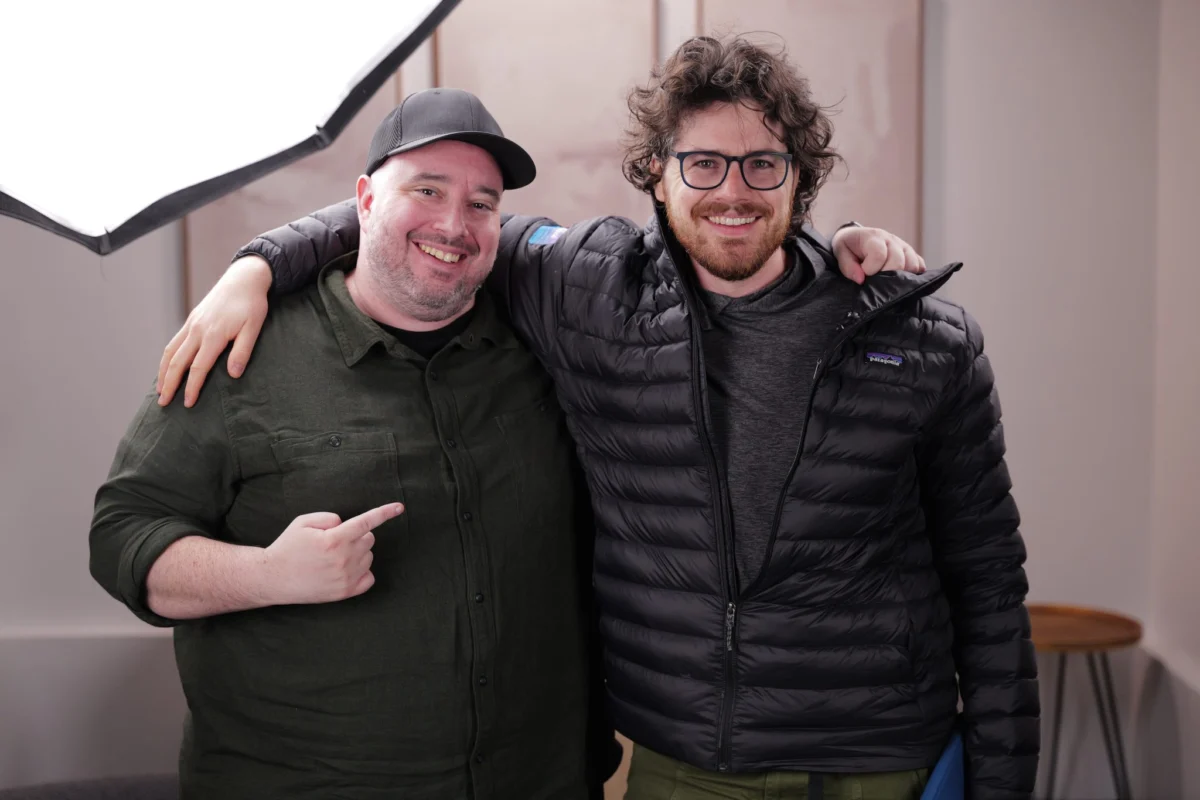
A central thread that has resonated with early viewers and critics is director Daniel Roher’s personal journey throughout the filmmaking process. "The AI Doc" interweaves the profound experience of becoming a father with the equally monumental shifts occurring in the field of artificial intelligence. This juxtaposition offers a unique perspective, grounding the abstract and often overwhelming discourse surrounding AI in the very human experience of raising a child and contemplating the future they will inherit. Roher himself, in a recent in-studio interview with Next Best Picture, described this dual narrative as integral to the film’s emotional core, stating that his personal evolution directly informed his understanding and presentation of AI’s potential futures.
The interview, which lasted approximately forty minutes, provided an in-depth look into the making of "The AI Doc." Roher discussed the challenges and inspirations behind the project, emphasizing the importance of balancing the speculative nature of AI’s future with tangible human concerns. The film’s commitment to human artistry, evident in its animation and visual design, was a key talking point, underscoring a deliberate choice to counter the increasingly digital and automated nature of AI itself.
Production Pedigree: A Foundation of Excellence
The production of "The AI Doc" is a significant talking point in itself, drawing from the creative and technical expertise of teams that have already achieved critical and commercial success. The involvement of Daniel Kwan and Jonathan Wang, the creative forces behind "Everything Everywhere All at Once," suggests an ambition to explore complex ideas with a blend of originality, visual flair, and emotional resonance. This film’s success was marked by its innovative narrative structure and its ability to tackle profound philosophical questions within a highly entertaining framework. The inclusion of their team implies a similar approach for "The AI Doc," likely aiming to make a potentially daunting subject accessible and engaging.
Furthermore, the participation of Shane Boris and Diane Becker, producers of the Oscar-winning documentary "Navalny," indicates a commitment to rigorous investigative journalism and compelling narrative non-fiction. "Navalny" captivated audiences with its unflinching portrayal of political courage and the dangers of authoritarianism, showcasing a talent for capturing high-stakes human drama. Their involvement suggests that "The AI Doc" will not shy away from the critical and potentially controversial aspects of AI development, aiming for a factual and impactful presentation. This dual expertise from both narrative and documentary powerhouses promises a film that is both artistically ambitious and journalistically sound.

A Timeline of AI’s Ascendancy and the Documentary’s Genesis
The development of "The AI Doc" coincides with a period of unprecedented acceleration in AI research and application. While AI has been a field of study for decades, the last ten years have witnessed a dramatic surge in its capabilities, moving from theoretical possibilities to widespread integration into daily life. Key milestones, such as the development of advanced neural networks, the breakthroughs in natural language processing (leading to sophisticated chatbots and AI-generated text), and the advancements in AI-driven image and video generation, have all contributed to a growing public awareness and, in many cases, apprehension about the technology.
The conceptualization of "The AI Doc" likely began in earnest around the early 2020s, a period marked by the rapid popularization of generative AI tools. As these technologies began to demonstrate capabilities previously confined to science fiction, the urgent need for a comprehensive and accessible exploration of their implications became apparent. Daniel Roher’s personal journey into fatherhood during this time would have amplified the stakes, prompting reflections on the kind of world his child would grow up in, a world increasingly shaped by intelligent machines. The film’s premiere at the 2026 Sundance Film Festival suggests a production timeline of approximately three to five years, a testament to the depth of research, filming, and post-production required for a documentary of this scope. The Sundance selection itself serves as a validation of the film’s artistic merit and its relevance to contemporary discourse.
Broader Implications: Navigating the ‘Apocaloptimist’ Landscape
The title, "The AI Doc: Or How I Became An Apocaloptimist," is particularly striking. It suggests a nuanced perspective that moves beyond simple dystopian or utopian predictions. The term "apocaloptimist" implies an individual who acknowledges the potential for catastrophic outcomes associated with a technology or phenomenon, yet simultaneously maintains a sense of hope and believes in humanity’s capacity to navigate these challenges and steer towards a positive future. This framing is crucial in a public discourse often polarized between sensationalized fears of AI takeover and overly optimistic assurances of technological salvation.
The film’s exploration of AI’s dual nature – its potential for both unprecedented progress and profound disruption – mirrors broader societal discussions. Governments worldwide are grappling with the ethical, economic, and security implications of AI. International bodies are convening to discuss regulatory frameworks, while academic institutions are intensifying research into AI safety and alignment. The widespread adoption of AI in sectors ranging from healthcare (drug discovery, diagnostics) and transportation (autonomous vehicles) to finance (algorithmic trading, fraud detection) and creative industries (content generation, design) underscores its transformative power.
However, concerns about job displacement due to automation, the potential for misuse in surveillance and warfare, the amplification of bias through algorithms, and the existential risks posed by superintelligent AI are equally prominent. "The AI Doc" is positioned to engage with these multifaceted issues, offering a cinematic platform for understanding the complexities and prompting critical thinking among its audience. The film’s emphasis on human-crafted elements in its visual presentation might also serve as a subtle commentary on the value of human creativity and ingenuity in an increasingly automated world.
Critical Acclaim and Audience Engagement
The positive reception at Sundance indicates that "The AI Doc" has succeeded in its ambitious goals. The specific praise for its exploration of AI’s threats and beneficial uses suggests that the film presents a balanced and insightful perspective. Roher’s personal narrative as a new father is likely to have provided an accessible entry point for audiences, making the abstract concepts of AI more relatable and emotionally resonant. This personal connection can be a powerful tool in demystifying complex subjects and fostering greater public engagement.
The film’s theatrical release on March 27th from Focus Features is anticipated with considerable interest. Focus Features has a strong track record of distributing critically acclaimed independent films that often engage with significant cultural and social issues. Their partnership suggests that "The AI Doc" is being positioned not just as an entertainment product but as an important cultural artifact, intended to spark dialogue and reflection.
Looking Ahead: The Future of AI Through a Human Lens
"The AI Doc: Or How I Became An Apocaloptimist" arrives at a critical juncture in the ongoing evolution of artificial intelligence. As the technology continues its relentless march forward, films like this documentary play a vital role in informing the public, challenging assumptions, and fostering a more nuanced understanding of the path ahead. By blending personal narrative with rigorous exploration, and by highlighting the enduring value of human artistry, Roher and Tyrell appear to have crafted a film that is both timely and timeless, prompting viewers to consider not just what AI can do, but what it means for humanity. The film’s success will likely be measured not only by its critical accolades and box office performance but also by its ability to foster informed discussion and contribute to a more considered approach to the development and integration of artificial intelligence into our lives and the lives of future generations. The "apocaloptimist" stance suggests a hopeful yet cautious outlook, one that acknowledges the profound challenges while championing human resilience and foresight.