



The Tang Dynasty epic, "The Lychee Road," marks a significant turning point for acclaimed comedian and director Da Peng, showcasing his directorial prowess and acting depth in a period drama that masterfully blends historical intrigue with sharp social commentary. This ambitious project, adapted from the celebrated novel of the same name by Ma Boyong, represents Da Peng’s foray into costume drama and his most complex undertaking to date, earning him accolades and establishing him as a versatile talent beyond his comedic roots. The film, which he both directed and stars in, has garnered critical attention for its intricate plot, stunning visual design, and insightful exploration of power dynamics within the imperial court.
Da Peng’s journey to "The Lychee Road" has been a remarkable ascent in the Chinese entertainment landscape. He first rose to prominence as an internet talk show host, captivating audiences with his unique brand of humor. His directorial debut, "Jian Bing Man" (2015), a sleeper hit, solidified his cinematic aspirations, earning him the prestigious Best New Director and Best New Actor awards. This success paved the way for subsequent appearances in diverse productions, including the popular "City of Rock," Yuen Woo-ping’s martial arts spectacle "The Thousand Faces of Dunjia," and the comedy "Johnny Keep Walking!". However, "The Lychee Road" signifies a deliberate departure into more mature and thematically rich storytelling, demonstrating a conscious evolution of his artistic vision.
The narrative of "The Lychee Road" is intricately woven around the historical backdrop of Chang’an City during the Tianbao era of the Tang Dynasty (742-756 AD), a period often characterized by its grandeur and prosperity, but also by underlying political machinations and societal stratification. The story centers on Li Shande, portrayed by Da Peng, a brilliant mathematician employed as a low-ranking officer within the Imperial Bureau. Despite his intellectual acumen, Li Shande’s life is one of quiet diligence, striving to provide a stable home for his wife, Zheng Yu Ting (Yang Mi), and their daughter, Putao. His modest dream of homeownership is realized after nearly twenty years of dedicated service, but this achievement comes at the steep price of significant debt incurred from moneylending monks, a detail that underscores the economic pressures faced even by those within the imperial apparatus.
The catalyst for the film’s central conflict arrives with the impending birthday of Emperor Xuanzong’s favored consort, Yang Gui Fei, a figure of immense influence and cultural significance during the Tang Dynasty. Eager to impress his beloved consort with extravagant gifts, the Emperor commissions a grand gesture: the delivery of fresh lychees from the southern province of Lingnan to the imperial capital of Chang’an. Li Shande, burdened by his financial obligations, is assigned this crucial task by his superiors. Unbeknownst to him, this mission is fraught with deception. He soon discovers that the assignment is not for preserved lychees, but for fresh fruit, a critical detail that renders the task seemingly insurmountable. The journey from Lingnan to Chang’an typically took approximately a month by horse, an impossibly long duration for perishables that spoil within three days. This revelation plunges Li Shande into a desperate race against time and the machinations of his superiors, who appear to have set him up for failure.
The Improbable Mission: A Test of Ingenuity and Resilience
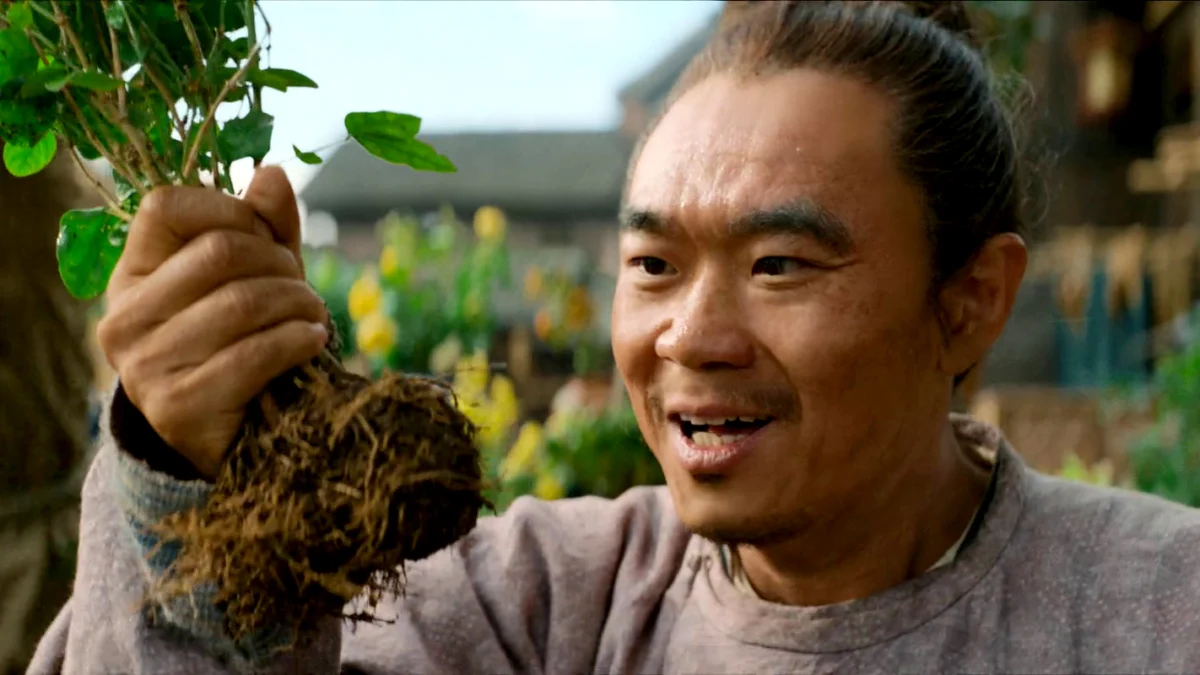
Li Shande’s journey to Lingnan to personally inspect the lychee orchards marks the beginning of his struggle. There, he cultivates alliances with Ah Tong (Zhuang Dafei), a spirited lychee grower, and Su Liang (Bai Ke), an eccentric but shrewd merchant. Despite the local governor, He Qi Guang (Lam Suet), being aware of Li’s likely failure, he nevertheless provides a slave to assist. Driven by a profound sense of duty and the looming threat of ruin, Li Shande embarks on a series of increasingly desperate experiments to devise a method for transporting the delicate fruit. These initial attempts are met with failure, highlighting the immense logistical challenges and the pervasive skepticism he faces. The intervention of the high-ranking court chancellor, Yang Guo Zhong (Andy Lau), a powerful figure during the era, offers Li a final, albeit precarious, opportunity to execute his mission properly. This pivotal moment underscores the hierarchical nature of the Tang court and the precarious position of officials like Li Shande, whose fate rests on the whims of those in power.
The film’s narrative structure effectively mirrors Da Peng’s directorial evolution. The initial segments of "The Lychee Road" embrace a lighthearted, comedic tone, playing to Da Peng’s established strengths and the inherent humor in Li Shande’s character. The sequences depicting Li’s initial attempts and the comedic montages of his failed transportation methods showcase his optimism and resilience, while simultaneously exposing the exploitative nature of his scheming superiors. However, as the narrative progresses, the tone subtly shifts. The film gradually transitions into a more serious historical drama, bordering on tragedy, as Li Shande encounters escalating court conspiracies and the harsh realities of imperial politics. This transformation culminates in a sharp and incisive satire, offering a pointed critique of the power struggles, rampant corruption, and systemic inefficiencies that plagued the Tang court, a period historically known for both its cultural zenith and its internal decay.
Visual Authenticity and Thematic Depth
The visual presentation of "The Lychee Road" is a significant achievement, meticulously recreating the grandeur and lived-in reality of the Tang Dynasty. The costume design is elaborate and historically informed, reflecting the distinct social strata and the opulence of the era. The art direction and set design contribute to an immersive experience, with the interiors of Chang’an and the imposing temples adorned with intricate Buddha statues standing out for their authentic, lived-in quality. This attention to detail not only enhances the film’s historical authenticity but also provides a rich tapestry against which the characters’ struggles unfold. The production successfully navigates a delicate balance between dramatic tension and moments of levity, largely attributable to Da Peng’s compelling performance. His portrayal of Li Shande is nuanced, capturing both the character’s intellectual brilliance and his vulnerability. The emotional resonance of the film’s conclusion adds a profound layer of impact, leaving audiences with a lingering sense of the human cost of political ambition and corruption.
The ensemble cast of "The Lychee Road" delivers performances that enrich the narrative and deepen its thematic exploration. Bai Ke shines as Su Liang, the eccentric merchant whose developing bond with Li Shande in Lingnan forms a crucial emotional anchor for many of the film’s more dramatic sequences. His portrayal adds a much-needed element of camaraderie and support to Li’s otherwise isolated struggle. Yang Mi, as Li Shande’s wife Zheng Yu Ting, presents a likable and grounded character, whose occasional displays of exasperation, particularly directed at her husband, add moments of relatable humor amidst the historical drama. Zhuang Dafei makes a memorable impression in her supporting role as Ah Tong, the fiery yet pragmatic lychee grower whose connection with Li offers a glimpse into the lives of ordinary people impacted by imperial decrees. The veteran Hong Kong actor Lam Suet embodies the corrupt governor He Qi Guang with his characteristic gravitas, portraying a figure of localized power and self-interest. The film culminates with a commanding screen presence from martial arts legend Andy Lau, who makes a significant late-stage appearance as Chancellor Yang Guo Zhong. Lau’s performance is magnetic, embodying the immense power and influence wielded by figures at the apex of the imperial hierarchy.
Satire of Corruption: A Timeless Resonance
Ultimately, the enduring strength of "The Lychee Road" lies in its potent satire of corruption within the imperial court, a theme that resonates far beyond its historical setting. The film unflinchingly portrays those in power as arrogant and self-serving figures, who consistently exploit the less fortunate for their own personal gain. This dynamic is effectively illustrated through the character of Li Shande, the honest protagonist. Despite the occasional acquisition of authority or influence, he remains fundamentally unchanged, his integrity a stark contrast to the moral compromises of his superiors. While many within the bustling metropolis of Chang’an aspire to recognition, wealth, and happiness, Li experiences the antithesis. He emerges as a tragic figure, ensnared by the intricate machinery of power, ambition, and bureaucratic inertia. His personal sacrifices and unwavering dedication in the face of systemic corruption serve as a poignant commentary on the individual’s struggle for dignity and justice within an oppressive system.
The film’s production team has been recognized for their commitment to historical accuracy and artistic excellence. While specific budget figures for "The Lychee Road" have not been publicly disclosed, period dramas of this scale typically involve significant investment in set design, costume creation, and extensive location shooting. For instance, the average cost of producing a high-quality historical drama series in China can range from tens of millions to hundreds of millions of RMB, and feature films often command similar or higher expenditures depending on their scope and ambition. The meticulous recreation of Tang Dynasty Chang’an, a city that was once the largest and most cosmopolitan in the world, with an estimated population of over a million during its peak, would have required substantial resources to achieve the level of authenticity displayed. This attention to detail in historical reconstruction is a testament to the film’s commitment to providing an immersive and educational viewing experience, further enhancing its critical and commercial appeal.
Da Peng’s Evolving Cinematic Voice
"The Lychee Road" stands as a testament to Da Peng’s significant evolution as a filmmaker. By successfully merging impressive visual storytelling with engaging, well-developed characters, the film achieves a rare blend of entertainment and substance. It is a highly entertaining and expertly crafted work that not only captivates audiences with its historical narrative and dramatic flair but also serves as a powerful commentary on enduring themes of power, corruption, and the human spirit. Da Peng’s ability to navigate complex thematic material while maintaining a compelling narrative arc signals his maturation as a director capable of tackling diverse genres and delivering impactful cinematic experiences. The film’s success suggests a promising future for Da Peng, one where his comedic sensibilities can be thoughtfully integrated with profound storytelling, further solidifying his position as a significant voice in contemporary Chinese cinema. The film’s critical reception, highlighted by positive reviews praising its historical accuracy, performances, and thematic depth, further supports the notion that "The Lychee Road" is more than just a period piece; it is a compelling and relevant piece of cinematic art.