


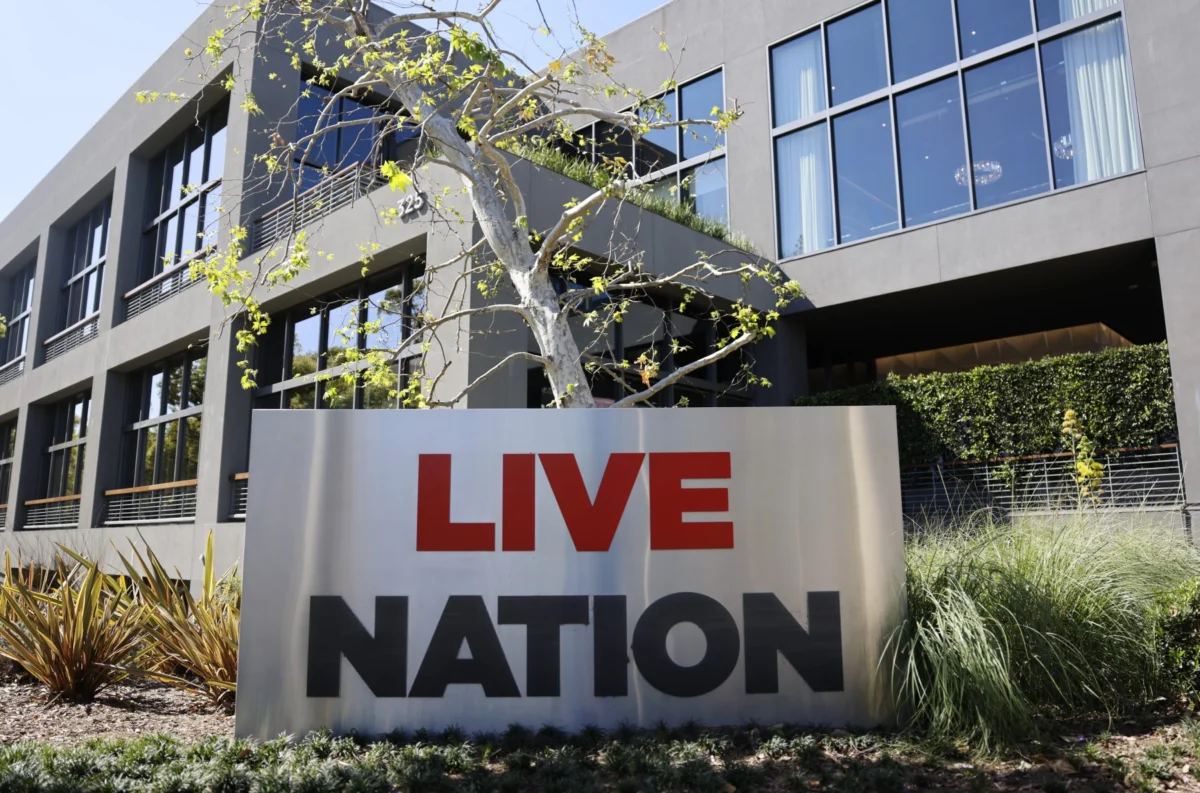
In the unfolding drama of the Live Nation antitrust trial, the fourth week saw the concert giant present its defense, calling key witnesses to the stand and leveling accusations of witness tampering against its primary competitor. As the legal battle intensifies in Manhattan federal court, this period has been crucial in shaping the narrative presented to the jury, with Live Nation striving to counter the prosecution’s claims of monopolistic practices and predatory behavior.
Week Four: Live Nation’s Defense Takes Center Stage
Following the conclusion of the state attorneys general’s case, Live Nation has embarked on presenting its defense, aiming to dismantle the prosecution’s argument that the company wields illegal monopolistic power over the live music industry. The trial, which commenced in early March, initially involved the U.S. Department of Justice. However, a settlement was reached with Live Nation just one week into the proceedings. Undeterred, New York, California, and numerous other states continued the lawsuit, driven by the objective of separating Live Nation from its ticketing subsidiary, Ticketmaster.
This past week was notably shorter in terms of court proceedings, with no jury testimony occurring on Wednesday, April 1st, or Thursday, April 2nd. These days were dedicated to addressing legal intricacies and procedural matters. The trial is slated to resume on Monday, April 6th, with the possibility of closing statements and the commencement of jury deliberations occurring in the subsequent week.

Key Witness Testimony: Challenging Previous Narratives
A significant development in week four involved testimony that directly challenged earlier claims made by prosecution witnesses. Weeks after the former executive of Brooklyn’s Barclays Center testified that Live Nation had allegedly threatened to withhold major artists if the venue switched ticketing providers from Ticketmaster to SeatGeek, the current CEO of the venue took the stand.
Laurie Jacoby, CEO of Brooklyn Sports & Entertainment, testified on Tuesday, offering a different perspective on the venue’s ticketing history. She detailed challenges experienced during SeatGeek’s tenure as the venue’s ticketing partner, citing difficulties with on-sales for concerts by prominent artists such as The Strokes and My Chemical Romance. According to reports from Inner City Press, Jacoby stated that these operational issues made it challenging to attract and retain musical acts, ultimately prompting the venue to revert to Ticketmaster. This testimony aimed to portray the decision to partner with Ticketmaster as a business necessity driven by service quality rather than coercion.
Further bolstering Live Nation’s defense, other witnesses offered testimony that countered earlier assertions of undue pressure. In the initial week of the trial, an executive from the NHL’s Minnesota Wild had informed the jury of his apprehension regarding the "catastrophic" consequences of losing Live Nation concerts, which he believed was a consequence of sticking with Ticketmaster. However, on Monday, as reported by MLex, an official from the NHL’s Washington Capitals testified to the contrary, describing Ticketmaster as an "outstanding business partner."
Jim Van Stone, president of business operations at Monumental Sports & Entertainment, which owns the NBA’s Washington Wizards and the Capital One Arena in Washington D.C., stated, "Their professionalism and the way they treat partners is outstanding. Ticketmaster… that has met all our needs. We believe in the fact that an exclusive relationship [with Ticketmaster] is better for us." This statement directly refuted the notion that venues are forced into exclusive contracts and highlighted the perceived benefits of such arrangements from a venue’s perspective.

The lineup of witnesses also included Eric Budish, an economics professor at the University of Chicago, who testified as an expert witness for Live Nation. Per MLex, Budish presented arguments suggesting that Ticketmaster possesses a genuine competitive advantage over rival ticketing services. However, during cross-examination, it was revealed that Budish had received over $1 million from Live Nation for his services as an expert economic witness in this case, a detail that the prosecution is likely to leverage to question the impartiality of his testimony.
Accusations of Witness Tampering and Legal Maneuvering
The most dramatic developments of the week emerged not from direct testimony to the jury, but from a scathing legal motion filed by Live Nation on Thursday. The concert giant demanded sanctions against the states, alleging that AEG, its major competitor, had covertly provided them with a "dossier of personal information" pertaining to a former employee. Live Nation contends that this information was then exploited by the states to prevent the former employee from testifying.
In their motion, Live Nation’s legal team asserted, "This blatant attempt to dissuade a witness from providing truthful testimony through intimidation is intolerable." They urged the judge to inform the jury that AEG and the states have been "closely coordinating" their efforts and that they had actively sought to suppress testimony which would have indicated that AXS, AEG’s ticketing platform, was "never of comparable quality to Ticketmaster." This aggressive legal maneuver suggests a strategic effort by Live Nation to discredit the prosecution’s case by exposing alleged collusion and attempts to manipulate the testimony presented.
The Core of Live Nation’s Defense: Superiority and Venue Preference

The testimony from Jacoby, Van Stone, and Budish directly addresses the central pillar of Live Nation’s defense strategy: that its dominant market position over the past fifteen years is a result of its superior service and appeal to venues, rather than through anti-competitive actions.
The alleged threats to Barclays Center if it opted for SeatGeek were reframed by Jacoby as a business decision based on Ticketmaster’s superior ticketing capabilities. Similarly, Van Stone’s testimony aimed to demonstrate that venue exclusivity contracts are often a preference of the venues themselves, seeking stability and optimal service, rather than an imposition by Live Nation.
The sanctions motion further reinforces this defense. Live Nation argues that the alleged efforts by AEG and the states to prevent the former employee’s testimony stem from a fear that his testimony would reveal that AEG’s AXS ticketing system is demonstrably inferior to Ticketmaster. Such an admission, Live Nation contends, would "fundamentally undermine plaintiffs’ case" by suggesting that market dominance is achieved through genuine competitive merit. If the judge grants the sanctions, it would send a powerful signal to the jury that the prosecution may have felt compelled to suppress evidence that supported Live Nation’s claims of competitive advantage.
Broader Implications and the Road Ahead
The testimony presented in week four has significant implications for the ongoing trial. Live Nation’s defense hinges on convincing the jury that its success is a testament to its market leadership and the superior value it provides to artists, venues, and fans. By presenting witnesses who attest to the quality of Ticketmaster’s services and the voluntary nature of exclusive partnerships, Live Nation seeks to paint a picture of a company that thrives on merit, not coercion.

The accusation of witness tampering, if substantiated or even perceived by the jury, could have a substantial impact on their perception of the prosecution’s conduct. It raises questions about the fairness of the proceedings and could potentially erode the credibility of the state attorneys general’s case.
As the trial approaches its final stages, the jury will be tasked with weighing the competing narratives. The prosecution will likely emphasize evidence of Live Nation’s aggressive tactics and the alleged stifling of competition, while the defense will continue to highlight the company’s perceived strengths and the benefits it brings to the live music ecosystem. The ultimate decision will not only determine the fate of Live Nation and Ticketmaster but could also set important precedents for antitrust enforcement in the digital age and the complex dynamics of the live entertainment industry. The upcoming week, with its potential for closing arguments and deliberations, promises to be a critical juncture in this high-stakes legal contest.