


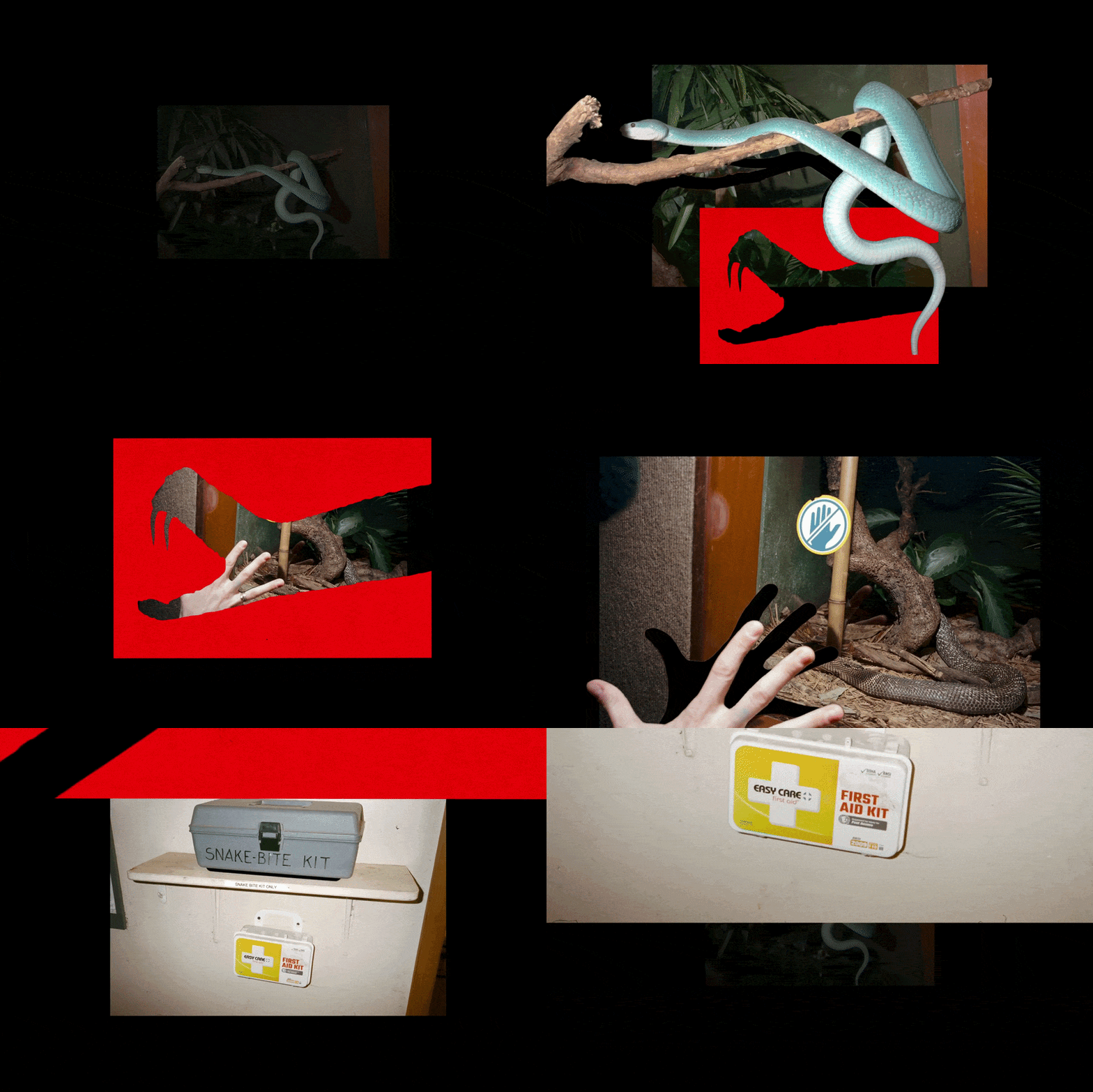
When a seven-foot-long western green mamba latched onto the hand of Chris Gifford in Raleigh, North Carolina, in 2021, the young snake enthusiast immediately realized his life was measured in minutes. The electric-hued serpent, native to West Africa, had delivered a potent neurotoxic venom designed to paralyze the respiratory system of its prey. As Gifford secured the animal and started a timer to track the onset of his symptoms, he became the latest data point in a specialized and high-stakes segment of American emergency medicine. His survival did not depend on the standard inventory of his local hospital, but rather on a little-known logistical network known as the Antivenom Index, which connects private citizens bitten by exotic pets to the rare pharmaceutical stockpiles maintained by the nation’s zoos.
The Critical Seconds Following an Exotic Envenomation
The clinical progression of an exotic snakebite is often described by medical toxicologists as a "nightmarish crescendo." Depending on the species, symptoms can include agonizing local pain, internal hemorrhaging, organ failure, and rapid paralysis. In Gifford’s case, the neurotoxins began to take hold within half an hour. His eyelids drooped—a sign of ptosis—and his diaphragm began to fail, creating a sensation he described as "drowning" while on dry land.

While most American emergency rooms are equipped to treat bites from native species like copperheads or rattlesnakes using the polyvalent antivenom CroFab, they are almost never stocked with biologics for African mambas, Asian cobras, or Australian taipans. These treatments are classified by the Food and Drug Administration (FDA) as investigational drugs, making them difficult and expensive for standard medical facilities to acquire and maintain. Consequently, when an exotic bite occurs, the regional poison control center must activate the Antivenom Index to locate the nearest zoological institution with the specific "anti-serum" required to neutralize the toxin.
The Mechanics of the National Antivenom Index
The Antivenom Index is a centralized database that tracks the location, quantity, and expiration dates of rare antivenoms across approximately 90 zoological organizations in the United States. For decades, the system was managed by Dr. Leslie Boyer, a professor emerita at the University of Arizona and a leading medical toxinologist. In its earliest iterations during the 1970s, the index was a physical notebook with tabbed pages and the home phone numbers of zookeepers.
In 2006, the system moved online, and as of 2023, it is hosted by the Toledo Zoo in Ohio. The Toledo Zoo maintains one of the country’s most diverse reptile collections, housing over 60 venomous species. John Chastain, the zoo’s general curator, noted that the system functions as a volunteer-driven safety net. When a call comes in—often in the middle of the night—zoo staff must coordinate with law enforcement and medical couriers to transport vials, sometimes using police escorts or helicopters to bridge the distance between the zoo’s refrigerator and the patient’s bedside.

For Chris Gifford, the index identified the Riverbanks Zoo in South Carolina, located 200 miles away, as the nearest source of mamba antivenom. Ten vials were packed on ice and flown by helicopter to Raleigh. The first dose was administered exactly six hours after the bite, just as Gifford’s respiratory failure reached a critical stage.
A History of Zoo-Based Medical Interventions
The reliance on zoos for public health is a tradition that dates back more than a century. In 1916, a reptile keeper at the Bronx Zoo was bitten by a rattlesnake. By chance, a Brazilian scientist was visiting New York with samples of antivenom from his laboratory in São Paulo. The successful treatment of the keeper established the first formal partnership between a U.S. zoo and an antivenom manufacturer.
Today, the Bronx Zoo remains a primary hub for the Northeast. Kevin Torregrosa, the zoo’s curator of herpetology, oversees a specialized refrigerator containing 25 different varieties of antivenom. While the primary purpose of the stock is to protect the zoo’s professional staff, the reality is that the vials are almost exclusively used for private citizens. Data indicates that between 2005 and 2011, approximately 70 percent of exotic snakebites reported in the U.S. occurred in private residences.

The Rising Popularity of Dangerous Exotic Species
Despite the inherent risks, the trade in venomous reptiles has expanded significantly. Advances in captive breeding mean that species once difficult to obtain are now readily available through online classifieds, pet stores, and reptile expos. Individual specimens, such as the monocled cobra or the Gaboon viper, often retail for less than $500.
The National Poison Data System reported that in 2024, there were over 5,000 bites from native venomous species, but only 81 recorded bites from exotic snakes. While the number of exotic bites is low, their complexity is disproportionately high. The demographics of these incidents are remarkably consistent: approximately 79 percent of victims are male, with an average age of 33. Experts suggest that the rise of social media "influencers" who engage in "free handling"—the practice of holding venomous snakes without safety tools—has contributed to the trend.
The Economic and Logistical Barriers to Treatment
The production of antivenom is a labor-intensive biological process. It requires "milking" venom from live snakes and injecting small, non-lethal amounts into donor animals, such as horses or sheep. The antibodies produced by the donor animal are then harvested and refined into a pharmaceutical product.

This process results in extreme costs:
- North American Coral Snake Antivenom: Approximately $8,000 per vial, with a typical dose requiring five vials.
- CroFab (Native Species): A full treatment course can cost a hospital between $40,000 and $45,000.
- King Cobra Antivenom: While individual vials from overseas manufacturers like the Thai Red Cross may cost as little as $60, a severe envenomation may require up to 60 vials due to the volume of venom the snake can inject.
Zoos frequently donate these supplies at a total loss. Because they are not licensed pharmacies, charging hospitals for the antivenom could jeopardize their FDA standing. This creates a financial burden on zoological institutions, which must replenish their stocks every few years as the biologics expire.
Legislative Responses and Public Safety Implications
The case of Chris Gifford led to significant legislative changes in North Carolina. After a zebra cobra—another of Gifford’s pets—escaped and was found roaming a residential neighborhood later in 2021, the Raleigh City Council passed a ban on "inherently dangerous" exotic animals. Similar bans have been enacted in Florence, South Carolina, following a 2024 incident involving an inland taipan.

The inland taipan case highlighted the extreme logistical challenges of the Antivenom Index. The snake, native to Australia, possesses the most toxic venom of any terrestrial serpent. When a handler was bitten in 2024, Christopher Pecori of the Miami-Dade Fire Department’s "Venom One" unit had to coordinate a multi-state relay to get the antivenom to the patient within six hours. On September 11, 2001, a similar emergency required a Lear jet to be granted one of the only FAA flight waivers in the country while all other aircraft were grounded, just to deliver taipan antivenom from San Diego to Florida.
The Future of the American Antivenom Safety Net
Medical experts like Dr. Boyer argue that the current system, while effective, is "funky" and unsustainable. She has called for a federally funded national venom treatment program that would remove the financial and logistical burden from zoos and place it under the purview of a dedicated public health agency.
"It’s a tradition of generosity and kindness by herpetologists that keeps citizen collectors protected," Boyer noted. However, as the exotic pet trade continues to grow and the cost of specialized biologics rises, the strain on the volunteer network of zookeepers and curators is reaching a breaking point.

For now, the safety of American exotic snake owners remains dependent on the speed of a helicopter and the willingness of a zookeeper to answer a phone at 3:00 a.m. While the Antivenom Index continues to save lives, it remains a fragile link in the chain of American emergency medicine, operated by professionals who hope they never have to use the very vials they so carefully stock.