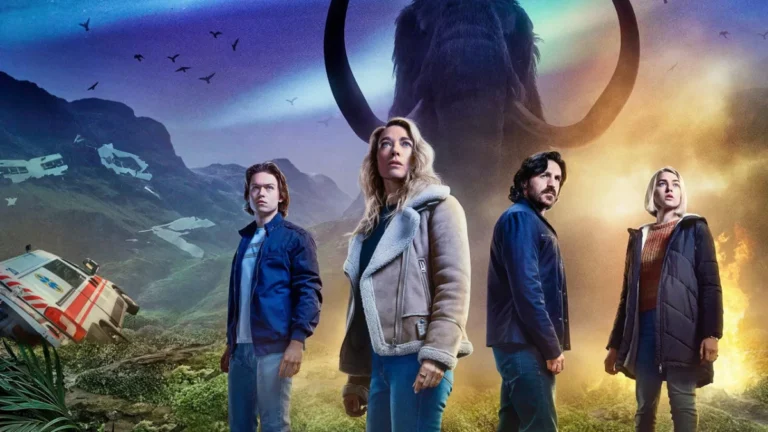





Netflix’s South Korean sci-fi disaster epic, The Great Flood, has concluded its critical 91-day premiere window on the streaming platform, cementing its status as a global phenomenon. The film garnered an impressive 86.6 million views within this crucial period, securing its place as the fifth most-watched non-English movie of all time on Netflix. This remarkable achievement not only underscores the burgeoning global appeal of South Korean cinematic productions but also marks a significant milestone as the first Korean movie to break into Netflix’s all-time top 10 on both its current "views" metric and the previously used "hours watched" metric.
A New Benchmark for Korean Cinema on a Global Stage
The success of The Great Flood arrives amidst a sustained surge in the popularity of K-content across Netflix’s vast international subscriber base. While South Korean series like Squid Game, All of Us Are Dead, and The Glory have previously shattered viewership records and dominated global conversations, feature films from the region have historically faced a steeper climb to achieve similar stratospheric success in the all-time rankings. The Great Flood, starring the acclaimed Kim Da-mi and Park Hae-soo, has demonstrably bucked this trend. Its unique blend of high-stakes survival, a compelling time-loop narrative, and cutting-edge visual effects resonated with audiences worldwide, proving that Korean cinema holds immense untapped potential for global blockbusters beyond episodic storytelling.
Netflix’s strategic pivot towards investing heavily in international, particularly Korean, original content over the past several years has clearly paid dividends. This investment has fostered a fertile ground for diverse narratives to find a global audience, breaking down traditional linguistic and cultural barriers. The Great Flood‘s journey from a highly anticipated release to an all-time top performer is a testament to the platform’s ability to identify and elevate content with universal appeal, further solidifying its position as a leading distributor of global entertainment. The film’s robust performance reinforces the streamer’s commitment to diversifying its content library and catering to the evolving tastes of its international audience, many of whom are increasingly open to non-English language productions.
Understanding Netflix’s Performance Metrics and The Great Flood‘s Standing
Netflix utilizes a specific 91-day premiere window to calculate its "Most Popular" lists, a metric designed to standardize comparisons between titles by focusing on initial engagement. During this pivotal period, The Great Flood amassed its 86.6 million views, a figure that places it in an elite category. The film finished just shy of the fourth position, currently held by last year’s action movie Exterritorial, which recorded 91.7 million views. However, it significantly outpaced the 2023 survival thriller Nowhere, which secured 85.7 million views, illustrating the tight competition at the pinnacle of Netflix’s non-English film offerings.
The distinction of being the first Korean movie to appear in the all-time top 10 on both the new "views" metric and the "old metric" (total hours watched) is particularly noteworthy. The transition from reporting total hours watched to total views (calculated by dividing total hours watched by the runtime of the film) was implemented by Netflix to provide a more intuitive and comparable measure of audience engagement, especially for titles with varying lengths. Achieving success on both metrics indicates not only that a vast number of subscribers initiated watching the film, but also that a significant aggregate amount of time was spent engaging with its content, suggesting strong completion rates and repeat viewings. This dual success unequivocally cements The Great Flood‘s legacy as a truly impactful title in Netflix’s history.
Global Resonance: Where the Flood Made Its Biggest Splash
The global footprint of The Great Flood is perhaps one of its most compelling aspects, demonstrating broad appeal across diverse geographical and cultural landscapes. Data compiled by analytics firm FlixPatrol provides granular insights into the film’s regional performance, tracking its daily presence in Netflix’s Top 10 lists across various countries.
The undisputed standout market for The Great Flood was Vietnam, where the film maintained a presence in the daily Top 10 for an astounding 75 days. This signifies that for nearly the entirety of its 91-day record-keeping window, The Great Flood remained one of the most-watched movies in the country. Such sustained engagement is rare and speaks to a profound connection with the Vietnamese audience, possibly due to cultural resonance, genre appeal, or strong word-of-mouth. This exceptional performance in Vietnam highlights the growing influence of Asian markets on global streaming trends and the potential for specific titles to achieve cult status in particular regions.
Beyond Vietnam, the film exhibited exceptionally strong performance across a wide swath of territories, including Asia, the Middle East, North Africa, and Latin America. Numerous countries within these regions saw The Great Flood spend over a month in their respective Top 10 charts, showcasing consistent viewer interest. For instance, countries like Oman, Peru, and Venezuela each recorded 33 days in their daily Top 10s, while Colombia, Ecuador, Jordan, Kuwait, and Saudi Arabia all saw the film maintain its strong position for 32 days. This widespread success in diverse non-English speaking markets underscores the film’s universal themes of survival and resilience, which transcended linguistic barriers.
A particularly significant aspect of The Great Flood‘s global run was its ability to penetrate and sustain viewership in notoriously competitive, English-dominated markets. Breaking into the Top 10 in regions like the United States and the United Kingdom is a formidable challenge for any non-English feature film. Yet, The Great Flood managed to hold a respectable position for 11 days in both the US and UK daily Top 10 lists. For a South Korean sci-fi thriller, spending over a week and a half in these highly saturated and diverse markets is a powerful indicator of its crossover appeal, fueled by positive critical reception and robust audience recommendations. This achievement highlights a shifting paradigm in global content consumption, where quality storytelling, regardless of origin language, can capture the attention of Western audiences.
The film also enjoyed a solid, albeit shorter, run across several European countries. It spent 11 days in the daily Top 10s of Norway and Sweden, 10 days in Denmark and Iceland, and a still noteworthy 5 days in Ireland, which represented its shortest overall run on the global leaderboard. These performances, while not as extended as in Asia or Latin America, nonetheless demonstrate the film’s ability to connect with European viewers and contribute to its overall global viewership numbers.
Implications and Broader Impact
The unprecedented success of The Great Flood carries significant implications for various stakeholders within the global entertainment industry.
For Netflix: This milestone unequivocally validates Netflix’s multi-billion-dollar investment in international content, particularly its focus on South Korean productions. The film’s performance proves that original, non-English movies can generate significant viewership and compete with Hollywood blockbusters for global attention. This success is likely to embolden Netflix to further ramp up its production of diverse international films, understanding that these titles are not just niche offerings but critical drivers of subscriber acquisition and retention worldwide. The ability of titles like The Great Flood to perform strongly across a multitude of regions, from Asia to the Americas and Europe, underscores the platform’s unique position as a global content aggregator and distributor, fostering cultural exchange through entertainment.
For the South Korean Film Industry: The Great Flood‘s achievement further solidifies South Korea’s reputation as a global cultural powerhouse. Following the Oscar triumph of Parasite and the global streaming dominance of Squid Game, this film’s success on the Netflix "Most Popular" list demonstrates that the Korean wave, or Hallyu, is not confined to music or television series but extends robustly into feature films. This will undoubtedly attract more international co-production opportunities, increased investment in Korean cinematic talent and infrastructure, and a broader recognition of Korean filmmaking prowess on the global stage. It opens doors for more diverse Korean genres to gain international traction, moving beyond the traditionally popular K-drama formats.
For the Sci-Fi Disaster Genre: The film’s triumph also signals the enduring and perhaps evolving appeal of the sci-fi disaster genre. While Hollywood has long dominated this space, The Great Flood demonstrates that compelling narratives, strong character development, and impressive visual effects, regardless of their origin, can resonate universally. Its time-looping survival thriller premise offered a fresh take on established tropes, appealing to viewers seeking both thrilling action and intellectual engagement. This could inspire filmmakers worldwide to explore new cultural contexts and narrative structures within the genre.
Future Outlook
As The Great Flood officially concludes its 91-day premiere window, its legacy is now firmly etched into Netflix’s record books. It joins an elite cohort of international heavyweights such as the Norwegian monster film Troll, the Spanish survival drama Society of the Snow, and the aforementioned Nowhere, all of which have captivated global audiences. The film’s journey is a powerful testament to the transformative power of streaming platforms in democratizing access to diverse content and fostering a truly global cinematic landscape. Industry analysts will be closely watching how future Korean film releases perform, with The Great Flood having set a new, incredibly high bar for international success. Its achievement suggests a future where the origin of a story is less important than its ability to captivate, entertain, and resonate with viewers across every corner of the globe.