



In the landscape of modern digital entertainment, few auditory cues are as instantly recognizable as the deep, authoritative baritone that precedes thousands of video game trailers across the European continent. For sixteen years, the phrase "PEGI 18" has served as a cultural touchstone, a regulatory gatekeeper, and a rite of passage for millions of consumers. Yet, until early 2024, the identity of the individual behind the recording remained largely unknown to the public. Richard Wells, a British voice actor based in Brussels, emerged from anonymity through a viral TikTok post, sparking a broader conversation regarding the valuation of voice talent, the evolution of digital media, and the unforeseen longevity of commercial recordings in the age of social media.
The Viral Emergence of an Anonymous Icon
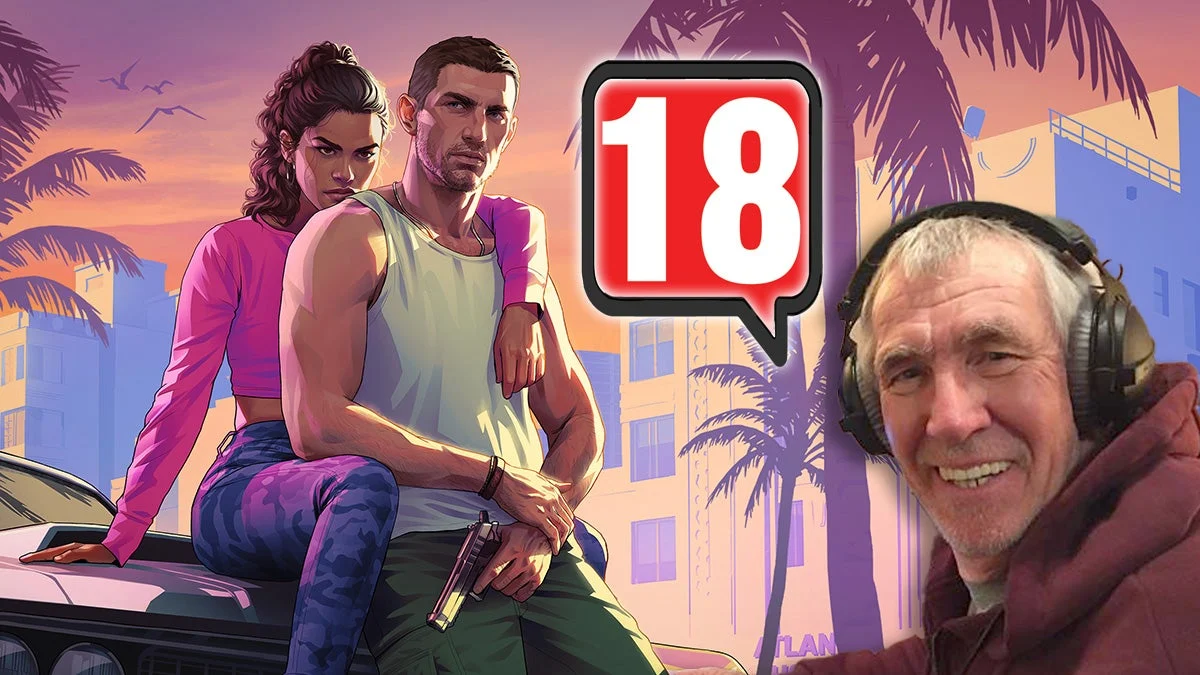
The transition from a faceless industry professional to a social media sensation occurred with uncharacteristic speed. In early 2024, Richard Wells uploaded a video to the social media platform TikTok, introducing himself as the voice behind the Pan European Game Information (PEGI) rating announcements. The video featured Wells, an older man with cropped white hair and a professional demeanor, demonstrating the "PEGI 18" vocalization that has been a staple of the gaming industry since 2009.
The reaction was immediate and substantial. The video quickly amassed over 20.4 million views and nearly 19,000 comments. The engagement highlighted a profound sense of nostalgia among gamers; one commenter noted that hearing the "PEGI 18" warning at age 12 felt like a "rite of passage," a sentiment that garnered over 150,000 likes. The sudden surge of recognition was a sharp departure for Wells, who had spent the better part of four decades working in the relatively invisible sectors of corporate narration and advertising.
Historical Context: The 2009 Recording Session
The recording that would eventually become one of the most-heard audio clips in history originated as a routine corporate assignment. In 2009, Wells was finishing a standard recording session in Brussels when he was asked to provide a few additional lines for a voice agency. The task was simple: record the various age classifications for the PEGI system—PEGI 3, 7, 12, 16, and 18.
At the time, Wells was paid a flat fee of €200 for what he estimates was approximately one minute of work. "I had no idea what it meant," Wells admitted, noting that he was not a gamer and viewed the session as just another "proverbial pocket" filler for the day. Neither the actor nor the agency could have predicted the meteoric rise of digital video platforms like YouTube and TikTok, which would eventually broadcast those two seconds of audio billions of times over the following decade and a half.
The Evolution of the PEGI System and the Gaming Industry
To understand the impact of Wells’ voice, one must consider the scale of the PEGI system. Established in 2003 to replace various national age-rating systems with a unified European standard, PEGI is now used in over 35 countries. It is administered by the Pan-European Game Information board and, in the United Kingdom, by the Games Rating Authority.

In 2009, when Wells made his recording, the global video game market was valued at approximately $54 billion. By 2024, that figure had grown to nearly $184 billion. As the industry expanded, the requirement for rating disclosures in marketing materials became more stringent. Every trailer, television advertisement, and social media clip for a mature-rated game in Europe was required to feature the "PEGI 18" audio cue. This mandatory inclusion ensured that Wells’ voice was embedded into the subconscious of an entire generation of consumers, regardless of whether they knew his name.
From Advertising to Voiceover: The Career of Richard Wells
The path that led Wells to that 2009 session was rooted in the world of global advertising. Initially a professional in the advertising sector, Wells worked for prestigious firms such as J. Walter Thompson and Leo Burnett. His career took him from London to Brussels and eventually to Southeast Asia, with stints in Singapore, Hong Kong, and Bangkok.
It was during his time in Bangkok, after 15 years in management, that Wells decided to pivot toward a more creative endeavor. Drawing on a natural aptitude for accents and languages—which he jokingly attributes to having "big ears"—he explored the possibility of a career in voiceover. In 1986, at the age of 35, he chose Brussels as his base of operations. The decision was strategic; as the headquarters for the European Parliament, the European Commission, and NATO, Brussels offered a consistent demand for English-language narration for corporate videos and educational materials.
For decades, Wells maintained a prolific career, often completing 200 to 250 jobs per year. His work spanned the transition from VHS to digital formats, encompassing everything from e-learning courses to television commercials. Despite his success, he remained a "faceless voice," a professional whose work was ubiquitous but whose identity was private.
The Compensation Debate and Official Responses
The viral success of Wells’ TikTok video brought a difficult question to the forefront: is a €200 one-time payment fair for a recording that achieves billions of impressions? Under traditional voice-acting contracts, performers often receive residuals or "usage fees" when a recording is used in a major television campaign or a high-profile film. However, the PEGI recording was treated as a "buyout" for a specific type of media that, in 2009, did not account for the explosion of social media marketing.
When the story of Wells’ €200 fee broke in early 2024, it prompted a response from PEGI leadership. Dirk Bosmans, the Director General of PEGI, clarified that the organization had not dealt with Wells directly in 2009, but rather through a third-party voice agency. Bosmans emphasized that there was "no insidious plan to get away with a freebie," noting that in 2009, the organization primarily anticipated the recordings being used for cinema and television ads, not as a permanent fixture of global digital media.
Following Wells’ public emergence, PEGI and the actor entered into negotiations to formalize a new arrangement. Bosmans stated that the goal was to "sort that with Richard because the point wasn’t to underpay anyone." Wells later confirmed that a new agreement had been reached, involving a "modest sum" as a buyout for the usage rights. This agreement ensures that PEGI owns the rights to the 2009 recording for the next 50 years, providing closure to the financial dispute.

Implications for Voice Talent in the Digital Age
The case of Richard Wells serves as a significant case study for the voice-acting industry, particularly as it relates to licensing and the longevity of digital assets. In the modern era, voice actors are increasingly wary of "perpetual buyouts," where a single fee grants a company the right to use a voice indefinitely across all platforms.
The rise of Artificial Intelligence (AI) has further complicated this landscape. Voice actors now face the risk of their recordings being used to train AI models that can replicate their likeness without further compensation. While Wells’ situation involved a human-to-human negotiation, it underscores the necessity for clear, forward-looking contracts that account for technological shifts.
A Legacy in the Record Books?
As Wells reflects on his 40-year career, he remains content with his professional journey, despite the modest financial windfall from his most famous work. However, he remains curious about the historical significance of the "PEGI 18" recording. He has considered approaching the Guinness World Records to determine if his voice is, in fact, the most-heard single recording in human history.
While such a claim is difficult to quantify, it is not without merit. Unlike most commercial slogans or jingles, which have a limited shelf life, the PEGI ratings have remained unchanged for 16 years. When compared to other iconic voices—such as Elwood Edwards’ "You’ve Got Mail" for AOL or the late Don LaFontaine’s movie trailer narrations—Wells’ "PEGI 18" benefits from being a mandatory regulatory requirement across dozens of countries in a multi-billion dollar industry.
Conclusion
Richard Wells’ journey from a routine corporate session in Brussels to a viral TikTok icon illustrates the unpredictable nature of fame in the 21st century. While his financial compensation may not have scaled with the billions of views his voice garnered, his impact on gaming culture is undeniable. His story highlights the evolving relationship between talent and technology, serving as a reminder that behind every iconic digital soundbite is a human story of professional craft and, occasionally, an unexpected legacy. For Wells, the reward is perhaps found not just in the "modest sum" of a buyout, but in the uproarious affirmation from millions of people who, for the first time, could put a face to the voice that defined their gaming experience.