


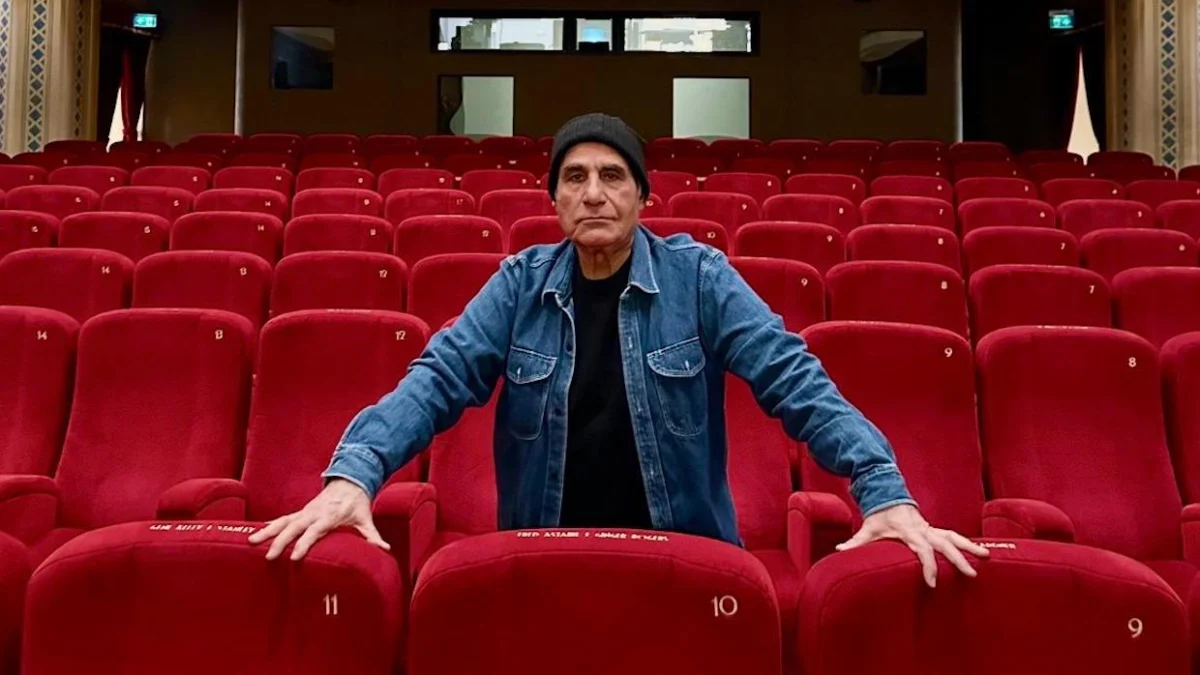
Amir Naderi, the seminal figure of the Iranian New Wave, is currently conducting an extensive pedagogical tour across Europe, marking a new chapter in a career defined by geographical displacement and an unyielding devotion to the cinematic medium. Speaking from Rome in February 2024, Naderi confirmed that his current itinerary involves teaching masterclasses that are specifically tailored to the cinematic heritage of each host nation. This educational endeavor follows a series of high-profile retrospectives in New York City, including screenings at Metrograph and Film Forum, which have sought to recontextualize his five-decade-long contribution to world cinema. Naderi’s journey from a self-taught orphan in the port city of Abadan to an internationally acclaimed auteur reflects a broader narrative of artistic perseverance and the evolution of the Iranian filmic identity during and after the 1979 Revolution.
A Pedagogical Pilgrimage Through European Cinema
Naderi’s current residency in Rome serves as the second stop on a multi-nation tour designed to mentor the next generation of filmmakers. His approach to film education is notably distinct; rather than imposing a universal curriculum, Naderi adapts his teachings to the specific history of the country he is visiting. In Italy, this involves a deep dive into the roots of Neorealism and the works of masters like Fellini and Antonioni, while in other regions, he pivots to local traditions. This cosmopolitan methodology is a direct extension of his own career, which has seen him produce significant works in the United States, Japan, and Italy.
The filmmaker’s move into education is driven by a critique of contemporary "world cinema," which he argues often suffers from a lack of structural discipline. Naderi emphasizes the importance of story architecture, pointing his students toward the rigorous screenwriting of the classical Hollywood era, specifically citing the works of Ben Hecht and Billy Wilder. By advocating for a return to formalist discipline over what he describes as "slipshod collation of footage," Naderi aims to cultivate a new cohort of directors capable of maintaining artistic integrity in an increasingly homogenized global market.
From the Streets of Abadan to the Iranian New Wave
To understand Naderi’s current stature, one must look to his formative years in Abadan, Iran. Born in 1946, Naderi was orphaned at the age of five. His early life was a struggle for survival, characterized by a series of menial jobs that would later provide the raw material for his most celebrated films. He worked as a shoe-shiner, a trash collector, and most famously, an ice-seller—a role immortalized in his 1984 masterpiece, The Runner (Devandeh).
His entry into the world of cinema began at a local theater where he sold soda. It was in this environment that he discovered the works of John Ford, Howard Hawks, and Kenji Mizoguchi. These early influences instilled in him a "religion of cinema" that bypassed formal academic training. By the early 1970s, Naderi had emerged as a leading voice in the Iranian New Wave, a movement characterized by its poetic realism, social critique, and innovative narrative techniques.
Naderi’s early filmography, produced under the auspices of the Institute for the Intellectual Development of Children and Young Adults (Kanoon), helped define the aesthetic of the era. His 1974 films Harmonica (Sazdahani) and Waiting (Entezar) showcased a burgeoning interest in the psychological states of children and the harsh realities of provincial life. However, it was his 1974 large-scale adaptation of Sadeq Chubak’s novel Tangsir that marked his departure from the traditional studio system. Naderi recalls this period as a moment of existential crisis, choosing to abandon commercial safety to pursue a purely personal, independent vision.
The Runner and the International Breakthrough
The 1980s marked a period of intense creative output despite the political upheavals following the Iranian Revolution. In 1984, Naderi released The Runner, which is widely considered the first post-revolutionary Iranian film to gain significant international acclaim. The film follows Amiro, a young boy living alone in a derelict ship on the Persian Gulf, who competes in races not for prizes, but as a manifestation of his will to survive and transcend his circumstances.
The Runner won the Grand Prix at the Three Continents Festival in Nantes, France, effectively putting Iranian cinema on the modern global map. The film’s success paved the way for other Iranian directors, such as Abbas Kiarostami and Mohsen Makhmalbaf, to reach international audiences. The technical precision of The Runner was aided by the editing of Bahram Beyzaie, another titan of Iranian cinema. The recent passing of Beyzaie in December 2023 has prompted a renewed look at their collaboration. Naderi has described Beyzaie as a "master of language" whose intellectual and emotional identity remained inextricably tied to the Iranian landscape, even in exile.
Exile and the New York Tetralogy
In 1989, following the release of Water, Wind, Dust (Ab, Bad, Khak), Naderi made the pivotal decision to leave Iran for the United States. Settling in New York City, he began a period of work that shifted his focus from the rural landscapes of Iran to the claustrophobic, vertical urbanity of Manhattan. This transition resulted in what critics often refer to as his "New York Tetralogy."

The first of these, Manhattan by Numbers (1993), serves as an allegory for the artistic struggle within the "rat race" of the city. Screened recently at Film Forum as part of their "Tenement Stories" program, the film captures a pre-gentrification New York, characterized by grit and economic anxiety. The subsequent films in this cycle—A, B, C… Manhattan (1997), Six Girls (2001), and Sound Barrier (2005)—demonstrated Naderi’s evolving interest in formal experimentation.
Sound Barrier, in particular, represents a radical departure in style. Centered on a deaf-mute boy’s search for a recording of his mother’s voice, the film uses aggressive sound design and fragmented editing to explore the volatility of personal identity and the archive. These New York films solidified Naderi’s reputation as a "director’s director," one who refused to cater to commercial pressures or the expectations of the "immigrant narrative."
The Architecture of Obsession: Vegas and Beyond
As Naderi’s career progressed into the 21st century, his thematic preoccupation with "obsession as hell" became more pronounced. His 2008 film, Vegas: A True Story, offered a blistering critique of the American Dream. Set on the outskirts of Las Vegas, the film follows a family that destroys their own home and land in a delusional search for buried treasure.
The film serves as a prescient commentary on American greed and the destructive nature of the "get-rich-quick" mentality. Analysts have noted that Vegas cuts deeper in the current political climate, reflecting a nation captured by the allure of "virtual gambling" and the desecration of the environment for short-term gain. Despite its bleakness, Naderi maintains that the obsession depicted in his films is a necessary precursor to transcendence. For Naderi, the act of filmmaking itself is the ultimate obsession, one that provides a path through the "hell" of existence.
Chronology of Major Works and Career Milestones
- 1946: Born in Abadan, Iran.
- 1971: Directs his first feature, Goodbye Friend.
- 1974: Releases Tangsir, Harmonica, and Waiting, establishing himself in the Iranian New Wave.
- 1984: The Runner receives international acclaim at the Nantes Three Continents Festival.
- 1989: Releases Water, Wind, Dust and relocates to New York City.
- 1993: Manhattan by Numbers marks his American debut.
- 2005: Sound Barrier wins the Roberto Rossellini Critics’ Prize at the Rome Film Festival.
- 2008: Vegas: A True Story premieres in competition at the Venice Film Festival.
- 2011: Directs Cut in Japan, a tribute to classic cinema.
- 2018: Releases Magic Lantern, continuing his exploration of cinematic ghosts and heritage.
- 2024: Embarks on a European teaching tour and receives retrospectives at Metrograph and Film Forum.
Broader Impact and Global Legacy
Amir Naderi’s impact on cinema extends beyond his individual filmography. He is frequently cited as a bridge between the traditional aesthetics of the Middle East and the avant-garde movements of the West. His refusal to speak of cinema in overtly political or didactic terms has allowed his work to remain evergreen, focusing instead on the universal dignity of human perseverance.
Data from international film festivals over the last three decades indicates a sustained interest in Naderi’s work, with his films appearing in over 50 major retrospectives worldwide. His move to Japan to film Cut (2011)—a movie about a filmmaker who becomes a human punching bag to pay off his debts—further illustrated his status as a global citizen of cinema.
Naderi’s current masterclasses in Rome and beyond are more than just technical workshops; they are a testament to his belief in cinema as a "religion" that transcends national borders. While he remains proud of his Iranian heritage, his long-standing physical absence from his homeland—having never returned since 1989—highlights the bittersweet reality of the exiled artist. "I got too far from my past, geographically," Naderi remarked during his recent tour, "but my heart is there."
As the political landscape of Iran continues to shift, Naderi’s work provides a vital historical link to the country’s cultural peak in the 1970s and 80s. His enduring commitment to "doing it my way" serves as a blueprint for independent filmmakers globally, reinforcing the idea that true cinematic art requires a level of obsession that borders on the sacred. Naderi’s journey remains unfinished, with potential future projects in Australia and continued teaching engagements, proving that for this "runner," the race for creative expression has no finish line.