


The critically acclaimed anime series, The Fable, an adaptation of Katsuhisa Minami’s celebrated manga, is currently captivating audiences with its intricate narrative and nuanced character development. The series, produced by Tezuka Productions, delves into the complex world of professional assassins, reimagining the archetypal hitman through the lens of personal transformation and existential questioning. Premiering in April 2024, The Fable has quickly established itself as a standout production, lauded for its sophisticated storytelling, meticulous animation, and compelling voice performances.
The Premise: A Killer’s Sabbatical
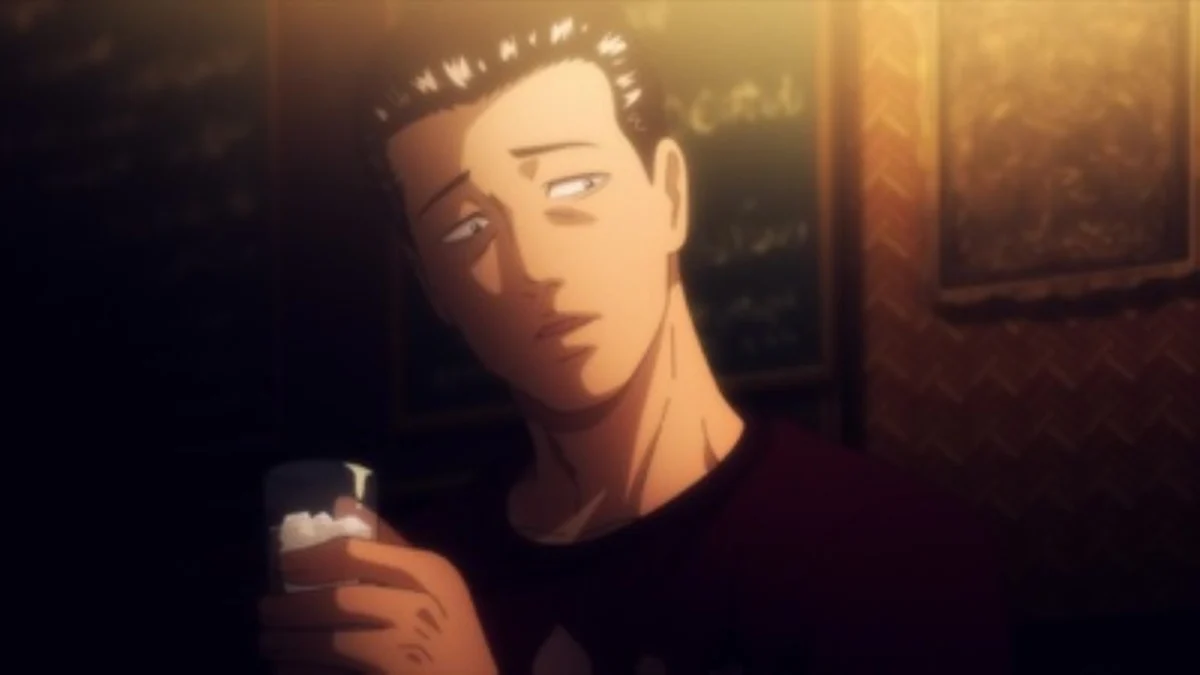
The narrative centers on Akira Sato, a notorious and ruthlessly efficient assassin who, despite his lethal prowess, finds himself devoid of any discernible emotional connection to life. This profound detachment is starkly illustrated in the fourth episode, where yakuza captain Takeshi Ebihara confronts Sato with a .38 caliber handgun, posing a pivotal question: "Tell me, Sato, what does life mean to you?" Sato’s inability to articulate an answer, stemming from his perceived emotional void, becomes the catalyst for his dramatic career redirection.
Following a particularly brutal mission, Sato, along with his trusted assistant and driver, Yoko, receives an unconventional directive from their enigmatic boss. To foster a more profound understanding of humanity and, paradoxically, to become a more effective professional, Sato is mandated to take a year-long sabbatical. This period is to be spent immersed in a "normal life," strictly prohibiting any engagement with weapons or killing. Their destination: Osaka, a bustling metropolis where the local yakuza syndicate, Maguro, will provide them with protection under new identities as siblings, Akira and Yoko Sato. However, their arrival does not go unnoticed. Ebihara, acutely aware of the potential disruption the duo might introduce into the established social order, immediately signals his intent to observe and, if necessary, test their mettle.
The Art of the Hitman: Precision Meets Philosophy
Ryosuke Takahashi, the director and screenwriter, imbues The Fable with his signature style, characterized by a commitment to plausible actions and credibly motivated characters operating within realistic circumstances. This approach is particularly evident in his portrayal of professional killers. The series meticulously depicts them as individuals who operate with an almost surgical precision, leaving no room for error. Their proficiency extends beyond mere marksmanship; they possess an appreciation for the aesthetics of their tools, such as a Nighthawk Custom pistol, and a deep understanding of the subtle art involved in executing a target cleanly and efficiently. Every movement, every shot, is executed with an unwavering decisiveness that speaks to extensive training and an almost detached professionalism. This meticulousness even extends to behavioral and linguistic studies, suggesting a calculated approach to their clandestine operations.
The series adeptly navigates the inherent contrast between Sato’s former life of calculated violence and his forced immersion into the mundane. The narrative carefully balances moments of intense action with periods of quiet introspection, ensuring the pacing remains engaging. These slower, domestic interludes, often underscored by a recurring, soothing musical motif inspired by Herbie Hancock’s "Cantaloupe Island," provide a stark counterpoint to the inherent darkness of Sato’s past. This deliberate juxtaposition serves to highlight the gradual, and often awkward, process of Sato’s reintegration into society.
A Journey of Self-Discovery and Unforeseen Encounters
Sato’s initial attempts at normalcy are marked by a profound lack of social graces, a consequence of years spent in a world where human interaction was reduced to transactional violence. However, as the series progresses, his rigid control begins to fray. A pivotal moment in his transformation involves befriending a parrot, a seemingly trivial interaction that signifies a willingness to engage with the unpredictable and the non-essential. This burgeoning openness allows him to accept individuals and experiences that deviate from his highly structured worldview. He begins to discover that true professional excellence, rather than being dictated by a rigid adherence to a "score," lies in the spontaneity and adaptability required to respond to the immediate moment.
This newfound embrace of improvisation liberates Sato from the illusion that a person’s worth is solely defined by their profession. He embarks on a journey of self-discovery, allowing himself to experience a spectrum of new emotions and developing a genuine desire for deeper self-understanding. This internal shift is crucial to the overarching theme of the series, which explores the possibility of redemption and personal growth even for those who have committed the most heinous acts.
Artistic Vision and Narrative Depth
The scenario writers, Mayumi Morita and Yuya Takashima, craft a narrative tapestry that unfolds across a variety of settings, maintaining an overall tone that is dark, somber, and decidedly unromantic. Certain scenes evoke the stoic, poker-faced directorial style of Takeshi Kitano, though they often forgo his signature Zen-like aesthetic control. Nevertheless, the series is punctuated by moments of deadpan humor and quirky offbeat occurrences, injecting levity into the otherwise grim narrative. Beneath the surface of this dark comedy lies a subtle irony, reminiscent of classic farces built on misunderstandings and innuendo, adding layers of complexity to the storytelling.
The visual design, spearheaded by animators Saki Hasegawa, Junichi Hayama, and Kyuma Oshita, contributes significantly to the series’ impact. Their confident hand renders a realistic aesthetic, devoid of overt symbolism, with a keen focus on detailed facial expressions and the intricate study of the human form. The resulting visual world is honest and unpretentious, featuring well-executed action sequences. While the use of chiaroscuro, the dramatic interplay of light and shadow, may not always reach the emphatic heights some viewers might anticipate, the core artistic ideas are consistently communicated with clarity. The strategic use of close-up shots is particularly effective, amplifying the expressiveness of the characters’ faces even in the absence of dialogue. These shots artfully stretch cinematic time, build suspense, and allow voice performers to convey profound psychological tension through brief, internal monologues.
Stellar Voice Performances and Cultural Nuances
The brilliance of The Fable‘s cast is undeniable, with each actor fully committed to their roles, particularly in their convincing renditions of the Osaka dialect. Akio Otsuka, as yakuza captain Takeshi Ebihara, transcends the archetype of a one-dimensional villain, infusing the character with a much-needed depth that makes him a compelling figure in Sato’s journey. However, the true standout performance lies in the dynamic interplay and chemistry between Miyuki Sawashiro and Kazuyuki Okitsu.
Okitsu, portraying Akira Sato, maintains a predominantly monotonous and flat vocal tone, a deliberate choice that reflects the character’s initial emotional detachment. Yet, he punctuates this with occasional, strategically placed moments of inflection that add subtle layers to Sato’s evolving psyche. In stark contrast, Sawashiro, as Yoko, delivers a performance rich with a spectrum of vocal nuances. Her performance never suppresses emotion, whether bold or feigned, allowing Yoko to convey a wide range of feelings with remarkable authenticity. Together, Sawashiro and Okitsu form a formidable duo, akin to a bass and soprano, whose balanced vocal performances perfectly encapsulate and convey the intricate psychological development of their characters. This vocal synergy is crucial in bridging the gap between Sato’s cold exterior and his burgeoning internal world, as well as in portraying Yoko’s complex role as both protector and catalyst.
Broader Implications and Artistic Resonance
The Fable stands as a captivating testament to comprehensive artistic collaboration. The series masterfully blends suspenseful storytelling with genuinely entertaining moments, creating an immersive experience for the audience. Beyond its narrative appeal, the series offers a profound invitation to contemplate the nature of identity and self-perception. It suggests a sanctuary where one’s identity remains unchallenged, yet in such a state, true amazement and profound growth may be elusive. The ultimate revelation of the series posits that the most valuable aspects of life are often found in the parts of ourselves that remain elusive, those hidden depths that can only be unearthed through profound encounters with others.
The series, by exploring the journey of a killer seeking to understand life’s meaning, touches upon universal themes of redemption, the search for purpose, and the transformative power of human connection. Its critical and popular success, evidenced by the strong reception since its April 2024 premiere, underscores the enduring appeal of well-crafted narratives that delve into the complexities of the human condition, even when filtered through the extreme circumstances of the criminal underworld. The meticulous attention to detail, from the animation and voice acting to the thematic exploration, solidifies The Fable‘s position as a significant and thought-provoking entry in contemporary anime.