


The global discourse surrounding artificial intelligence has reached a fever pitch, oscillating between utopian promises of a post-scarcity society and dystopian warnings of human obsolescence. At the center of this cultural and technological maelstrom is a new documentary titled The AI Doc: Or How I Became an Apocaloptimist, directed by Daniel Roher and Charlie Tyrell. Set for a theatrical release on March 27, the film attempts to navigate the complex landscape of Silicon Valley’s latest gold rush through the lens of a new father’s anxiety. Roher, who earned an Academy Award for his 2022 documentary Navalny, brings a personal and humanistic perspective to a subject often dominated by abstract mathematics and corporate jargon. However, as the film secures unprecedented access to the architects of this new era, it simultaneously raises questions about the efficacy of journalistic interrogation in the face of concentrated technological power.
The Pursuit of Access in the AI Era
Securing an audience with the leadership of the world’s most influential AI firms has become a Herculean task for traditional media. This difficulty was recently highlighted by filmmaker Adam Bhala Lough, whose project Deepfaking Sam Altman was born out of necessity when his requests to interview the OpenAI CEO were ignored for months. Lough eventually resorted to creating a digital avatar and chatbot to simulate Altman’s presence, a creative choice that underscored the opacity of the industry’s top tier.
In contrast, Roher and Tyrell achieved a level of access that is nearly unparalleled in the current media environment. The AI Doc features sit-down interviews with Sam Altman, CEO of OpenAI; Dario Amodei, CEO of Anthropic; and Demis Hassabis, co-founder and CEO of Google’s DeepMind Technologies. These three figures represent the vanguard of the generative AI movement, overseeing the development of models like GPT-4, Claude, and Gemini. While the filmmakers were unable to secure participation from Meta’s Mark Zuckerberg or X’s Elon Musk, the presence of Altman, Amodei, and Hassabis provides a significant cross-section of the industry’s leadership.
This access, however, has become a point of contention for early reviewers and critics. While the film captures these executives on camera, the resulting dialogue often mirrors the carefully curated talking points found in corporate press releases. In one notable exchange, Roher asks Altman why the public should trust him to guide the rapid acceleration of AI, considering its potential to fundamentally alter human civilization. Altman’s response—“You shouldn’t”—is presented as a moment of profound honesty, yet the film fails to push further into the implications of that admission. This "glibness," as some observers have described it, suggests a power imbalance where the interviewers are granted proximity but denied deep accountability.
A Personal Chronology: Fatherhood and Future Shock
The narrative framework of The AI Doc is deeply personal, centered on Daniel Roher’s transition into fatherhood. As he and his wife, filmmaker Caroline Lindy, prepare for the birth of their first child, Roher’s professional curiosity about AI transforms into an existential dread. The film’s chronology follows this emotional arc, beginning with Roher’s initial investigations into the technology and escalating as he encounters the more alarming perspectives within the AI safety community.
Among the most jarring contributions comes from Tristan Harris, co-founder of the Center for Humane Technology. Harris, who rose to prominence through the documentary The Social Dilemma, offers a sobering assessment of the risks associated with unaligned AI. He recounts conversations with researchers who are so convinced of the existential risk posed by the technology that they do not expect their own children to reach high school age. Harris’s warnings center on the potential for AI to dismantle the fundamental structures of society, from the economy to the traditional educational system.
This sense of "future shock" is a recurring theme. The film documents Roher’s attempts to reconcile the "optimist" side of the equation—promises of AI-driven breakthroughs in medicine, climate science, and energy—with the "apocalyptic" risks of total societal collapse. This internal conflict is what leads to the coinage of the term "apocaloptimist," a state of being that reflects the cognitive dissonance required to live in the modern age.
The Visual Language of Human Creativity
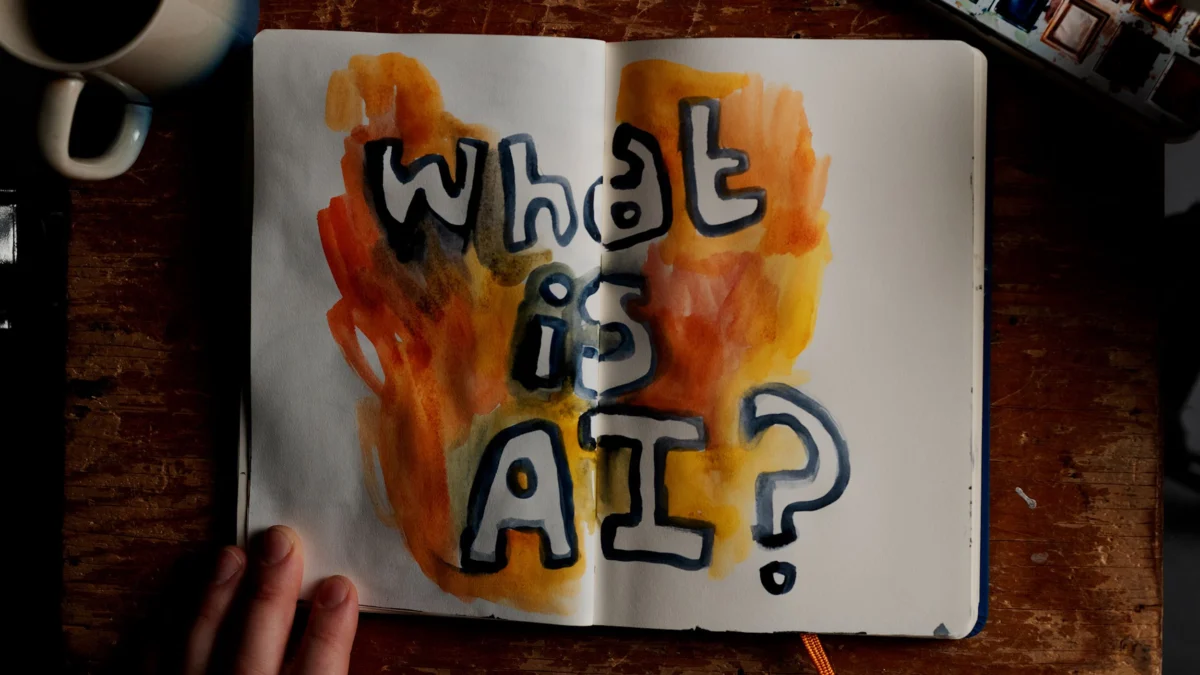
To counteract the cold, algorithmic nature of its subject matter, The AI Doc employs a vibrant and distinctly human visual style. The film features hand-drawn illustrations and paintings by Roher himself, alongside whimsical stop-motion sequences. These elements were produced in collaboration with Daniel Kwan, the Oscar-winning co-director of Everything Everywhere All at Once, who served as a producer on the project.
By utilizing traditional artistic mediums, the filmmakers create a deliberate contrast with the generative outputs of AI. This aesthetic choice serves two purposes: it makes the complex concepts of machine learning more accessible to a general audience and asserts the value of human creativity in a world increasingly dominated by synthetic media. Roher’s insistence on using plain language rather than Silicon Valley buzzwords further democratizes the topic, transforming a technical debate into a human story.
Supporting Data: The High Stakes of the AI Race
The documentary arrives at a time when the "AI gold rush" is backed by staggering financial and technical data. According to reports from Goldman Sachs, generative AI could eventually drive a 7% (or almost $7 trillion) increase in global GDP and lift productivity growth by 1.5 percentage points over a 10-year period. However, the same report estimates that AI could expose the equivalent of 300 million full-time jobs to automation.
The concentration of power mentioned in the film is reflected in the market valuations of the companies involved. As of early 2024, OpenAI was reportedly seeking a valuation of $80 billion or more, while Anthropic has secured billions in investment from tech giants like Amazon and Google. This influx of capital creates what Roher has elsewhere described as a "Ponzi scheme" environment, where the pressure to deliver returns can override safety concerns.
Furthermore, the documentary touches upon the concept of Artificial General Intelligence (AGI)—the hypothetical point at which a machine can perform any intellectual task a human can. While the CEOs interviewed often speak of AGI as an inevitability, the film notes a lack of critical examination regarding the limitations of current Large Language Models (LLMs). LLMs are essentially sophisticated statistical engines, and the path from "predicting the next word" to "possessing human-level cognition" remains a subject of intense scientific debate.
Official Responses and Public Sentiment
The film’s conclusion features a call to action, suggesting that the general public holds the ultimate responsibility for steering the AI revolution. This perspective was echoed during a post-screening Q&A at the Academy Museum in Los Angeles, where the production team, including Daniel Kwan and Tristan Harris, emphasized the need for collective awareness and political pressure.
"We’re excited to continue this conversation," Kwan stated during the event. "This is just the beginning… I know that this movie will never be able to encompass everything." He encouraged the audience to "link arms" and face the uncertainty of the future together.
However, this "both-sides" approach has been met with skepticism by some policy experts. While the film suggests that ordinary citizens can influence the trajectory of AI, critics point out that the regulatory landscape is currently being shaped by intense lobbying from the very corporations featured in the documentary. The European Union’s AI Act and the United States’ Executive Order on AI represent the first major attempts at government oversight, but the effectiveness of these measures remains to be seen.
Broader Impact and Ethical Implications
The AI Doc: Or How I Became an Apocaloptimist serves as a cultural marker for the current state of the AI debate. It captures a moment in time when the creators of the technology admit they do not fully understand the "black box" of their own models, yet continue to deploy them at a global scale. The film’s greatest strength lies in its ability to humanize the stakes, moving beyond technical specs to ask what it means to be a parent, a worker, and a citizen in the age of automation.
Yet, by framing the executives as mere passengers on a train they built, the documentary risks absolving them of agency. The "modest shrug" often seen from tech leaders when confronted with the harms of their products—be it algorithmic bias, the erosion of privacy, or the displacement of labor—is a recurring motif that the film documents but does not entirely dismantle.
As the film moves into theaters, it will likely spark further discussion on the role of the documentary filmmaker in the age of Big Tech. Can a film truly hold power to account when it relies on that power for its very existence? The AI Doc provides a robust crash course in the "what" and the "how" of AI, but the "why" remains as elusive as ever. For Roher, the answer may lie not in the boardrooms of San Francisco, but in the advice given by his own father: that every generation faces its own existential crisis, and the only path forward is to remain a "great parent" and a dedicated human, regardless of the historical forces at play.