

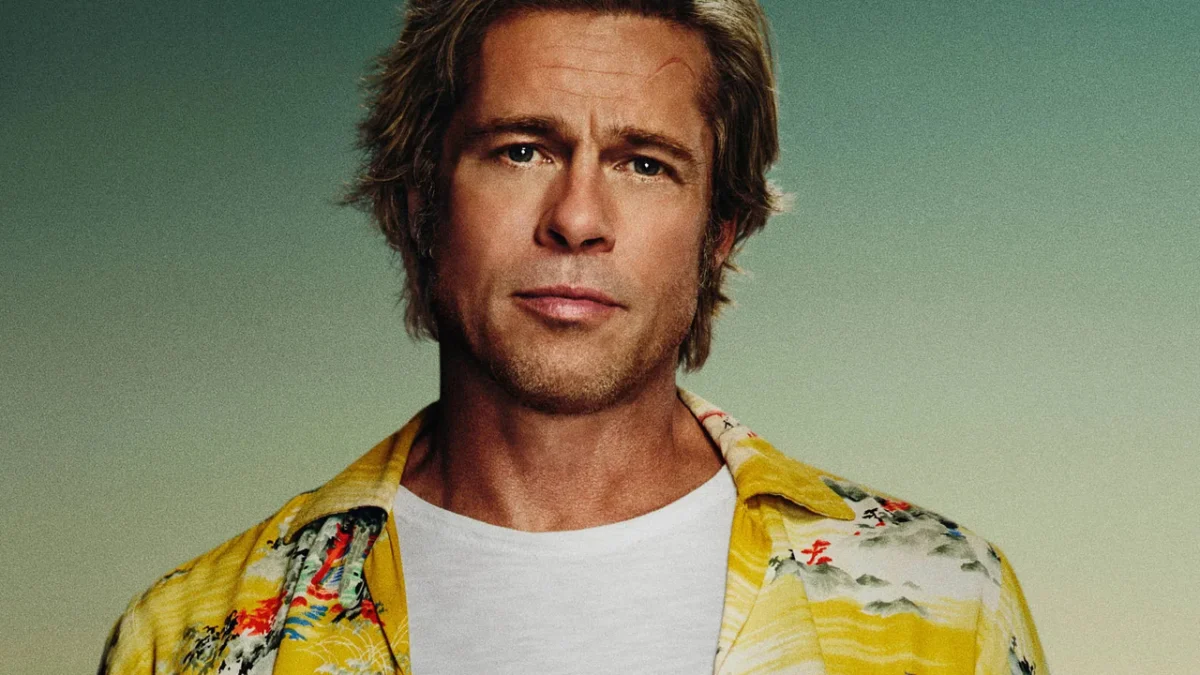
The highly anticipated spin-off from Quentin Tarantino’s critically acclaimed Once Upon a Time in Hollywood, centered on Brad Pitt’s enigmatic stuntman character, Cliff Booth, is generating significant buzz across online platforms. This project, now officially acknowledged and reportedly directed by David Fincher, has sparked considerable debate within cinephile circles regarding its potential reception. While the pedigree of the creative team – Tarantino’s original vision, Fincher’s meticulous direction, and Pitt’s enduring star power – positions The Adventures of Cliff Booth as a potential cinematic event, a deeper analysis of early tracking data from Greenlight Analytics raises pertinent questions about broader public awareness and, crucially, whether audiences are prepared to embrace this film on the big screen.
The Genesis of a Spin-Off: From Hollywood Hills to Streaming Horizons
Once Upon a Time in Hollywood, released in 2019, served as Quentin Tarantino’s ninth film, a nostalgic and revisionist ode to the twilight of Hollywood’s Golden Age and the seismic cultural shifts of 1969 Los Angeles. The film garnered widespread critical acclaim, earning ten Academy Award nominations, including Best Picture, and winning two: Best Supporting Actor for Brad Pitt’s portrayal of Cliff Booth, and Best Production Design. Pitt’s performance as the stoic, loyal, and quietly dangerous stunt double to Leonardo DiCaprio’s Rick Dalton was a standout, captivating audiences with his laconic charm and effortless cool. The character of Cliff Booth, a man shrouded in mystery yet possessing an undeniable moral compass (albeit a highly unconventional one), immediately became a fan favorite, leading to early whispers and fervent hopes for a deeper exploration of his backstory or subsequent adventures.
The eventual confirmation of a spin-off, titled The Adventures of Cliff Booth, sent ripples of excitement through the film industry. The announcement that visionary director David Fincher, known for his dark, meticulous thrillers such as Se7en, Fight Club, and The Social Network, would helm the project further elevated its status. Fincher’s signature style – psychological depth, visual precision, and often morally ambiguous narratives – appears a natural fit for expanding the world of Cliff Booth, promising a more intense, character-driven exploration than perhaps even Tarantino himself might have delivered in a direct sequel. Brad Pitt’s return to the role, an Academy Award-winning performance, solidified the project’s allure. This trifecta of creative power immediately branded The Adventures of Cliff Booth as a high-profile production, one that Netflix, its reported distributor, likely views as a prestige offering. The film is reportedly slated for an August release, with indications of a potential theatrical run, a strategic move that could signal Netflix’s evolving distribution ambitions.
Greenlight Analytics: Illuminating Early Audience Sentiment
To gauge the true extent of audience demand beyond the immediate fan base, Whats-On-Netflix turned to Greenlight Analytics, a leading firm specializing in tracking data for upcoming film releases. Greenlight Analytics utilizes comprehensive methodologies to monitor public anticipation, awareness, and interest, providing invaluable insights into market viability. A few months prior, Greenlight Analytics had positioned Here Comes The Flood as the most anticipated Netflix release of 2026, but The Adventures of Cliff Booth emerged as a significant point of interest for dedicated film enthusiasts, prompting a more granular investigation into its tracking metrics. Brandon Katz, Director of Insights & Content Strategy at Greenlight Analytics, provided crucial context and analysis for the latest data.
Awareness Metrics: Navigating the Initial Marketing Landscape
Initial tracking data for The Adventures of Cliff Booth reveals a slight dip in overall awareness, moving from 15% in December 2025 to 13% by March 2026. While a decline might initially trigger concern, Katz emphasizes that such fluctuations are not uncommon, particularly for films still in the early stages of their marketing cycle. "It is not uncommon for films with minimal marketing months out from release to see Awareness scores fluctuate," Katz explains. "This is especially true for streaming exclusive movies, and doubly so for titles that don’t even have an official release date yet." This nuanced perspective is critical; awareness often ebbs and flows, primarily driven by promotional beats such as trailer drops, official release date announcements, or significant media coverage.
A relevant industry observation Katz shared pertains to major promotional events: "The ugly secret of Super Bowl movie trailers is that they rarely lead to any sustained lifts." While the Super Bowl often serves as a high-profile platform for film studios to debut teasers, the ephemeral nature of the event means that initial spikes in awareness rarely translate into long-term, organic growth without sustained follow-up marketing. For The Adventures of Cliff Booth, the Super Bowl acknowledgment served more as an official confirmation rather than a full-fledged marketing launch. Indeed, the limited availability of a high-quality official trailer post-Super Bowl further supports Katz’s assessment, suggesting that Netflix is likely reserving a substantial marketing blitz for a later, more strategic window. This "wait-and-see" approach for a high-profile title implies a carefully planned campaign designed to maximize impact closer to the rumored August release.
Interest Among Aware (IAA): A Strong Foundation Among the Initiated
Despite the modest overall awareness, the conversion rate among those who are familiar with The Adventures of Cliff Booth paints a far more optimistic picture. A remarkable 71% of individuals aware of the project express interest in seeing it. Katz highlights that an "Interest Among Aware" (IAA) score of 71% is exceptionally healthy, especially for a film several months out from its release. "This compares well to other recent Netflix originals in their week of release, such as Frankenstein (70%), The Rip (72%), and Jay Kelly (72%), but behind Wake Up Dead Man: A Knives Out Story (80%)," he notes. This high IAA score indicates that the film’s core concept, coupled with its esteemed creative team, resonates strongly with those who have encountered its promotional material or heard about its development.
However, Katz offers a crucial caveat: high interest within a niche audience does not automatically guarantee widespread success. "Its reach is not yet broad enough. The key to watch for is whether it can maintain a 70-plus IAA score while pushing its Awareness above the 25%-35% range where many Netflix originals fall," Katz advises. For comparison, he states that wide-release theatrical films typically require an awareness floor of around 40% to ensure robust box office performance. This distinction underscores the challenge The Adventures of Cliff Booth faces: transforming a strong, niche enthusiasm into broader public demand. Netflix’s marketing strategy will be paramount in bridging this gap, aiming to elevate general awareness without diluting the intense interest already cultivated among early adopters. The success of this strategy will dictate whether the film achieves critical mass beyond its dedicated fanbase.
Premium Fee Intent: The Young Male Demographic Leads the Charge
A particularly insightful metric from Greenlight Analytics is "Premium Fee Intent," which gauges an audience’s willingness to pay for content beyond a standard subscription, such as a theatrical ticket or a Video-On-Demand (VOD) rental. Here, a distinct demographic trend emerges: men under 35 are driving demand with a 45% premium fee intent, a significant 13-point lead over women under 35 (32%). This disparity is not arbitrary; it points directly to the potent influence of the creative forces behind the film.
"There’s little doubt that the trifecta of Quentin Tarantino’s Once Upon a Time in Hollywood, David Fincher, and Brad Pitt are setting The Adventures of Cliff Booth up to resonate with the expected male audience," Katz confirms. This combination of a beloved character from a highly regarded film, a director celebrated for his cerebral and often dark thrillers, and a perennial male icon like Brad Pitt creates a potent appeal for this demographic. Beyond the specific creative team, Greenlight Analytics’ data consistently identifies men under 35 as the most passionately engaged film fans in the U.S., and critically, the most likely to spend money on film across various formats. This demographic’s proclivity for premium content consumption makes them a vital target for any film aspiring to a theatrical or premium VOD release. Katz encapsulates this sentiment perfectly: "Continuing this contemporary cult classic with another beloved filmmaker on the default streamer is practically catnip for this demo (and I count myself among them!)." This strong premium intent among a key spending demographic presents a compelling argument for Netflix to consider a more robust theatrical strategy, particularly given the reported above-the-line costs associated with such a high-caliber production.
The Theatrical Release Dilemma: Netflix’s Strategic Crossroads
Netflix has historically maintained a cautious stance on wide theatrical releases, preferring to prioritize its streaming platform for subscriber retention. However, the data for The Adventures of Cliff Booth complicates this traditional approach. Men indicate a 29% theatrical intent, compared to 24% for women. While the overall theatrical intent sits at a modest 26%, this figure must be viewed through the lens of minimal marketing. The question thus becomes: could a theatrical run be viable, and indeed, profitable for Netflix?
Katz weighs in on this critical decision: "Given the reported above-the-line costs alone for The Adventures of Cliff Booth, it might have been worth a theatrical release for an attempt at monetary ROI." This suggests that the substantial investment in the film, driven by its A-list talent, could warrant exploring avenues beyond pure streaming to recoup costs or generate additional revenue. However, he acknowledges the "chicken-and-egg scenario" at play. The current 26% theatrical intent doesn’t scream urgent box office demand, but this is largely a consequence of the film’s low awareness and nascent marketing. A significant, traditional marketing push would be essential to elevate theatrical intent to a level that justifies a wide release.
Katz provides a breakdown of the arguments for and against a theatrical run based on the available data:
-
Arguments for Theatrical Release:
- High Premium Fee Intent (Young Men): The 45% premium fee intent among men under 35 is a strong indicator of willingness to pay for access, which includes cinema tickets. This demographic is known for its cinephilia and spending habits on film.
- Creative Pedigree: The combination of Tarantino’s original IP, Fincher’s direction, and Pitt’s star power inherently lends itself to a big-screen experience. This elevates the film beyond a typical streaming original.
- Potential for Brand Building and Awards: A successful theatrical run, even a limited one, can significantly enhance a film’s prestige, making it more competitive during awards season and bolstering Netflix’s reputation as a home for cinematic excellence.
- Diversified Revenue Stream: For a high-budget film, theatrical revenue could offset production costs and provide an additional profit stream, rather than solely being a subscriber acquisition/retention tool.
-
Arguments Against Theatrical Release (based on current data):
- Low Overall Awareness: At 13%, general awareness is too low to support a successful wide theatrical release without a substantial and costly marketing campaign.
- Modest Overall Theatrical Intent: The 26% overall theatrical intent, while showing a slight male skew, is not robust enough to guarantee strong box office performance without significant investment in promotional activities.
- Netflix’s Historical Model: A shift to wide theatrical releases represents a deviation from Netflix’s core business model, which has primarily focused on direct-to-consumer streaming. This would involve navigating complex distribution agreements and potentially alienating some subscribers who expect immediate streaming access.
- Marketing Investment Required: To lift awareness and theatrical intent to competitive levels (e.g., 40%+ awareness for wide releases), Netflix would need to commit to a traditional, expensive marketing spend, a cost they might prefer to avoid for a title that ultimately serves their streaming platform.
Ultimately, any decision for a wide theatrical release would necessitate a comprehensive, expensive marketing campaign designed to significantly raise overall awareness and theatrical intent. For now, the industry awaits Netflix’s strategic move for The Adventures of Cliff Booth. Will it be treated as a more traditional theatrical release, akin to the modest pushes for awards-contenders like Roma or The Irishman? Or will Netflix experiment with a novel, attention-grabbing distribution strategy, perhaps mirroring the "stunty" events seen for properties like Stranger Things, One Piece, or the upcoming Narnia film, which is reportedly getting a Thanksgiving release?
Broader Implications and the Future of Film Distribution
The case of The Adventures of Cliff Booth serves as a microcosm of the larger shifts occurring within the film industry, particularly the evolving relationship between streaming platforms and traditional theatrical exhibition. As streaming services invest heavily in high-quality, star-driven content, the lines between "streaming original" and "theatrical event" continue to blur. Films like The Killer (also by David Fincher for Netflix) have seen limited theatrical runs, often to qualify for awards and generate critical buzz before their global streaming debut. However, The Adventures of Cliff Booth, with its clear lineage to a box office success and its star-studded creative team, presents a stronger argument for a more significant theatrical play.
Netflix’s decision will be closely watched by competitors and industry analysts alike. A successful theatrical run for Cliff Booth could pave the way for a more hybrid distribution model for future high-profile Netflix originals, allowing the company to tap into additional revenue streams while still leveraging its vast subscriber base. Conversely, if Netflix opts for a purely streaming release despite the strong premium intent among a key demographic, it would underscore the company’s unwavering commitment to its core platform, even at the potential cost of foregone box office revenue.
The film’s performance, whether on streaming or in cinemas, will also offer insights into the enduring appeal of character-driven spin-offs and the power of creative collaborations between celebrated directors and actors. In an era increasingly dominated by established franchises and IP, The Adventures of Cliff Booth represents a unique proposition: a spin-off from a relatively recent, original film, expanding a beloved character’s story under the guidance of a new, equally respected visionary. Its trajectory will be a key indicator of audience appetite for such projects and the optimal strategies for bringing them to market.
As the rumored August release approaches, all eyes will be on Netflix’s marketing rollout. The critical test for The Adventures of Cliff Booth will be its ability to transcend its strong "in-the-know" following and capture the imagination of a broader audience, ultimately determining whether Brad Pitt’s return as Cliff Booth truly becomes a cinematic hit, whether on the big screen or the small.