


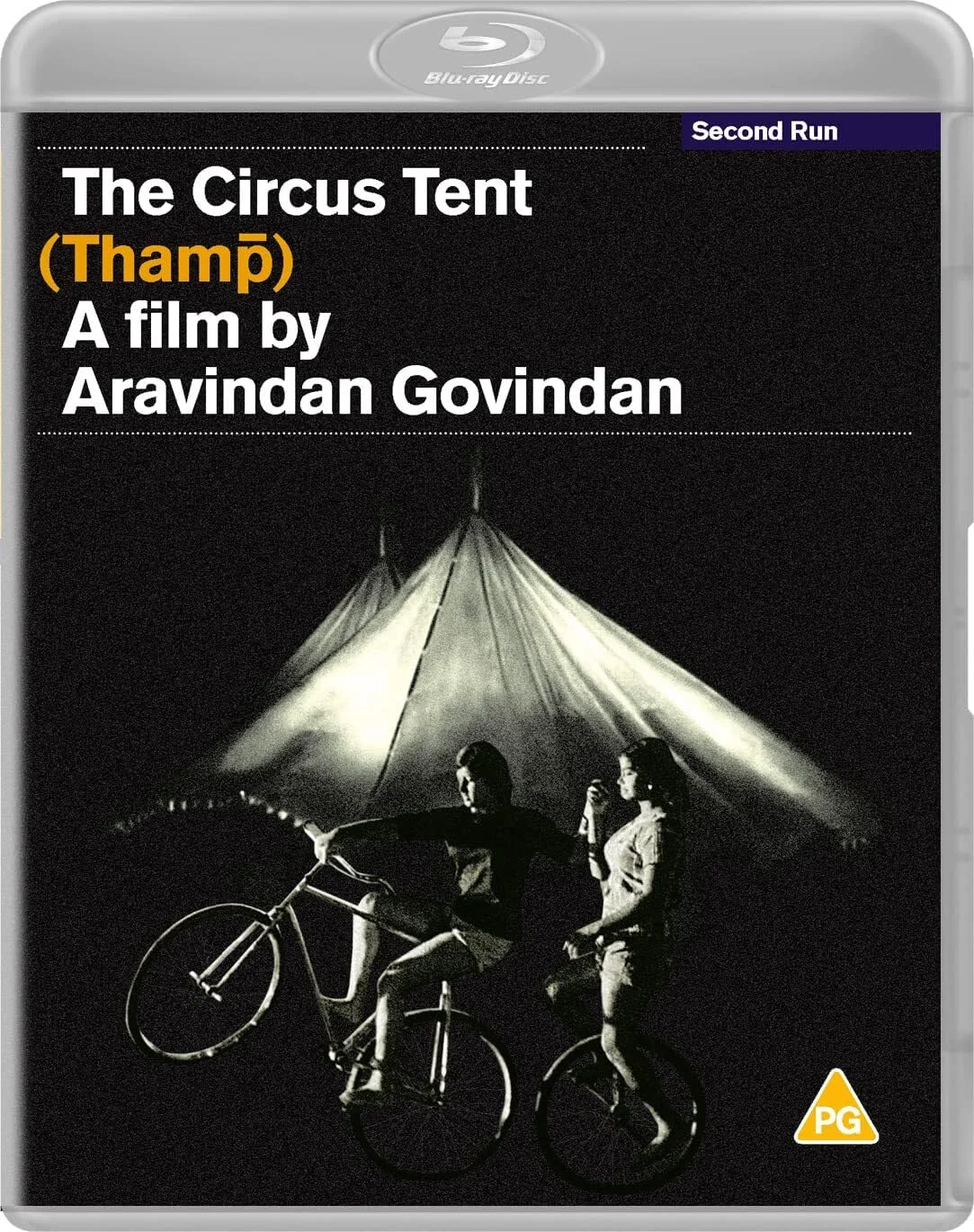
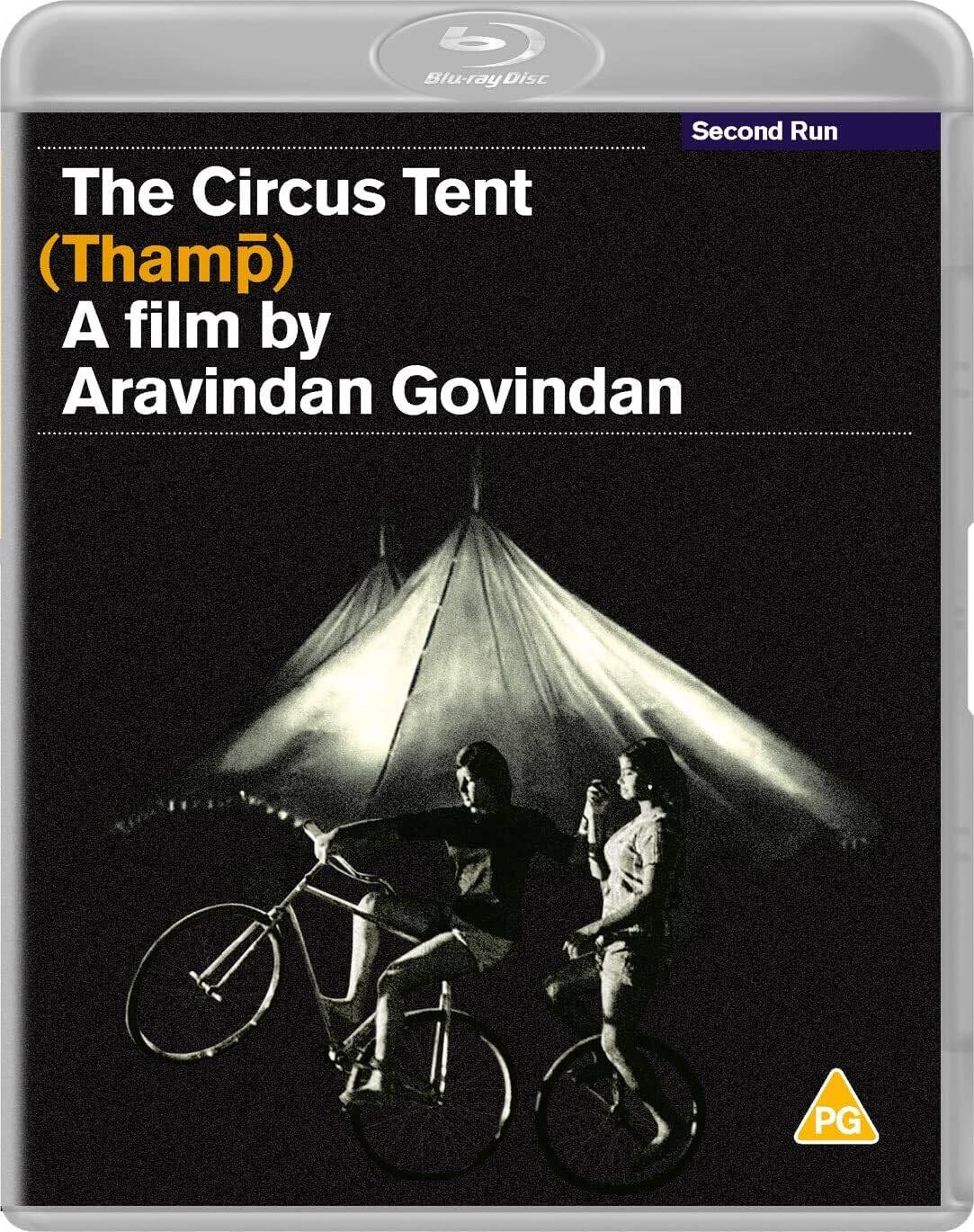
Released in 1978, G. Aravindan’s Thampu emerged as a pivotal achievement within the New Malayalam Cinema movement, a period marked by bold formal experimentation and a profound engagement with the social fabric of Kerala. This seminal work, presented in stark black-and-white and spanning approximately 130 minutes, masterfully navigates the liminal space between fiction and documentary, embodying Aravindan’s distinctive cinéma vérité approach and his penchant for blurring traditional narrative boundaries. The film’s ensemble cast, featuring luminaries like Bharath Gopi, Nedumudi Venu, V. K. Sreeraman, and Jalaja, is seamlessly integrated with actual circus performers, underscoring the film’s unique genesis. Notably, Thampu was conceived without a conventional script; its narrative unfolded organically during the shooting process in Thirunavaya, a picturesque locale on the banks of the Bharathapuzha river, an area steeped in cultural significance and natural beauty.
The production methodology employed for Thampu serves as a powerful testament to Aravindan’s artistic philosophy. He invited villagers to witness an actual circus performance, meticulously capturing their authentic reactions and emotions. This immersive approach allowed for the organic integration of a local festival into the film’s evolving narrative structure. The resultant cinematic experience is simultaneously observational and profoundly poetic, offering a meditative exploration of transience, collective human experience, and the ephemeral nature of spectacle. Upon its release, Thampu garnered significant critical acclaim, securing the National Film Award for Best Direction for G. Aravindan, and the National Film Award for Best Cinematography for Shaji N. Karun. It also received the award for Best Feature Film in Malayalam, alongside numerous accolades from both the Kerala State Film Awards and the Kerala Film Critics Association. The enduring legacy and artistic significance of Thampu were underscored decades later through a meticulous 4K restoration undertaken by the Film Heritage Foundation. This revitalized version premiered to international acclaim in the prestigious Cannes Classics section of the Cannes Film Festival in 2022, followed by screenings at major international film venues, ensuring its continued accessibility and relevance for contemporary audiences.
The Arrival of Spectacle in Thirunavaya
Thampu intricately portrays the impact of a traveling circus on a tranquil riverside village in Kerala. The film opens with a deliberate and atmospheric depiction of the troupe’s arrival, featuring a truck laden with equipment navigating a rough road. The camera lingers on the faces of the performers, hinting at the lives and stories contained within the transient community. This initial scene establishes a sense of anticipation and curiosity, drawing the viewer into the unfolding narrative. The focus soon shifts to the local inhabitants, particularly the children, whose unbridled enthusiasm and eagerness to witness the spectacle are captured with remarkable authenticity. The presence of exotic animals, a common feature of traveling circuses of that era, immediately captivates the younger audience, with a particularly spirited monkey eliciting widespread amusement and fascination. A pivotal moment in the film’s early stages is the erection of the circus tent, depicted with a sense of grandeur and communal effort, culminating in the final stretching of the canvas, a visually striking and memorable sequence that signifies the commencement of the temporary carnival.
As the daily routines of the village intersect with the circus’s establishment, subtle nuances emerge. Women are shown washing clothes and hanging them on ropes, a scene that introduces a slightly voyeuristic and sensual undertone, a quiet observation of domestic life juxtaposed against the burgeoning spectacle. The promotional activities of the circus band, touring the fields and surrounding areas, are presented as another visually arresting and memorable segment, highlighting the effort to permeate the local consciousness with the promise of entertainment. The official inauguration of the circus takes center stage, emphasizing the troupe’s strategic approach to embedding themselves within the community by securing a notable local figure to preside over the opening ceremony. The ensuing performances are a vibrant tapestry of human talent and animal interaction. Clowns elicit laughter, wild animals mesmerize children with a blend of awe and apprehension, and acrobats leave spectators spellbound. The film also dedicates attention to the rigorous daily practice routines of the performers, offering glimpses into the dedication and discipline behind the dazzling displays. Amidst this, a subtle romantic subplot begins to weave its way through the narrative, adding a layer of human connection to the larger spectacle. The overall pacing of the film remains deliberately calm, which amplifies the impact of a sudden slap scene, resonating both literally and narratively, a stark reminder of the underlying tensions that can exist beneath the surface of communal merriment. However, the most enduring and impactful moment of Thampu is its conclusion. The ending is as unexpected as it is fitting, reflecting the profound, albeit often transient, impact of the circus on the lives of the villagers, while simultaneously preserving an element of enigmatic contemplation.

A Departure from Conventional Narrative
Govindan Aravindan consciously eschews a conventional storyline in Thampu. Instead, he immerses the viewer in the unfolding events through a meticulously crafted succession of simple, observational scenes. The editors, Rameshan and Selvanathan, skillfully interweave these moments, creating a narrative flow that fluidly transitions between documentary realism and fictional suggestion. This approach is significantly bolstered by the striking cinematography of Shaji N. Karun, whose visually arresting frames effectively construct a narrative of their own. A central figure in this visual storytelling is the circus manager, portrayed by Bharath Gopi. Gopi’s performance is so deeply ingrained and naturalistic that it becomes challenging to discern where his acting begins and the character’s genuine existence ends. The film’s enduring power is particularly evident in the numerous shots capturing the mesmerized audience, especially the children, as they absorb the performances. These images remain etched in the viewer’s memory long after the credits roll. The film’s score also contributes significantly to its unique atmosphere, characterized by its intensity, although it might prove somewhat demanding for those unaccustomed to its distinctive sonic palette.
Beyond its narrative and visual achievements, Thampu functions as an insightful ethnographic exploration of the region and its customs, particularly in how these are influenced and temporarily altered by the circus’s presence. Shaji N. Karun’s cinematography masterfully highlights the inherent beauty of the locale, capturing the interplay between the natural landscape and the artificial intrusion of the circus. As the villagers’ initial fascination gradually wanes, leading to the inevitable departure of the troupe, a palpable sense of nostalgia and a subtle disillusionment with the cyclical rhythms of life begin to emerge. This underscores the transient nature of external stimuli and the return to the enduring realities of everyday existence.
Critical Acclaim and Enduring Relevance
Thampu is widely regarded as an exceptional cinematic achievement, a testament to the artistic prowess and thematic depth characteristic of Malayalam cinema during that era. It stands as a profound triumph of cinéma vérité, ultimately solidifying its position as a genuine masterpiece of Indian cinema. The film’s critical reception was overwhelmingly positive, recognizing its innovative approach to filmmaking and its powerful exploration of human experience. The National Film Award for Best Direction, Best Cinematography, and Best Feature Film in Malayalam were not mere accolades but affirmations of the film’s artistic merit and its significant contribution to the cinematic landscape. The Kerala State Film Awards and Critics Association awards further cemented its status as a culturally important and artistically significant film.
The meticulous 4K restoration by the Film Heritage Foundation in 2022 was a crucial intervention, ensuring that Thampu could be preserved and presented with the visual fidelity it deserves for future generations. Its premiere at Cannes Classics, a section dedicated to celebrating the history of cinema, is a testament to its international artistic standing. The subsequent screenings at major international film festivals and venues have further amplified its global reach, introducing its unique vision to new audiences and critics alike. This restoration and subsequent global exposure have reaffirmed Thampu‘s place not just within Indian film history, but as a significant work of world cinema, relevant for its artistic innovation, its social commentary, and its enduring humanistic themes.
Socio-Cultural Context and Impact
The period of the late 1970s in India, particularly within Kerala, was a fertile ground for artistic and intellectual movements. The New Malayalam Cinema, often referred to as the "Indian New Wave," was characterized by a conscious departure from the commercial formulas that dominated mainstream Indian cinema. Filmmakers like G. Aravindan, along with contemporaries such as Adoor Gopalakrishnan and K.G. George, sought to create cinema that was more reflective of Indian realities, grounded in local culture, and experimentally in form. The movement was fueled by a generation of filmmakers who were deeply influenced by world cinema, including Italian Neorealism and French New Wave, but were committed to forging a distinct cinematic language that resonated with their own cultural milieu.
The arrival of a traveling circus in a rural Kerala village, as depicted in Thampu, was a significant event in the social landscape of the time. Circuses, for many decades, represented a form of popular entertainment that brought a sense of wonder and escapism to communities, especially in areas with limited access to other forms of media or entertainment. The film captures this inherent allure, the excitement generated by the exotic, the daring, and the unusual. However, Aravindan’s film goes beyond a simple portrayal of entertainment. It delves into the socio-economic dynamics at play. The circus troupe, itself a transient entity, interacts with a settled community, highlighting the contrasts between their lifestyles and aspirations. The film subtly explores themes of labor, exploitation, and the ephemeral nature of popular appeal. The villagers’ initial fascination, their temporary immersion in the world of spectacle, and their eventual return to their routines mirrors a broader societal dynamic where external influences can create temporary ripples but do not fundamentally alter the established order.
The film’s engagement with real circus artists and local villagers was not merely a stylistic choice but a profound statement about authenticity and representation. By blurring the lines between performer and non-performer, actor and real person, Aravindan challenged conventional notions of cinematic reality. This approach also allowed for a more nuanced portrayal of the lives of those who formed the backbone of such traveling spectacles, often living on the margins of society. The film’s critical success and subsequent restoration have helped to ensure that this important aspect of Kerala’s cultural and cinematic history is not forgotten. Thampu continues to be studied and admired for its artistic innovation, its humanist perspective, and its enduring relevance as a document of a specific time and place, as well as a timeless exploration of human nature and the allure of the extraordinary. Its legacy is a testament to the power of cinema to capture the complexities of life, both in its grand spectacles and its quiet intimacies.