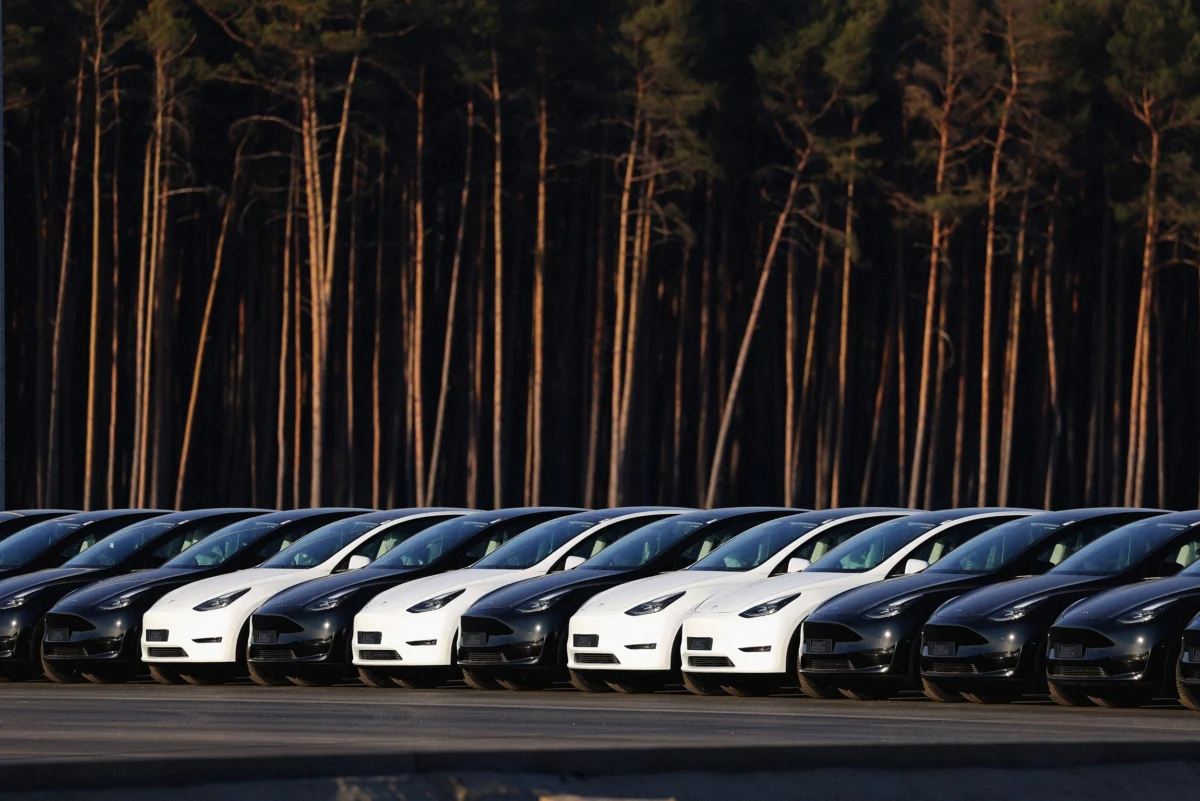
The relationship between Tesla Inc. and its most dedicated consumer base has entered a period of significant friction following a series of controversial policy changes and pricing adjustments. This month, a segment of the Tesla community expressed intense dissatisfaction over what has been characterized as a "bait and switch" regarding the transferability of the company’s Full Self-Driving (FSD) software. The dispute centers on a promotional offer that allowed existing owners to migrate their expensive FSD suites—once sold for as much as $15,000 as a "lifetime" feature—to new vehicle purchases. While the offer was initially framed as a straightforward incentive to drive sales before the end of the first quarter, subsequent fine-print adjustments have left many customers financially committed to vehicles that may no longer qualify for the benefit.
The FSD Transfer Dispute and Delivery Deadlines
The controversy began when Tesla announced that owners who purchased a new vehicle by March 31 would be permitted to transfer their FSD package from their old car to the new one. This was particularly enticing for long-term owners who had paid five-figure sums for software that remained in "Beta" or "Supervised" versions for years. However, the company later amended the agreement to stipulate that customers must not only order but also "take delivery" of the new vehicle by the March 31 deadline.
Given Tesla’s historical and current production backlogs, particularly for high-demand models, many customers found themselves in a logistical trap. Buyers who placed orders in good faith discovered that their delivery dates were scheduled for April or later, effectively nullifying the FSD transfer. While Tesla offered a refund of the $250 order fee for those wishing to cancel, the move sparked an outcry on social media platforms, specifically X (formerly Twitter), where Tesla enthusiasts have historically congregated to support the brand.
Cybertruck Pricing Volatility and Market Positioning
Adding to the consumer unrest is the rapidly shifting price point of the Cybertruck, Tesla’s stainless-steel electric pickup. When the vehicle was first launched in November 2023, the entry-level rear-wheel-drive model was priced at approximately $60,990. By early 2024, the company introduced a base model priced at $59,990, but CEO Elon Musk soon clarified that this specific pricing would only be available for a 10-day window.
Following this brief period, the cost of the entry-level Cybertruck surged to $79,990, a $20,000 increase that fundamentally altered the vehicle’s market segment. This volatility, combined with the FSD transfer hurdles, has created a sense of instability among prospective buyers. The Cybertruck, which was once marketed as a disruptor to the traditional truck market with an affordable entry point, has increasingly become a luxury-priced asset, alienating some of the middle-class early adopters who had held reservations for years.
The Polarization of the "Teslarati" Community
The digital ecosystem surrounding Tesla, often referred to as the "Teslarati," is currently experiencing a profound schism. For years, the community on X functioned as a powerful, decentralized marketing arm for the company. Investors and enthusiasts frequently engaged in "echo chamber" behavior, hyping the company’s trillion-dollar market capitalization and Musk’s vision for a sustainable future.
However, the recent policy shifts have forced a confrontation between brand loyalty and consumer advocacy. High-profile Tesla influencers have begun to publicly clash. For instance, the account known as "The Cybertruck Guy" recently labeled the FSD transfer situation a "pathetic disaster." This prompted a swift backlash from other loyalists, who accused critics of "sabotage" and "insufficient fealty" to Musk. This internal policing has led to a wave of "blocking" and social excommunication within the community, as the boundary for what constitutes acceptable criticism continues to shrink.
Case Study: The Psychology of Disillusionment
The journey from advocate to critic is exemplified by Earl Banning, a psychologist based in Anchorage, Alaska. Banning joined the Tesla community in 2018, gaining thousands of followers after Elon Musk retweeted a video of his car using the "Summon" feature. Banning became a central figure in the community, inventing the "Frunk Puppy Friday" trend and frequently defending Musk against journalists and short-sellers.
Banning’s disillusionment was gradual but rooted in three distinct areas:
- Technical Discrepancies: Despite Musk’s promises of imminent full autonomy, Banning’s early access to FSD Beta revealed dangerous flaws, including the car attempting to drive onto sidewalks or toward fire hydrants.
- Public Health and Science: As a healthcare professional, Banning found Musk’s 2020 commentary on the COVID-19 pandemic—including predictions of "zero new cases" by April 2020—to be factually reckless.
- Social and Political Friction: The final break occurred in December 2022 during a live chat on X. Banning expressed concern that Musk’s increasingly polarizing rhetoric regarding the transgender community was alienating families, including his own. Musk’s dismissal of these concerns signaled to Banning that the company’s leadership was no longer prioritized on the inclusive, "green" mission that originally attracted him.
Documentation of FSD Performance Gaps
Other owners have turned to data and documentation to voice their concerns. A Los Angeles-based driver known as Jilianne has broadcast over 170 hours of live FSD demonstrations on X. While she maintains an affection for her Model S Plaid—a vehicle she purchased for $119,000—she uses her platform to provide a "counterbalance" to the polished marketing videos released by Tesla.
Her livestreams often highlight software glitches and the necessity for human intervention, challenging the narrative that the software is "feature-complete." Like Banning, Jilianne has faced harassment from the "fanboy" segment of the community, who label her as "ungrateful." Her experience underscores a growing trend of "dual-minded" ownership: consumers who admire the mechanical engineering of the vehicles but remain deeply skeptical of the software claims and the corporate leadership.
The Dawn Project and the Safety Debate
Perhaps the most prominent critic to emerge from the former ranks of Tesla supporters is Dan O’Dowd, a tech billionaire and CEO of Green Hills Software. O’Dowd, who previously owned multiple Tesla Roadsters and a Model S, began to question the company’s direction in 2017 when Musk failed to deliver on a promised autonomous cross-country drive from Los Angeles to New York.
O’Dowd subsequently founded The Dawn Project, an organization dedicated to banning "defective" software in safety-critical systems. The project has funded high-profile Super Bowl advertisements showing Teslas failing to stop for school buses or striking child-sized mannequins. Tesla and its supporters have aggressively pushed back against O’Dowd, accusing him of faking tests and acting as a "bad-faith actor" on behalf of competitors. O’Dowd maintains that his critiques are based on rigorous analysis of every available FSD video, arguing that the software’s failure rate remains unacceptably high for public road use.
Strategic Pivot: From Mass-Market EVs to Robotics
The consumer frustration coincides with a significant shift in Tesla’s corporate strategy. In early 2024, reports surfaced that Tesla had scrapped plans for a long-awaited $25,000 "Model 2," which was intended to bring electric vehicles to the mass market. Instead, Musk announced a pivot toward "Optimus" humanoid robots and a dedicated "Robotaxi" platform.
In January 2025, the company further surprised the market by announcing it would phase out production of the Model S and Model X—the very vehicles that established Tesla as a luxury powerhouse—to focus resources on AI and robotics. This transition has left some long-term owners feeling abandoned, as the company moves away from the "Secret Master Plan" of making affordable EVs and toward speculative high-tech ventures.
Analysis of Broader Implications and Brand Value
The erosion of trust among Tesla’s "vanguard" has tangible implications for the brand’s long-term health. According to recent market sentiment analysis, including reports cited by the Los Angeles Times, Tesla’s brand favorability has taken a hit due to Musk’s extracurricular activities and the perceived instability of the company’s product roadmap.
While Tesla remains the dominant force in the global EV market, it now faces stiff competition from Chinese manufacturers like BYD and legacy automakers like Hyundai and Ford, who are offering more price-stable alternatives. The "cult-like" loyalty that once allowed Tesla to spend $0 on traditional advertising is fraying. When early adopters—the very people who defended the company during its "production hell" years—begin to publicly label the company’s tactics as "lies," the marketing cost for Tesla to acquire new, less-forgiving customers is likely to rise.
The current atmosphere suggests that for many, the "Tesla bubble" has burst. While many former enthusiasts continue to drive and enjoy their vehicles, the era of unquestioning devotion to the brand and its CEO appears to be giving way to a more conventional, and often more critical, consumer-manufacturer relationship. Whether Tesla can regain this lost goodwill through technical breakthroughs in FSD or if the pivot to robotics will further alienate its core automotive base remains the central question for the company’s future.