The landscape of San Francisco real estate is often defined by its exorbitant costs and high-stakes bidding wars, but a recent transaction involving a narrow strip of dirt in the Sunset District has shifted the narrative from a cautionary tale of buyer’s remorse to a high-tech community experiment. What began as a $25,000 financial error by a local couple has evolved into "Paint a Street," a crowdsourced art installation spearheaded by a trio of software engineers and tech innovators. By converting a non-developable easement into a digital-to-physical canvas, the new owners aim to turn a neighborhood liability into a permanent fixture of San Francisco’s eccentric cultural history.
The Origin of the Conflict: A Costly Auction Miscalculation
The saga began last year when JJ Hollingsworth and her husband participated in a municipal auction for what they believed was a developable parcel of land adjacent to their property. With a starting bid of just $1, the couple ultimately committed $25,000, envisioning a strategic acquisition that could enhance their home’s value or provide space for future construction. However, the reality of the purchase surfaced shortly after the deed was transferred.
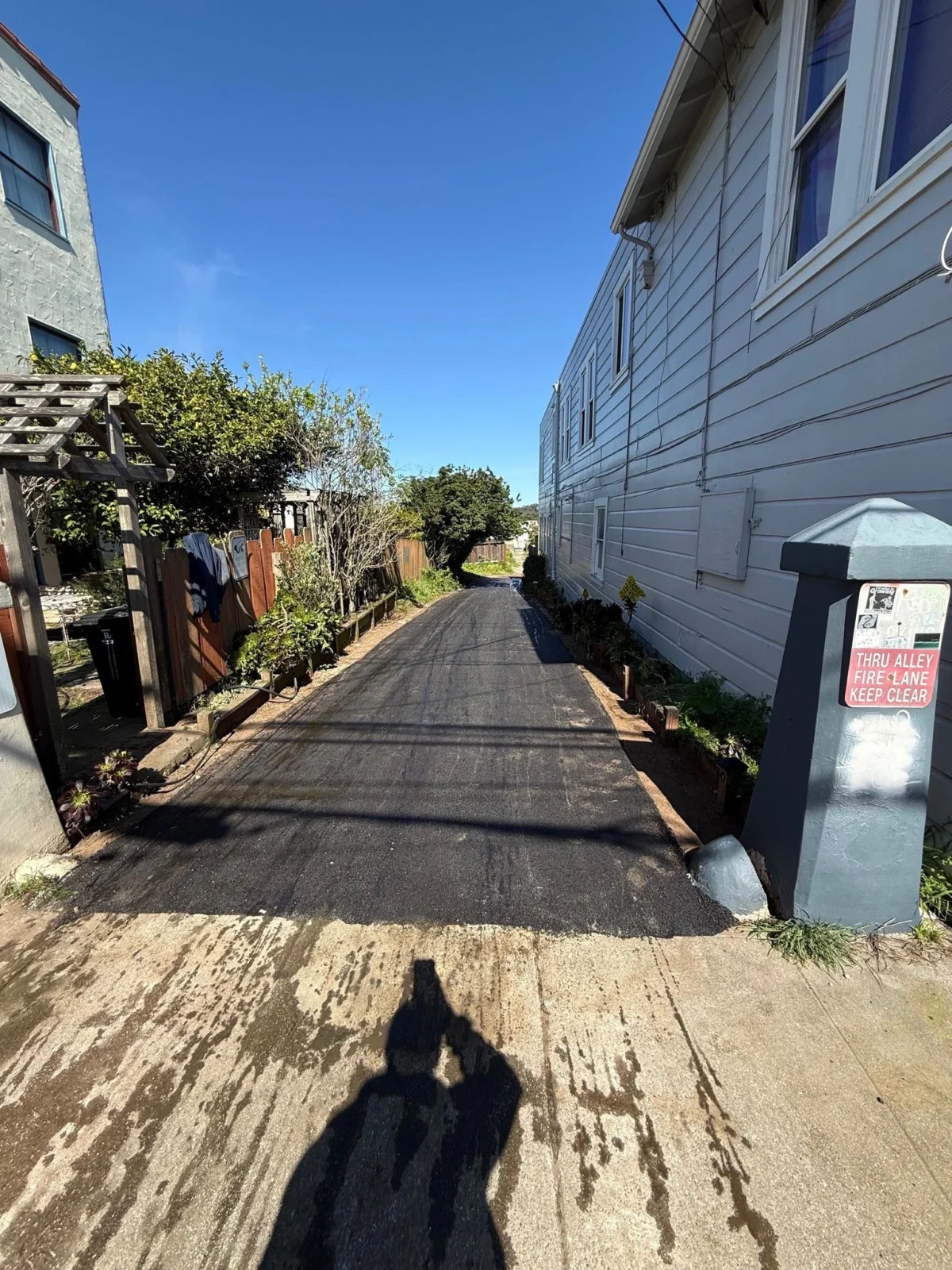
The "parcel" was not a building lot but an 82-foot-long, narrow easement—essentially a dirt path that serves as a utility and access corridor. Under San Francisco zoning laws and the specific restrictions of the easement, the land was entirely unbuildable. Furthermore, Hollingsworth discovered that the property was a significant liability; as the owner of record, she was responsible for its maintenance and any potential injuries occurring on the site, yet she found it nearly impossible to secure traditional property insurance for a stand-alone dirt alley.
"It was just a big liability hanging over my head, and it caused me a lot of concern and stress," Hollingsworth stated, reflecting on the months she spent searching for a way to divest from the property. The story gained local notoriety after being featured in the San Francisco Standard, drawing the attention of the city’s technology community.
The Transition of Ownership and the Tech Trio
In early 2024, a group of three tech professionals—Patrick Hultquist, Theo Bleier, and Riley Walz—approached Hollingsworth with a proposal to take the land off her hands. The trio, known in Silicon Valley circles for "tech pranks" and community-focused software projects, offered $26,000 for the property, allowing Hollingsworth to recoup her initial investment and a small margin for her troubles.
The buyers bring a significant pedigree in software development and digital culture. Riley Walz is a recent OpenAI employee who gained attention for creating "Jmail," a searchable, Gmail-style interface for the Jeffrey Epstein document dumps. Patrick Hultquist and Theo Bleier are experienced software engineers who, along with Walz, have previously organized "Pursuit," a large-scale, citywide scavenger hunt in San Francisco.
Upon finalizing the purchase, the new owners invested an additional $10,000 to pave the dirt path, transforming the uneven ground into a smooth asphalt surface. This physical renovation served as the foundation for their primary objective: the "Paint a Street" project.
Paint a Street: A Digital Collaborative Art Experiment
Announced via social media and a dedicated web platform, Paint a Street is an initiative that invites the global internet community to design the physical surface of the alley. The project draws direct inspiration from "r/place," a social experiment and collaborative project hosted on the social networking site Reddit in 2017, 2022, and 2023. In r/place, millions of users placed individual colored pixels on a digital canvas to create complex, often chaotic, communal art.
The San Francisco version operates on a similar but more curated logic. Users visit the Paint a Street website to submit low-resolution digital drawings. These submissions are confined to a grid-based format, which will eventually be translated into 6-by-6-inch physical squares. The process is governed by the following parameters:
- Submission Window: The window for art submissions and community voting opened recently and is scheduled to conclude on Tuesday, April 7.
- Community Ranking: Users can upvote or downvote individual tiles. This democratic ranking system determines which pieces of art earn a spot on the final installation.
- Physical Capacity: The 80-foot road can accommodate exactly 1,280 tiles. Only the top-ranked submissions will be included in the final layout.
- Medium: Rather than using traditional liquid paint, which is subject to rapid weathering and municipal restrictions, the collage will be printed on a high-durability, industrial-grade sidewalk decal.
Technical Moderation and the Challenge of Crowdsourcing
Crowdsourced art projects historically face significant challenges regarding content moderation, particularly when the results are displayed in a public, residential space. To prevent the installation from being overtaken by inappropriate or explicit imagery—a common phenomenon in anonymous digital spaces—the team has implemented a multi-layered review process.
Every submission is initially processed through an artificial intelligence content moderation program designed to flag offensive material, including graphic violence or sexually explicit content. Following the AI filter, flagged images undergo manual review by the project organizers.
"Everyone I’ve talked to has asked this," Hultquist noted regarding the potential for "digital vandalism." While the team is committed to blocking explicit images, they acknowledged the difficulty of preventing "coordinated art," where multiple users might attempt to form a larger, inappropriate image out of several smaller, seemingly innocent tiles. Despite these risks, the organizers expressed confidence that the voting system and moderation protocols would maintain a standard suitable for a public thoroughfare.
Neighborhood Impact and Local Reception
The project is located in the Sunset District, a neighborhood traditionally known for its quiet residential streets and proximity to the Pacific Ocean. While some residents might be wary of a "tech prankster" project in their backyard, early reactions from neighbors have been largely positive, viewing it as an extension of the city’s historic penchant for "weirdness" and public art.
Stanton Glantz, a retired professor and neighbor, remarked that the project represents a "little part of San Francisco weirdness" and expressed optimism about the transformation of the once-dilapidated dirt path. For the previous owner, JJ Hollingsworth, the resolution is a significant relief. Initially skeptical of the trio’s offer—to the point of hiring a lawyer to verify their financial standing—she now views the project as a celebration.
"They told me that the art was intended to bring people together, so that’s a good thing," Hollingsworth said. To mark the transition, she plans to host a neighborhood gathering featuring a performance by her real estate lawyer, who is also a songwriter.
Broader Implications for San Francisco Real Estate and Public Art
The "Paint a Street" project highlights several emerging trends at the intersection of technology, law, and urban planning. First, it underscores the complexities of municipal land auctions, where "sliver parcels" and easements are frequently sold to unsuspecting buyers who do not realize the limitations of the property. In San Francisco, where land is at a premium, these vestigial pieces of infrastructure often become "zombie properties" that remain in legal limbo for decades.
Second, the project demonstrates a shift in how public art is conceived and funded. Rather than relying on government grants or traditional commissions, Hultquist, Bleier, and Walz are using private capital and digital platforms to create a "permanent" installation. By using a sidewalk decal rather than permanent paint, they also navigate the grey areas of municipal code regarding street alterations.
Finally, the project serves as a physical manifestation of internet culture. By bringing the logic of Reddit and digital collaborative platforms to a physical San Francisco street, the organizers are testing the durability of online communities when translated into the real world.
Conclusion and Future Outlook
As the April 7 deadline approaches, the Paint a Street website continues to see a flux of submissions ranging from pixelated memes like "Pepe" and "Longcat" to abstract patterns and digital sketches. The final installation is expected to be unveiled shortly after the voting concludes, at which point the 80-foot alley will officially transition from a "dirt liability" to a potential tourist attraction.
The organizers hope that the project will serve as a blueprint for how neglected urban spaces can be reclaimed through community engagement and technological intervention. Whether the alley becomes a lasting landmark or a fleeting digital-age curiosity, it has already succeeded in resolving a $25,000 real estate nightmare through the unconventional application of software engineering and public art. For the residents of the Sunset District, the transformation ensures that a formerly ignored dirt path will now be a focal point of conversation and creativity for years to come.