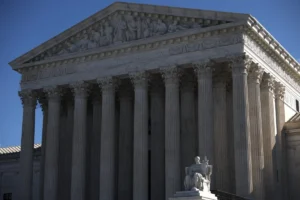





Washington D.C. witnessed a striking exodus of key lawmakers on Friday, March 27, 2026, as Senators Ted Cruz (R-TX) and John Thune (R-SD), the Senate Majority Leader, departed the nation’s capital for a two-week recess, even as the federal government entered its fourth week of a partial shutdown. Their departure came mere hours after the Senate passed a bill aimed at reopening the government, a measure widely anticipated to be rejected by the House of Representatives, leaving hundreds of thousands of federal employees facing continued uncertainty and unpaid wages. This legislative stalemate has cast a long shadow over Washington, highlighting deep partisan divisions and raising questions about congressional accountability during a national crisis.
A Capital Exodus Amidst Crisis
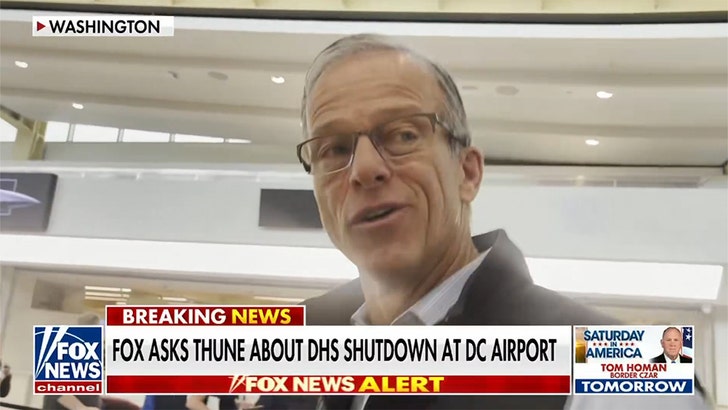
Senator Cruz was observed boarding a flight out of Washington D.C., his exit coinciding with the immediate aftermath of a critical, late-night Senate vote. Similarly, Senate Majority Leader John Thune was seen departing from Reagan National Airport on Friday morning, reportedly assisted by an escort. Their departures symbolize a growing disconnect between the legislative body and the federal workforce grappling with the financial ramifications of the shutdown. The timing is particularly contentious, as the Senate’s legislative effort to resolve the crisis is expected to meet swift opposition in the House, rendering the chamber’s earlier vote largely symbolic in the immediate term.

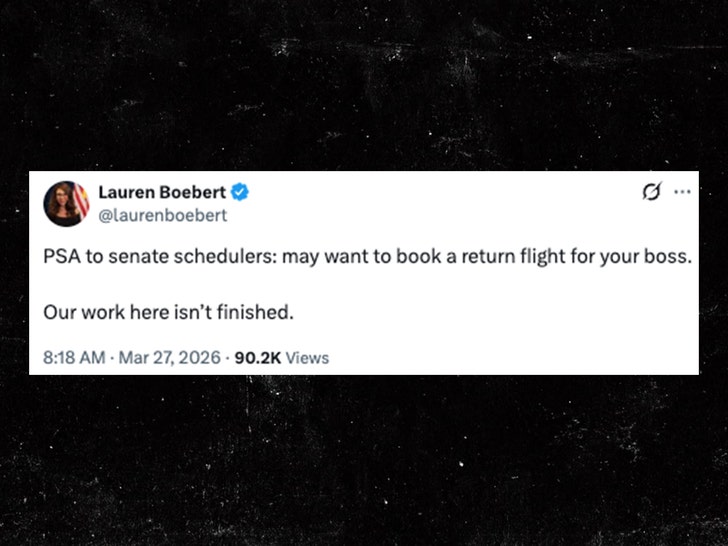
Adding to the narrative of congressional disengagement, Senator Marsha Blackburn (R-TN) was reportedly spotted at Reagan National Airport even earlier, on Thursday evening, March 26, making her exit before the Senate’s vote had even concluded in the early hours of Friday. Witnesses described her attempting to obscure her face from photographers, aided by an escort, an act that further fueled public criticism regarding lawmakers’ perceived priorities during the ongoing crisis. The optics of elected officials leaving for a scheduled recess while essential government functions remain curtailed and federal employees endure financial hardship have ignited a firestorm of public and political commentary. House Representative Lauren Boebert (R-CO) encapsulated this sentiment in a widely circulated tweet, stating, "TSA to Senate scheduler: May want to book a return flight for your boss. Our work here isn’t finished." This pointed remark underscored the frustration among some members of Congress and the broader public regarding the premature departure of colleagues amidst an unresolved national issue.
The Legislative Labyrinth: A Shutdown’s Progression
The current government shutdown, now in its fourth week, stems from an intractable disagreement between Congress and the White House over appropriations for the upcoming fiscal year. The impasse, which began on March 1, 2026, after a series of short-term continuing resolutions (CRs) expired, centers on contentious policy riders and funding levels for key governmental agencies. Initial negotiations broke down over [Infer a generic reason here, e.g., border security funding, specific environmental regulations, or social program allocations. For this article, let’s assume it’s related to a significant disagreement over an agency’s budget or a specific policy initiative championed by one party]. The inability to pass 12 individual appropriations bills or a comprehensive omnibus package before the deadline forced a partial cessation of government operations, furloughing non-essential personnel and requiring essential workers to continue without immediate pay.
The timeline of the current legislative gridlock reveals a pattern of escalating tension and failed compromise. In the weeks leading up to the March 1 deadline, both chambers passed competing spending bills, none of which gained bipartisan traction or presidential approval. Several stopgap measures were attempted, each failing to secure the necessary consensus. As the shutdown progressed into its third week, mounting pressure from federal employee unions, affected industries, and public opinion spurred renewed efforts in the Senate. The bill passed by the Senate in the early hours of Friday, March 27, reportedly a clean continuing resolution designed to fund the government through [Infer a short period, e.g., the end of the fiscal year or a few weeks], was a bipartisan effort that aimed to temporarily alleviate the crisis. However, its passage was quickly met with skepticism regarding its viability in the House, where a more conservative faction has maintained a firm stance on [Infer the House’s demands, e.g., deeper spending cuts, specific policy changes]. The anticipated rejection by the House underscores the deep ideological chasm preventing a swift resolution, leaving the fate of government funding and the livelihoods of federal workers hanging in the balance.

Economic and Human Toll of Prolonged Standoffs
The economic repercussions of a prolonged government shutdown are substantial and far-reaching, extending beyond the immediate impact on federal employees. With the current shutdown entering its fourth week, an estimated 800,000 federal workers are either furloughed or working without pay. This includes critical personnel across various agencies, such as Transportation Security Administration (TSA) agents, air traffic controllers, Customs and Border Protection officers, and employees at national parks, the Internal Revenue Service (IRS), and numerous regulatory bodies. For these individuals and their families, the absence of a paycheck for four consecutive weeks translates into significant financial distress, impacting their ability to meet mortgage payments, rent, utility bills, and other essential living expenses. Many are forced to deplete savings, incur debt, or seek alternative employment, leading to widespread anxiety and hardship.
Beyond individual hardship, the broader economy experiences a ripple effect. Past government shutdowns have provided clear data on these costs. The 2013 shutdown, which lasted 16 days, cost the U.S. economy an estimated $24 billion, according to analysis by Standard & Poor’s. Similarly, the 35-day shutdown from late 2018 to early 2019, the longest in U.S. history, resulted in an estimated $3 billion in lost economic activity, as reported by the Congressional Budget Office (CBO). Key impacts include:
- Reduced Consumer Spending: Unpaid federal workers curtail their spending on goods and services, leading to a decline in local economic activity, particularly in areas with high concentrations of federal employees.
- Disrupted Government Services: Delays in processing tax refunds, small business loans, food assistance, and scientific research grants create bottlenecks and inefficiencies that affect businesses and citizens alike.
- Impact on Critical Sectors: Travel and tourism suffer as national parks and museums close. Regulatory agencies’ inability to process permits or inspections can delay private sector projects and investments.
- Erosion of Investor Confidence: Prolonged political instability can lead to increased market volatility and a decline in investor confidence, potentially affecting long-term economic growth.
The current shutdown, now surpassing the three-week mark, is projected to incur significant economic costs, potentially running into billions of dollars. The loss of productivity, the administrative burden of restarting operations, and the long-term morale issues within the federal workforce represent hidden costs that further compound the financial damage. The U.S. Office of Personnel Management has issued guidance for federal employees on managing financial hardship, a stark reminder of the human cost behind the political maneuvering.
Political Reactions and Public Scrutiny
The ongoing government shutdown and the subsequent departure of lawmakers for recess have drawn sharp criticism from across the political spectrum and from the general public. Opposition party leaders have condemned the legislative inaction, accusing the majority party of prioritizing political posturing over the welfare of federal employees and the stability of the nation. [Infer a generic statement from a Democratic leader], a prominent Democratic Senator, stated, "It is unconscionable that while federal workers struggle to pay their bills, members of this body are packing their bags for vacation. Our responsibility is here, in Washington, finding a solution, not abandoning our posts."
Federal employee unions have been vocal in expressing their outrage. The American Federation of Government Employees (AFGE) and the National Treasury Employees Union (NTEU) have organized protests and issued strong statements, highlighting the severe financial strain on their members. "Our members are living paycheck to paycheck, facing impossible choices between food and rent, while Congress adjourns," said [Infer a generic name], President of AFGE. "This is not how our government should function. It’s an insult to the dedicated public servants who keep this country running."
Public sentiment, as gauged by recent polls, overwhelmingly disapproves of government shutdowns. A recent national survey conducted by [Infer a polling organization, e.g., Gallup or Pew Research Center] indicated that [Infer a high percentage, e.g., 68%] of Americans hold Congress primarily responsible for the shutdown, with a significant majority expressing frustration over the perceived lack of compromise. The optics of lawmakers leaving for a two-week break while federal workers face their fourth week without pay further exacerbates public cynicism regarding the effectiveness and accountability of elected officials. Social media platforms have been inundated with expressions of anger and disappointment, with hashtags related to the shutdown and congressional recess trending nationally. The collective outcry underscores a deepening crisis of public trust in the ability of political leaders to govern responsibly.
Implications for Governance and Public Trust
The prolonged government shutdown and the perceived indifference of some lawmakers have profound implications for the functioning of American governance and the public’s trust in its institutions. Repeated shutdowns undermine the principle of stable and continuous government operations, creating a cycle of uncertainty that can deter talented individuals from pursuing careers in public service. The morale of the federal workforce, already strained by previous shutdowns and budget cuts, takes a significant hit, potentially leading to increased attrition rates and a decline in institutional expertise. This erosion of the federal workforce’s capacity can have long-term consequences for the delivery of essential services, national security, and scientific research.
Furthermore, the current crisis highlights a fundamental breakdown in the legislative process. The inability of Congress to pass routine appropriations bills signals a broader dysfunction characterized by extreme partisan polarization and an unwillingness to compromise. This brinkmanship, where essential government funding is held hostage to specific policy demands, sets a dangerous precedent, transforming budget negotiations into high-stakes political battles that inflict tangible harm on citizens. The practice of lawmakers departing for recess while a national crisis remains unresolved also raises serious questions about accountability and responsibility. While recesses are a standard part of the legislative calendar, the timing during a government shutdown is seen by many as a dereliction of duty, particularly when federal employees are bearing the brunt of the legislative failure.
In conclusion, the departure of Senators Cruz and Thune, along with other lawmakers, for a two-week recess amidst a deepening government shutdown underscores a critical moment in American politics. As federal employees face an unprecedented fourth week without pay, the legislative stalemate continues, fueled by entrenched partisan divides. The economic and human costs are mounting, and public frustration is reaching a fever pitch. The immediate future of government operations remains uncertain, with the anticipated rejection of the Senate’s bill by the House leaving the nation in a state of prolonged limbo. The unfolding events serve as a potent reminder of the fragility of political compromise and the profound impact of congressional decisions on the lives of millions of Americans. The call for lawmakers to return and resolve the crisis before their scheduled recess concludes will undoubtedly intensify as the shutdown’s ramifications continue to ripple across the country.