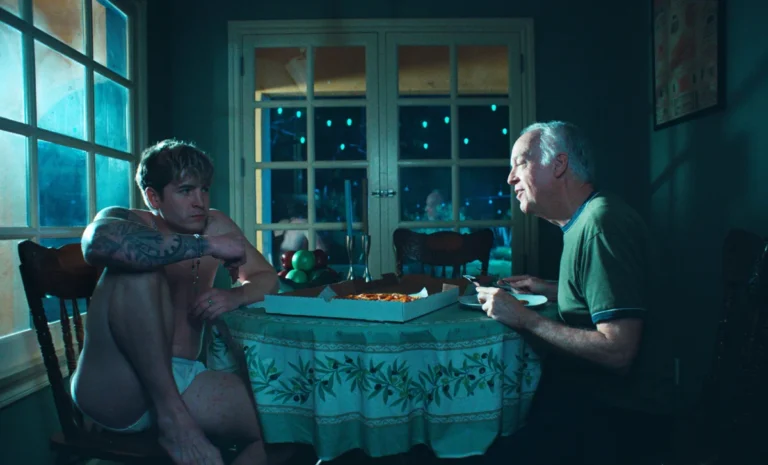



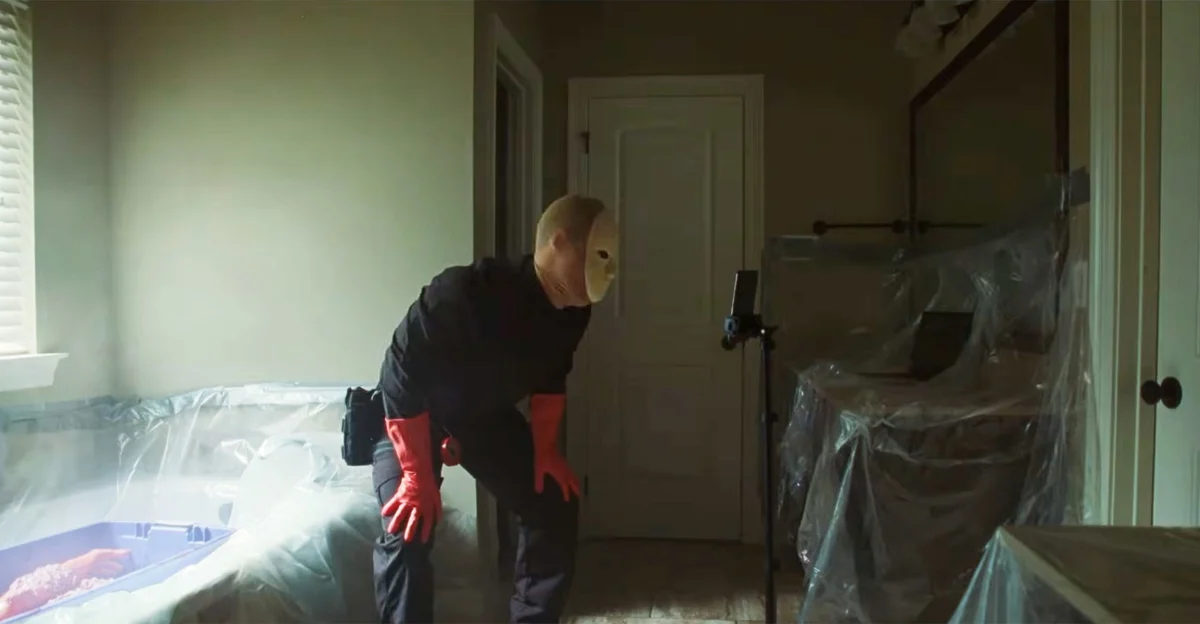
IFC Films has released the second official trailer for Faces of Death, a modern meta-horror reimagining of the infamous 1978 cult film, slated for theatrical release this April. The new footage, unveiled on March 25, 2026, escalates the unsettling tension, promising a provocative exploration of the lines between authenticity and fabrication in the digital age. Directed by Daniel Goldhaber, known for his critically acclaimed works Cam and How to Blow Up a Pipeline, the remake pivots the original’s controversial "is it real?" premise into a contemporary narrative centered on online content moderation.
A Deep Dive into the Remake’s Premise and Vision
The upcoming Faces of Death stars Barbie Ferreira and Dacre Montgomery in leading roles, supported by Josie Totah, Aaron Holliday, Jermaine Fowler, and pop artist Charli XCX. The narrative follows a woman employed as a content moderator for a major video platform who stumbles upon a series of extremely violent videos. These clips appear to be meticulously crafted re-enactments of death scenes from the original Faces of Death, a film notorious for purporting to showcase actual footage of fatalities from various sources. The moderator’s central challenge, and indeed the film’s core tension, lies in discerning whether the depicted violence is a meticulously staged fabrication or genuine events unfolding in real-time. This premise taps directly into the anxieties of an era grappling with misinformation, deepfakes, and the psychological toll of digital content consumption.
Daniel Goldhaber, alongside co-writer Isa Mazzei, has expressed a clear intention to honor the original film’s infamous conceit within the framework of modern filmmaking and legal boundaries. "It’s very important to us to honor the parts of that aspect of the original," the filmmakers have stated, acknowledging the delicate balance between homage and responsible storytelling. This commitment suggests a nuanced approach to a subject matter that, in its original form, drew significant criticism for its dubious claims and graphic imagery. The remake aims to leverage the original’s notoriety not for shock value alone, but as a springboard for timely social commentary.
IFC Films has voiced strong support for Goldhaber’s vision, with representatives stating, "We’re in awe of Goldhaber’s reimagining of Faces of Death. His take is unsettling, timely, and provocative, and we can’t wait to unleash it in theaters everywhere this spring." This endorsement highlights the studio’s confidence in the film’s ability to resonate with contemporary audiences while engaging with complex themes relevant to the digital experience. The second trailer, described as "the freakiest trailer yet," strategically employs disturbing and unsettling visuals to capture the attention of its target demographic, signaling a film that does not shy away from its challenging subject matter.
The Enduring Legacy of the Original ‘Faces of Death’
To fully appreciate the scope and ambition of Goldhaber’s remake, it is essential to revisit the cultural impact and controversial history of the 1978 original Faces of Death. Directed by John Alan Schwartz (under the pseudonym "Conan Le Cilaire"), the film was marketed as a genuine documentary showcasing various forms of death, from animal slaughter and accidents to murders and executions. Its primary appeal, and indeed its most enduring legacy, was the provocative question it posed to viewers: "Is it real?"

Released during an era when access to uncensored or graphic content was far more restricted than today, Faces of Death became a word-of-mouth phenomenon. It was widely distributed on VHS, finding its audience through underground networks and late-night cable television. Despite its often crude special effects and clearly staged sequences, many viewers genuinely believed they were witnessing authentic footage of human mortality. This belief, cultivated by the film’s narrator (played by Michael Carr as "Dr. Francis B. Gröss"), who presented himself as a pathologist exploring the many facets of death, fueled its cult status.
The film’s content included scenes of alleged cannibalism, assassinations, animal attacks, and executions. While many segments were later exposed as hoaxes or re-enactments – a car crash scene, for instance, was revealed to be a staged stunt – the film’s power lay in its psychological manipulation. It challenged viewers’ perceptions of reality and pushed the boundaries of what was acceptable to depict on screen. Faces of Death garnered significant controversy, facing bans in several countries, including the United Kingdom, Australia, and New Zealand, due to its graphic nature and deceptive marketing. Its legal battles and cultural debates solidified its place as one of the most infamous exploitation films ever made, influencing a generation of "shockumentaries" and contributing to the development of the found-footage horror subgenre. The original film’s ability to unsettle and provoke, primarily through its blurring of factual reporting and staged horror, provides a rich historical backdrop for Goldhaber’s modern interpretation.
Daniel Goldhaber’s Thematic Trajectory: From ‘Cam’ to ‘Pipeline’ to ‘Faces of Death’
Daniel Goldhaber’s directorial career demonstrates a consistent fascination with contemporary anxieties, technology’s impact on human identity, and the blurring lines between performance and reality. His previous works offer crucial insights into the intellectual framework he brings to the Faces of Death remake.
His 2018 film Cam, co-written with Isa Mazzei (who also co-wrote the Faces of Death remake), explored the dark side of online identity and performance through the story of a camgirl whose online persona is stolen. Cam delved into themes of digital doppelgängers, the commodification of identity, and the existential horror of losing control over one’s virtual self. The film received critical acclaim for its psychological depth and its nuanced portrayal of online labor, establishing Goldhaber as a filmmaker adept at dissecting the complexities of the internet age.
Following Cam, Goldhaber directed the 2022 eco-thriller How to Blow Up a Pipeline. This film, based on Andreas Malm’s non-fiction book, presented a taut, urgent narrative about environmental activists resorting to radical sabotage to combat climate change. How to Blow Up a Pipeline was lauded for its gripping suspense, its nuanced ethical questions, and its portrayal of characters driven to extreme measures by profound ideological conviction. It showcased Goldhaber’s versatility in genre, moving from psychological horror to political thriller, while maintaining a keen focus on societal issues and moral ambiguities.
The progression from Cam‘s digital identity crisis to Pipeline‘s direct action against systemic issues, and now to Faces of Death‘s interrogation of online violence and content moderation, reveals a filmmaker deeply engaged with the pressing concerns of the 21st century. Goldhaber’s work consistently challenges audiences to confront uncomfortable truths about technology, power structures, and the human condition. His choice to tackle Faces of Death is not merely a genre exercise but a logical extension of his thematic interests, offering a platform to explore how the original film’s central question—"Is it real?"—has evolved in an era saturated with user-generated content, deepfakes, and the constant negotiation of online truth.
The Unseen Labor: Content Moderation as Modern Horror

The decision to center the Faces of Death remake on a content moderator elevates the film beyond a simple rehash of its predecessor’s shock tactics. It positions the narrative squarely within a modern societal crisis: the unseen, often traumatic, labor of content moderation. The film’s protagonist, Barbie Ferreira’s character, embodies the real-world experiences of countless individuals tasked with sifting through the internet’s darkest corners.
Content moderators are the frontline workers of the digital age, employed by tech giants to review and filter user-generated content, ensuring it adheres to platform guidelines. Their daily work involves exposure to extreme violence, hate speech, child exploitation, self-harm, and a litany of other disturbing material. Studies and journalistic investigations have repeatedly highlighted the severe psychological toll this work takes, leading to conditions like PTSD, anxiety, depression, and moral injury. These individuals often work under intense pressure, with strict quotas and limited psychological support, becoming unwitting witnesses to humanity’s darkest impulses.
By placing a content moderator at the heart of Faces of Death, Goldhaber and Mazzei transform the film into a potent commentary on this invisible workforce. The horror in the remake stems not only from the graphic videos themselves but also from the psychological burden of constantly confronting them and the existential dread of distinguishing genuine horror from elaborate fabrications. The film implicitly asks: what does it mean to be the gatekeeper of digital reality, and what price do these gatekeepers pay?
The original film’s quote, "That is the first rule of content creation – give the people what they want," takes on a chilling new meaning in this context. In the age of viral content and algorithmic amplification, the desire for sensationalism and graphic material drives demand, placing immense pressure on both content creators and the moderators who regulate it. This thematic layer promises to make the Faces of Death remake not just a horror film, but a profound social critique of the digital ecosystem and its human cost.
Key Cast and Creative Contributions
The ensemble cast assembled for Faces of Death brings a blend of established talent and fresh faces to the project, enhancing its contemporary appeal.
- Barbie Ferreira, known for her breakout role as Kat Hernandez in HBO’s Euphoria, has earned acclaim for her nuanced performances exploring body image, sexuality, and self-discovery among Gen Z. Her casting as the content moderator protagonist suggests a performance capable of conveying deep psychological distress and vulnerability, making her an ideal choice for a role that demands emotional complexity.
- Dacre Montgomery, recognized globally for his portrayal of Billy Hargrove in Stranger Things, brings a charismatic yet menacing presence to the screen. His previous work demonstrates a capacity for roles that flirt with darker undertones, suggesting he might embody a character who blurs moral lines or contributes to the film’s central ambiguity.
- The supporting cast includes Josie Totah (Saved by the Bell, Champions), Aaron Holliday (Euphoria), and comedic actor Jermaine Fowler (Coming 2 America, Sorry to Bother You), whose diverse talents promise to round out the film’s human element.
- Perhaps the most intriguing casting choice is that of musician Charli XCX. Known for her innovative pop music and avant-garde aesthetic, her involvement signals a willingness to experiment with unconventional roles. Her presence could lend the film a distinct modern edge and attract an audience beyond traditional horror aficionados.
The synergy between Goldhaber and Mazzei as screenwriters is also crucial. Their collaborative success with Cam indicates a shared understanding of how to craft narratives that dissect digital culture with both intelligence and visceral impact. Their approach to Faces of Death is not simply to replicate the gore but to intellectualize the horror, grounding it in the very real anxieties of living in an internet-dominated world.
Marketing and Anticipation: The Trailer’s Impact

The release strategy for Faces of Death has been carefully orchestrated, with multiple trailers designed to build anticipation and underscore the film’s evolving themes. The initial teaser trailer offered a glimpse into the unsettling atmosphere, hinting at the meta-narrative without revealing too much. The first official trailer expanded on this, showcasing more of the premise and the initial confrontation with the disturbing videos. The second trailer, however, marks a significant escalation.
Described by First Showing as "the freakiest trailer yet," this latest release is designed to be provocative, gross, and unsettling. It aims to firmly establish the film’s horror credentials while emphasizing its intellectual undertones. The marketing strategy appears to be twofold: appeal to the morbid curiosity that propelled the original Faces of Death to cult status, while simultaneously attracting a new generation of viewers interested in "elevated horror" or films with strong social commentary.
IFC Films, known for distributing challenging and independent cinema, is well-positioned to navigate the potentially controversial reception of this remake. Their statement—highlighting Goldhaber’s take as "unsettling, timely, and provocative"—serves as a clear signal to both critics and audiences about the film’s intentions. By openly acknowledging the film’s challenging nature, IFC primes viewers for a thought-provoking experience rather than mere exploitation. The inclusion of new posters alongside the second trailer further reinforces the film’s aesthetic and thematic identity, solidifying its presence in the crowded spring release schedule.
Broader Implications: Horror, Reality, and the Digital Age
The Faces of Death remake arrives at a time when the very nature of reality is constantly being questioned, particularly within online spaces. The proliferation of deepfakes, manipulated media, and sophisticated disinformation campaigns has made it increasingly difficult to distinguish between what is real and what is fabricated. This film, by placing that epistemological challenge at its core, holds the potential to be more than just a horror movie; it could serve as a powerful cultural artifact reflecting our contemporary anxieties.
From a genre perspective, Faces of Death contributes to a growing trend in horror that moves beyond simple jump scares or gore, delving into psychological terror and social critique. Films like Hereditary, Get Out, and Goldhaber’s own Cam have demonstrated the appetite for horror that is both terrifying and intellectually engaging. The remake’s meta-narrative also aligns with the self-aware tendencies of modern horror, where films often comment on the genre itself or the act of filmmaking/viewing.
The film’s exploration of content moderation also has significant societal implications. It could spark broader conversations about the ethical responsibilities of tech companies, the mental health crisis among content moderators, and the impact of constant exposure to graphic content on individuals and society. In an increasingly polarized world where "truth" is often contested, a film that explicitly grapples with the ambiguity of visual evidence and the human cost of processing it is exceptionally timely.
As Goldhaber’s Faces of Death prepares for its theatrical debut on April 10, 2026, it stands poised to revive a notorious cult classic while simultaneously offering a poignant and disturbing reflection on the state of media, reality, and human experience in the digital age. Whether audiences are brave enough to confront its unsettling questions remains to be seen, but its arrival is guaranteed to provoke discussion.