
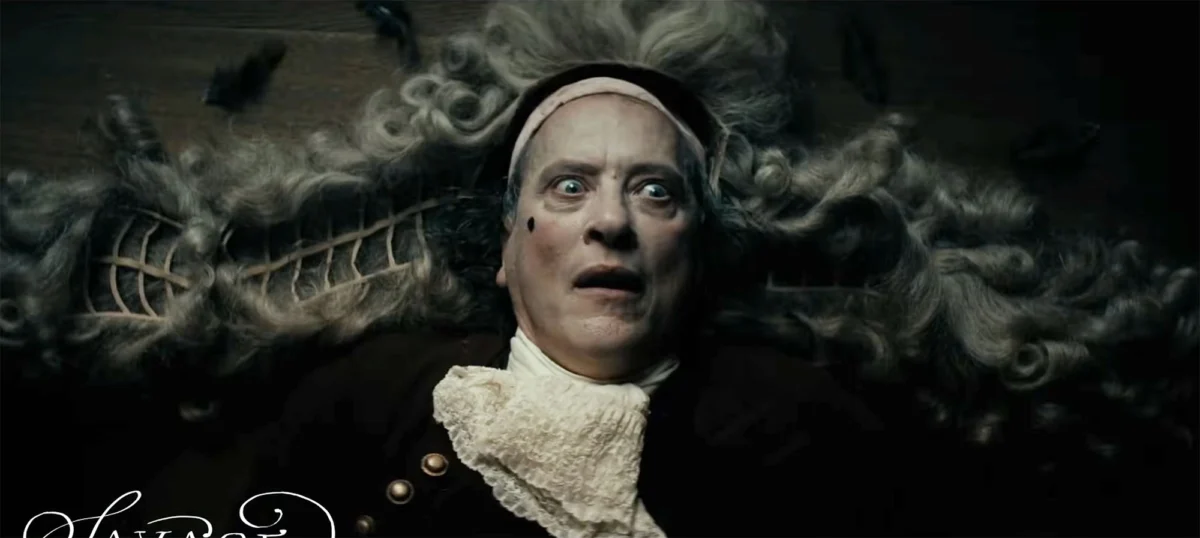
Paramount UK has officially unveiled the trailer for Savage House, an upcoming British satirical comedy directed and written by Peter Glanz, slated for release in UK cinemas on June 5th, 2026, following an earlier debut in Ireland in January of the same year. The film, which promises a "kooky" and "bonkers" take on 18th-century England, stars BAFTA winner Richard E. Grant and Emmy and Golden Globe winner Claire Foy as a formidable aristocratic couple navigating a tumultuous period marked by a devastating pox outbreak and the Jacobite Uprising. The initial reception of the trailer suggests a darkly humorous and visually opulent production, drawing immediate comparisons to Yorgos Lanthimos’ critically acclaimed 2018 historical black comedy, The Favourite.
A Glimpse into 18th-Century Anarchy and Ambition
Savage House is set against a backdrop of significant historical upheaval in 18th-century Britain, a period characterized by stark social stratification, political instability, and pervasive health crises. The narrative centers on Sir Chauncey Savage, portrayed by Richard E. Grant, and his equally ambitious wife, Lady Savage, played by Claire Foy. Their relentless pursuit of an "improved life" is depicted as a blind, almost farcical, quest for status and prosperity, leaving a trail of "ironic decadence and bloodshed" in its wake. The film’s promotional material vividly describes a world where "duels erupt like sudden thunderstorms, alliances crumble over candlelit dinners, and the Savages’ stately home becomes a stage for absurdity and brutality alike." This premise positions Savage House as more than just a period piece; it is a sharp social commentary wrapped in the guise of a flamboyant comedy, dissecting the veneers of aristocracy and the often-grotesque realities beneath.
The supporting cast features a roster of accomplished British talent, including Bel Powley, Kila Lord Cassidy, Jack Farthing, Richard McCabe, Vicki Pepperdine, and Pip Torrens. Their collective presence is expected to enhance the ensemble’s comedic timing and dramatic depth, contributing to the film’s overall texture. The combination of a strong creative vision, an evocative historical setting, and a distinguished cast sets high expectations for Savage House to deliver a memorable cinematic experience that blends historical context with biting modern sensibilities.
Historical Underpinnings: Disease and Rebellion in 18th-Century Britain
To fully appreciate the satirical depth of Savage House, it is crucial to understand the historical context it leverages. The 18th century in Britain was a period of immense change and inherent contradictions, perfectly ripe for dark comedic exploration.

The Pox Outbreak: The film explicitly mentions a "pox outbreak." While specific historical records detail various epidemics, smallpox was a pervasive and terrifying scourge throughout the 18th century. It was an endemic disease, meaning it was always present in the population, causing widespread mortality and disfigurement. Historians estimate that smallpox was responsible for up to 10% of all deaths in Europe during this era, and its impact on infant and child mortality was even more severe. For the wealthy, contracting smallpox was often a matter of social concern as much as health; survival might mean disfiguring scars, impacting marriage prospects or social standing, while death could disrupt dynastic lines. The medical understanding of the time was rudimentary, with treatments often ineffective or even harmful. Inoculation (an early form of vaccination using live virus) was introduced but was controversial and not widely adopted until later in the century. The presence of such a deadly and disfiguring disease would have cast a long shadow over daily life, creating a stark contrast with the "ironic decadence" pursued by the elite, highlighting their obliviousness or willful ignorance to the suffering around them. This historical reality provides a potent backdrop for Glanz’s satire, underscoring the absurdity of the Savages’ self-absorbed existence amidst widespread public health crises.
The Jacobite Uprising: The "Jacobite Uprising" refers primarily to the series of attempts by supporters of the exiled House of Stuart (the "Jacobites") to restore them to the British throne after the Glorious Revolution of 1688. The most significant of these was the 1745 uprising, led by Charles Edward Stuart, often known as Bonnie Prince Charlie. This rebellion saw Jacobite forces march deep into England, reaching Derby, before retreating and ultimately suffering a decisive defeat at the Battle of Culloden in 1746. The Jacobite cause was complex, involving religious (Catholic vs. Protestant succession), political (divine right vs. parliamentary sovereignty), and nationalistic (Scottish Highlander support) dimensions. The period immediately following the ’45 Rebellion was marked by brutal suppression, particularly in the Scottish Highlands, with the British government implementing harsh laws to dismantle clan structures and culture.
For English society, even those not directly involved, the Jacobite threat represented a profound instability. It questioned the legitimacy of the Hanoverian monarchy, created internal divisions, and necessitated significant military expenditure and vigilance. The presence of this political unrest and potential for "bloodshed" would have permeated the atmosphere, adding another layer of tension and danger to the supposedly genteel world of the aristocracy. Savage House‘s decision to set its narrative during such a volatile period allows for a juxtaposition of personal, trivial ambitions against the backdrop of national crisis, magnifying the satirical critique of class and power. The Savages’ "blind pursuit" of a better life, seemingly oblivious or indifferent to these profound external threats, serves as a powerful commentary on aristocratic detachment.
Peter Glanz’s Vision and the Legacy of Period Satire
Peter Glanz, the writer and director behind Savage House, is known for his distinctive cinematic voice. His previous feature film, The Longest Week (2014), starring Jason Bateman and Olivia Wilde, explored themes of privilege and existential ennui in contemporary New York, albeit with a more conventional comedic tone. With Savage House, Glanz appears to be venturing into more audacious territory, embracing the dark humor and visual extravagance often associated with period satires. The move to a historical setting, particularly one as rich with social and political intrigue as 18th-century Britain, offers Glanz a broader canvas for his satirical brushstrokes. The explicit comparison to The Favourite suggests an intention to subvert typical historical drama tropes, favoring anachronistic dialogue, eccentric characterizations, and a willingness to explore the grotesque aspects of human nature.
The genre of period satire has enjoyed a resurgence in recent years, proving its enduring appeal and relevance. Films like The Favourite, television series such as Hulu’s The Great, and more recently, Poor Things, have demonstrated a voracious appetite among audiences for historical narratives that are irreverent, visually stunning, and intellectually provocative. These productions often use historical settings as a mirror to contemporary societal issues, critiquing power dynamics, gender roles, and the pursuit of status with a modern sensibility. Savage House, by positioning itself within this lineage, aims to capitalize on this trend, offering a fresh perspective on the foibles of the elite. The "darkly satirical play on class and power" promised by the film indicates a deeper engagement with social commentary than a mere slapstick comedy, hinting at a nuanced critique of societal structures through exaggerated characterizations and absurd situations.
The Illustrious Cast: Perfecting the Art of Period Eccentricity

The casting of Savage House is a significant factor in its anticipated success, bringing together two actors renowned for their versatility and ability to command both dramatic and comedic roles, particularly within historical contexts.
Richard E. Grant as Sir Chauncey Savage: Grant is a master of flamboyant, often darkly comedic, and eccentric characters. His iconic role in Withnail & I (1987) cemented his status as a cult figure, and his later work, including an Oscar-nominated performance in Can You Ever Forgive Me? (2018), has consistently showcased his ability to imbue characters with both profound pathos and outrageous humor. His distinctive voice, expressive features, and inherent theatricality make him an ideal choice for Sir Chauncey Savage, a character described as pursuing a "better life" with "ironic decadence." Grant’s presence alone suggests a performance that will be both hilariously over-the-top and subtly nuanced, anchoring the film’s satirical core. Audiences can expect Sir Chauncey to be a memorable figure in Grant’s impressive gallery of idiosyncratic characters.
Claire Foy as Lady Savage: Foy is celebrated for her powerful and nuanced portrayals of strong women, most notably her Emmy and Golden Globe-winning performance as Queen Elizabeth II in Netflix’s The Crown. Her extensive experience in historical dramas, including Wolf Hall and First Man, demonstrates her command of period aesthetics and complex emotional landscapes. In Savage House, Foy has the opportunity to showcase a different facet of her talent, leaning into the comedic and perhaps even villainous aspects of Lady Savage. The character’s "equally driven" nature and participation in the couple’s chaotic pursuit of status suggest a formidable and perhaps ruthlessly funny performance. The dynamic between Grant’s theatricality and Foy’s intense focus is poised to create a captivating and highly entertaining central pairing.
The supporting ensemble further strengthens the film’s potential. Bel Powley, known for her roles in The Diary of a Teenage Girl and A Royal Night Out, brings a youthful energy and comedic timing. Jack Farthing, familiar from Poldark and Spencer, has experience in period dramas and portraying complex characters. Veterans like Richard McCabe, Vicki Pepperdine, and Pip Torrens add gravitas and seasoned comedic prowess, ensuring a well-rounded and engaging cast capable of handling the film’s unique blend of historical detail and farcical humor. The collective talent promises a film rich in character and performance, crucial for a satire that relies on its protagonists to carry its critique.
Production and Release Trajectory
The journey of Savage House from conception to release provides insight into the contemporary independent film landscape. The film’s premiere in Ireland in January 2026, preceding its UK release, is a common strategy for European productions. It allows for an initial market test, generates early reviews, and builds momentum before a wider theatrical rollout. Such staggered releases can also be strategic for awards season positioning, though the primary focus for a comedy of this nature is often commercial success and critical buzz rather than major awards.
Paramount Pictures UK’s decision to distribute Savage House in the UK market underscores confidence in its commercial appeal and its ability to resonate with British audiences, who have a long-standing appreciation for dark humor and period dramas. The June 5th, 2026 release date places it firmly within the competitive summer cinema schedule, suggesting Paramount believes it can carve out a niche amidst blockbuster releases. Its distinct genre and stylistic approach might appeal to audiences seeking an alternative to mainstream fare.

The absence of a confirmed US release date is a common scenario for films with a distinctly "British" flavor. While the original article expresses optimism that "US audiences will be just as amused," securing a US distributor often depends on a combination of factors: critical reception from early releases, potential festival screenings (though none have been announced for Savage House), and the ability to effectively market the film to an American audience. Independent films, especially those with niche appeal, often face challenges in securing broad distribution in the highly competitive US market. A successful UK run and strong reviews could significantly bolster its chances of finding a US home, potentially through a specialty distributor that caters to art-house or independent cinema. Updates on its US distribution will be keenly awaited by international film enthusiasts.
Broader Implications and Cultural Resonance
Savage House enters a cultural conversation that continues to re-evaluate history through a modern lens. The film’s premise, using the turmoil of the 18th century to lampoon the "blind pursuit" of status and the "ironic decadence" of the elite, offers a timeless critique relevant to contemporary discussions on wealth disparity, political maneuvering, and societal hypocrisy. By highlighting the absurdity of privilege against a backdrop of genuine hardship (pox and rebellion), Glanz’s work has the potential to resonate with audiences grappling with similar contradictions in their own societies.
The film’s expected blend of opulent visuals and biting humor contributes to a growing trend in cinema that prioritizes entertainment while subtly, or not so subtly, challenging traditional narratives. This approach allows for a broader audience engagement than purely academic historical dramas, making complex themes accessible through the vehicle of comedy. The success of films like The Favourite demonstrated that audiences are not only receptive but eager for period pieces that break conventions, offering a fresh, often cynical, and visually stunning reinterpretation of the past. Savage House appears poised to contribute to this rich tradition, providing both escapism and a pointed commentary.
As Savage House prepares for its UK theatrical debut, it stands as a testament to the enduring appeal of British storytelling and the power of satirical cinema. With its stellar cast, intriguing premise, and promising creative direction, it aims to be a notable entry in the pantheon of period dark comedies, inviting audiences to laugh at the absurdities of the past while perhaps reflecting on the echoes in the present. The anticipation surrounding its release suggests that Glanz’s "bonkers" vision is set to captivate and amuse in equal measure.