

The anime series Rooster Fighter, a vibrant adaptation of Shu Sakuratani’s manga, has captivated audiences with its unique premise: a valiant rooster named Keiji who battles monstrous demons across Japan. While the series officially premiered in Japan this month, international viewers were granted an unusually early glimpse, with episodes serialized on Adult Swim and Hulu in America, and on Disney+ in other global territories since mid-March. This preemptive international rollout has generated significant buzz, allowing the show to build a substantial fanbase before its domestic debut.
The narrative follows Keiji, a samurai-esque rooster whose unwavering courage and combat prowess are employed to protect humanity from a relentless onslaught of ravenous monsters. His solitary, heroic journey through the Japanese landscape evokes a sense of classic samurai cinema, a sentiment director Daisuke Suzuki, speaking from Sanzigen studio, acknowledges also draws inspiration from the genre of Western films. Suzuki, an experienced hand in the anime industry, particularly with CG animation, initially harbored doubts about the viability of a series centered on a chicken. However, a deep dive into Sakuratani’s manga profoundly shifted his perspective, transforming his initial skepticism into passionate dedication.
The Genesis of a Feathered Hero: From Skepticism to Tears
Daisuke Suzuki’s journey to directing Rooster Fighter began not with a personal quest for the project, but through his established role as an employee at Sanzigen Inc., the CG production company behind the anime. Having honed his skills as a modeler, animator, and CG director within the studio, Suzuki was offered the directorial position. His initial reaction, as he candidly shared, was one of professional obligation rather than enthusiastic anticipation. "When I first heard the concept, I honestly couldn’t understand what could possibly be interesting about an anime about a chicken," Suzuki admitted. "However, as a Japanese salaryman, I couldn’t refuse the offer, so I reluctantly started reading the original manga."

The transformation of Suzuki’s perspective was swift and dramatic. Upon completing the manga, he found himself overwhelmed with emotion. "By the time I finished, I was moved to tears—so much so that I was crying heavily!" he recounted. "I thought, ‘What an incredibly passionate story!’ That experience really boosted my motivation, and I was able to approach the project with genuine enthusiasm." This personal revelation underscores the manga’s powerful narrative and its ability to imbue even the most unconventional subjects with profound emotional weight, a testament to Sakuratani’s storytelling prowess.
Crafting a Distinctive Visual Identity: Blending CG and Cel Animation
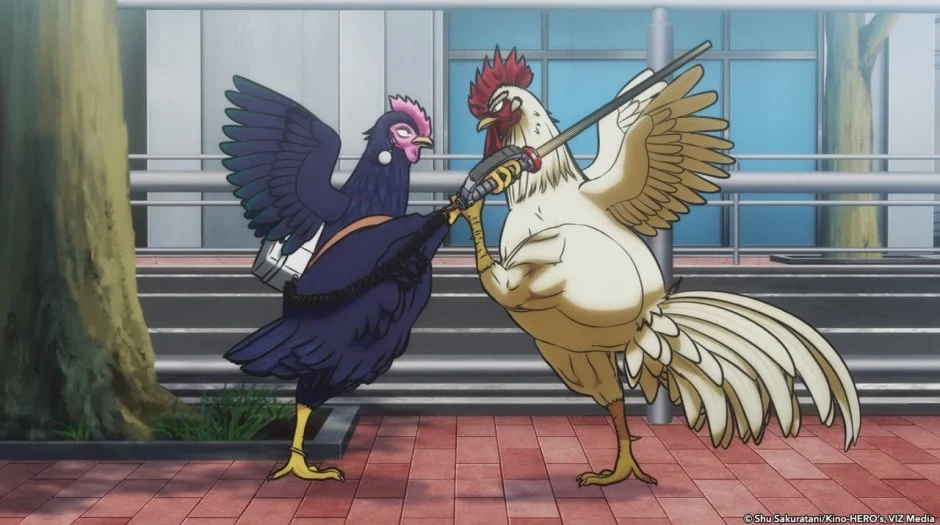
One of the most striking aspects of Rooster Fighter is its distinctive visual style, which masterfully balances modern CG techniques with the aesthetic sensibilities of traditional cel animation. Far from being an overtly "CG-heavy" production, the series employs a look that Suzuki describes as deliberately aiming for a "hand-drawn cel-style." This approach imbues the animation with a warmth and familiarity often associated with classic anime.
"By deliberately aiming for a hand-drawn cel-style look, we strive to express the appeal of traditional cel animation that runs through our work, while also making it easier for Japanese audiences to accept," Suzuki explained. "Rather than smooth, glossy CG motion, we aim for animation that has the warmth of hand-drawn work." To achieve this, Sanzigen utilizes a range of techniques. Flat color design and strong outline lines are employed to mimic the look of traditional cels. Frame skipping is intentionally incorporated to create a specific sense of timing and rhythm, reminiscent of limited animation styles. Furthermore, flat filters and effects are meticulously applied during the compositing stage, ensuring that the CG elements seamlessly integrate with hand-drawn characters and backgrounds. The ultimate goal, Suzuki emphasized, is to make viewers "not overly conscious of the CG."
The choice to render the protagonist, Keiji, in CG was a practical one, dictated by the inherent complexities of animating a chicken. "Chickens actually have many lines and are difficult to draw, and few animators are accustomed to drawing them, making them unsuitable for hand-drawn animation," Suzuki noted. This strategic use of CG for the avian hero allows for dynamic and fluid movement, while human characters remain hand-drawn, preserving a distinct visual contrast.

The Art of the Feathered Warrior: Directing Keiji’s Power and Presence
Translating the raw power and commanding presence of a rooster into compelling on-screen action presented a unique directorial challenge. Suzuki revealed that a key visual technique employed is the frequent use of "harmony processing," which freezes the image into a painterly, illustration-like style during Keiji’s exaggerated poses. These moments are amplified far beyond typical usage, requiring close collaboration across various departments. The artistic contributions of individuals like Joseph Shin, particularly evident in the opening sequence, were crucial in elevating these visual elements to an artistic level.
While specific human movie stars were not direct visual references for Keiji’s character design, the voice performance of Kenta Miyake played a pivotal role. The series utilizes pre-scoring, where voice actors record their lines before animation is finalized. "Since we produce the animation using pre-scoring (as opposed to the more common post-recording in Japan), you could say that Miyake Kenta’s voice performance as Keiji itself became the reference," Suzuki stated. This method allows the vocal performance to deeply influence the character’s animation and emotional delivery.
Balancing Humor and Heart: The Challenge of Believability
Rooster Fighter‘s premise is undeniably whimsical, yet the series manages to maintain a serious engagement with its characters and narrative. This delicate balance between inherent silliness and genuine emotional stakes was a primary concern during the adaptation process. Suzuki elaborated on this challenge: "We aimed to push the balance found in the manga even further and enhance its sense of believability."
The initial episodes were meticulously adjusted to foster audience empathy for Keiji. "In particular, in Episode 1, which serves as the introduction, we made detailed adjustments to the dialogue and structure so that human viewers could empathize with Keiji the chicken as much as possible," Suzuki said, citing Keiji’s interactions with the old man and his flashbacks as key elements in building this connection.

The introduction of animation also presented an opportunity to leverage the element of time. Suzuki highlighted the time-race sequence in Episode 6 between Keiji and a "raging torrent," where Keiji’s speed was pushed to exceed Mach 1 to ensure the scene’s dramatic impact and believability within the narrative’s heightened reality.
The Kaiju Connection: Fighting Giants with Style
The epic clashes between Keiji and the monstrous demons, often of colossal proportions, require specific directorial strategies to maintain audience engagement. Suzuki drew a parallel to the historical impact of kaiju films, where the sheer scale difference itself becomes a central spectacle. "In those works, the difference in size itself becomes a major highlight. There is a sense of catharsis in seeing a small chicken defeat a giant monster," he explained.
To accentuate this dynamic, the animation deliberately portrays the demons as "heavy and somewhat sluggish," while Keiji’s agility and decisive finishing moves are sharply emphasized. This contrast amplifies the satisfaction of his victories. Furthermore, color design and texture mapping were extensively employed to imbue the demons with a sense of biological realism, even adding a "slightly unsettling quality" to enhance their formidable nature.
Embracing the Tropes: Stylized Action and Iconic Homages
The action sequences in Rooster Fighter are replete with stylized "manga" effects, including dynamic speed lines, explosive vertical lines, and the distinctive kanji characters that punctuate Keiji’s attacks. Suzuki expressed his personal enjoyment of these expressive tools. "Speed lines and focus lines are a hallmark of Japanese animation expressions. They allow us to add impact even to low-frame or still images. It’s also a technique I personally love and am very familiar with, so I actively incorporated it."

The iconic "Kokekokko" battle cry, the Japanese equivalent of "cock-a-doodle-doo," presented a unique challenge. Recognizing its distinctive presence in the manga, the decision was made to depict it as is, interpreting the sound itself as having a tangible, physical force that strikes and pierces the demons.
The series also consciously pays homage to a rich cinematic history. Suzuki confirmed that when working on the first episode, he saw it as an opportunity to create a "kaiju film I love!" References to iconic films like Godzilla were integral to the production. The visual motif of demons exploding in silhouette, a clear nod to the anime adaptation of Fist of the North Star, was also meticulously recreated. Suzuki noted that this stylistic choice, initially born from broadcast limitations regarding grotesque imagery, has evolved into a recognized and respected form of traditional expression within Japanese animation. Even the sound design incorporates the familiar "electric crackling" sound effect preceding these explosions. The Western genre influence, Suzuki revealed, stemmed from composer Takahashi Tetsuya’s suggestion that Western-style music might suit Keiji, leading to tense "standoff" scenes inspired by the music during storyboard creation.
Collaboration and Adaptation: Working with Hiroshi Seko and Kenta Miyake
The script adaptation by Hiroshi Seko, a writer with extensive experience in high-octane action anime like Chainsaw Man and Jujutsu Kaisen, proved to be a highly collaborative and effective process. Suzuki discovered a shared alma mater in film school, which facilitated smooth communication. "Seko-san’s decision to boldly trim down the early part of the original story and focus more heavily on the battles with the Devils was nothing short of brilliant," Suzuki commented. Seko’s accommodating nature, readily accepting minor changes during the storyboard phase, further streamlined the production.
The casting of Kenta Miyake as Keiji was a personal choice by Suzuki, who envisioned the rooster as a "mischievous noble." Miyake’s prior performance as Thor in the Japanese dub of Marvel Cinematic Universe films, where he adeptly balanced serious and comedic tones, made him the ideal candidate. "In that role as well, he balances both serious and comedic performances, which made him an ideal fit for Keiji," Suzuki stated.

Adding a touch of charming absurdity, Miyake himself performed all the chicken sounds during the pre-scoring session, surpassing initial considerations of using real recordings. His vocalizations were so impressive that they immediately became the final choice, even inspiring other voice actors playing chickens to emulate his performance, creating a "fun recording environment."
The Unconventional Love Scene: A Surprising Sensuality
Addressing a particularly unusual element of the first episode, the avian sex scene, Suzuki acknowledged the initial apprehension regarding broadcast standards. The animation for this sequence was deliberately kept minimal, a simple two-frame loop, to avoid explicit depiction. However, the voice actors’ passionate performances imbued the scene with an unexpectedly "sensual tone," much to the amusement of the mixing booth crew, which was reportedly filled with laughter.
Global Appeal and Future Prospects
While Rooster Fighter premiered in Japan in April, its March release in North America and other territories has provided a significant lead. Suzuki, however, expressed a primary focus on bringing out the manga’s full appeal rather than strategizing for specific regional reception. "My only focus was on bringing out the full appeal of the original manga and making it as entertaining as possible for viewers," he stated.
The overwhelmingly positive reception from overseas audiences has been a welcome development. Suzuki attributes this success in part to the original creator’s efforts during the manga’s serialization. He expressed hope that this international attention will translate into increased interest and enjoyment of both the manga and anime within Japan, a sentiment that would undoubtedly bring him great satisfaction. The series’ unique blend of action, humor, and heartfelt storytelling appears to have transcended cultural boundaries, establishing Rooster Fighter as a notable and beloved entry in the global anime landscape.