


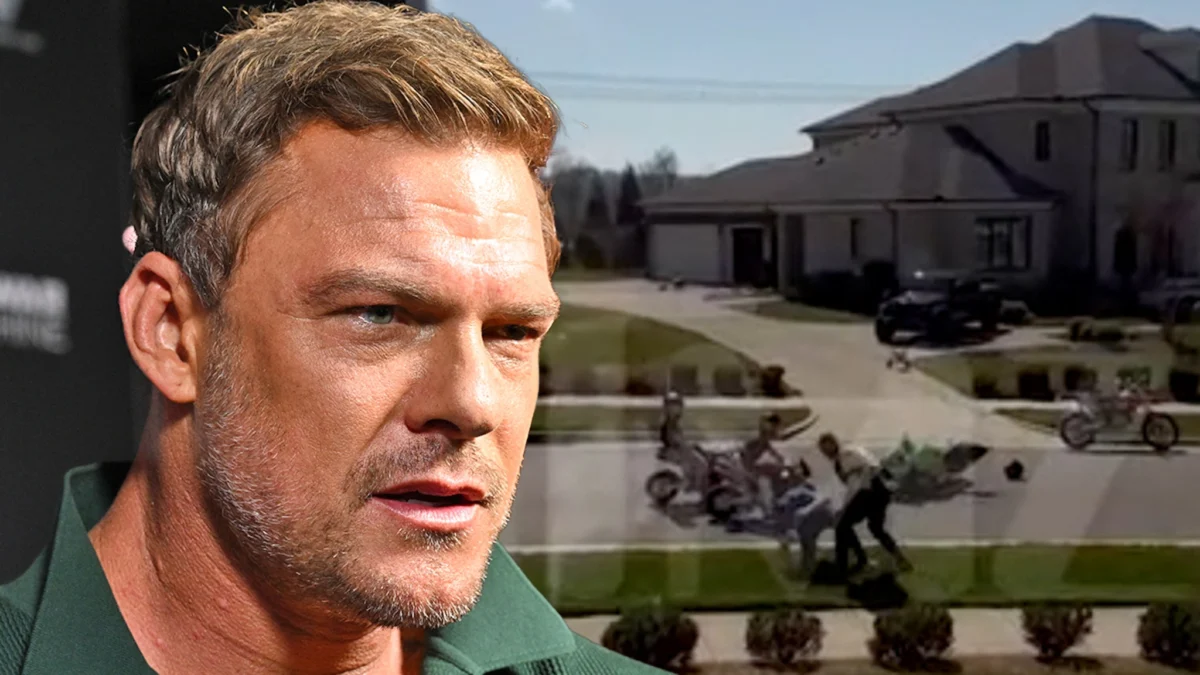
Reports have emerged providing a more comprehensive account of the altercation involving "Reacher" star Alan Ritchson and his neighbor, Ronnie Taylor, in Brentwood, Tennessee. Sources close to the actor contend that Ritchson was not the aggressor in the confrontation that culminated in a widely circulated video showing him physically retaliating against Taylor. These sources claim that Taylor initiated the conflict by aggressively attempting to stop Ritchson, who was riding his motorcycle ahead of his two children, resulting in Ritchson being knocked off his bike twice before the recorded incident.
The incident, which transpired on Sunday afternoon, March 22, 2026, has drawn significant media attention, primarily due to Ritchson’s celebrity status and the dramatic nature of the viral video. However, the narrative presented by those close to the actor paints a picture of self-defense following repeated provocation and physical assault by Taylor. This account directly contradicts Taylor’s own claims that Ritchson was operating his motorcycle at excessive speeds and that the confrontation was a response to persistent dangerous driving habits.
Chronology of the Altercation: A Detailed Account
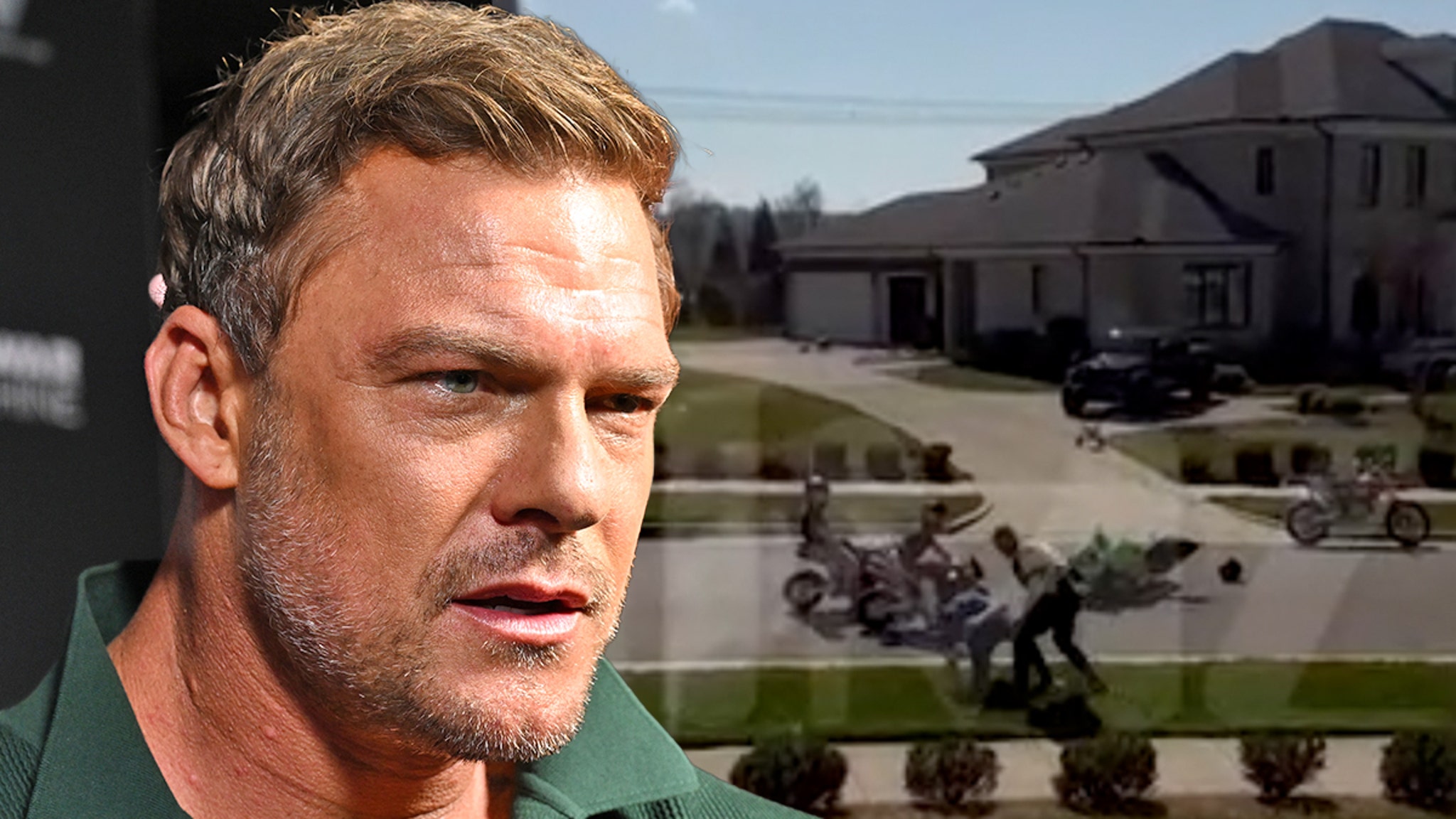
The sequence of events, as pieced together from sources aligned with Alan Ritchson, began on a seemingly ordinary Sunday afternoon in the affluent suburban community of Brentwood, Tennessee. Ritchson was reportedly enjoying a motorcycle ride, with his two young children following closely behind on their mini bikes. This detail underscores the family context of the outing, suggesting a recreational activity rather than an intentional provocation.
According to these sources, the tranquility of the afternoon was abruptly shattered when Ronnie Taylor, a neighbor, "bolted into the street" in what was described as a "really aggressive" attempt to impede Ritchson’s motorcycle. This sudden and forceful intervention reportedly caused Ritchson to lose control of his bike, resulting in a crash. The fall left the actor with various cuts and bruises, along with a minor injury to his finger, indicating a tangible physical impact from this initial collision. The description of Taylor’s actions as "aggressive" suggests an intent beyond merely communicating dissatisfaction, escalating the situation immediately.
While Ritchson was still on the ground, reportedly recovering from the fall, Taylor allegedly continued his confrontational behavior, daring Ritchson to strike him while yelling. Crucially, sources indicate that Ritchson did not respond to this verbal provocation. Instead, demonstrating an attempt to de-escalate the volatile situation, Ritchson reportedly tried to remount his motorcycle with the intention of leaving the scene and removing himself and his children from the escalating tension.
However, the situation reportedly worsened. As Ritchson attempted to depart, Taylor allegedly shoved him to the ground for a second time. It was this second physical assault, following the initial crash and verbal taunts, that sources claim prompted Ritchson’s physical response. The subsequent moments were captured on video, showing Ritchson retaliating against Taylor, an act that has since gone viral across various platforms. Following the physical confrontation, Ritchson, accompanied by his children, left the scene on his motorcycle.
Conflicting Narratives: The Perspectives of Ritchson and Taylor
The core of this incident lies in the starkly contrasting accounts provided by the two parties involved.
Alan Ritchson’s Perspective (via sources close to him):
Sources close to Ritchson vehemently assert that he was not the instigator. Their narrative emphasizes a clear sequence of unprovoked aggression from Taylor:
- Initial Aggression: Taylor’s "aggressive" attempt to stop Ritchson’s motorcycle, leading to a crash and Ritchson’s injuries.
- Verbal Provocation & De-escalation Attempt: Taylor’s taunts while Ritchson was on the ground, met with Ritchson’s efforts to leave.
- Second Physical Assault: Taylor’s subsequent shove, which knocked Ritchson down again, ultimately leading to Ritchson’s physical response in what is presented as an act of self-defense.
These sources explicitly state that Taylor "initiated and instigated" the entire event, framing Ritchson as a victim of escalating aggression who only acted when physically assaulted twice.
Ronnie Taylor’s Perspective:
In direct contrast, Ronnie Taylor has provided his own account, telling TMZ that the altercation stemmed from Ritchson’s alleged "excessive speeds" on his motorcycle within the neighborhood for two consecutive days. Taylor claims he finally "confronted" Ritchson about these "dangerous motorcycle habits" on Sunday, implying that his actions were a justified response to perceived reckless behavior endangering the community. Taylor’s statement suggests he initiated the contact to address a safety concern, framing Ritchson’s riding as the primary catalyst for the dispute. His account does not detail the alleged shoves or Ritchson’s attempts to leave, focusing instead on the initial justification for his intervention.
The disparity in these narratives highlights the complexities inherent in neighbor disputes, where differing perceptions of events and personal boundaries can quickly lead to conflict. The presence of a video, while providing visual evidence of the physical altercation, does not fully capture the preceding events or the motivations of either party, underscoring the importance of a thorough investigation.
Legal Framework and Police Response in Tennessee
The Brentwood Police Department has confirmed its involvement in the ongoing investigation into the incident. As of the latest reports, no arrests have been made, and sources close to Alan Ritchson have indicated his full cooperation with law enforcement officials. This suggests that authorities are carefully reviewing all available evidence, including witness statements, the viral video, and the differing accounts of Ritchson and Taylor, before determining if any charges are warranted.
Self-Defense Laws in Tennessee:
Tennessee law, like many states, recognizes the right to self-defense. Generally, an individual is justified in using a reasonable amount of force to protect themselves from imminent bodily harm. Key elements often considered in self-defense claims include:
- Imminence: The threat of harm must be immediate.
- Reasonableness of Force: The force used must be proportionate to the perceived threat.
- Absence of Provocation: While not always an absolute bar, if the defendant initiated the conflict, their self-defense claim might be weakened. However, if the initial aggressor escalates the conflict or the defendant attempts to retreat, the right to self-defense can be restored.
In this case, Ritchson’s camp argues that Taylor was the initial aggressor, and Ritchson’s actions were a direct response to being physically assaulted twice, including an attempt to leave the scene that was thwarted by a second shove. If this account is substantiated by evidence, it could bolster a self-defense claim, mitigating potential assault charges against Ritchson. Conversely, if Taylor’s claims of Ritchson’s reckless driving are proven and Taylor’s actions are deemed a reasonable attempt to prevent immediate danger, the legal landscape could shift. However, even if Ritchson was speeding, physically assaulting someone who is attempting to leave is unlikely to be viewed as a justifiable response under self-defense laws.
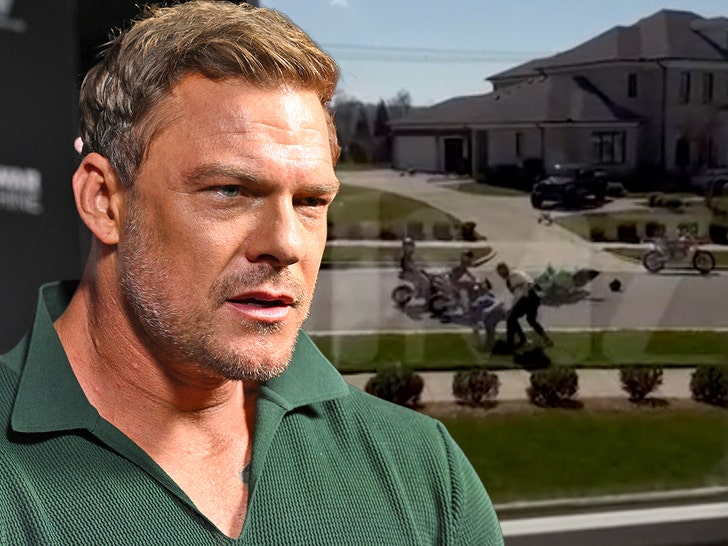
Legal experts suggest that the outcome will heavily depend on witness testimonies corroborating the sequence of events, particularly the alleged shoves and Ritchson’s attempts to disengage. The viral video, while dramatic, only captures a segment of the overall confrontation, making the pre-video actions critical for a full legal assessment.
Community Context: Brentwood, Tennessee
Brentwood, Tennessee, is an affluent suburb of Nashville, renowned for its spacious homes, top-rated schools, and a strong sense of community. It is often perceived as a quiet, family-friendly area where residents expect a high degree of civility and adherence to community standards, particularly concerning public safety and neighborly conduct. The presence of a high-profile celebrity like Alan Ritchson, known for his imposing physical presence in roles such as Jack Reacher, engaging in a street brawl in such a locale, is particularly jarring for the community.
The incident raises questions about neighborhood disputes and how they can escalate, even in seemingly peaceful environments. Local ordinances regarding noise, traffic speed, and public conduct are typically well-enforced in Brentwood, and residents generally expect these rules to be respected. Taylor’s complaint about "excessive speeds" aligns with typical community concerns in residential areas. However, the alleged method of confrontation—bolting into the street and physically accosting a motorcyclist—is an extreme departure from typical dispute resolution mechanisms encouraged in such communities, which usually involve communication, formal complaints, or police intervention. The incident may prompt discussions within the community about appropriate responses to perceived infractions and the boundaries of personal confrontation.
The "Reacher" Persona vs. Reality: Public Perception
Alan Ritchson’s role as Jack Reacher in the Amazon Prime Video series has significantly elevated his public profile. Reacher is characterized as a formidable, no-nonsense former military police major with a strong moral compass and a propensity for swift, decisive, and often violent action when confronted with injustice or threats. This fictional persona creates an intriguing juxtaposition with the real-life incident.
While Ritchson’s on-screen character is lauded for his physical prowess and willingness to deliver justice, the reality of a celebrity engaging in a street fight carries different implications. For many fans, the video might evoke the "Reacher" archetype, seeing Ritchson as defending himself. However, in the realm of public perception, celebrity brawls, regardless of provocation, often invite scrutiny and can potentially impact an actor’s image. Public relations experts would likely advise celebrities to avoid physical confrontations, even when provoked, due to the high likelihood of negative media attention and legal repercussions.
The incident, therefore, becomes a complex narrative of a public figure navigating a private dispute under intense public scrutiny, where his professional image as a powerful action hero may both inform and complicate public understanding of his actions in a real-world, high-stakes confrontation.
Broader Implications and Public Reaction
The viral nature of the video ensures that this incident will remain a topic of discussion, not just for its immediate legal ramifications but also for its broader implications.
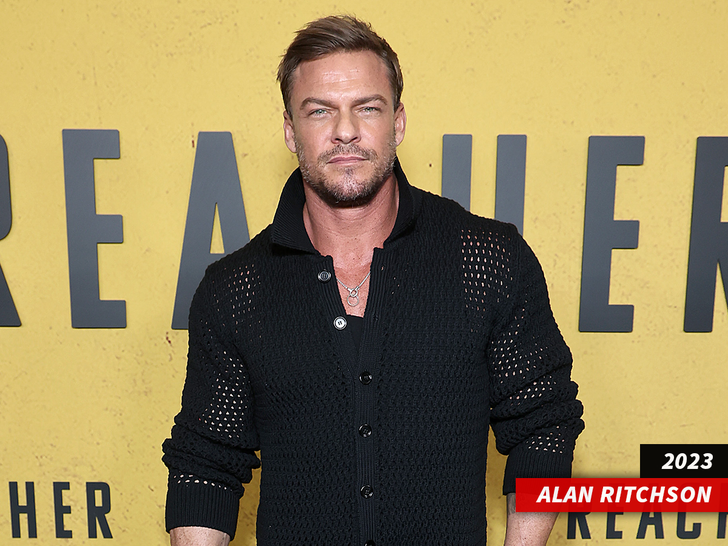
Impact on Ritchson’s Career: While Ritchson’s camp is presenting a strong self-defense narrative, any involvement in a public altercation carries risks for a celebrity. The optics of a violent encounter, even if justified, can lead to questions from studios, advertisers, and the public. However, if the investigation fully supports Ritchson’s account of self-defense, it could ultimately solidify his image as someone capable of protecting himself and his family, potentially even aligning with his tough-guy persona in a way that resonates with his fanbase.
Celebrity Privacy and Public Scrutiny: The incident also underscores the constant public scrutiny faced by celebrities, even in their private lives. A neighbor dispute, which for ordinary citizens might remain a private matter, quickly becomes a global news story when a famous individual is involved, especially with the immediate dissemination of video evidence. This highlights the double-edged sword of modern media, where instant sharing can both expose wrongdoing and potentially misrepresent complex situations.
Escalation of Neighbor Disputes: Beyond the celebrity angle, the event serves as a stark reminder of how quickly neighborly disagreements can escalate into physical altercations. What might begin as a concern over property or conduct can, without proper de-escalation strategies or third-party intervention, spiral into violence with serious legal consequences for all involved. This incident may prompt communities to re-evaluate local conflict resolution resources and promote safer ways to address grievances.
Official Statements and Ongoing Investigation
A representative for Alan Ritchson has not yet issued a formal public statement directly addressing the details of the altercation beyond confirming cooperation with authorities. This is a common strategy in ongoing investigations, allowing legal processes to unfold without premature public commentary that could be misconstrued or used in future legal proceedings.
The Brentwood Police Department has confirmed that the investigation is active and that they are gathering all pertinent information. They are expected to interview all witnesses, review the video evidence in conjunction with the full timeline of events, and assess the extent of injuries sustained by both parties. Depending on their findings, potential charges could range from assault for either or both individuals, to reckless endangerment, or even no charges if actions are deemed justifiable under self-defense statutes.
Ultimately, the resolution of this incident will depend on the thoroughness of the police investigation and the legal interpretations of the events. While the viral video offers a snapshot of the confrontation, the complete picture, including the alleged instigation and repeated physical assaults preceding the recorded segment, will be crucial in determining accountability and legal consequences. The Brentwood community and fans of Alan Ritchson alike await further clarity as the investigation progresses.