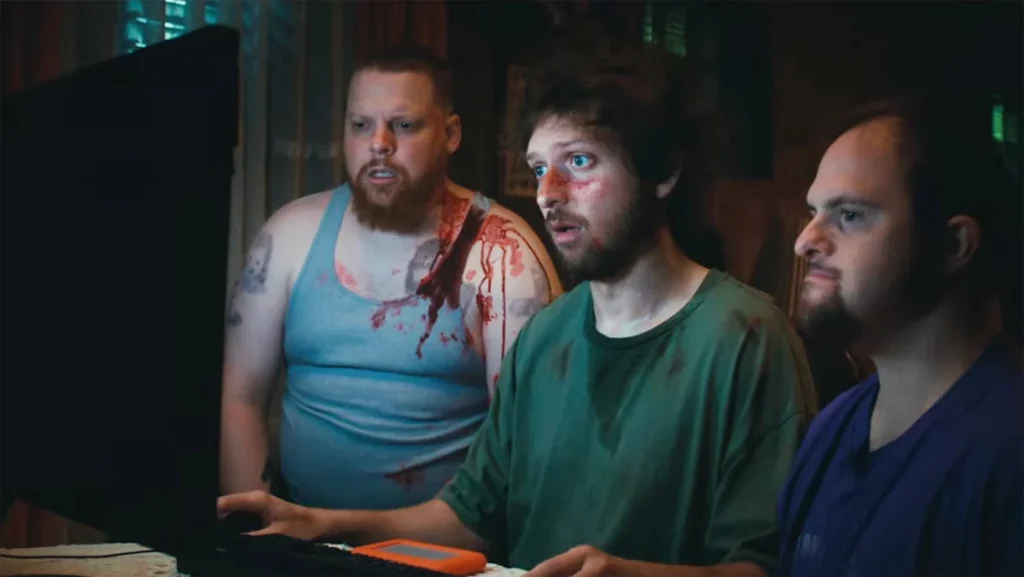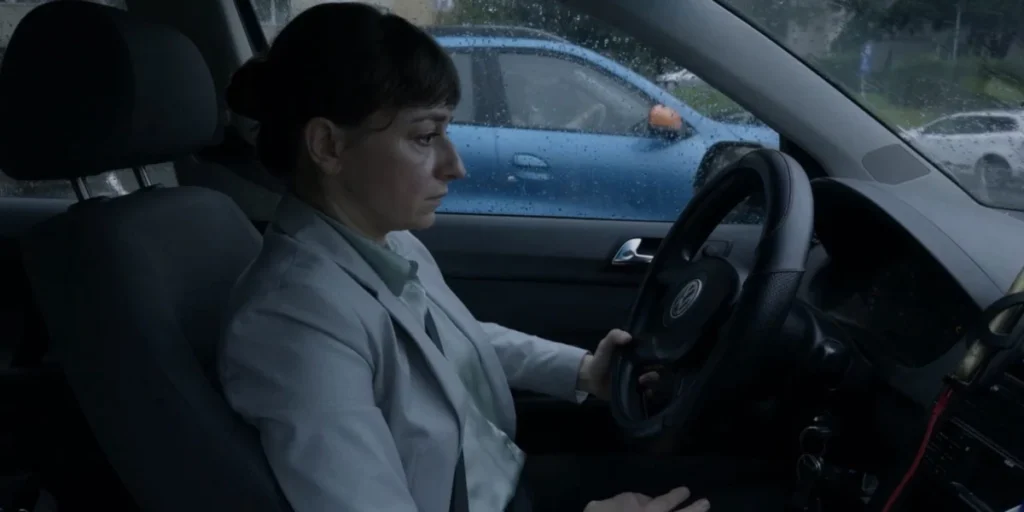

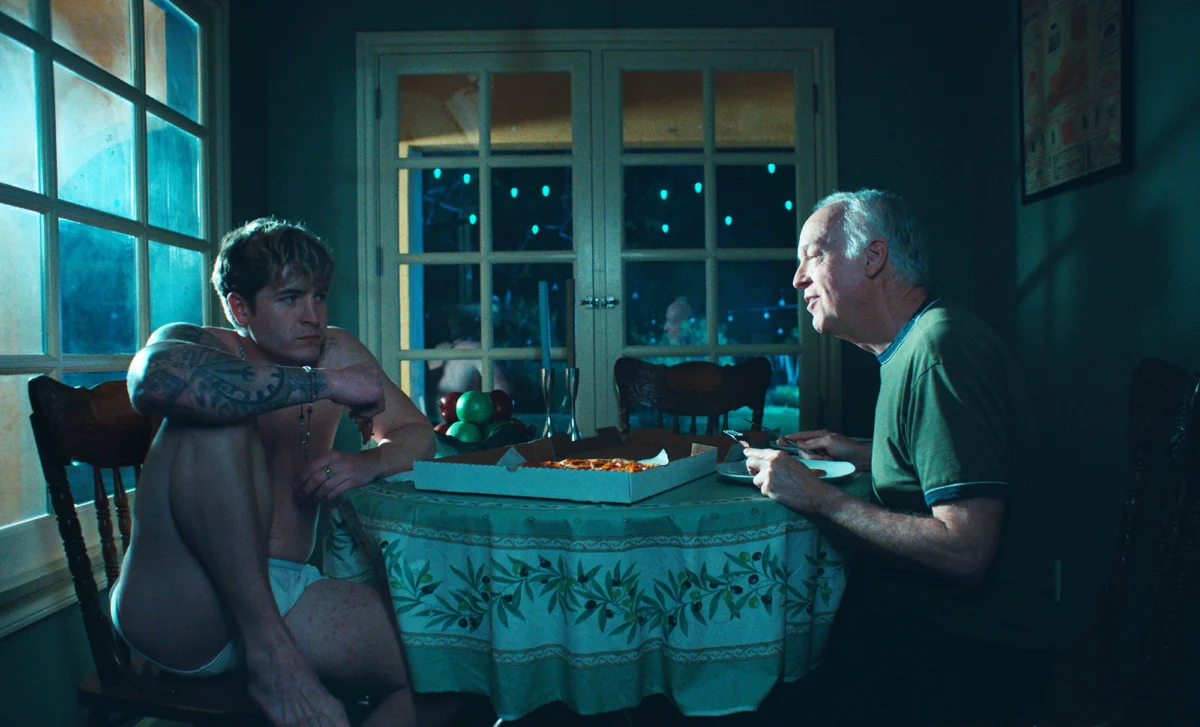
Obscured Releasing has launched the official trailer for Elliot Tuttle’s independent feature, Blue Film, a cinematic endeavor poised to ignite significant discussion with its unvarnished exploration of sexuality, desire, and the haunting echoes of the past. The trailer, released on April 3, 2026, offers a compelling glimpse into a narrative described as a provocative LGBTQ romantic drama, featuring Kieron Moore and veteran actor Reed Birney in leading roles. This announcement comes ahead of the film’s selective theatrical release in the United States on May 8, 2026, following a notable, albeit challenging, run on the international film festival circuit.
A Daring Narrative Emerges: Unpacking the Premise
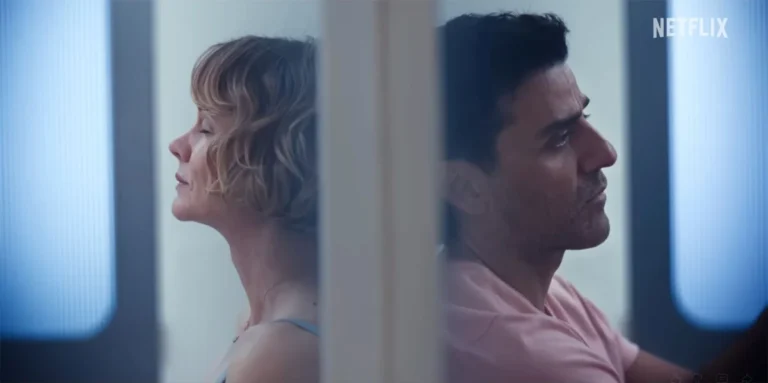
The newly released trailer immediately establishes Blue Film as a work of considerable intensity and psychological depth. At its core is the story of Aaron Eagle, portrayed by Kieron Moore, a fetish camboy who agrees to a clandestine meeting with an anonymous client, played by Reed Birney. What begins as a transactional encounter—reportedly for the sum of $50,000—quickly devolves into something far more intricate and unsettling. The film’s synopsis reveals that Aaron discovers a disturbing, deeply personal connection to the masked client from his own youth, transforming the intended power dynamic into a fraught confrontation with shared history and buried desires.
The official description provided by Obscured Releasing elaborates: "When a fetish camboy (Kieron Moore) visits a client in exchange for $50,000, he discovers a masked man (Reed Birney) with a camera and a series of increasingly probing questions. But when the man reveals a disturbing connection to Aaron’s past, the two drop their personas and gradually reveal their true desires in a seductive thriller being called ‘one of the most daring American films of recent vintage.’" This framing suggests a narrative that transcends simple genre categorization, blending elements of thriller, drama, and intense character study. The film is touted as "scarier than any straight horror this year," a testament to its psychological grip and willingness to delve into the unsettling aspects of human connection and societal taboos surrounding sex and sexuality. The trailer itself hints at a tense, claustrophobic atmosphere, primarily set over the course of a single night, where the two men engage in a "war of words & emotions as they wrestle with the impact of a tainted and shared past." This setup promises a verbal and emotional sparring match, with the past serving as both a catalyst and a weapon.
Behind the Lens: Elliot Tuttle’s Artistic Vision
At the helm of this ambitious project is American indie filmmaker Elliot Tuttle, who not only directed but also penned the screenplay for Blue Film. Tuttle is known for his previous work, including the film The Steps and several short films, establishing a reputation for exploring nuanced human relationships and often uncomfortable truths. His directorial style typically favors intimate character studies, often placing protagonists in morally ambiguous or psychologically demanding situations. For Blue Film, Tuttle appears to double down on this approach, crafting a narrative that forces both characters and audience to confront complex questions about identity, memory, and the lasting impact of early experiences.
Sources close to the production indicate that Tuttle aimed to create a film that challenges conventional notions of desire and connection, pushing beyond surface-level interactions to probe deeper emotional wounds. His decision to tackle "taboo topics related to sex and sexuality" is consistent with a growing trend in independent cinema to explore marginalized experiences and narratives that are often overlooked by mainstream productions. The director’s commitment to portraying these themes with both rawness and sensitivity is expected to be a hallmark of Blue Film, further solidifying his position as a filmmaker unafraid to provoke thought and stimulate dialogue. The film’s independent nature undoubtedly afforded Tuttle a greater degree of artistic freedom, allowing for an uncompromising vision that might have been curtailed in a more commercially driven studio environment.
Starring Duo: Kieron Moore and Reed Birney’s Potent Chemistry

The success of a film like Blue Film, heavily reliant on intense interpersonal dynamics, rests significantly on the performances of its lead actors. Kieron Moore, whose credits include the Netflix series Boots (a fictional work mentioned in the original source, suggesting an emerging talent profile), steps into the demanding role of Aaron Eagle. Playing a character like Aaron, a camboy navigating a complex and potentially dangerous encounter, requires a delicate balance of vulnerability, street-smarts, and an underlying emotional depth. Moore’s portrayal is anticipated to be a breakout performance, capturing the essence of a young man grappling with past trauma and present desires. His role is central to the film’s exploration of fetishism, consent, and the commodification of intimacy, demanding a performance that is both physically and emotionally exposed.
Sharing the screen with Moore is the acclaimed Reed Birney, an actor with a distinguished career in both film and theatre, known for his ability to convey unsettling intensity and profound vulnerability. Birney’s credits include numerous stage performances, earning him a Tony Award, and memorable roles in films and television series that often see him inhabiting complex, morally ambiguous characters. In Blue Film, he takes on the role of the anonymous client, a character shrouded in mystery and laden with a hidden agenda. Birney’s experience in crafting intricate psychological portraits suggests he will bring a formidable presence to the role, anchoring the film’s dramatic tension. The dynamic between Moore and Birney is crucial, as their characters’ "war of words & emotions" drives the narrative forward. The trailer hints at a powerful, almost confrontational chemistry, suggesting that their performances will be key to unlocking the film’s layered themes and the unsettling nature of their shared past. The casting of such a seasoned actor alongside a rising talent underscores the film’s commitment to strong performances as the bedrock of its provocative storytelling.
The Festival Circuit: A Path Less Travelled, A Courageous Premiere
The journey of Blue Film through the film festival circuit has been as compelling as its narrative. The film garnered significant attention by premiering at the 2025 Edinburgh Film Festival, a prestigious event renowned for its commitment to showcasing diverse and challenging cinematic voices. This premiere was particularly notable given the film’s unconventional path to the festival stage. The original announcement explicitly states that Blue Film was "rejected from almost every other festival" before its Edinburgh debut. This detail speaks volumes about the film’s provocative content and its willingness to tread into areas that many programmers might deem too controversial or niche.
The phenomenon of a film being rejected by numerous festivals is not uncommon for independent features that push boundaries, particularly those dealing with explicit sexual themes or highly sensitive psychological subject matter. Film festival programmers often weigh artistic merit against potential controversy, audience reception, and even logistical challenges. The fact that Edinburgh embraced Blue Film highlights the festival’s long-standing reputation for championing bold, independent cinema and providing a platform for films that challenge societal norms. Edinburgh’s decision to program Blue Film undoubtedly validated Tuttle’s vision and provided the film with crucial early exposure and critical attention. Following its world premiere, the film continued its festival run, playing at the Montclair Film Festival and the Philadelphia Film Festival. These festivals, known for their strong emphasis on independent and thought-provoking cinema, further cemented Blue Film‘s reputation as a significant work in contemporary indie filmmaking. The journey through these festivals allowed the film to build critical momentum and generate early buzz, setting the stage for its wider release.
Thematic Depths: Confronting the Uncomfortable and Redefining "Blue Film"
The title Blue Film itself is a deliberate choice, carrying historical connotations of explicit and often illicit pornography. By reclaiming and recontextualizing this term, Elliot Tuttle’s film appears to engage in a meta-commentary on the very nature of perception, desire, and the gaze. Far from being a mere exploitative piece, the film promises to dissect the psychological underpinnings of such content, exploring the motivations, vulnerabilities, and consequences involved. The narrative delves into themes of identity, memory, and the lasting trauma of past events, particularly within the context of sexual encounters and evolving understandings of self.
The film’s exploration of "taboo topics related to sex and sexuality" goes beyond mere shock value. It aims to provoke a deeper inquiry into societal attitudes towards non-normative sexual expressions, the complexities of consent, and the psychological scars left by formative experiences. The quote "Scarier than any straight horror this year" suggests that the film’s true terror lies not in jump scares or gore, but in the discomfort of confronting human vulnerability, manipulation, and the psychological horror of a past that refuses to stay buried. This psychological terror taps into universal anxieties about trust, betrayal, and the fragility of identity. Moreover, as an LGBTQ tale, Blue Film contributes to the ongoing evolution of queer cinema, pushing boundaries in representation by exploring narratives that delve into the less-examined facets of queer experience, moving beyond conventional coming-out stories or romantic comedies. It seeks to present a more complex, perhaps even disturbing, view of queer relationships and desire, fostering a necessary dialogue about the multifaceted nature of human sexuality and its representation in art.
Independent Cinema’s Champions: Production and Distribution

The realization of a film like Blue Film is a testament to the collaborative spirit and resilience of independent cinema. Produced by Bijan Kazerooni, Will Youmans, Adam Kersh, and Waylon Sall, the project benefits from the expertise of a team dedicated to fostering unique cinematic voices. Their collective efforts in navigating the challenges of indie financing and production are crucial in bringing such an artistically audacious project to fruition.
A significant figure in the film’s backing is Mark Duplass, who serves as a consulting producer. Duplass, a prominent figure in the independent film landscape, is known for his work in the "mumblecore" movement and his consistent championing of distinctive, character-driven narratives. His involvement signals a stamp of approval from a respected voice in indie filmmaking, lending credibility and potentially opening doors for the film. Duplass’s track record suggests a keen eye for projects that challenge conventions and prioritize authentic storytelling, making his association with Blue Film particularly fitting.
The distribution of such a challenging film falls to Obscured Releasing, a company that appears to specialize in bringing niche and artistically daring features to a wider audience. In an industry dominated by blockbusters, specialized distributors like Obscured Releasing play an indispensable role in ensuring that diverse cinematic voices find their platform. Their strategy likely involves carefully targeted marketing to art-house audiences, film enthusiasts, and communities interested in LGBTQ+ and provocative cinema. The decision to release Blue Film in select US theaters starting May 8th, 2026, reflects a strategic approach to build momentum through word-of-mouth and critical acclaim, rather than a broad, mainstream rollout. This method allows the film to cultivate its audience organically, leveraging the buzz generated by its festival run and the initial trailer release.
Critical Acclaim and Anticipation: A Daring American Film
The early critical reception of Blue Film, as teased in the trailer’s promotional material, positions it as "one of the most daring American films of recent vintage." This accolade suggests that the film is not merely provocative for its subject matter but is also artistically significant, pushing the boundaries of cinematic storytelling in the contemporary landscape. Such praise indicates a film that is not afraid to take risks, both in its narrative content and its aesthetic execution. Critics are likely to engage with Blue Film on multiple levels, dissecting its psychological complexities, the performances of its leads, and its broader implications for queer cinema and independent filmmaking.
The anticipation surrounding the film’s release is palpable, particularly among those who seek out cinema that challenges, provokes, and encourages deep reflection. In an era where diverse representation and nuanced storytelling are increasingly valued, Blue Film stands to contribute significantly to ongoing cultural conversations about sexuality, trauma, and the power dynamics inherent in human relationships. Its ability to spark debate and critical analysis will undoubtedly be a key measure of its impact.
Release Details and Future Impact
Elliot Tuttle’s Blue Film is scheduled to open in select US theaters on May 8th, 2026. This limited theatrical release will be a crucial test of the film’s ability to connect with audiences beyond the festival circuit. Its success will likely depend on strong critical reviews, enthusiastic word-of-mouth, and the strategic efforts of Obscured Releasing to reach its target demographic.
Beyond its immediate box office performance, Blue Film is poised to leave a lasting mark on independent cinema and the discourse surrounding LGBTQ+ representation. By tackling "taboo topics related to sex and sexuality" with an unflinching gaze, the film contributes to a growing body of work that seeks to normalize and explore the full spectrum of human experience, even its most uncomfortable facets. It challenges audiences to confront their own biases and assumptions, fostering empathy and understanding. As a "daring American film," Blue Film embodies the spirit of independent filmmaking—bold, uncompromising, and essential for the continued evolution of cinematic art. Its release marks not just the debut of a new film, but a moment for reflection on the power of storytelling to illuminate the complexities of the human condition.