



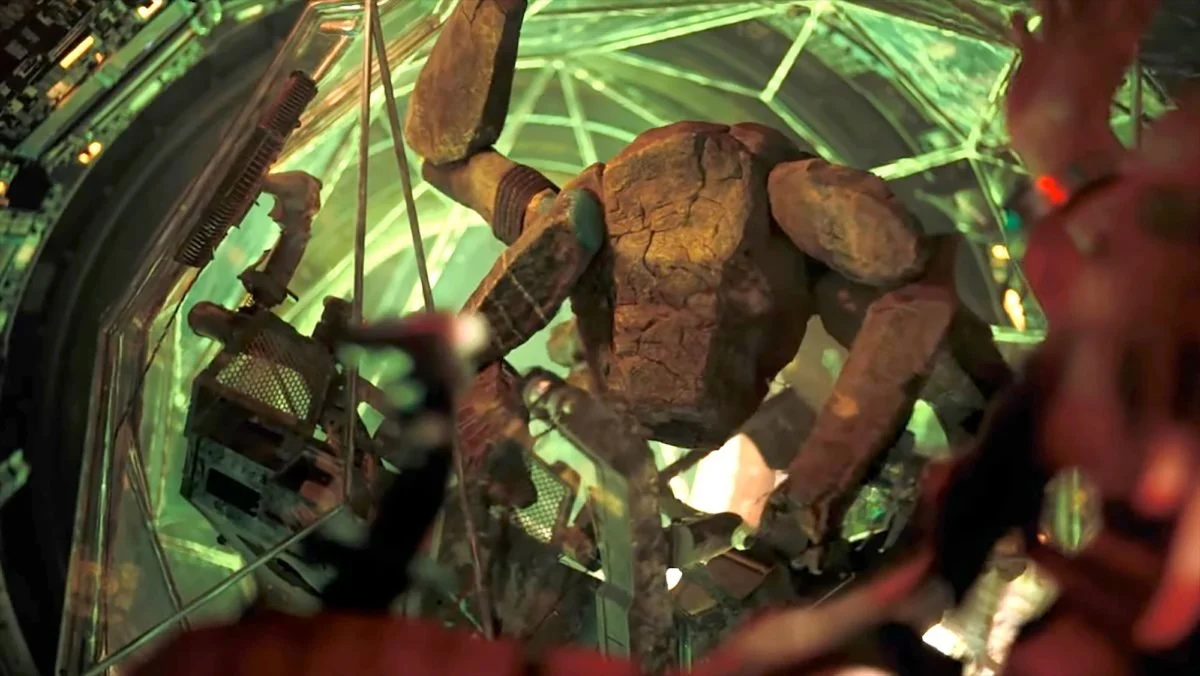
The cinematic adaptation of Andy Weir’s bestselling novel, Project Hail Mary, has officially arrived in theaters, garnering widespread critical acclaim and immediately solidifying its place among the pantheon of modern science fiction masterpieces. Released on March 20, 2026, the film, helmed by the visionary directing duo Phil Lord & Christopher Miller, is being celebrated for its profound blend of scientific ingenuity, compelling character study, and an overarching message of hope. Starring Ryan Gosling as the amnesiac astronaut Ryland Grace and featuring a groundbreaking practical effects portrayal of his alien companion, Rocky, the movie is lauded for its intelligent narrative and breathtaking visual execution, marking a significant milestone in the genre.
The Genesis of a Galactic Rescue Mission
Project Hail Mary plunges audiences into an interstellar saga centered on humanity’s last-ditch effort to avert an extinction-level event. The narrative unfolds against the backdrop of the "Petrova Line," a catastrophic phenomenon discovered by Dr. Irina Petrova. This invisible front comprises "Astrophage," a newly identified alien microorganism with an insatiable appetite for solar energy. These microscopic entities are rapidly consuming the sun’s output, threatening Earth with an unprecedented ice age and the ultimate demise of all life. In a desperate race against time, an international coalition launches the Hail Mary, an advanced spacecraft carrying a crew of elite astronauts and scientists on a perilous journey to Tau Ceti, a nearby star system. Tau Ceti, a real star located approximately 12 light-years from Earth, is identified as one of the few celestial bodies seemingly unaffected by the Astrophage, making it humanity’s sole beacon of hope.
The film’s protagonist, Ryland Grace (portrayed with nuanced depth by Ryan Gosling), awakens on the Hail Mary spacecraft light-years from Earth, his memory fragmented and his crewmates inexplicably deceased. His initial struggle to piece together his identity and the mission’s purpose forms the emotional core of the opening act. As Grace slowly reclaims his memories, the monumental task before him becomes horrifyingly clear: he is the last surviving member of the crew, burdened with the responsibility of discovering why Tau Ceti remains untouched by the Astrophage and transmitting that crucial data back to Earth to save the home sun. His solitary mission takes an unexpected turn with the arrival of an alien spacecraft, whose lone occupant, Rocky, shares the identical mission to save their own imperiled star system. The ensuing partnership between Grace and Rocky, overcoming language barriers and vastly different physiologies, becomes a testament to interspecies cooperation and the universal drive for survival.
Andy Weir’s Legacy: A Foundation of "Hard Sci-Fi"
The success of Project Hail Mary is deeply rooted in the literary prowess of its author, Andy Weir. Weir has carved a unique niche in contemporary science fiction with his distinctive approach to "hard sci-fi," characterized by rigorous scientific accuracy, meticulous problem-solving narratives, and an underlying current of humor and optimism. His previous novel, The Martian, released in 2011, achieved global acclaim, chronicling an astronaut’s ingenious fight for survival after being stranded on Mars. The subsequent film adaptation in 2015, directed by Ridley Scott and starring Matt Damon, was a critical and commercial triumph, demonstrating the cinematic viability of Weir’s intellectually stimulating narratives.
Project Hail Mary, published in 2021, continued Weir’s tradition, quickly becoming a New York Times bestseller. The novel was praised for its intricate scientific puzzles, the compelling voice of Ryland Grace, and the remarkably endearing character of Rocky. Weir’s ability to imbue complex scientific concepts with accessibility and dramatic tension is a hallmark of his work, and it’s a quality that Lord & Miller meticulously preserved and amplified in the film adaptation. The enduring appeal of Weir’s stories lies in their affirmation of human ingenuity and resilience, portraying science not as an abstract academic pursuit but as a tangible tool for overcoming seemingly insurmountable challenges.
The Cinematic Journey: From Bestseller to Blockbuster
The journey of Project Hail Mary from page to screen began swiftly after its literary release. MGM, now part of Amazon, secured the film rights, recognizing the immense potential for a cinematic spectacle. The crucial decision to entrust the project to Phil Lord & Christopher Miller was a stroke of genius. Known for their innovative and often genre-bending work on films like Spider-Man: Into the Spider-Verse, The Lego Movie, and 21 Jump Street, Lord & Miller possess a unique ability to infuse intelligence, humor, and emotional depth into broad genre narratives. Their track record suggested they were perfectly suited to translate Weir’s blend of scientific rigor and humanistic charm.
The attachment of Ryan Gosling to the lead role of Ryland Grace further heightened anticipation. Gosling, celebrated for his versatile performances in films ranging from Drive to La La Land and Blade Runner 2049, brings a compelling mix of vulnerability, intellect, and understated heroism to the character. His portrayal grounds the fantastical elements of the story in a relatable human experience.
Screenwriter Drew Goddard, who previously penned the screenplay for The Martian and is known for his work on The Cabin in the Woods and Bad Times at the El Royale, was tasked with adapting Weir’s dense novel. Goddard’s experience with Weir’s material proved invaluable, allowing him to streamline complex scientific explanations without sacrificing the story’s intellectual integrity. The challenge lay in converting Grace’s internal monologue and detailed scientific problem-solving into dynamic visual storytelling. Goddard, under Lord & Miller’s direction, expertly navigated this, ensuring that the core scientific principles remained integral to the plot while allowing the character interactions and visual spectacle to drive the narrative forward.
Production details reveal a commitment to practical filmmaking, a decision that has significantly contributed to the film’s immersive quality. Rather than relying solely on green screen technology, the filmmakers constructed intricate, full-scale sets for the Hail Mary spacecraft. This approach not only provided the actors with tangible environments to interact with but also enhanced the visual authenticity. A standout example of this commitment is the portrayal of Rocky, the alien companion. Eschewing full CGI, Rocky was brought to life through sophisticated puppetry and practical effects, performed on set. This decision imbues Rocky with a palpable presence and allows for more organic interactions with Gosling, fostering a genuine sense of camaraderie that CGI alone might struggle to achieve.

The visual grandeur of Project Hail Mary is further amplified by the work of cinematographer Greig Fraser, an Academy Award winner known for his stunning contributions to films like Dune and The Batman. Fraser’s lens captures the vast emptiness of space with both awe and intimacy, finding pockets of vibrant color and light amidst the darkness. His distinctive visual style ensures that even the most scientifically dense sequences are rendered with striking aesthetic appeal, making every frame count and enhancing the film’s overall impact.
Narrative Core and Thematic Resonance
At its heart, Project Hail Mary is a story of profound connection and unwavering optimism. The narrative intricately weaves together scientific puzzles, existential threats, and deeply personal journeys. Ryland Grace’s gradual recovery of his memory serves as a clever narrative device, allowing the audience to discover the stakes of the mission alongside him. The depiction of Astrophage, a novel and terrifying threat, provides a compelling impetus for the mission, underscoring the fragility of life and the immense power of the universe.
The dynamic between Grace and Rocky is the film’s emotional anchor. Their initial struggles with communication, a fascinating exploration of linguistic and physiological differences, evolve into a deep, symbiotic partnership. Rocky, an Eridian from the Tau Ceti system, is not merely a plot device but a fully realized character, whose unique physiology and problem-solving approach complement Grace’s human ingenuity. Their collaborative efforts to understand the Astrophage and develop a solution highlight the film’s central theme: that collaboration, even across species, is paramount in the face of universal challenges. The practical realization of Rocky on screen amplifies this connection, allowing for a tangible, believable bond to form between the two protagonists.
Beyond the immediate crisis, Project Hail Mary explores broader themes of human resilience, the ethics of sacrifice, and the boundless potential of scientific discovery. The mission itself represents a global effort, transcending national boundaries in pursuit of a common goal—a powerful message of unity in a divided world. The film champions science as humanity’s greatest tool, showcasing how systematic inquiry, creative thinking, and persistent experimentation can unlock solutions to seemingly impossible problems. It’s a compelling argument for intellectual curiosity and the pursuit of knowledge.
Critical Reception and Broader Implications
Upon its release, Project Hail Mary was met with an overwhelmingly positive critical response, drawing immediate comparisons to seminal science fiction films. Reviewers have placed it alongside classics such as Interstellar, Contact, Apollo 13, Gravity, Arrival, and The Martian, hailing it as an instant classic. The film’s ability to combine intellectual rigor with genuine emotional appeal has been particularly praised. Critics noted its "built-in levity" and "hopefulness," making it a deeply rewatchable experience that inspires rather than merely entertains.
The decision by Lord & Miller to emphasize practical effects, particularly for Rocky, has been lauded as a bold and successful artistic choice. This commitment to tangible elements contributes significantly to the film’s realism and immersiveness, distinguishing it from many contemporary sci-fi productions that lean heavily on CGI. This approach has sparked conversations within the industry about the optimal balance between practical and digital effects, potentially influencing future filmmaking trends.
The film’s commercial performance is anticipated to be robust, driven by strong word-of-mouth and the established fanbases of Andy Weir, Ryan Gosling, and Lord & Miller. Its critical success also positions it as a strong contender for various awards, particularly in technical categories such as cinematography, sound, and visual effects, as well as for its screenplay and direction.
Project Hail Mary signals a continued resurgence in demand for intelligent, "hard sci-fi" cinema. Its success demonstrates that audiences are eager for stories that challenge them intellectually while still delivering compelling narratives and emotional resonance. The film’s unwavering optimism, its celebration of scientific inquiry, and its powerful message of cooperation provide a much-needed antidote to more dystopian narratives prevalent in the genre. It suggests that even in the face of global catastrophe, humanity, perhaps with a little help from friends beyond our planet, possesses the capacity for ingenuity and compassion to overcome any challenge.
The film’s thematic emphasis on scientific problem-solving also holds significant implications for inspiring future generations. By showcasing science as an exciting, creative, and ultimately world-saving endeavor, Project Hail Mary has the potential to encourage interest in STEM fields. It makes the abstract world of astrophysics and microbiology thrilling and accessible, demonstrating the real-world impact of scientific exploration.
In conclusion, Project Hail Mary is more than just a space movie; it is a profound exploration of human and alien connection, a testament to scientific endeavor, and a beacon of hope. Its masterful direction, compelling performances, and groundbreaking practical effects elevate it to a status rarely achieved in contemporary cinema. Lord & Miller, along with their stellar cast and crew, have delivered a film that is not only visually magnificent and intellectually stimulating but also deeply moving and universally inspiring. It stands as a powerful reminder that even when facing the impossible, with curiosity, collaboration, and a good buddy, anything is possible.