



A bold new comedic offering, "Pizza Movie," emerges from the collaborative minds of directors and writers Brian McElhaney and Nick Kocher, known for their work as the comedy duo BriTANicK. This feature debut, clocking in at a brisk 92 minutes, plunges viewers into a chaotic, hallucinogenic journey that hinges on a seemingly simple, yet critically urgent, quest for a pizza. While the film’s premise might lean into the absurd, its execution, bolstered by a talented ensemble cast, delivers a surprisingly cohesive, albeit lighthearted, cinematic experience. The narrative centers on two college roommates who find themselves on a perilous psychedelic trip, with their only salvation lying in the timely delivery of a universally beloved comfort food.
The core of the film’s narrative revolves around an unfortunate incident involving a synthetic drug colloquially known as "M.I.N.T.S." – an acronym for Mind-Igniting Neural Tuning Stimulants. This experimental substance, discovered by chance by the protagonists, promises a profound, albeit unpredictable, altered state of consciousness. The script, penned by McElhaney and Kocher, meticulously outlines a six-phase hallucinogenic experience, each characterized by increasingly bizarre and disorienting manifestations. However, the stakes are dramatically heightened by the explicit warning: failure to terminate the trip before the completion of the sixth phase guarantees a final, terrifying, and presumably irreversible, hallucinatory state. The sole countermeasure, the film posits, is the consumption of pizza. This peculiar antidote forms the central driving force of the plot, propelling the characters through a series of increasingly outlandish obstacles.
The Genesis of a Psychedelic Quest
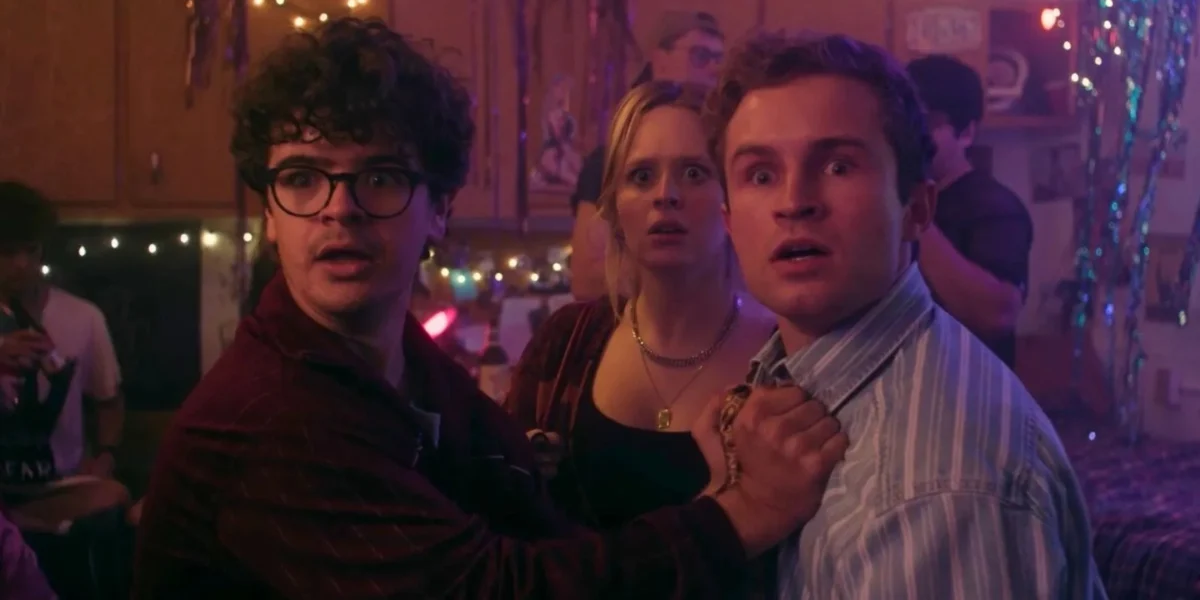
The story unfolds within the familiar confines of a college dormitory, a setting that immediately establishes a relatable backdrop for the protagonists’ predicament. Gaten Matarazzo, stepping out of his well-known role in "Stranger Things" and into a more mature collegiate setting, portrays Jack, a character defined by his gregarious nature and impulsive decision-making. Opposite him, Sean Giambrone, recognizable from "The Goldbergs," embodies Montgomery, Jack’s roommate, whose personality is marked by a distinct awkwardness and a cautious disposition. This classic dichotomy between the carefree and the cautious forms the initial dynamic of their friendship, setting the stage for their shared ordeal.
The discovery of the M.I.N.T.S. is presented as a consequence of a common college experience: bullying. Following an encounter with aggressive football players, the roommates seek refuge and, in the process, stumble upon the hidden cache of drugs. Montgomery’s initial apprehension is overcome by Jack’s persuasive influence, leading them to ingest the stimulants. This pivotal moment marks the film’s transition from a grounded slice-of-life scenario to a full-blown psychedelic adventure. The directors, in crafting this origin story, effectively leverage the audience’s familiarity with the tropes of college comedies and coming-of-age narratives, only to subvert them with the introduction of the hallucinogenic element.
A Stellar Ensemble Navigates the Absurd
The critical success of "Pizza Movie" can be significantly attributed to its ensemble cast, which features a compelling blend of established young talent and seasoned comedic performers. Gaten Matarazzo and Sean Giambrone, as the central duo, anchor the film with their distinct yet complementary performances. Matarazzo, known for his endearing portrayal of Dustin Henderson in "Stranger Things," brings a charismatic energy to Jack, effectively conveying the character’s impulsiveness and underlying good nature. His physical comedy, often a highlight of his performances, shines through, showcasing a remarkable nimbleness that hints at his background in musical theater. Giambrone, drawing parallels to a younger Michael J. Fox with his vocal delivery and earnestness, imbues Montgomery with a likable vulnerability. He skillfully navigates the character’s cautiousness, ensuring that Montgomery remains a sympathetic figure rather than a mere obstacle to the film’s comedic momentum.
However, the undeniable breakout performance comes from Lulu Wilson, who portrays Lizzy, a former friend who inadvertently becomes involved in the M.I.N.T.S. ordeal. Wilson, previously recognized for her significant contributions to the horror genre in films like "Annabelle: Creation" and "Ouija: Origin of Evil," as well as the acclaimed series "The Haunting of Hill House," demonstrates remarkable versatility. Her portrayal of Lizzy is anything but a typical supporting role; she fully embraces the film’s outlandishness with a performance that is both off-the-wall and profoundly engaging. Her expressive face, capable of conveying a spectrum of emotions from exuberant joy to sheer terror, becomes a visual focal point, drawing the audience into the surreal landscape of the drug-induced hallucinations. Wilson’s performance is a testament to her burgeoning talent and her potential to excel across a wide range of cinematic genres.
The supporting cast further elevates the comedic stakes. The film features appearances from a notable roster of talent, including Jack Martin, Peyton Elizabeth Lee, Marcus Scribner, Caleb Hearon, and Justin Cooley. Each actor contributes to the film’s vibrant tapestry of characters, navigating the chaotic narrative with comedic precision. Notably, Daniel Radcliffe makes a cameo appearance, adding an unexpected yet welcome star power to the film’s already impressive lineup. The inclusion of such a diverse and talented group underscores the directors’ ability to attract a strong cast, even for a film that proudly embraces its "proudly stupid" premise.
A Masterclass in Absurdist Comedy
The humor in "Pizza Movie" is deliberately broad and often leans into the unexpected, a characteristic that aligns perfectly with its psychedelic premise. While the review acknowledges that not every joke lands, the sheer volume and the inherent absurdity of the situations ensure a consistent stream of laughter. The film frequently employs the "isn’t that random?" brand of comedy, which, in the context of a drug-induced hallucination, feels not only appropriate but essential. The nonsensical images and fractured thoughts that accompany psychotropic substances are mirrored in the film’s comedic structure, creating a disorienting yet hilarious experience for the audience.
The film’s comedic tone is further solidified by a memorable cameo from Sarah Sherman, a prominent figure in contemporary absurdist comedy and a cast member of "Saturday Night Live." Sherman portrays the creator of the M.I.N.T.S., tasked with delivering crucial exposition regarding the drug’s effects and the characters’ predicament. Her performance is described as "appropriately hilarious" and "idiosyncratic," perfectly setting the stage for the ensuing chaos. Her presence not only lends credibility to the film’s comedic ambitions but also serves as a clear indicator of the directors’ comedic sensibilities, drawing clear lines to the more surreal and unpredictable corners of humor.
Directional Flair and Cinematic Influences
McElhaney and Kocher, in their feature directorial debut, demonstrate a keen understanding of comedic timing and visual storytelling. As the narrative progresses into its more action-oriented sequences, their direction becomes particularly evident. The creative staging, innovative camera techniques, and sharp editing exhibit a clear influence from contemporary cinematic trends, most notably the groundbreaking work in "Everything Everywhere All at Once." This stylistic homage is not merely superficial; it informs the film’s ability to navigate complex visual gags and rapid-fire comedic beats.
One of the film’s most lauded segments is a particular sequence where the characters are forbidden from using profanity, under penalty of the M.I.N.T.S. exacerbating their hallucinations. This section is described as reminiscent of "Groundhog Day" if directed by Sam Raimi, a comparison that highlights its clever use of repetition, escalating absurdity, and a touch of unsettling horror-comedy. This particular segment showcases the directors’ ability to craft memorable and inventive set pieces that not only advance the plot but also provide substantial comedic and visual payoffs.
Thematic Resonance and Broader Implications
Beyond the immediate comedic spectacle, "Pizza Movie" touches upon themes of friendship, escapism, and the search for solutions in the face of overwhelming circumstances. The characters’ desperate pursuit of pizza, while inherently absurd, serves as a metaphor for their yearning for normalcy and comfort amidst a disorienting and terrifying experience. The film suggests that even in the most outlandish scenarios, simple pleasures and familiar comforts can provide a crucial anchor.
The film’s title itself is a clever double entendre, revealing a key plot element while also encapsulating the film’s overall energy and tone. It suggests a project that is both enjoyable in the moment of consumption and perhaps less substantial or memorable once the experience has concluded. This self-awareness on the part of the filmmakers is commendable, as it allows them to fully embrace the film’s lighthearted and somewhat inconsequential nature without pretension.
From a broader cultural perspective, "Pizza Movie" taps into the enduring appeal of stoner comedies and psychedelic narratives. The film offers a modern take on these genres, incorporating contemporary comedic voices and visual styles. Its success, particularly within its intended audience, may lie in its ability to provide a visual companion for viewers who might also be indulging in similar altered states, offering a shared experience of humor and absurdity. The film’s accessibility, coupled with its star-studded cast and inventive premise, positions it as a noteworthy entry in the landscape of contemporary comedic cinema, even if its lasting impact is more akin to a fleeting, enjoyable indulgence than a profound cinematic statement.
The film’s success also highlights a growing trend in independent and streaming-first comedies that prioritize creative freedom and unique premises, often leveraging established comedic talent and recognizable young stars to draw audiences. The collaboration between McElhaney and Kocher, with their strong comedic backgrounds, suggests a deliberate effort to imbue the film with a distinct comedic voice. Their ability to attract a cast that includes actors from major television series and even a Hollywood A-lister like Daniel Radcliffe speaks to the growing appeal and reach of such projects. The 92-minute runtime is also a strategic choice, aligning with the current viewer preference for more concise and digestible entertainment, particularly within the comedy genre.
The underlying message, though delivered with a significant dose of silliness, speaks to the human need for simple pleasures and the often-unconventional paths we take to find them. In a world that can often feel overwhelming and unpredictable, the allure of a universally comforting food like pizza, elevated to the status of a life-saving antidote, resonates on a primal level. "Pizza Movie" may not be a film that lingers in the intellectual consciousness for long, but for those seeking an unpretentious, laugh-out-loud cinematic escape, it certainly delivers on its cheesy, psychedelic promise. The film’s ability to blend disparate comedic elements, from character-driven humor to surreal visual gags, with a clear narrative objective, marks it as a well-crafted, if ultimately light, piece of entertainment.