


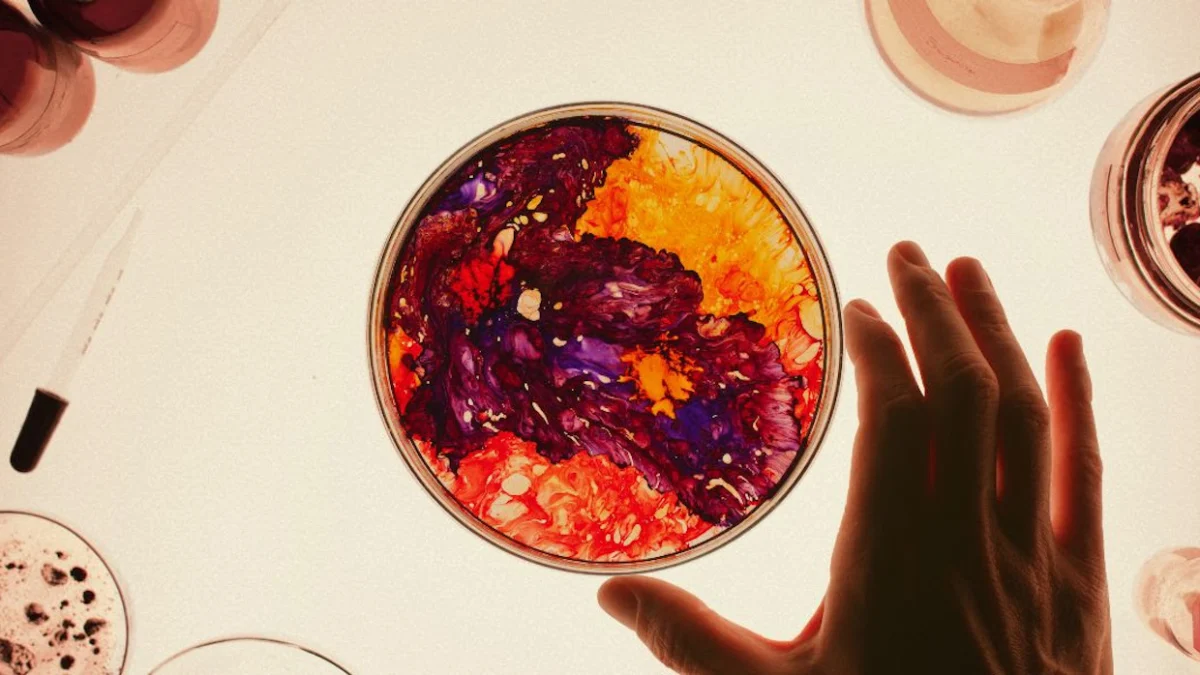
The boundary between empirical observation and artistic expression has long been a fertile ground for experimental filmmakers, yet few have approached the canvas of the physical world with the meticulous patience of Australian director Josef Gatti. In his feature-length debut, Phenomena, Gatti presents a 90-minute odyssey that attempts to visualize the fundamental laws of physics through high-speed, macro-cinematography and practical scientific experiments. Premiering at the True/False Film Fest, a venue renowned for its commitment to the "non-fiction" vanguard, the film serves as both a scientific document and a psychedelic exploration of the natural world.
The project is the culmination of nearly a decade of labor, transitioning through various media formats before achieving its final cinematic state. Gatti’s work challenges the contemporary reliance on computer-generated imagery (CGI) and artificial intelligence (AI), asserting that the most "trippy" and profound visual experiences are not found in code, but in the molecular reactions occurring within a petri dish or the arcing of high-voltage electricity. Guided by his father, a veteran physics professor, Gatti has crafted a work that is as much a tribute to the scientific method as it is to the history of avant-garde cinema.
The Decade-Long Evolution of Phenomena
The trajectory of Phenomena from a series of experimental shorts to a feature-length documentary reflects a rigorous commitment to the evolution of a singular concept. The project’s origins date back to 2016, when Gatti began producing short-form visual essays that paired scientific phenomena with electronic and neoclassical music. These early iterations were less about narrative and more about the "sublime molecular artistry" inherent in matter and energy.
By 2019, the project gained significant momentum when it was commissioned as a web series by the Australian Broadcasting Corporation (ABC). During this period, Gatti refined his technical approach, utilizing advanced camera equipment to capture reactions that are typically invisible to the naked eye. The series allowed Gatti to explore specific themes such as electromagnetism and gravity in isolated segments, but the filmmaker maintained a "master plan" to eventually synthesize these experiments into a cohesive feature.
Between 2020 and 2023, the work expanded into immersive installations, appearing in museums and galleries across Australia. These exhibitions allowed Gatti to test how audiences reacted to the scale of his imagery. The transition to a 90-minute feature required a difficult process of refinement. According to the filmmaker, nearly a decade’s worth of experiments and ideas were left on the cutting room floor to ensure the film maintained a narrative arc—not through traditional storytelling, but through a progression of scientific complexity.
A Taxonomy of Ten Experiments
At the core of Phenomena are ten distinct experiments, each designed to illustrate a pillar of the physical universe. Gatti categorizes these segments as studies in light, matter, energy, waves, gravity, electromagnetism, nuclear energy, entropy, quantum energy, and life. To achieve these visuals, Gatti and his father spent weeks in a laboratory setting for each segment, often sourcing rare chemicals and custom-built hardware.
- Light and Matter: The film opens with explorations of refraction and chemical reactions that simulate the birth of stars. By using specialized lenses, Gatti captures the way photons interact with different densities of liquid, creating prismatic effects that mirror galactic nebulae.
- Electromagnetism and the Lichtenberg Figure: One of the most visually arresting segments involves "Lichtenberg figures," which are branching, tree-like patterns created by high-voltage electrical discharges. These experiments are notoriously dangerous, requiring a "short circuit" of immense power to burn patterns into insulating materials. Gatti uses this to represent the raw energy that powers the universe.
- Waves and Gravity: Utilizing cymatics—the study of visible sound and vibration—the film shows how sound waves can manipulate physical matter into geometric patterns. This serves as a metaphor for the invisible forces of gravity and the wave-particle duality of the subatomic world.
- Entropy and Quantum Energy: In these later segments, the film moves toward more abstract representations. Entropy is visualized through the breakdown of complex chemical structures, while quantum energy is suggested through the erratic, non-linear movement of particles at the micro-scale.
- The Mystery of Life: The final act of the film focuses on biological precursors. Using macro-lenses to observe the movement of organic compounds, Gatti attempts to bridge the gap between "dead" matter and the spark of biological animation.
Technical Execution and the Rejection of AI
In an era where generative AI can produce complex visual patterns with a single text prompt, Gatti’s insistence on practical cinematography is a deliberate philosophical stance. Every frame of Phenomena is captured in-camera. This "analogue" approach to digital filmmaking requires a level of precision that AI cannot yet replicate: the unpredictability of fluid dynamics and the genuine physics of light.
The technical specifications of the production involved high-frame-rate cameras capable of slowing down micro-second reactions into minutes of fluid motion. This allows the viewer to witness the "real-time" evolution of a chemical bond or an electrical arc. Gatti’s background as a cinematographer is evident in his use of lighting, which emphasizes the three-dimensionality of the microscopic subjects, making them appear as vast as planetary bodies.

The filmmaker has expressed a profound lack of interest in AI-generated imagery, citing a preference for the "real world." This sentiment aligns with a growing movement in the documentary community that seeks to preserve the "indexical truth" of the image—the idea that a film should be a direct record of physical reality. For Gatti, the "trippiness" of the film is enhanced by the knowledge that the viewer is looking at something that actually exists, rather than a mathematical approximation of reality.
The Auditory Landscape: Nils Frahm and Rival Consoles
The sensory experience of Phenomena is heavily dependent on its score, which serves as the film’s emotional and structural backbone. Gatti collaborated with two giants of the contemporary electronic and neoclassical scenes: Nils Frahm and Rival Consoles (Ryan Lee West).
Nils Frahm, known for his unconventional approach to the piano and his use of vintage synthesizers, provided a vast catalog of music spanning 15 years. Frahm’s music often emphasizes the mechanical sounds of the instruments—the clicking of keys, the hum of an amplifier—which complements Gatti’s focus on the "mechanics" of the universe. The "free-flowing" nature of Frahm’s compositions allows the visuals to breathe, providing a sense of scale and wonder.
To provide sonic consistency, Rival Consoles was brought in to compose an original score for the film’s opening and closing sequences. Known for his "humanized" electronic music, West’s contributions help ground the more abstract visual segments. The interplay between the music and the imagery creates what Gatti describes as a "psychedelic musical odyssey," where the rhythm of the edit is dictated by the frequency of the sound.
Implications for Science Communication and Cinema
Phenomena occupies a unique space in the cultural landscape. It functions as "science communication," but it eschews the didactic, explanatory tone of traditional documentaries like Cosmos. There are no talking heads or complex diagrams; instead, the film relies on the "sublime" to foster an appreciation for physics. This approach has been compared to the Baby Einstein series, albeit for an adult audience capable of appreciating the deeper philosophical implications of the visuals.
The film arrives at a time of "geopolitical peril and interpersonal alienation," as noted by critics. In this context, Gatti’s work acts as a "quasi-radical act" of refocusing attention on the fundamental forces that allow life to exist. By highlighting the beauty of the "small scientific marvels," the film encourages a sense of stewardship and curiosity toward the natural world.
From an industry perspective, Phenomena demonstrates the viability of long-form, non-narrative experimental film in the digital age. Its success at festivals like True/False suggests that there is a significant audience appetite for "slow cinema" that offers a meditative, rather than purely informational, experience.
Conclusion and Future Directions
As Josef Gatti transitions from the world of shorts and web series to feature filmmaking, Phenomena stands as a definitive statement of his artistic intent. The film is a reminder that the tools of modern cinema—macro lenses, high-speed sensors, and immersive sound—can be used to reconnect audiences with the physical reality of the universe.
Gatti has indicated that he intends to continue exploring the intersection of science and psychedelia. With several new projects "bursting to get out," the filmmaker is poised to remain a leading voice in the Australian experimental scene. For now, Phenomena remains a singular achievement: a film that proves the universe is not just something to be studied in a textbook, but something to be experienced through the lens of a camera. Whether viewed as a scientific record or a visual meditation, it challenges the viewer to look closer at the world around them and find the extraordinary within the ordinary.